
Russell Moore
Author of Onward: Engaging the Culture without Losing the Gospel
About the Author
Russell Moore (PhD, New Orleans Baptist Theological Seminary) is the eighth president of the Ethics Religious Liberty Commission of the Southern Baptist Convention. A widely sought-after commentator, Dr. Moore has been called "vigorous, cheerful, and fiercely articulate" by The Wall Street Journal. show more He is the author of several books, including The Kingdom of Christ, Tempted and Tried, and Onward. He and his wife, Maria, have five children. show less
Image credit: Dr. Moore preaching in chapel at SBTS. By Theology147 - Own work, CC BY-SA 3.0, https://commons.wikimedia.org/w/index.php?curid=22498114
Series
Works by Russell Moore
Adopted for Life: The Priority of Adoption for Christian Families & Churches (2009) 832 copies, 13 reviews
Christ-Centered Parenting - Bible Study Book: Gospel Conversations on Complex Cultural Issues (2017) 32 copies
Counseling and the Authority of Christ 14 copies
Christ-Centered Parenting - Leader Kit: Gospel Conversations on Complex Cultural Issues (2017) 4 copies
Tome uma posição: Assuma com coragem as consequências de sua fé (Portuguese Edition) (2021) 2 copies
Adoption and Orphan Care 1 copy
Christ-Centered Parenting 1 copy
Associated Works
Not Just Good, but Beautiful: The Complementary Relationship between Man and Woman (2015) — Contributor — 51 copies
Tagged
Common Knowledge
- Birthdate
- 1971-10-09
- Gender
- male
- Occupations
- pastor
dean - Organizations
- Southern Baptist Theological Seminary
- Nationality
- USA
- Places of residence
- Louisville, Kentucky, USA
- Associated Place (for map)
- Kentucky, USA
Members
Reviews
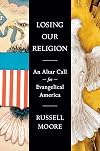
Summary: A call to repentance, to come to Jesus, for an evangelical church that has lost its credibility, authority, identity, integrity, and stability.
“The problem now is not that people think the church’s way of life is too demanding, too morally rigourous, but that they have come to think the church doesn’t believe its own moral teachings.”
RUSSELL MOORE, P. 44.
Russell Moore has experienced first hand shattering disillusionment with a church that no longer seems to believe its own show more message. He was at one time the president of the Ethics and Religious Liberty Commission (ERLC) of the Southern Baptist Convention. He is a popular author and has spoken trenchantly on the moral issues of the day, grounded in his belief in the authority of the Bible. That all changed when, seeing the immoral behavior of our former president in his candidacy, he refused to endorse him. Added to that, when an investigative report uncovered hundreds of cases of sexual abuse in his denomination, he advocated for the survivors of abuse when denominational leaders were stonewalling the issue. For the first offense, there was a popular backlash that included withholding of contributions. For the second, he was called on the carpet for being divisive and jeopardizing the support of church mission programs. He was attacked and demonized. At the end of his term as president of the ERLC, he resigned and joined a nondenominational congregation, leaving the body he had been a part of since he first walked down the aisle in response to an altar call.
Moore has wrestled with the parlous state of an American evangelicalism being abandoned by those who no longer think the church believes its own message, that has embraced political rather than spiritual power, that has justified the immoral for the end of “winning” a culture war, that has jettisoned a belief in truth, and turned to a nostalgic wish to return to some unspecified past greatness rather than to trust and walk with Christ into his future for his people. He sees the crumbling of such a “religion” to be a good thing. We ought to lose such a religion. Moore recurs to the practice of the altar call, a time of decision and turning from all these illusions and returning to our first love for Christ who alone can save us.
In five chapters, Moore outlines what he sees evangelicalism has lost. There is lost credibility, the growing gap between professed belief and actual behavior. There is lost authority as churches have embraced the tribal narratives of different political groups rather the truths they profess together in the creeds. There is a loss of identity in the embrace of a Christian nationalism of blood and soil rather than the multiethnic pilgrim exile community who follow Jesus. There is a loss of integrity in the acceptance of moral compromise to “win” battles–a far cry from Christian faithfulness that prioritizes trusting obedience over “results.” And we have lost the stability of nostalgia that fails to face the traumas we have endured in the recent past, where we end up repeating what has not been repaired.
Each chapter not only addresses the losses both of our failings and our crumbling illusions. Moore addresses how the faithful live when the ruins are falling. He urges us to embrace rather than resist disillusionment, to face rather than deny judgment. He calls us to tell the truth and avoid foolish controversies. A telling challenge for me was that he urges us to not “self-censor.” Most of extremist lies come from a very small but vigorous group who persuade truthtellers to go to ground. He urges us to refuse secularization and false framings of warfare that target people rather than spiritual powers. He urges the cultivation of intergenerational community. He challenges “whataboutism” that justifies immoral acts by the immorality of the “other” side, calling us to long-term integrity rather than short-term success. He movingly describes his growing friendship with Beth Moore, of whom he once spoke critically as he urges us to new communities and friendships with those whose gospel faithfulness transcends other differences.
As he concludes, he speaks of revival in very different terms. A reviving of American moral and religious greatness might actually be a bad thing without repentance and the hard work of the deep healing of our spiritual woundedness. Nostalgia seems so much safer and yet this is like going back to slavery in Egypt rather than following God in the uncertainties of the wilderness. His final words recur to his title: “Maybe only when we lose our religion will we be, once again, amazed by grace.”
This is both a hard and hopeful book. Moore unflinchingly names the failures of evangelicalism. He doesn’t offer any glowing promises but simply, for those who will hear, a call to press through our disillusionment to repentance, through our cynicism to belief in Christ, through our culture warring divisions to engaging local communities, and through the fog of a post-truth and post-morality world to integrity of belief and behavior. There are no promises here that these things will save evangelicalism or America. Rather, the only hope offered is that come what may, we will be saved, along with those drawn by gospel faithfulness. That is the hope we all find at the altar.
________________________________
Disclosure of Material Connection: I received a complimentary review copy of this book from the publisher. show less
“The problem now is not that people think the church’s way of life is too demanding, too morally rigourous, but that they have come to think the church doesn’t believe its own moral teachings.”
RUSSELL MOORE, P. 44.
Russell Moore has experienced first hand shattering disillusionment with a church that no longer seems to believe its own show more message. He was at one time the president of the Ethics and Religious Liberty Commission (ERLC) of the Southern Baptist Convention. He is a popular author and has spoken trenchantly on the moral issues of the day, grounded in his belief in the authority of the Bible. That all changed when, seeing the immoral behavior of our former president in his candidacy, he refused to endorse him. Added to that, when an investigative report uncovered hundreds of cases of sexual abuse in his denomination, he advocated for the survivors of abuse when denominational leaders were stonewalling the issue. For the first offense, there was a popular backlash that included withholding of contributions. For the second, he was called on the carpet for being divisive and jeopardizing the support of church mission programs. He was attacked and demonized. At the end of his term as president of the ERLC, he resigned and joined a nondenominational congregation, leaving the body he had been a part of since he first walked down the aisle in response to an altar call.
Moore has wrestled with the parlous state of an American evangelicalism being abandoned by those who no longer think the church believes its own message, that has embraced political rather than spiritual power, that has justified the immoral for the end of “winning” a culture war, that has jettisoned a belief in truth, and turned to a nostalgic wish to return to some unspecified past greatness rather than to trust and walk with Christ into his future for his people. He sees the crumbling of such a “religion” to be a good thing. We ought to lose such a religion. Moore recurs to the practice of the altar call, a time of decision and turning from all these illusions and returning to our first love for Christ who alone can save us.
In five chapters, Moore outlines what he sees evangelicalism has lost. There is lost credibility, the growing gap between professed belief and actual behavior. There is lost authority as churches have embraced the tribal narratives of different political groups rather the truths they profess together in the creeds. There is a loss of identity in the embrace of a Christian nationalism of blood and soil rather than the multiethnic pilgrim exile community who follow Jesus. There is a loss of integrity in the acceptance of moral compromise to “win” battles–a far cry from Christian faithfulness that prioritizes trusting obedience over “results.” And we have lost the stability of nostalgia that fails to face the traumas we have endured in the recent past, where we end up repeating what has not been repaired.
Each chapter not only addresses the losses both of our failings and our crumbling illusions. Moore addresses how the faithful live when the ruins are falling. He urges us to embrace rather than resist disillusionment, to face rather than deny judgment. He calls us to tell the truth and avoid foolish controversies. A telling challenge for me was that he urges us to not “self-censor.” Most of extremist lies come from a very small but vigorous group who persuade truthtellers to go to ground. He urges us to refuse secularization and false framings of warfare that target people rather than spiritual powers. He urges the cultivation of intergenerational community. He challenges “whataboutism” that justifies immoral acts by the immorality of the “other” side, calling us to long-term integrity rather than short-term success. He movingly describes his growing friendship with Beth Moore, of whom he once spoke critically as he urges us to new communities and friendships with those whose gospel faithfulness transcends other differences.
As he concludes, he speaks of revival in very different terms. A reviving of American moral and religious greatness might actually be a bad thing without repentance and the hard work of the deep healing of our spiritual woundedness. Nostalgia seems so much safer and yet this is like going back to slavery in Egypt rather than following God in the uncertainties of the wilderness. His final words recur to his title: “Maybe only when we lose our religion will we be, once again, amazed by grace.”
This is both a hard and hopeful book. Moore unflinchingly names the failures of evangelicalism. He doesn’t offer any glowing promises but simply, for those who will hear, a call to press through our disillusionment to repentance, through our cynicism to belief in Christ, through our culture warring divisions to engaging local communities, and through the fog of a post-truth and post-morality world to integrity of belief and behavior. There are no promises here that these things will save evangelicalism or America. Rather, the only hope offered is that come what may, we will be saved, along with those drawn by gospel faithfulness. That is the hope we all find at the altar.
________________________________
Disclosure of Material Connection: I received a complimentary review copy of this book from the publisher. show less
Welcome Back, Dr. Moore! For roughly a decade now, the once-phenomenal Dr. Russell Moore has been either a shill for SBC Leadership in his role as head of its Ethics and Religious Liberty Commission or embroiled in controversy over his rabid anti-Trumpism. Here, while not *completely* stepping back from either position, Moore does an excellent job of calling American Churchianity - not just the SBC, but *all* of American Churchianity - back to a focus on Christ, Him Crucified, and Spreading show more the Gospel. Full of Southern aphorisms that even this native Son of the South rarely heard in the exurbs of Atlanta, despite being barely a decade younger than Moore, this text also shows just how knowledgeable and insightful Moore at his best can show himself to be. And yes, while allowing that he is still wrong on a few positions (which I'm sure he and others would disagree with me over), this really is a return to the best of Moore, the Moore that made me at first *excited* that he was taking over the ERLC.
Indeed, the only reasons for the two star deductions are simple: the dearth of a bibliography - less than 10%! - when 20-30% is more normal, and even at least 20% is more normal *within this specific genre*, and the frequent use of "prooftexting", the practice of citing Bible verses outside of their context as "proof" of some point or another, which is a rampant problem in this genre in particular.
Still, if you're a Christian in America today... you need to read this book. If you're just interested in studying the decline of Christianity in America today and what could be done about it... you need to read this book. And if you're actively anti anything remotely Christian... maybe skip this one. ;) Still, that means that several million Americans... need to read this book. Very much recommended. show less
Indeed, the only reasons for the two star deductions are simple: the dearth of a bibliography - less than 10%! - when 20-30% is more normal, and even at least 20% is more normal *within this specific genre*, and the frequent use of "prooftexting", the practice of citing Bible verses outside of their context as "proof" of some point or another, which is a rampant problem in this genre in particular.
Still, if you're a Christian in America today... you need to read this book. If you're just interested in studying the decline of Christianity in America today and what could be done about it... you need to read this book. And if you're actively anti anything remotely Christian... maybe skip this one. ;) Still, that means that several million Americans... need to read this book. Very much recommended. show less
Russell Moore is the executive editor of the magazine Christianity Today, a minister, and was in a leadership role in the Southern Baptist Convention until he was pressured into leaving as a result of his refusal to endorse Donald Trump and his unwillingness to sweep under the rug the numerous allegations of sexual abuse within the Southern Baptists. Although he maintained his beliefs he said that he was losing his religion. This book explains what he means when he says Evangelists are show more losing their religion and explains why many people are leaving a church that seems to have turned its back on things that had made it Christian. His key message is that "only when something is lost can it be found."
His prose style is like drinking from a fire hose with extremely dense paragraphs. Those paragraphs have so many things worth noting that my Kindle copy now is filled with highlights. The book is not only valuable for Evangelists or Baptists, it is valuable for any church goer in America. Also, many of its lessons can be applied to non-religious situations as well.
The book is divided into sections describing what is being lost and why. The end of each section includes suggestions for compensating for these loses.
Losing our Credibility. The section begins with a reference to the R.E.M. song "Losing My Religion" that had been posted by a woman who said that she was not losing her faith but was afraid she was losing her church and did not believe that her church believed what her church had taught her.
Losing our Authority. This section talks about tribalism and includes statements like "we are called not just to argue about what is true, but to say things we know to be false, just to prove that we are part of the tribe to which we belong." He continues saying that "What a movement rooted in power instead of truth actually wants are people who are willing to accept seemingly crazy ideas .... and to change them at a moments notice." He then emphasizes the "the evangelical culture of the past half century has focused comparatively little on judgement for the hearer, and much more on a different kind of fear - the imminent threat from one's neighbors or culture."
Losing our Identity. This section is focused on culture war issues that consume the evangelical community at the expense of the more religious issues. He sees a worldwide trend evolving towards a "post-Christian right" where culture war issues supplant the religious ones with religious symbols used for "shoring up an ethnic or national identity."
Losing Our Integrity. In 2016, the author had published comments saying that "Trump was morally unfit for leadership." These comments resulted in furious responses from people who were willing toss aside moral judgements in order to support a member of the tribe. He later realized that this willingness to excuse moral failings started long before the 2016 election and could be found in the willingness of so many church leaders to excuse moral failings of all types in their leaders.
Losing our Stability. This section discusses the ideas of revival versus reformation to reset the moral compass of the church. He concludes by saying that American Christianity is in crises. The church is a scandal in all the worst ways. We bear responsibility for that." concluding that we need to "Make Evangelism Born Again." show less
His prose style is like drinking from a fire hose with extremely dense paragraphs. Those paragraphs have so many things worth noting that my Kindle copy now is filled with highlights. The book is not only valuable for Evangelists or Baptists, it is valuable for any church goer in America. Also, many of its lessons can be applied to non-religious situations as well.
The book is divided into sections describing what is being lost and why. The end of each section includes suggestions for compensating for these loses.
Losing our Credibility. The section begins with a reference to the R.E.M. song "Losing My Religion" that had been posted by a woman who said that she was not losing her faith but was afraid she was losing her church and did not believe that her church believed what her church had taught her.
Losing our Authority. This section talks about tribalism and includes statements like "we are called not just to argue about what is true, but to say things we know to be false, just to prove that we are part of the tribe to which we belong." He continues saying that "What a movement rooted in power instead of truth actually wants are people who are willing to accept seemingly crazy ideas .... and to change them at a moments notice." He then emphasizes the "the evangelical culture of the past half century has focused comparatively little on judgement for the hearer, and much more on a different kind of fear - the imminent threat from one's neighbors or culture."
Losing our Identity. This section is focused on culture war issues that consume the evangelical community at the expense of the more religious issues. He sees a worldwide trend evolving towards a "post-Christian right" where culture war issues supplant the religious ones with religious symbols used for "shoring up an ethnic or national identity."
Losing Our Integrity. In 2016, the author had published comments saying that "Trump was morally unfit for leadership." These comments resulted in furious responses from people who were willing toss aside moral judgements in order to support a member of the tribe. He later realized that this willingness to excuse moral failings started long before the 2016 election and could be found in the willingness of so many church leaders to excuse moral failings of all types in their leaders.
Losing our Stability. This section discusses the ideas of revival versus reformation to reset the moral compass of the church. He concludes by saying that American Christianity is in crises. The church is a scandal in all the worst ways. We bear responsibility for that." concluding that we need to "Make Evangelism Born Again." show less
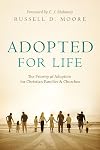
Few books have impacted me this year like Adopted For Life: The Priority of Adoption for Christian Families and Churches. Russell Moore writes in a clear, Gospel-centered manner. He elevates the issue of adoption above merely social concern and roots it is the very heart of the Gospel of Jesus Christ. Moore's transparency brings a gravity to his writing. The pain of infertility and the insensitivity of others are a few of the emotional valleys through which the author takes the reader. I show more HIGHLY recommend this book to every pastor and any person who wants to better understand what it means to be adopted into God's family.
"Our adoption is about more than just belonging. Our adoption is about the day when the graves of this planet will be emptied, when the great assembly of Christ's church will be gathered before the Judgment Seat. On that day, the accusing principalities and powers will probably look once more at us - former murderers and fornicators and idolaters, formerly uncircumcised in flesh and heart - and they may ask one more time, 'So are they brothers?' The hope of adopted children like my sons - and like me - is that the voice that once thundered over the Jordan will respond, one last time, 'They are now.'" (p. 57) show less
"Our adoption is about more than just belonging. Our adoption is about the day when the graves of this planet will be emptied, when the great assembly of Christ's church will be gathered before the Judgment Seat. On that day, the accusing principalities and powers will probably look once more at us - former murderers and fornicators and idolaters, formerly uncircumcised in flesh and heart - and they may ask one more time, 'So are they brothers?' The hope of adopted children like my sons - and like me - is that the voice that once thundered over the Jordan will respond, one last time, 'They are now.'" (p. 57) show less
Awards


You May Also Like


Associated Authors
Statistics
- Works
- 43
- Also by
- 1
- Members
- 4,432
- Popularity
- #5,651
- Rating
- 4.1
- Reviews
- 27
- ISBNs
- 74
- Languages
- 1
- Favorited
- 3
