
Forrest Aguirre
Author of Heraclix and Pomp: A Novel of the Fabricated and the Fey
About the Author
Series
Works by Forrest Aguirre
The Butterfly Artist 3 copies
The Shining Halls of Night 1 copy
Beyond the Silver Scream 1 copy
The Varvaros Ascensions 1 copy
Torn Pages 1 copy
Two Of Swords 1 copy
Stickmen 1 copy
Keys I Don't Remember 1 copy
Associated Works
Clockwork Phoenix 2: More Tales of Beauty and Strangeness (2009) — Contributor — 70 copies, 1 review
Tagged
Common Knowledge
- Canonical name
- Aguirre, Forrest
- Birthdate
- 1969-07-29
- Gender
- male
- Education
- Brigham Young University (BA|Humanities)
- Occupations
- editor
writer - Organizations
- The Church of Jesus Christ of Latter-day Saints
- Nationality
- USA
- Birthplace
- Wiesbaden, Hesse, West Germany
- Associated Place (for map)
- Wiesbaden, Hesse, West Germany
Members
Reviews
Beware the Death’s Head Fez in this is Weird, Mystery Adventure
In brief, Heraclix & Pomp is a fun, well-constructed fairy tale that will appeal to fans of historical and speculative fiction.
MYSTERY ADVENTURE: As the Book Summary indicates (copied below), Heraclix & Pomp tracks an undead man (recently raised) and a magical sprite as they hunt down a necromancer. The amnesiac, Frankenstein-like-golem ‘Heraclix’ rediscovers himself (and the history of his subparts which maintain their show more own volition) while the mischievous, chronologically-challenged fairy ‘Pomp’ learns human concepts. As the title suggests, this book is really about their plight, but they serve well as proxies for any introspective reader who questions “Who am I?” and “Where is my life going?” Don’t worry, the adventure is more comedic than philosophical. The unique duo navigates the Austrian & Ottoman Empires of 18th century Europe (with sorties into Hell); the below Dialogue Excerpt captures their collective voice.
With a story that hinges on two characters not knowing where they are going, or who they are, the reader should expect dealing with some uncertainty. There is also an implicit promise that Heraclix’s mysterious history will be explained, and it is. Whereas the dosing of information seemed spot on for the first half, the latter suffers from some disjointed/unexpected transitions and reveals. In all, Aguirre artfully unveils Heraclix’s past(s) well enough, even if his geographical trajectory cannot be predicted. The real strength of Aguirre’s writing is his weird style and eye for design:
WEIRD STYLE: Aguirre’s prose is steeped with entertaining weirdness (see Weird Excerpt), but could hardly be classified as horror despite the key word “necromancy” tagging it. As done for the novella Swans Over the Moon, Aguirre’s meticulous character design is again brilliant. Foremost, the appearance of the death's-head-Fez caps must be highlighted. The juxtaposition of skull-and-crossbones on the timely headpiece (popular in the 18th century) represents the necromancer, indeed the entire book, well. If this was a Sword & Sorcery tale, we’d expect to encounter a grimmer skull helmet akin to the head of Frazetta’s Deathdealer; but this book is more of historical fantasy that delivers weird myth under more inviting flare.
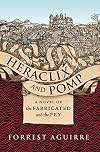
The elegant cover (credit artist Claudia Noble) and introductory quote from the esteemed alchemist Hermes Trismegistus, promise readers an intellectual narrative. My knowledge of history is terrible, so I undoubtedly missed many historical references, but the inclusions of real curiosities are enjoyable: for instance, the winged hussar cavalry units that appeared in angelic-costume on the battlefield make a cameo here. Historical and speculative fiction fans will enjoy this unique tale.
Weird Excerpt:
“Around, above, and through—yes, even through them—flowed a gathering of spectral beings, close to a hundred strong, their ecto-plasmic strands in tatters behind them as they floated up and down the stone stairway and the great, empty, circular shaft around which it spiraled. The specters were loathsome, every one of them crippled in some way. Many were missing limbs, several sported gunshot wounds, a few were altogether decapitated. But the mere sight of the apparitions, strangely, did little to affect Heraclix who was himself, after all, caught in some kind of state between life and death. Rather, it was the soft crying and plaintive weeping (of those who still had mouths, tongues, and heads with which to weep), the faintly echoed pleas that caused him to shiver…”
Dialogue Excerpt
“What do you see?” Pomp asks.
“The past. Or at least a part of it.”
“What is ‘past’?”
“It’s what happened before now.”
Pomp looks up at Heraclix with a skeptical squint.
“I met you in Mowler’s apartment. You came there in a jar. Before, you were free. And I have a hunch that I might have once been free.”
“But Mowler pushes you around.”
“That’s precisely it. What did I have to fear from him? I am physically superior to him in every way: stronger, faster. Yet I didn’t fight back.”
“You should.”
“But I didn’t. Something held me back.”
“What holds you back?”
“Guilt.”
“What is ‘guilt’?”
“’Guilt’ is feeling bad for something you’ve done.”
“Why do you have guilt?” Pomp asks.
“I don’t know, exactly. But I think it might have something to do with . . .” Heraclix stops.
“With what?”
“With whatever happened to me before I awoke in the cauldron of blood.”
Book Summary:
Heraclix was dead and Pomp was immortal. That was before Heraclix’s reanimation (along with the sewn-together pieces and parts of many other dead people) and Pomp’s near murder at the hands of an evil necromancer. As they travel from Vienna to Prague to Istanbul and back again (with a side-trip to Hell), they struggle to understand who and what they are: Heraclix seeks to know the life he had before his death and rebirth, and Pomp wrestles with the language and meaning of mortality. As they journey across a land rife with revolution and unrest, they discover that the evil necromancer they thought dead might not be so dead after all. In fact, he might be making a pact to ensure his own immortality . . . show less
In brief, Heraclix & Pomp is a fun, well-constructed fairy tale that will appeal to fans of historical and speculative fiction.
MYSTERY ADVENTURE: As the Book Summary indicates (copied below), Heraclix & Pomp tracks an undead man (recently raised) and a magical sprite as they hunt down a necromancer. The amnesiac, Frankenstein-like-golem ‘Heraclix’ rediscovers himself (and the history of his subparts which maintain their show more own volition) while the mischievous, chronologically-challenged fairy ‘Pomp’ learns human concepts. As the title suggests, this book is really about their plight, but they serve well as proxies for any introspective reader who questions “Who am I?” and “Where is my life going?” Don’t worry, the adventure is more comedic than philosophical. The unique duo navigates the Austrian & Ottoman Empires of 18th century Europe (with sorties into Hell); the below Dialogue Excerpt captures their collective voice.
With a story that hinges on two characters not knowing where they are going, or who they are, the reader should expect dealing with some uncertainty. There is also an implicit promise that Heraclix’s mysterious history will be explained, and it is. Whereas the dosing of information seemed spot on for the first half, the latter suffers from some disjointed/unexpected transitions and reveals. In all, Aguirre artfully unveils Heraclix’s past(s) well enough, even if his geographical trajectory cannot be predicted. The real strength of Aguirre’s writing is his weird style and eye for design:
WEIRD STYLE: Aguirre’s prose is steeped with entertaining weirdness (see Weird Excerpt), but could hardly be classified as horror despite the key word “necromancy” tagging it. As done for the novella Swans Over the Moon, Aguirre’s meticulous character design is again brilliant. Foremost, the appearance of the death's-head-Fez caps must be highlighted. The juxtaposition of skull-and-crossbones on the timely headpiece (popular in the 18th century) represents the necromancer, indeed the entire book, well. If this was a Sword & Sorcery tale, we’d expect to encounter a grimmer skull helmet akin to the head of Frazetta’s Deathdealer; but this book is more of historical fantasy that delivers weird myth under more inviting flare.
The elegant cover (credit artist Claudia Noble) and introductory quote from the esteemed alchemist Hermes Trismegistus, promise readers an intellectual narrative. My knowledge of history is terrible, so I undoubtedly missed many historical references, but the inclusions of real curiosities are enjoyable: for instance, the winged hussar cavalry units that appeared in angelic-costume on the battlefield make a cameo here. Historical and speculative fiction fans will enjoy this unique tale.
Weird Excerpt:
“Around, above, and through—yes, even through them—flowed a gathering of spectral beings, close to a hundred strong, their ecto-plasmic strands in tatters behind them as they floated up and down the stone stairway and the great, empty, circular shaft around which it spiraled. The specters were loathsome, every one of them crippled in some way. Many were missing limbs, several sported gunshot wounds, a few were altogether decapitated. But the mere sight of the apparitions, strangely, did little to affect Heraclix who was himself, after all, caught in some kind of state between life and death. Rather, it was the soft crying and plaintive weeping (of those who still had mouths, tongues, and heads with which to weep), the faintly echoed pleas that caused him to shiver…”
Dialogue Excerpt
“What do you see?” Pomp asks.
“The past. Or at least a part of it.”
“What is ‘past’?”
“It’s what happened before now.”
Pomp looks up at Heraclix with a skeptical squint.
“I met you in Mowler’s apartment. You came there in a jar. Before, you were free. And I have a hunch that I might have once been free.”
“But Mowler pushes you around.”
“That’s precisely it. What did I have to fear from him? I am physically superior to him in every way: stronger, faster. Yet I didn’t fight back.”
“You should.”
“But I didn’t. Something held me back.”
“What holds you back?”
“Guilt.”
“What is ‘guilt’?”
“’Guilt’ is feeling bad for something you’ve done.”
“Why do you have guilt?” Pomp asks.
“I don’t know, exactly. But I think it might have something to do with . . .” Heraclix stops.
“With what?”
“With whatever happened to me before I awoke in the cauldron of blood.”
Book Summary:
Heraclix was dead and Pomp was immortal. That was before Heraclix’s reanimation (along with the sewn-together pieces and parts of many other dead people) and Pomp’s near murder at the hands of an evil necromancer. As they travel from Vienna to Prague to Istanbul and back again (with a side-trip to Hell), they struggle to understand who and what they are: Heraclix seeks to know the life he had before his death and rebirth, and Pomp wrestles with the language and meaning of mortality. As they journey across a land rife with revolution and unrest, they discover that the evil necromancer they thought dead might not be so dead after all. In fact, he might be making a pact to ensure his own immortality . . . show less
Intellectual, weird fiction for Fantasy readers; 5 stars
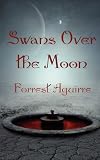
Summary (from Smashwords): “Judicar Parmour Pelevin rules the ancient kingdom of Procellarium on an environmentally decimated desert moon of a blue world. His stubborn insistence on establishing order, in the name of upholding ancient tradition, sets his own family’s swords against him. But is tradition strong enough to contain the chaos that erupts all around him and throughout his kingdom?”
“Tradition demands, the Doom of show more Change be spoken, Else that stands shall fall…” – from The Doom of Change rite (from Swans Over the Moon)
Conflict and Design: Initially the ruler Judicar is embroiled in a “man vs alien conflict”, being pitted against a rebellious daughter and the aliens that she sympathizes with and leads. But the conflict is much deeper than simple “us vs. them.” The deadly struggle between “old-world vs. new-age” dominates since it permeates throughout the character design (i.e. the two-headed counselor Heterodymus sporting one baby-faced head and one lich-like), the lunar milieu (the vividly different cultures of the chaotic Euler district vs. the lawful Procellarium), and the haunts of our protagonist Judicar (the “Doom of Change” rite and the laws of Procellarium are intimately connected to the deaths in his family).
Style: Aguirre writes with an entertaining, heavy narrative that reads like Shakespeare. Aguirre is a World Fantasy Award winner for his editorial work, with Jeff VanderMeer, on the Leviathan 3 anthology; with “Swans” he demonstrates his command for storytelling in addition to his command over language. Expect: (1) haunting descriptions, (2) brutal action, and (3) a touch of dark humor. His prose is best represented with excerpts:
1)Haunting Descriptions: “She entered the room, gliding over the floor as if the ground itself retreated from her touch in recognition of her standing as the Judicar's daughter. Her waist-length ghost-white hair flowed only slightly behind her crimson robes. Above her floated two apparitions – Tarans, those wispy souls of un-baptized infants that are often seen flitting about in cemeteries or dark woods, bewailing in mewing voices their terrible fates. But these two were quite contented, continually re-arranging a series of red silk scarves around the maiden's head, shoulders, waist, and arms. She simultaneously swelled and retreated, like a beating heart, as she approached.”
2) Brutal Action: “His blunderbuss pistol discharged point blank into the Scaramouche's face, spattering mask, bone, and flesh in a mist of gore that coated his lap and right leg. He drew his rapier, slowly circling his horse to get a clear view of his surroundings above the fray, but the tourbillon was too great. He soon found himself in the midst of the enemy, completely surrounded.. His horse buckled beneath him, its armor punctured by dozens of enemy bayonets.”
3) Dark Humor: “Their ignominious departure from Euler was the antithesis of their stately arrival. The Judicar and Heterodymus left without an escort to find their carriage besotted with feces, rotting eggs, and vegetables. They gathered their drunken pygmies, some by the nape of the neck, and hitched them to their posts. When the Judicar opened the door to the carriage, the severed head of his deputy rolled out.”
Highly recommended:“Swans” will appeal directly with fans of contemporary weird authors: Phillip K. Dick, M. John Harrison, and Jeff VanderMeer. Also, fans of weird pulp/fantasy fiction Clark Ashton Smith, Darrell Schweitzer will devour this. However, ANY reader looking for intellectual escapism should read this. show less
Summary (from Smashwords): “Judicar Parmour Pelevin rules the ancient kingdom of Procellarium on an environmentally decimated desert moon of a blue world. His stubborn insistence on establishing order, in the name of upholding ancient tradition, sets his own family’s swords against him. But is tradition strong enough to contain the chaos that erupts all around him and throughout his kingdom?”
“Tradition demands, the Doom of show more Change be spoken, Else that stands shall fall…” – from The Doom of Change rite (from Swans Over the Moon)
Conflict and Design: Initially the ruler Judicar is embroiled in a “man vs alien conflict”, being pitted against a rebellious daughter and the aliens that she sympathizes with and leads. But the conflict is much deeper than simple “us vs. them.” The deadly struggle between “old-world vs. new-age” dominates since it permeates throughout the character design (i.e. the two-headed counselor Heterodymus sporting one baby-faced head and one lich-like), the lunar milieu (the vividly different cultures of the chaotic Euler district vs. the lawful Procellarium), and the haunts of our protagonist Judicar (the “Doom of Change” rite and the laws of Procellarium are intimately connected to the deaths in his family).
Style: Aguirre writes with an entertaining, heavy narrative that reads like Shakespeare. Aguirre is a World Fantasy Award winner for his editorial work, with Jeff VanderMeer, on the Leviathan 3 anthology; with “Swans” he demonstrates his command for storytelling in addition to his command over language. Expect: (1) haunting descriptions, (2) brutal action, and (3) a touch of dark humor. His prose is best represented with excerpts:
1)Haunting Descriptions: “She entered the room, gliding over the floor as if the ground itself retreated from her touch in recognition of her standing as the Judicar's daughter. Her waist-length ghost-white hair flowed only slightly behind her crimson robes. Above her floated two apparitions – Tarans, those wispy souls of un-baptized infants that are often seen flitting about in cemeteries or dark woods, bewailing in mewing voices their terrible fates. But these two were quite contented, continually re-arranging a series of red silk scarves around the maiden's head, shoulders, waist, and arms. She simultaneously swelled and retreated, like a beating heart, as she approached.”
2) Brutal Action: “His blunderbuss pistol discharged point blank into the Scaramouche's face, spattering mask, bone, and flesh in a mist of gore that coated his lap and right leg. He drew his rapier, slowly circling his horse to get a clear view of his surroundings above the fray, but the tourbillon was too great. He soon found himself in the midst of the enemy, completely surrounded.. His horse buckled beneath him, its armor punctured by dozens of enemy bayonets.”
3) Dark Humor: “Their ignominious departure from Euler was the antithesis of their stately arrival. The Judicar and Heterodymus left without an escort to find their carriage besotted with feces, rotting eggs, and vegetables. They gathered their drunken pygmies, some by the nape of the neck, and hitched them to their posts. When the Judicar opened the door to the carriage, the severed head of his deputy rolled out.”
Highly recommended:“Swans” will appeal directly with fans of contemporary weird authors: Phillip K. Dick, M. John Harrison, and Jeff VanderMeer. Also, fans of weird pulp/fantasy fiction Clark Ashton Smith, Darrell Schweitzer will devour this. However, ANY reader looking for intellectual escapism should read this. show less
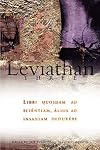
This was book 3 of the Leviathan series. The Leviathan series is an anthology series that's won a decent amount of critical acclaim. Each book in the series picks a theme; in Leviathan Three's case, libraries. Not every story has to do with the central theme; rather, it's used more as loose framework. The Leviathan series has really made me appreciate good editors. VanderMeer and Aguirre pick stories the same way one picks songs when making an interesting mixed tape. They're looking for an show more overall effect of tone and atmosphere. Stories, that when placed together, create a certain feel or aesthetic. They picked stories from all over the place -- across genre, style, and time. One story could be an odd story written last year in a post-modern style and the next a tale was written 150 years ago in the Romantic tradition, yet somehow the transition is smooth. This also makes one realize how some human desires and motivations are truly timeless. The book features contemporary writers in fantasy, avant-gardists, 19th century French poets, as well as some tales of horror and humor. One tale, "The Noble Library" by Zoran Zivkovic was hysterical. The whole story was a long rant about how much the protagonist hated paperback books! A man of my own heart. To quote Zivkovic,
"I've always felt the greatest possible distain for paperback books. They are the ultimate profanation of an ideal that must remain exalted and noble at any cost. Only the ignorant and uninformed claim that a book should not be judged by its cover. Packaging must mirror the contents. Would you wrap a luxury item in old newspapers, for example?"
I really enjoyed the overall effect VanderMeer and Aguirre created by assembling such an unlikely collection of voices -- odd bedfellows, if you will. I haven't run across a similar editing style before. I'm really looking forward to Leviathan Four. Its theme: Cities. show less
"I've always felt the greatest possible distain for paperback books. They are the ultimate profanation of an ideal that must remain exalted and noble at any cost. Only the ignorant and uninformed claim that a book should not be judged by its cover. Packaging must mirror the contents. Would you wrap a luxury item in old newspapers, for example?"
I really enjoyed the overall effect VanderMeer and Aguirre created by assembling such an unlikely collection of voices -- odd bedfellows, if you will. I haven't run across a similar editing style before. I'm really looking forward to Leviathan Four. Its theme: Cities. show less
This is a solicited ARC that I agreed, with much anticipation, to read and fairly review. Full disclosure thingy you know. Now that all the ethical things are out of the way.
Get ready for a wild ride through the Holy Roman and Ottoman empires as Heraclix, a sort of Frankenstein's monster, and his unlikely companion, the fairy Pomp, try to find where Heraclix came from and what he was before he was sewn together by the sorcerer Mowler.
But Mowler wants to rule Hell since he figures he's show more already damned, why not at least be #1 in Hell and while he's at it why not take everyone else with him so he can be top dog of everyone. To do this he needs the Ottoman Turks to attack the Holy Roman empire. This background is what Heraclix and fey Pomp have to deal with as they try to get to Istanbul to find out Heraclix's origins and along the way Pomp learns what it means to be non-fairy, if that makes any sense.
Uncategorizable comes to mind. Is it historical fiction? Is it fantasy? Is it horror? The plot rolls from historical fact to to fantasy to pure horror at times and you never know how the various threads are going to come back together again especially after Pomp and Heraclix are separated. The plot seems random at times but just hold on, it's all making sense soon.
It is helpful to know what the Holy Roman and Ottoman empires were, and a little bit about eastern European geography. A little effort makes the ride a bit more enjoyable. show less
Get ready for a wild ride through the Holy Roman and Ottoman empires as Heraclix, a sort of Frankenstein's monster, and his unlikely companion, the fairy Pomp, try to find where Heraclix came from and what he was before he was sewn together by the sorcerer Mowler.
But Mowler wants to rule Hell since he figures he's show more already damned, why not at least be #1 in Hell and while he's at it why not take everyone else with him so he can be top dog of everyone. To do this he needs the Ottoman Turks to attack the Holy Roman empire. This background is what Heraclix and fey Pomp have to deal with as they try to get to Istanbul to find out Heraclix's origins and along the way Pomp learns what it means to be non-fairy, if that makes any sense.
Uncategorizable comes to mind. Is it historical fiction? Is it fantasy? Is it horror? The plot rolls from historical fact to to fantasy to pure horror at times and you never know how the various threads are going to come back together again especially after Pomp and Heraclix are separated. The plot seems random at times but just hold on, it's all making sense soon.
It is helpful to know what the Holy Roman and Ottoman empires were, and a little bit about eastern European geography. A little effort makes the ride a bit more enjoyable. show less
Awards


You May Also Like


Associated Authors
Statistics
- Works
- 22
- Also by
- 8
- Members
- 260
- Popularity
- #88,385
- Rating
- 3.6
- Reviews
- 9
- ISBNs
- 15