
Maryann Cocca-Leffler
Author of Let It Fall
About the Author
Image credit: Maryann Cocca-Leffler
Series
Works by Maryann Cocca-Leffler
Fighting for Yes! The Story of Disability Rights Activist Judith Heumann (2022) 70 copies, 4 reviews
How Big Is Baby Now?: A New Baby Gift Book for Big Brothers and Big Sisters (Baby Shower Gift) (2020) 8 copies
Sopa de coragem 1 copy
Llego el otono 1 copy
Baby's Things (Reading Ring) 1 copy
Está Quase! 1 copy
Oh, So Silly! 1 copy
Baby's Words (Reading Ring) 1 copy
The Tug 1 copy
Associated Works
Tagged
Common Knowledge
- Canonical name
- Cocca-Leffler, Maryann
- Birthdate
- 20th century
- Gender
- female
- Education
- Massachusetts College of Art (BFA)
- Occupations
- illustrator
- Organizations
- Authors' Guild
Dramatists' Guild
Society of Children's Book Authors and Illustrators - Awards and honors
- Young Hoosiers Award 2003
- Nationality
- USA
- Places of residence
- Massachusetts, USA
New Hampshire, USA - Associated Place (for map)
- USA
Members
Reviews
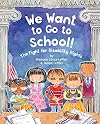
Co-author Leffler, who has cerebral palsy, explains how children with disabilities won the right to attend public school.
At age 3, Leffler entered public school, where—like “other kids with disabilities all around America”—she learned and played “side by side” with her friends. But, she learned, “it hadn’t always been that way.” In the early 1970s, public schools “said NO to millions of children who wanted to go to school”; disabled children were segregated in special show more schools, attended inferior classes, or simply stayed home. In an eye-opening double-page spread packed with racially diverse, cartoon-style children, a child notes, “There’s about 1,000 kids on this page”—a fraction of the 8 million disabled children across the United States being denied an education. Drawing on the 1954 Brown v. Board of Education case banning racial school segregation, the determined parents of seven children with disabilities—all of whom present as kids of color—filed a class-action lawsuit: Mills v. Board of Education of the District of Columbia. Speech-balloon dialogue presents parents’ pleas, school authorities’ opposition, and lawyers’ arguments. Finally, on Aug. 1,1972, Judge Joseph C. Waddy ruled that “children with disabilities must be given a free public education,” spurring similar federal court cases. Illustrator and co-author Cocca-Leffler warmly depicts figures with an array of skin tones; some children are blind, and some use wheelchairs. Leffler presents White.
An accessible introduction to a little-known but life-changing victory for disabled children. (note, timeline, authors' note, attorney's note, sources) (Informational picture book. 5-8)
-Kirkus Review show less
At age 3, Leffler entered public school, where—like “other kids with disabilities all around America”—she learned and played “side by side” with her friends. But, she learned, “it hadn’t always been that way.” In the early 1970s, public schools “said NO to millions of children who wanted to go to school”; disabled children were segregated in special show more schools, attended inferior classes, or simply stayed home. In an eye-opening double-page spread packed with racially diverse, cartoon-style children, a child notes, “There’s about 1,000 kids on this page”—a fraction of the 8 million disabled children across the United States being denied an education. Drawing on the 1954 Brown v. Board of Education case banning racial school segregation, the determined parents of seven children with disabilities—all of whom present as kids of color—filed a class-action lawsuit: Mills v. Board of Education of the District of Columbia. Speech-balloon dialogue presents parents’ pleas, school authorities’ opposition, and lawyers’ arguments. Finally, on Aug. 1,1972, Judge Joseph C. Waddy ruled that “children with disabilities must be given a free public education,” spurring similar federal court cases. Illustrator and co-author Cocca-Leffler warmly depicts figures with an array of skin tones; some children are blind, and some use wheelchairs. Leffler presents White.
An accessible introduction to a little-known but life-changing victory for disabled children. (note, timeline, authors' note, attorney's note, sources) (Informational picture book. 5-8)
-Kirkus Review show less
This book has a great representation of the history of disabilities in a public school setting and how discrimination against children with disabilities affects the children and their families. They all come together and fight for equal education for all students and win the fight.
Grade: Intermediate (3rd-4th)
I enjoyed how inclusive this book was and how it showed the empowerment of the community among families and children. This was a great way to include the history of disabilities in show more education and how children felt throughout the process. show less
Grade: Intermediate (3rd-4th)
I enjoyed how inclusive this book was and how it showed the empowerment of the community among families and children. This was a great way to include the history of disabilities in show more education and how children felt throughout the process. show less
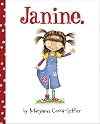
Janine is a story about a girl who is seen as an outcast by one group of kids at school, while another group of kids think she's pretty great. Although not explicitly stated, in the back of the book it states that Janine (this story is based off of the author's daughter) has NLD, CP, and CVI.
I liked how in this story, Janine embraces who she was, and although the other character shut Janine down, there was never a moment where Janine questioned who she was. I loved that positivity that show more Janine expressed, and many can learn from this. show less
I liked how in this story, Janine embraces who she was, and although the other character shut Janine down, there was never a moment where Janine questioned who she was. I loved that positivity that show more Janine expressed, and many can learn from this. show less
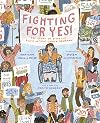
This is an engaging and fascinating picture book biography about Judith Heumann, one of the activists who worked for Section 504's ratification. It begins with her childhood experiences as a wheelchair user who was barred access from nearly every experience the other neighborhood children were able to have--including going to school. The discrimination she faced from public and religious officials was eye-opening. She was even denied a teaching license after completing the certification show more program due solely to her use of a wheelchair. While this is a long read, it portrays the need for ADA accessibility in a personal and empathetic way, as well as covering the long battle for section 504 and the way different communities came together for protest and support. I will be adding this to my Civil Rights legislation unit for fifth graders. show less
Lists
Awards


You May Also Like


Associated Authors
Statistics
- Works
- 69
- Also by
- 11
- Members
- 7,781
- Popularity
- #3,133
- Rating
- 3.9
- Reviews
- 136
- ISBNs
- 213
- Languages
- 6