
Filip Florian
Author of Little Fingers
About the Author
Works by Filip Florian
Toate bufnițele 1 copy
Tagged
Common Knowledge
Members
Reviews
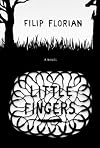
This is one of the most confusing books I've ever read. It is also one of the best. My head is still spinning from the extraordinarily long paragraphs (some as long as 10 pages) and I think I understand "what happened' in the end. The story is about a town where a mass grave of bodies is discovered. Various personalities have theories about the who, when, and why of all these bodies, but it isn't until a team of Argentinian soccer players shows up (and they are an entire sub-story) that the show more story seems to resolve itself.
The characters--their stories and conversations--are the strength of the book. I felt at times that Robin Williams had invaded James Joyce's brain...the stream of conscious, free wheeling, long, long sentences with lots of paragraphs, left me breathless.
There is the young anthropologist Petrus, his slightly nutty Auntie Paulina, her daughter Jo-Jo (she whose anatomy always brought to his mind various ripe fruits; there's the Orthodox monk with the hair that had to be trimmed every 8 hours and the visions of the Holy Mother telling him what to do, who transcribes the Bible on birch bark, and hears confession via hidden letters left in a rose bush; there's the police chief with the missing little finger, the photographer with his camel Alladin, the aforementioned soccer team, and the list goes on.
There is no way to describe the plot. The book is a free fall of ideas about the mystery of the mass grave. It's an easy read if you sit down and stay with it, but it is also a hard read. One well worth undertaking.
Last note: The translator Alistair Ian Blyth did a masterful job. show less
The characters--their stories and conversations--are the strength of the book. I felt at times that Robin Williams had invaded James Joyce's brain...the stream of conscious, free wheeling, long, long sentences with lots of paragraphs, left me breathless.
There is the young anthropologist Petrus, his slightly nutty Auntie Paulina, her daughter Jo-Jo (she whose anatomy always brought to his mind various ripe fruits; there's the Orthodox monk with the hair that had to be trimmed every 8 hours and the visions of the Holy Mother telling him what to do, who transcribes the Bible on birch bark, and hears confession via hidden letters left in a rose bush; there's the police chief with the missing little finger, the photographer with his camel Alladin, the aforementioned soccer team, and the list goes on.
There is no way to describe the plot. The book is a free fall of ideas about the mystery of the mass grave. It's an easy read if you sit down and stay with it, but it is also a hard read. One well worth undertaking.
Last note: The translator Alistair Ian Blyth did a masterful job. show less
"Little Fingers" is not an easy read; its short 200 pages belies the effort that is required to follow the multiple characters and themes in the novel. The plot structure is not logical and organized, but is more free-flowing, sometimes back and forth in time, and between different characters. There are elements of magical realism in the novel.
The author deals with his subject matter, the discovery of hundreds of bones at a construction site and the investigation that is triggered, with show more graceful prose and even touches of charming, well-placed humor. The novel addresses humanity's need for justice, for restitution, and for explanations of atrocities that are too horrific to be explained. As several archaeologists arrive from Argentina to further investigate the remains, the story of that country's "desaparecidos" is juxtaposed against the horrors of torture under the Communist regime in Romania. There are no neat answers, no final resolutions. This is a book that will unsettle you, and make you think and wonder. This would be a great book for a book club discussion. It takes effort to read this novel, but the effort, for this reader, paid off in spades. show less
The author deals with his subject matter, the discovery of hundreds of bones at a construction site and the investigation that is triggered, with show more graceful prose and even touches of charming, well-placed humor. The novel addresses humanity's need for justice, for restitution, and for explanations of atrocities that are too horrific to be explained. As several archaeologists arrive from Argentina to further investigate the remains, the story of that country's "desaparecidos" is juxtaposed against the horrors of torture under the Communist regime in Romania. There are no neat answers, no final resolutions. This is a book that will unsettle you, and make you think and wonder. This would be a great book for a book club discussion. It takes effort to read this novel, but the effort, for this reader, paid off in spades. show less
The discovery of a mass grave filled with human skeletons in a small Romanian town is the animating event behind Little Fingers, Filip Florian's first novel and also his first work available in English. Is the grave evidence of a brutal genocide carried out by the former regime, or is it nothing more than a centuries-old collection of plague victims? This mystery serves as a rather feeble framing device and is quickly overshadowed by this novel's riotous and quirky assortment of stories and show more characters. There's a photographer with a camel, an aunt with prophetic dreams, a monk with hair that grows eight inches every four hours, an old man who fishes for pigeons from the top of a tower, Bolivian musicians, Roman ruins, Argentinean archeologists, and much more—all in about 200 pages. Little Fingers is messy and filled with loose ends, but it's also wonderfully imaginative. Ultimately, Little Fingers makes the point that we see only what we want to see, conforming our realties to our imaginations.
Florian's playful prose is masterfully translated by Alistair Ian Blyth, providing the perfect accompaniment to these inventive stories. This description of the mellowing effect of aging illustrates Florian's eclectic style:
"The little girl no longer chases after lambs, not because she is not in good physical shape—she is, she does aerobics a number of times a week—but the little girl has known too much: love, mathematics, Easter lamb pudding, high and flat heels, the throes of labor, driving, divorce."
In many cases, such as in this description of the villagers' first impression of the team of Argentinean archeologists, Florian makes good use of humor:
"Four of the Argentineans were wearing jeans and a fifth Bermuda shorts, the T-shirt of one had sleeves shredded with a pair of scissors, the vest of another was imprinted with the face of the Pope, at the throat of the tallest swung a crucifix as big as a communion-wafer stamp. In short, they looked different from the way men of science usually appear in the popular imagination and were younger than they ought to have been."
If you embrace whimsy and disorder, you'll love Little Fingers, but if you prefer a coherent plot and an organized structure, look elsewhere.
This review also appears on my literary blog Literary License. show less
Florian's playful prose is masterfully translated by Alistair Ian Blyth, providing the perfect accompaniment to these inventive stories. This description of the mellowing effect of aging illustrates Florian's eclectic style:
"The little girl no longer chases after lambs, not because she is not in good physical shape—she is, she does aerobics a number of times a week—but the little girl has known too much: love, mathematics, Easter lamb pudding, high and flat heels, the throes of labor, driving, divorce."
In many cases, such as in this description of the villagers' first impression of the team of Argentinean archeologists, Florian makes good use of humor:
"Four of the Argentineans were wearing jeans and a fifth Bermuda shorts, the T-shirt of one had sleeves shredded with a pair of scissors, the vest of another was imprinted with the face of the Pope, at the throat of the tallest swung a crucifix as big as a communion-wafer stamp. In short, they looked different from the way men of science usually appear in the popular imagination and were younger than they ought to have been."
If you embrace whimsy and disorder, you'll love Little Fingers, but if you prefer a coherent plot and an organized structure, look elsewhere.
This review also appears on my literary blog Literary License. show less
The hot new novel from Romania is based on the premise of excavations of a Roman fort in a small town unearth a mass grave. It is immediately rumored and believed that the bones belong to people executed by the communist regime in the 1950's and the situation denigrates into a morbid and sensationalist media circus.
Florian builds around this premise a series of biographies and set pieces. Multiple voices speak that tell stories often tangentially related to the main story. There's Petrus the show more archaeologist who spends a lot of time listening to the stories, dreams, and prognostications of the elderly women of town. There's the priest who waits on the next apparition of the Virgin. There's the lone partisan, survivor of the communist era. Then there are the Argentinians, experts in political murders, who fly in to examine the grave.
I'd admit this is not a straightforward nor easy to read novel. Still I enjoyed the humor and the writing of Florian (as translated by Alastair Ian Blyth) which is both poetic in the dreamy sections and poetic in the many portions that describe and list ordinary objects. Florian is an interesting voice and addition to my Around the World For A Good Book project. show less
Florian builds around this premise a series of biographies and set pieces. Multiple voices speak that tell stories often tangentially related to the main story. There's Petrus the show more archaeologist who spends a lot of time listening to the stories, dreams, and prognostications of the elderly women of town. There's the priest who waits on the next apparition of the Virgin. There's the lone partisan, survivor of the communist era. Then there are the Argentinians, experts in political murders, who fly in to examine the grave.
I'd admit this is not a straightforward nor easy to read novel. Still I enjoyed the humor and the writing of Florian (as translated by Alastair Ian Blyth) which is both poetic in the dreamy sections and poetic in the many portions that describe and list ordinary objects. Florian is an interesting voice and addition to my Around the World For A Good Book project. show less
Awards

You May Also Like
Associated Authors
Statistics
- Works
- 9
- Members
- 124
- Popularity
- #161,164
- Rating
- 3.2
- Reviews
- 7
- ISBNs
- 19
- Languages
- 5