
A. J. Cronin (1896–1981)
Author of The Citadel
About the Author
A.J. (Archibald Joseph) Cronin was born in Cardross, Scotland on July 19, 1896. He was educated at the University of Glasgow Medical School and served as a surgeon in the Royal Navy during World War I. After the war, he investigated occupational diseases in the coal industry and worked as a general show more practitioner in Wales and London. His first novel, Hatter's Castle, written in 1931, was an immediate success, and Cronin gave up the practice of medicine to become a full-time author. Hatter's Castle was adapted into a film in 1941. His other works include Shannon's Way, The Judas Tree, A Song of Sixpence, and A Thing of Beauty. He drew on his medical background in writing his books, and his most popular character was Doctor Finlay, which provided the background for the television series, Doctor Finlay's Casebook. Many of his books were made into films including The Stars Look Down, The Citadel, The Keys of the Kingdom, and The Green Years. He died on January 6, 1981. (Bowker Author Biography) show less
Image credit: Courtesy of the NYPL Digital Gallery (image use requires permission from the New York Public Library)
Series
Works by A. J. Cronin
The Citadel (Penguin ELT Simplified Readers: Level 5: Upper-Intermediate) (1987) 45 copies, 1 review
Hatter's Castle / Kaleidoscope in "K" / The Citadel / Lady with Carnations / Adventures of a Black Bag / Jupiter Laughs 6 copies, 1 review
Obras Completas : Novelas . 4 4 copies
A.J. Cronin Bestsellers: The Citadel, The Stars Look Down, and The Keys of the Kingdom (2020) 3 copies
Doktor Finlay kommer tillbaka 2 copies
Vigil in the Night / Jupiter Laughs 2 copies
The Green Years / Beyond This Place 2 copies
Замок Броуди Роман 2 copies
Three Loves, Part 1 2 copies
Doktor Carrolls dilemma 1 copy
Lekar na San Felipe 1 copy
Cô Gái Và Hoa Cẩm Chướng 1 copy
An Irish Rose 1 copy
La Dame Aux Oeillets 1 copy
L' Epée De Justice 1 copy
La Lumière Du Nord 1 copy
Three Stories: Mascot for Uncle, Child of Compassion, The Man Who Couldn't Spend Money (1938) 1 copy
Il giardiniere spagnolo 1 copy
O farol do Norte 1 copy
LA CIIUDADELA 1 copy
Un bolsillo lleno de vodka 1 copy
Le jardinier espagnol 1 copy
El joven trovador 1 copy
Spanish Gardener 1 copy
Le Chapelier Et Son Château 1 copy
Sous Le Regard Des Etoiles 1 copy
Les Années Vertes 1 copy
Les Années D' Illusions 1 copy
The green years 1 copy
Très Amores 1 copy
Three Loves, Part 2 1 copy
VIAJE DECISIVO. 1 copy
En läkares kamp : roman 1 copy
Woman of the Earth 1 copy
La Antorcha Eterna 1 copy
Novelettes and Short Stories 1 copy
The citadel. Episode 52 1 copy
Viviamo ancora. 1 copy
Yeşil Yıllar 1 copy
El Castillo de Odio 1 copy
Shannons vg̃ 1 copy
A Figueira de Judas 1 copy
Kaleidoskop in "K" - bk1347 1 copy
Dama sa karanfilima 1 copy
Příhody z černého kufříku 1 copy
Τα κλειδιά της Βασιλείας 1 copy
Algemas Perdidas 1 copy
LE CHAPELIER ET SON CHAPEAU 1 copy
A missão do Dr. Murray 1 copy
Traumkinder. 1 copy
DOKTOR MURRAYS AUFTRAG 1 copy
The Quest of the Legend 1 copy
LES ANNEES D'ILLUSION 1 copy
ETRANGERS DU PARADIS 1 copy
LES VERTES ANNEES 1 copy
Associated Works
Reader's Digest Condensed Books 1982 v03: The Man from St. Petersburg / Pioneer Women: Voices from the Kansas Frontier / No Escape / The Citadel (1982) — Author — 34 copies
Reader's Digest Condensed Books 1961 v04: Ring of Bright Water / The Judas Tree / The Edge of Sadness / A Fall of Moondust / A Christmas Carol / Summer of Pride (1961) — Author — 22 copies
Reader's Digest Best Sellers 1965: Captain Newman, M.D. | When the Cheering Stopped | Spy Who Came in From the Cold | Song of Sixpence (1965) — Author — 13 copies
My Most Inspiring Moment: Encounters with Destiny Relived by Thirty-Eight Best-Selling Authors (1965) 12 copies
Adventures in Two Worlds / The Bridges at Toko-ri / Kiss Me Again, Stranger / Rivets / The Silent World / Story of Aviation / The Swimming Pool / 7 Short Stories of De Maupassant (1953) — Contributor — 12 copies
Reader's Digest Condensed Books: The Sound of Wings • The Suitcases • The Keys of the Kingdom • Callanish (1984) — Author — 4 copies
Reader's Digest Condensed Books: Women and Thomas Harrow, The Northern Light, In My Father's House, Cone of Silence (1955) — Contributor — 3 copies
Best-in-Books: Beyond This Place / Gallant Mrs. Stonewall / U.S.A. in Color / Life at Happy Knoll / Land of Stones and Saints / Dreamers of the American Dream (1957) — Contributor — 3 copies
Reader's Digest Condensed Books. A Song Of Sixpence, Taxi To Tobruk, Strangers On A Bridge, Varda: The Flight Of A Falcon, ...And Presumed Dead (1961) — Contributor — 3 copies
Reader's Digest Condensed Books: Run Silent, Run Deep / The Dollmaker / Crusader's Tomb / Hunter / Mischief (1955) — Contributor — 2 copies
Reader's Digest Condensed Books: Adventures In Two Worlds • The Bridges At Toko-Ri • Old Herbaceous • Operation Cicero • Digby (1954) 2 copies
Kirjavaliot - Perintö (Straight ∙ Monkeys on the Interstate ∙ The Keys of the Kingdom ∙ Coyote Waits) (1991) 2 copies
Reader's Digest Condensed Books: The Whispering Land / The Tuntsa / The Judas Tree / Fate is the Hunter / Evil Come, Evil Go (1961) — Contributor — 2 copies
Om weer te leven; De laatste reis van de Andrea Doria; Vaarwel, lady; Komplot in Tokio 2 copies, 1 review
Reader's Digest Condensed Books: Man, Woman and Child • Ice Brothers • The Citadel • Sadie Shapiro Matchmaker (1981) 1 copy
Reader's Digest Condensed Books: The Three Faces of Eve • Sharks and Little Fish • Beyond This Place • Call Me Lucky • The Green Helmet (1953) — Author — 1 copy
Capolavori del brivido e del mistero — Contributor — 1 copy
Reader's Digest Condensed Books: Skyscraper / The Keys of the Kingdom / From This Day Forward / Sharpe's Sword (1984) — Author — 1 copy
Tagged
Common Knowledge
- Canonical name
- Cronin, A. J.
- Legal name
- Cronin, Archibald Joseph
- Birthdate
- 1896-07-19
- Date of death
- 1981-01-06
- Gender
- male
- Education
- University of Glasgow (MB ∙ ChB|1919)
University of Glasgow (MD|1925)
Dumbarton Academy
St Aloysius' College - Occupations
- surgeon
novelist
physician - Organizations
- Royal Naval Volunteer Reserve (WWI)
Membership of the Royal College of Physicians (1924)
British Ministry of Information (WWII) - Awards and honors
- National Book Award (1937)
- Relationships
- Cronin, Vincent (son)
Olivier, Laurence (friend)
Chaplin, Charlie (friend)
Hepburn, Audrey (friend) - Nationality
- UK
- Birthplace
- Cardross, Dunbartonshire, Scotland, UK
- Places of residence
- Dumbarton, West Dunbartonshire, Scotland, UK
London, Middlesex, England, UK
New Canaan, Connecticut, USA
Blue Hill, Maine, USA
Glasgow, Lanarkshire, Scotland, UK
Wales, UK (show all 8)
Cap-d'Ail, France
Greenwich, Connecticut, USA - Place of death
- Glion, District de la Riviera-Pays-d'Enhaut, Vaud, Switzerland
- Burial location
- Cimetière de La Tour-de-Peilz, Montreux, Switzerland
- Map Location
- Scotland, UK
Members
Reviews
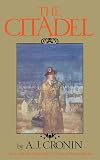
"If we go on trying to make out that everything's wrong outside the profession and everything is right within, it means the death of scientific progress."
First published in 1937 and set during the interwar years 'The Citadel' shines a light on the medical establishment in Britain at the time through the eyes of a young newly qualified Scottish doctor. Andrew Manson, takes up his first clinical post as an assistant to a GP in a small Welsh mining community where disease and poverty is rife, show more sanitation poor and operations are performed on kitchen tables before moving as his career progresses to the fashionable, greedy world of London with its private clinics, hypochondriac patients and rich awards. Manson arrives with a bagful of enthusiasm and idealism but soon comes face to face with the realism of his chosen profession.
Archibald Joseph Cronin was born in Cardross, Dunbartonshire, in 1896, and was destined either for the Church or medicine: he chose medicine. Cronin trained in various hospitals in Scotland, Dublin and South Wales. He was appointed as a Medical Inspector of Mines and reported on coal-dust inhalation and lung disease before subsequently moving to London and private practice. This novel is therefore semi-autobiographical in nature as he draws on his professional career as a background.
The novel has two specific areas of emphasis. Firstly, the work of the doctor in a poor community and how his work is transformed when he moves to a city and private practice. Secondly the competence, or incompetence, of doctors and their need to keep their skills up to date. Manson is often critical of the quality of other doctors' work.
In the small Welsh mining village, the men, as miners, can change doctors through a company insurance scheme whenever they wish, their choices often based on the doctor's own popularity rather than his ability. Manson is outspoken and critical of the way in which the service is funded which lands him in trouble.
But the climax comes when Manson is asked to treat the daughter of an old friend who has tuberculosis. Manson has her admitted to an established London hospital but when the treatment provided there shows no signs of benefit he recommends a new therapy. His senior disagrees and Manson removes his young patient to a newly built hospital with an un-medically qualified boss. However, despite the success of the treatment and his patient's subsequent discharge, when Manson’s London colleagues hear about this he is referred to the General Medical Council (GMC) to be investigated with the potential outcome of him being struck off the Medical Register.
In many respects this novel is a creature of its time. Cronin identified many of the issues in clinical practice which needed to be tackled , including better supervision of young doctors, postgraduate education programmes and the novel's popularity along with the cinematic portrayal helped towards the establishment of the NHS a decade or so later. However, some of the issues, in particular affordability, are still relevant today.
This isn't perhaps great literature. Manson despite his revolutionary zeal isn't always a particularly likeable character, he is often, selfish, arrogant and uncaring, but Cronin still manages to present an interesting and entertaining story. I am always interested in novels that feature social history and this book had the power to change public attitudes and behaviour towards health as well as professional thinking and for that reason alone deserves to be more widely read today. show less
First published in 1937 and set during the interwar years 'The Citadel' shines a light on the medical establishment in Britain at the time through the eyes of a young newly qualified Scottish doctor. Andrew Manson, takes up his first clinical post as an assistant to a GP in a small Welsh mining community where disease and poverty is rife, show more sanitation poor and operations are performed on kitchen tables before moving as his career progresses to the fashionable, greedy world of London with its private clinics, hypochondriac patients and rich awards. Manson arrives with a bagful of enthusiasm and idealism but soon comes face to face with the realism of his chosen profession.
Archibald Joseph Cronin was born in Cardross, Dunbartonshire, in 1896, and was destined either for the Church or medicine: he chose medicine. Cronin trained in various hospitals in Scotland, Dublin and South Wales. He was appointed as a Medical Inspector of Mines and reported on coal-dust inhalation and lung disease before subsequently moving to London and private practice. This novel is therefore semi-autobiographical in nature as he draws on his professional career as a background.
The novel has two specific areas of emphasis. Firstly, the work of the doctor in a poor community and how his work is transformed when he moves to a city and private practice. Secondly the competence, or incompetence, of doctors and their need to keep their skills up to date. Manson is often critical of the quality of other doctors' work.
In the small Welsh mining village, the men, as miners, can change doctors through a company insurance scheme whenever they wish, their choices often based on the doctor's own popularity rather than his ability. Manson is outspoken and critical of the way in which the service is funded which lands him in trouble.
But the climax comes when Manson is asked to treat the daughter of an old friend who has tuberculosis. Manson has her admitted to an established London hospital but when the treatment provided there shows no signs of benefit he recommends a new therapy. His senior disagrees and Manson removes his young patient to a newly built hospital with an un-medically qualified boss. However, despite the success of the treatment and his patient's subsequent discharge, when Manson’s London colleagues hear about this he is referred to the General Medical Council (GMC) to be investigated with the potential outcome of him being struck off the Medical Register.
In many respects this novel is a creature of its time. Cronin identified many of the issues in clinical practice which needed to be tackled , including better supervision of young doctors, postgraduate education programmes and the novel's popularity along with the cinematic portrayal helped towards the establishment of the NHS a decade or so later. However, some of the issues, in particular affordability, are still relevant today.
This isn't perhaps great literature. Manson despite his revolutionary zeal isn't always a particularly likeable character, he is often, selfish, arrogant and uncaring, but Cronin still manages to present an interesting and entertaining story. I am always interested in novels that feature social history and this book had the power to change public attitudes and behaviour towards health as well as professional thinking and for that reason alone deserves to be more widely read today. show less

Three Loves is A. J. Cronin's second novel, first published in 1932. It tells the engrossing, ultimate tragic, story of the three loves of Lucy Moore -- her husband, her son, and God.
Into all three relationships, Lucy brings the same monumental pride, bull-headed obstinance, and self-defeating melodrama that lead to her ultimate downfall. Life gives Lucy some hard knocks, but it is hard to feel sorry for her when she antagonizes all those who try to help her.
It is Lucy’s stubborn hostility show more that makes this book more interesting than the typical family drama. Although she is not likeable, she inspires some sympathy because she means well in her monomaniacal way. Like with a Greek tragedy, it is hard to tear away even when the tragic end is so apparently inevitable.
The book is fairly long -- over 550 pages -- but moves right along with plenty of action, plot, and conflict among the characters. Some of the attitudes and assumptions of the characters are a little dated, but with illegitimate children, adultery, violent death, lesbianism, insanity, social injustice, and Church hypocrisy, there is nothing stodgy about the story.
Cronin was a prolific mid-century author who wrote more than 20 novels, many which were made into movies or television shows. Judging from Three Loves, it is easy to see why he was so popular.
Also posted on Rose City Reader. show less
Into all three relationships, Lucy brings the same monumental pride, bull-headed obstinance, and self-defeating melodrama that lead to her ultimate downfall. Life gives Lucy some hard knocks, but it is hard to feel sorry for her when she antagonizes all those who try to help her.
It is Lucy’s stubborn hostility show more that makes this book more interesting than the typical family drama. Although she is not likeable, she inspires some sympathy because she means well in her monomaniacal way. Like with a Greek tragedy, it is hard to tear away even when the tragic end is so apparently inevitable.
The book is fairly long -- over 550 pages -- but moves right along with plenty of action, plot, and conflict among the characters. Some of the attitudes and assumptions of the characters are a little dated, but with illegitimate children, adultery, violent death, lesbianism, insanity, social injustice, and Church hypocrisy, there is nothing stodgy about the story.
Cronin was a prolific mid-century author who wrote more than 20 novels, many which were made into movies or television shows. Judging from Three Loves, it is easy to see why he was so popular.
Also posted on Rose City Reader. show less
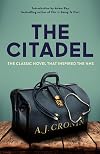
I can enjoy vintage fiction works that have something important to say, even when the writing styles may be dated—as is the case with this classic novel. What's more, it isn't a short or fast-paced read, but Andrew's experiences in the first phases had me interested enough to see where his journey would go.
It was something to watch his idealist's eyes open to lamentable realities concerning the state of the medical field he'd entered. Then with the thickening of the plot, the heightening show more of the conflict, and my growing care for some of the characters, I truly became invested.
And I appreciate a flawed protagonist; it isn't my thing for lead characters to come off as virtually perfect. Still, during the phase when Andrew changes into a fairly colossal jerk, although the author does show the gradual process of Andrew's reasoning and how he justifies himself on his way down, I found it a little hard to put up with his jerkiness and keep reading.
Also, I'm not a fan of the story's handling of the character Christine, ultimately, or how some critical matters play out in her marriage to Andrew. A big part of the issue may come down to this 1937 novel being a product of its period, as the author aimed to write a morality tale during a time when the culture/media promoted certain "wifely ideals."
On a different note, while the instances of more colorful language are left to the reader's imagination, I'd say that as the characters' uses of "damn" and "hell" in their nonliteral senses eventually increased, they became repetitive to the point of excess.
Nevertheless, I was sure that Andrew's journey as a man and as a doctor would come around in this story that, again, has something important and meaningful to say—including something about the folly of valuing, defending, and upholding institutions for their own sake while lacking or losing what should be the institutions' real concerns: human lives and wellbeing.
Plus, the reading made me curious to watch the 1983 British television mini series based on the novel. So! We'll see how that goes.
(Does that screen adaptation handle Christine's character any differently? Just asking. If you happen to know the answer—don't tell me.) show less
It was something to watch his idealist's eyes open to lamentable realities concerning the state of the medical field he'd entered. Then with the thickening of the plot, the heightening show more of the conflict, and my growing care for some of the characters, I truly became invested.
And I appreciate a flawed protagonist; it isn't my thing for lead characters to come off as virtually perfect. Still, during the phase when Andrew changes into a fairly colossal jerk, although the author does show the gradual process of Andrew's reasoning and how he justifies himself on his way down, I found it a little hard to put up with his jerkiness and keep reading.
Also, I'm not a fan of the story's handling of the character Christine, ultimately, or how some critical matters play out in her marriage to Andrew. A big part of the issue may come down to this 1937 novel being a product of its period, as the author aimed to write a morality tale during a time when the culture/media promoted certain "wifely ideals."
On a different note, while the instances of more colorful language are left to the reader's imagination, I'd say that as the characters' uses of "damn" and "hell" in their nonliteral senses eventually increased, they became repetitive to the point of excess.
Nevertheless, I was sure that Andrew's journey as a man and as a doctor would come around in this story that, again, has something important and meaningful to say—including something about the folly of valuing, defending, and upholding institutions for their own sake while lacking or losing what should be the institutions' real concerns: human lives and wellbeing.
Plus, the reading made me curious to watch the 1983 British television mini series based on the novel. So! We'll see how that goes.
(Does that screen adaptation handle Christine's character any differently? Just asking. If you happen to know the answer—don't tell me.) show less
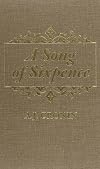
Song of Sixpence is a coming of age story set in Scotland early in the 20th century. Laurence Carroll grows up, sort of always on the outside, his father being Irish Catholic, and people in their community treating them a bit like pariahs. At times, when the opportunity for social advancement arose, he would shun the few friends he had out of shame and embarrassment, only to find it was not worth it. Life takes some rough turns, as when his father died from galloping consumption, or when his show more and his mother's benefactor had institutionalized for insanity. He believed all of his dreams of the future were dashed. He was often very naive, and would be taken in by less than scrupulous people, but it all works out in the end.
I did enjoy reading this older book (published 1964) and could understand his choices in spite of wanting to draw him aside and say "Look here Laurie, that is not the smartest decision", but I imagine in the past, some of my elders thought the same about some of my poor judgements. show less
I did enjoy reading this older book (published 1964) and could understand his choices in spite of wanting to draw him aside and say "Look here Laurie, that is not the smartest decision", but I imagine in the past, some of my elders thought the same about some of my poor judgements. show less
Lists
1930s (1)
Tagged Doctors (1)
Awards


You May Also Like


Associated Authors
Statistics
- Works
- 136
- Also by
- 41
- Members
- 6,610
- Popularity
- #3,708
- Rating
- 3.7
- Reviews
- 123
- ISBNs
- 538
- Languages
- 19
- Favorited
- 13
