
J. R. Moehringer
Author of The Tender Bar
About the Author
J. R. Moehringer is a Pulitzer Prize-winning journalist and novelist. He is the author of The Tender Bar (2005) and Sutton (2012). He collaborated on Andre Aggassi's memoir Open (2012). Moehringer graduated from Yale University in 1986. He began his journalism career as a news assistant at The New show more York Times later moving to Breckenridge, Colorado to work at the Rocky Mountain News and even later he became a reporter for the Orange County bureau of the Los Angeles Times. Moehringer eventually was sent to Atlanta to serve as the LA Times national correspondent on the south. Moehringer received the Literary Award, PEN Center USA West and the Livingston Award for Young Journalists, both in 1997 and a Pulitzer Prize for Feature Writing in 2000. (Bowker Author Biography) show less
Image credit: photo by Becky Rech
Works by J. R. Moehringer
Associated Works
Tagged
Common Knowledge
- Birthdate
- 1964-12-07
- Gender
- male
- Education
- Yale University (BA|History)
- Occupations
- writer
journalist
author
correspondent (national correspondent - Los Angeles Times) - Organizations
- Los Angeles Times
- Awards and honors
- Pulitzer Prize (Feature Writing, 2000)
- Nationality
- USA
- Birthplace
- New York, New York, USA
- Places of residence
- Denver, Colorado, USA
- Associated Place (for map)
- Colorado, USA
Members
Reviews

Far too many of the reviews for this book here on LT criticize the book and the author for 'whining' about his childhood. I can only deduce these readers had their humanity removed in some kind of surgical procedure meant to bolster their own perception of themselves. Honestly, the reveiwers/readers all must come from perfectly well-adjusted families and are themselves superior to everyone else in every way. Far from whining, Moehringer regularly castigates himself for his faults, even show more though they are largely not of his own making. He came from an altogether dysfunctional family and struggled for everything, particularly a grounded sense of himself. The characters are so credible and unique that they would never be believed in a fictional account. It's the kind of book that is wildly popular these days, only from a female perspective. Don't get me wrong, there are far too few female authors and female narratives because of the gender gaps in publishing. But, I'd argue, there are also too few honest male voices writing sincerely about male identity and struggles - Moehringer fills this void with class. For those who reviewed this book negatively, I'd say, "Get over yourselves." For everyone else, "Read this book."
The book was recently adapted to film, and the producers, which included Moehringer, did a nice job of capturing the tone of the narrative - boy basically grows up in a bar, raised by ne'er-do-well barflies - but the book is much more evocative, lighter on the Hollywood moments and heavier on the heart-felt emotion.
Highly Recommended!
5 bones!!!!! show less
The book was recently adapted to film, and the producers, which included Moehringer, did a nice job of capturing the tone of the narrative - boy basically grows up in a bar, raised by ne'er-do-well barflies - but the book is much more evocative, lighter on the Hollywood moments and heavier on the heart-felt emotion.
Highly Recommended!
5 bones!!!!! show less
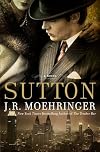
While J.R. Moehringer was watching the news in 2008, with the world’s banking systems going down the tubes, people losing their life savings, and no-one holding the banks accountable, he became very angry. He thought of the bank robber Willie Sutton, whom he had heard stories about as a child growing up in Brooklyn. Sutton had become mythological for his prolific bank heists and his three escapes from prisons. Moehringer then wrote this touching novelization of what could have happened the show more day Sutton was released from prison on Christmas in 1969 had he revisited the places from his past.
Moehringer researched Willie Sutton and visited the places that he had traversed during his crime sprees. Along with the stories he heard in boyhood, he had plenty of files to work with in visualizing this story.
It’s interesting to me that so many characters (other than an old woman he meets at The Farm Colony) all have descriptive names such as Bad Cop, Good Cop, Reporter, Photographer, Head Nurse. I was wondering why Moehringer would do this. It sort of muddies their faces for me, like maybe the message is that Sutton doesn’t want to know them any deeper. He certainly didn’t want to reveal any of himself to them. Then again, maybe it’s an extension of the world Sutton was in where so many of his cronies had a nickname. There’s Crazy Joe, Angel of Death, Happy, Mad Dog, Botchy. The list goes on.
This book really opened my eyes to some of the white-washing the United States has done with its own history. Never in my school days was I told that every 10-15 years or so the country will have a recession and hey, you should probably prepare for it. Nope, I was told about the Great Depression and everything else was swept under the rug. I was told that as long as you work hard you will be fine. That’s a lie. You can work hard for years and still lose everything. And the banks will come out the winners.
Early in the book, in the summer of 1914, Willie’s friend Eddie rants about this:
Some f***in system, he says. Every ten or fifteen years it crashes. Aint no system, that’s the problem. It’s every man for his-f***in-self. The Crash of ’93? My old man saw people standin in the middle of the street bawlin like babies. Wiped out. Ruined. But did those bankers get pinched? Nah- they got richer. Oh the government promised it would never happen again. Well it happened again didn’t it fellas? In ’07. And ’11. And when them banks fell apart, when the market did a swan dive, didn’t them bankers walk away scot-free again?
Another theme running through the novel is the subject of memory. How much of our memory is really the way things happened and how much is what we want to believe? Sutton’s version of events is highly entertaining but is it entirely accurate? Read through to the end to find out.
I only have one minor quibble in an otherwise engaging story. I thought the ending was a little strange because I didn’t understand why Reporter went to the theme park. Maybe I just missed something.
The world doesn’t know the genuine Willie Sutton. He wrote two autobiographies which contradict each other. At different times he was lauded and then reviled by his neighborhood, the cops, and the country. Was he really a ‘gentleman bandit’? Did he give money away (I think he did – or is it that I hope he did)?
Moehringer’s book, The Tender Bar, an autobiography, has been on my to-read list for years. I really should break it out soon. It would be great if Sutton had bigger publicity. I can only say that it is definitely worth a read, especially if you are interested in criminal history. show less
Moehringer researched Willie Sutton and visited the places that he had traversed during his crime sprees. Along with the stories he heard in boyhood, he had plenty of files to work with in visualizing this story.
It’s interesting to me that so many characters (other than an old woman he meets at The Farm Colony) all have descriptive names such as Bad Cop, Good Cop, Reporter, Photographer, Head Nurse. I was wondering why Moehringer would do this. It sort of muddies their faces for me, like maybe the message is that Sutton doesn’t want to know them any deeper. He certainly didn’t want to reveal any of himself to them. Then again, maybe it’s an extension of the world Sutton was in where so many of his cronies had a nickname. There’s Crazy Joe, Angel of Death, Happy, Mad Dog, Botchy. The list goes on.
This book really opened my eyes to some of the white-washing the United States has done with its own history. Never in my school days was I told that every 10-15 years or so the country will have a recession and hey, you should probably prepare for it. Nope, I was told about the Great Depression and everything else was swept under the rug. I was told that as long as you work hard you will be fine. That’s a lie. You can work hard for years and still lose everything. And the banks will come out the winners.
Early in the book, in the summer of 1914, Willie’s friend Eddie rants about this:
Some f***in system, he says. Every ten or fifteen years it crashes. Aint no system, that’s the problem. It’s every man for his-f***in-self. The Crash of ’93? My old man saw people standin in the middle of the street bawlin like babies. Wiped out. Ruined. But did those bankers get pinched? Nah- they got richer. Oh the government promised it would never happen again. Well it happened again didn’t it fellas? In ’07. And ’11. And when them banks fell apart, when the market did a swan dive, didn’t them bankers walk away scot-free again?
Another theme running through the novel is the subject of memory. How much of our memory is really the way things happened and how much is what we want to believe? Sutton’s version of events is highly entertaining but is it entirely accurate? Read through to the end to find out.
I only have one minor quibble in an otherwise engaging story. I thought the ending was a little strange because I didn’t understand why Reporter went to the theme park. Maybe I just missed something.
The world doesn’t know the genuine Willie Sutton. He wrote two autobiographies which contradict each other. At different times he was lauded and then reviled by his neighborhood, the cops, and the country. Was he really a ‘gentleman bandit’? Did he give money away (I think he did – or is it that I hope he did)?
Moehringer’s book, The Tender Bar, an autobiography, has been on my to-read list for years. I really should break it out soon. It would be great if Sutton had bigger publicity. I can only say that it is definitely worth a read, especially if you are interested in criminal history. show less
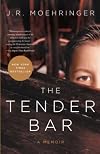
A memoir of a young man whose mother struggled to raise him alone after leaving his abusive father. In place of the man he never really knew, JR (it doesn't STAND FOR ANYTHING!) latched on to his Uncle Charlie and a motley assortment of bartenders and patrons at "The Bar", the neighborhood watering hole in his hometown of Manhasset on Long Island. Throughout his teenage years, these men took him under their collective and individual wings, took him to the beach, discussed books with him, show more gave him advice (of varying degrees of usefulness), encouraged him to dream of and eventually apply to Yale and made him feel he had a home beyond the bedlam of his grandparents' house, where he and his mother most often lived. Later, they supported him through failed love affairs, demoralizing attempts at novel-writing and dead-end jobs, taught him by example (mostly how to drink and survive hangovers), and gave him unconditional love. The story could be depressing as all get-out, but it's not. There is so much humor and tenderness in it--and after all, here is this supremely well-written memoir you're reading, as proof that it all turned out OK in the end. show less
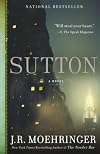
A fictional rendering of the life of notorious bank-robber and jail-breaker Willie Sutton, who supposedly answered a reporter's question about why he robbed banks with the classic line "Because that's where the money is". Sutton, later in life, said that he probably would have said that if anyone asked him that question, because it's pretty obvious, but that the story wasn't true..."The credit belongs to some enterprising reporter who apparently felt a need to fill out his copy..." [Sutton] show more is based on an enterprising reporter's attempt to get Willie's story on Christmas Day, 1969, after Willie had been released from prison for the last time, in ill health. Willie takes Reporter and Photographer (these characters and many others in the book, are referred to only by their occupations) on a tour of his old haunts around Manhattan and Brooklyn, ostensibly leading up to the big pay-off, i.e. his revealing what really happened to the clean-cut kid who spotted him and alerted the cops several years after Willie's last successful prison break. Reporter and Photographer don't get much but tired, but Reader.....Reader gets the works. This is one of the most engrossing stories I've read in a long time. The crimes he committed are not the focus of the tale; Moehringer (an enterprising reporter himself) has fleshed out the man, and given us a Willie Sutton we can understand...not just a cardboard cut-out 20th century Robin Hood, but a real human struggling to survive, to do what he's good at, and maybe find a little love.
Review written July 2014 show less
Review written July 2014 show less
Lists
Read These Too (1)
Awards


You May Also Like


Associated Authors
Statistics
- Works
- 10
- Also by
- 4
- Members
- 3,711
- Popularity
- #6,827
- Rating
- 3.9
- Reviews
- 141
- ISBNs
- 76
- Languages
- 6
- Favorited
- 7