
Eric Hebborn (1934–1996)
Author of The art forger's handbook
Works by Eric Hebborn
Tagged
Common Knowledge
- Canonical name
- Hebborn, Eric
- Birthdate
- 1934-03-20
- Date of death
- 1996-01-11
- Gender
- male
- Occupations
- artist
art forger - Organizations
- Royal Society of British Artists
- Awards and honors
- Royal Academy Silver Medal
Hacker Portrait Prize - Cause of death
- head trauma
- Nationality
- England
- Birthplace
- London, England, UK
- Places of residence
- London, England, UK
Italy - Place of death
- Rome, Italy
- Associated Place (for map)
- London, England, UK
Members
Reviews

The book is brilliant. Eric Hebborn is brilliant. I see the issue of art fogeries in a new light. Hebborn is a rascal and he makes a good point. There is no such thing as a fake work of art. There might be a faulty (or fake) attribution, but every work of art is valid in its own right, albeit they are not all of equal quality.
All artists would copy the work of others who they considered masters. This has always been the way artists learn their trade. A large part of Hebborn's carrer derived show more from drawing in the style of one or another great master. He never copied an existing work, but rather he drew in the manner and style of a school or a person. And as to being the work of a follower or so-and-so, he would tell you that HE is a follower of the work of so-and-so. He never claimed the work was by any of the old masters. Rather, he always left it to the "experts" to discover or decide to whom the work should be attributed.
I think he wrote the book to explain his own life and career, but mainly he wrote it to condemn the so-called experts who don't really know much about art. He says that people who can't themselves draw, have no business to call themselves experts. Identifying styles and artists is only 5% of the knowledge of art. Ninety-five percentage is knowing, from experience, how it is made.
This is a well-written, highly informative, and very entertaining book. And if ever there was an author with whom I would like to sit and share a meal and a bottle of wine, it is Hebborn. show less
All artists would copy the work of others who they considered masters. This has always been the way artists learn their trade. A large part of Hebborn's carrer derived show more from drawing in the style of one or another great master. He never copied an existing work, but rather he drew in the manner and style of a school or a person. And as to being the work of a follower or so-and-so, he would tell you that HE is a follower of the work of so-and-so. He never claimed the work was by any of the old masters. Rather, he always left it to the "experts" to discover or decide to whom the work should be attributed.
I think he wrote the book to explain his own life and career, but mainly he wrote it to condemn the so-called experts who don't really know much about art. He says that people who can't themselves draw, have no business to call themselves experts. Identifying styles and artists is only 5% of the knowledge of art. Ninety-five percentage is knowing, from experience, how it is made.
This is a well-written, highly informative, and very entertaining book. And if ever there was an author with whom I would like to sit and share a meal and a bottle of wine, it is Hebborn. show less
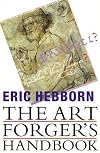
Hebborn is a British artist and master forger. His drawings followed the old master style and were hung in museums around the world until his uncovering in 1980. He wrote this book in the mid 90s, and was killed shortly thereafter in Italy. (Disgruntled gallery stooge? Fellow forger enforcing the code of silence on tricks of the trade?) Anyway, he's a colorful man, and he writes with acid wit about the foibles of the fine art and historical art market. In addition, there is a ton of valuable show more information in the book on working methods of the old masters, even if you don't intend to try and pass copies off as the real thing. This is a highly recommended, and I imagine his autobiography, Drawn to Trouble is an amusing and informative read as well. Let us not overlook, this book contains mentions of dozens of books that would be worth studying for the serious student of art history and old master techniques. I could spend a couple of years catching up on the reading suggested by Hebborn. show less
Hebborn is a British artist and master forger. His drawings followed the old master style and were hung in museums around the world until his uncovering in 1980. He wrote this book in the mid 90s, and was killed shortly thereafter in Italy. (Disgruntled gallery stooge? Fellow forger enforcing the code of silence on tricks of the trade?) Anyway, he's a colorful man, and he writes with acid wit about the foibles of the fine art and historical art market. In addition, there is a ton of valuable show more information in the book on working methods of the old masters, even if you don't intend to try and pass copies off as the real thing. This is a highly recommended, and I imagine his autobiography, Drawn to Trouble is an amusing and informative read as well. Let us not overlook, this book contains mentions of dozens of books that would be worth studying for the serious student of art history and old master techniques. I could spend a couple of years catching up on the reading suggested by Hebborn. show less
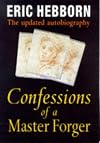
The late Eric Hebborn writes a very strange book, some parts quite good, but other parts quite maudlin. Parts, like his section talking about life in Rome, rise above purple prose to quite good travel-with-gossip writing. Other parts were much less up to snuff. Raised in an abusive working class British household, Hebborn gets into trouble fairly early and ends up in the foster-care system, but finally heads off to art school where he is misunderstood and 'misunderestimated' (to quote show more President Bush), before he finally lands a scholarship that gets him to Rome. He drifts as teacher, artist, and the finally settles accidentally into dealing in prints, drawings and antiques. As a dealer-artist, he finds that he can furnish faked drawings, and he gradually makes it his task to design fakes to fool particular experts. He targets their weaknesses and prejudices, just as one might study an opponent to design the perfect trap for them. Although Hebborn keeps insisting that he did this fakery specifically to unmask the pretense (and delusion?) of experts like Colnaghi and Sothebys, his mention of life in Rome with his boyfriends, trips to Morocco, heavy drinking, and a jet-set live-style funded with fake art seems to point that a major motivation was the almighty pound. Although he insists that he never tried to fool his friends, he went out of his way to design a fake which *would* fool his friend Sir Anthont Blount (later unmasked as a Russian spy), so he could approach a dealer with the fake. Some of this book is stomach-turning, self-serving and repeatedly engages in special pleading and begging the question. He claims that hundreds of his "old master" drawings, sketches and paintings are in American collections. I don't doubt it. How much has his work served to change artist's biographies and art works to serve what Hebborn thought (or his contemporary art critics thought) fit their conception of that artist? Perhaps the fakes will seem more obvious in another century; perhaps not. But the fact remains that Hebborn, like many forgers, was also trying to change history, and that is deeply disquieting. For curatorial-types, this book should be read with his _Art Forgers' Handbook_ which has recipes and procedures for everything from aging paper, to making ink, and creating false marks of provenance. show less
You May Also Like


Statistics
- Works
- 5
- Members
- 236
- Popularity
- #95,934
- Rating
- 4.0
- Reviews
- 4
- ISBNs
- 14
- Languages
- 2
- Favorited
- 1