
Julianne Lee
Author of Knight Tenebrae
About the Author
Series
Works by Julianne Lee
A Question of Guilt: A Novel of Mary, Queen of Scots, and the Death of Henry Darnley (2008) 89 copies, 1 review
Battle Ready 2 copies
Culture Control 1 copy
Knight's Lady 1 copy
Associated Works
Tagged
Common Knowledge
- Legal name
- Lee, Julianne Ardian
- Other names
- Lee, J. Ardian
Gardner, Laurien (shared pseudonym) - Birthdate
- 1956
- Gender
- female
- Occupations
- actor
writer - Organizations
- Science Fiction and Fantasy Writers of America
- Nationality
- USA
- Birthplace
- Point Mugu, California, USA
- Associated Place (for map)
- California, USA
Members
Discussions
(M87'12) Interloper at Glencoe, Julianne Lee in World Reading Circle (December 2012)
Kindred Spirits, Julianne Lee (M31'12) in World Reading Circle (June 2012)
Reviews
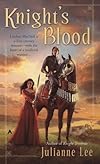
Knight's Blood is the second book in a trilogy written by author Julianne Lee. I received through the LibraryThing Early Reviewer's program. The book works fine as a stand alone novel, although be forewarned--it ends on a cliffhanger that will leave you most likely wanting to read the final book of the series.
Overall, I found the story to be well written and enteraining. There are shades of the Outlander series here, to be sure. The plot is a bit confusing, as it centers around time travel, show more so the narrative jumps back and forth from present day London to fourteenth century Scotland. A navy pilot who wooed and won his beautiful wife in the first book of the series, has found himself transported back from a series of adventures in 14th century Scotland (which included being knighted and getting married). When he and Lindsay, his squire aka wife, discovered she was pregnant, at his wife's urging they found help from one of the "wee folk", Nemed, to return to present day London for the birth of their child. Alex returned to his duties as a Navy Pilot. Before long he received word that his wife has given birth to a son. Alex takes a leave of absence from the military to visit his wife and child, but when he arrives in London he is shocked to find their apartment empty with signs of a hasty departure by Lindsay. In the apartment he sees a photo of his newborn son and is shocked to see he has pointed ears--a dead giveaway that the child is not entirely human. Alex immediately suspects Lindsay of having been unfaithful to him. He discovers from a neighbor that their son was kidnapped and Lindsay fled quickly in pursuit of the kidnappers. Fled back in time and to another land. Alex knew he had to do the same, and quickly.
Alex managed to travel back to the general area of his castle as a laird in Scotland and the general time of his lairdship, the 14th century, through the machinations of the "wee folk". However, he arrived naked and very, very ill. He managed to regain his health after a long recuperation during which a grown young man showed up. A young man unmistakably of his lineage who turns out to be his twenty-seven year old son, Trefor; who was not only kidnapped as an infant by the fae, but has now been back in time by a beautiful version of this species, Morag. Trefor is indeed of magical lineage himself, on his mother's side, it turns out. Trefor believes his parents are responsible for abandoning him as an infant and bears a marked hatred of his father, in particular. Alex accepts that he is his son, but feels only antipathy towards him. They begin a quest in search of Alex's wife, Trefor's mother together.
In the meantime, Lindsay has gone back to previous ways of passing as a man to join a militant group of raiders, plundering and wreaking havoc and death upon villages in the far northern reaches of England. A dashing masculine version of the fae named An Reubair is the leader of this group and he is determined to call Lindsay his own and have sons by her. Between trying to keep An Reubair at bay and dealing with the aftermath of a brutal rape (which along with the fatal aftermath is described in graphic detail), Lindsay has her work cut out for her in her quest to search for her lost infant son.
When the "family" finally meets up with one another, they return to the castle of his lairdship Alex MacNeil (who has now been proclaimed an Earl). All is not well, though and this is about as dysfunctional a family as you will find. Trefor is longing for his mother who rejects him outright and refuses even to talk to him. Alex sides with his wife to protect her. Between the two of them, they display an inexplicable cruelty to this albeit unpleasant young man, who is their son and who survived a childhood full of neglect, abuse and cruelty in foster homes. His hatred towards his father is festering and is bound to end up leading to no good. His parents are only fanning the flames. This relationship is the least enjoyable part of the book because such coldness displayed by parents is so unnatural and feels wrong. The other really maddening part of the book is Alex's power displays over his wife in 14th century Scotland, when both of them being from modern London, know that this behaviour is unacceptable.
The story ends on a cliffhanger that will probably leave you wanting to read the third and final book in the trilogy. show less
Overall, I found the story to be well written and enteraining. There are shades of the Outlander series here, to be sure. The plot is a bit confusing, as it centers around time travel, show more so the narrative jumps back and forth from present day London to fourteenth century Scotland. A navy pilot who wooed and won his beautiful wife in the first book of the series, has found himself transported back from a series of adventures in 14th century Scotland (which included being knighted and getting married). When he and Lindsay, his squire aka wife, discovered she was pregnant, at his wife's urging they found help from one of the "wee folk", Nemed, to return to present day London for the birth of their child. Alex returned to his duties as a Navy Pilot. Before long he received word that his wife has given birth to a son. Alex takes a leave of absence from the military to visit his wife and child, but when he arrives in London he is shocked to find their apartment empty with signs of a hasty departure by Lindsay. In the apartment he sees a photo of his newborn son and is shocked to see he has pointed ears--a dead giveaway that the child is not entirely human. Alex immediately suspects Lindsay of having been unfaithful to him. He discovers from a neighbor that their son was kidnapped and Lindsay fled quickly in pursuit of the kidnappers. Fled back in time and to another land. Alex knew he had to do the same, and quickly.
Alex managed to travel back to the general area of his castle as a laird in Scotland and the general time of his lairdship, the 14th century, through the machinations of the "wee folk". However, he arrived naked and very, very ill. He managed to regain his health after a long recuperation during which a grown young man showed up. A young man unmistakably of his lineage who turns out to be his twenty-seven year old son, Trefor; who was not only kidnapped as an infant by the fae, but has now been back in time by a beautiful version of this species, Morag. Trefor is indeed of magical lineage himself, on his mother's side, it turns out. Trefor believes his parents are responsible for abandoning him as an infant and bears a marked hatred of his father, in particular. Alex accepts that he is his son, but feels only antipathy towards him. They begin a quest in search of Alex's wife, Trefor's mother together.
In the meantime, Lindsay has gone back to previous ways of passing as a man to join a militant group of raiders, plundering and wreaking havoc and death upon villages in the far northern reaches of England. A dashing masculine version of the fae named An Reubair is the leader of this group and he is determined to call Lindsay his own and have sons by her. Between trying to keep An Reubair at bay and dealing with the aftermath of a brutal rape (which along with the fatal aftermath is described in graphic detail), Lindsay has her work cut out for her in her quest to search for her lost infant son.
When the "family" finally meets up with one another, they return to the castle of his lairdship Alex MacNeil (who has now been proclaimed an Earl). All is not well, though and this is about as dysfunctional a family as you will find. Trefor is longing for his mother who rejects him outright and refuses even to talk to him. Alex sides with his wife to protect her. Between the two of them, they display an inexplicable cruelty to this albeit unpleasant young man, who is their son and who survived a childhood full of neglect, abuse and cruelty in foster homes. His hatred towards his father is festering and is bound to end up leading to no good. His parents are only fanning the flames. This relationship is the least enjoyable part of the book because such coldness displayed by parents is so unnatural and feels wrong. The other really maddening part of the book is Alex's power displays over his wife in 14th century Scotland, when both of them being from modern London, know that this behaviour is unacceptable.
The story ends on a cliffhanger that will probably leave you wanting to read the third and final book in the trilogy. show less
 This review was written for LibraryThing Early Reviewers.
No. I'm sorry, but no - it just doesn't work. Time travel romance is really hard to do well, mostly because real romance depends on, well, kindred spirits - people who know and like one another. Here we have two women displaced in time - and while the book says they find kindred spirits and True Love, I don't believe it. Too many real, deep-based differences in conceptual thinking between modern times and the Civil War. Shelby-as-Mary-Beth bothers me for several reasons; one major one was - show more she's not willing to say yes to Lucas because Mary Beth won't like it. Ruining her reputation, and her relationship with her parents? No problem there. It's only over Lucas that she has such tender sensibilities for Mary Beth's feelings. It just feels like dragging the story out unnecessarily. And then there's the whole thing with - she's changed events, but she's not sure she's changed enough. So her solution is to go charging across a countryside at war, alone and unarmed, with a horse, in order to rescue her husband. It's only by auctorial fiat she finds him in the first place - her odds are impossibly low. And of course he won't come with her - anyone from that time could have told her that (did tell her that, in fact, but she didn't listen - of course, her modern ideas are the Truth and theirs will have to bend before her). And then she finds him _again_, in the middle of battle, and manages to bring him off. So unlikely. Mary-Beth-as-Shelby is equally unlikely; there are a few episodes of shock over weird stuff she sees (electric lights, cars...) but she handles a flush toilet and a modern kitchen without difficulty. And she manages as well as she does only because she finds a man willing to believe her and help her out (funny how the modern man accepts the truth and the one from the previous era won't even entertain it...). Way too many coincidences, too much auctorial fiat, too much unlikeliness throughout. The research on the Civil War era shows - I believe the time, I just don't believe the characters. And that makes it a book that wasn't worth my time to read. There are also a few bad plot holes - Mary-Beth-as-Shelby makes a big point out of how she has never been in the bedroom of the house...but Shelby found her diary hidden there, even though in the diary Mary Beth says she isn't married to Lucas. Just how did it get there? Stuff like that - it was necessary that Shelby have the diary, it's appropriate that Mary Beth object to being in man's bedroom, never mind that these two things contradict. show less
This review was written for LibraryThing Early Reviewers.If you made it through the first, and become attached enough to the characters to come back for more, then you'll probably enjoy this book at least as much as a dish of vanilla ice cream. Moreso than the first, it embraces the weird; that being mythical creatures of Celtic extraction. Combined with some time-travel oddities, and you end up with a plot that is fairly unique. The main characters, Alex and Lindsay, returned to the 21st century at the end of Knight Tenebrae. Lindsay was show more pregnant, and infant mortality in the 13th century was enough to force Alex to give up his new career as a rising star among Scottish nobility in the service of Robert the Bruce and seek a return passage. Both resume their careers, Lindsay as a reporter in London and Alex as an air force pilot. A few days after Lindsay gives birth to a pointy-eared freak, her baby is snatched and a "changeling" -- kind of a leprechaun, is left behind to be killed in a rage. Confident the perpetrator spirited her son back to the 13th century, she finds the same creature who was responsible for her last trip and compels him to send her back again, without waiting for Alex to catch up. Alex has the same idea, but seeks (and finds) a different route. Alex is repatriated with his clansmen and fief, while Lindsay falls in with a group of raiders on the Scottish/English border.
And then the boy shows up. Except, he's not a baby anymore, in fact, he's scarcely younger than his parents! Fun with time travel indeed. It turns out he's a petulant little brat, bitter over being abandon by his parents his whole life, accusing them of not trying to find him (although to his parents, it's only been a few weeks since he disappeared as a baby). For some reason, Alex doesn't use this as a defense, and conflict continues throughout the book. This time, however, Alex and Lindsay don't return to modern times at the end -- they both think it unlikely they will be able to, and Alex has been upgraded to "Earl" status. As before, when sticking to more mundane, historical events, Lee shows she can be a competent historical novelist. I am moderately interested in what the next book brings. show less
And then the boy shows up. Except, he's not a baby anymore, in fact, he's scarcely younger than his parents! Fun with time travel indeed. It turns out he's a petulant little brat, bitter over being abandon by his parents his whole life, accusing them of not trying to find him (although to his parents, it's only been a few weeks since he disappeared as a baby). For some reason, Alex doesn't use this as a defense, and conflict continues throughout the book. This time, however, Alex and Lindsay don't return to modern times at the end -- they both think it unlikely they will be able to, and Alex has been upgraded to "Earl" status. As before, when sticking to more mundane, historical events, Lee shows she can be a competent historical novelist. I am moderately interested in what the next book brings. show less
This review was written for LibraryThing Early Reviewers.Knight's Blood is the second part in a trilogy and even though I haven't read the first part I quickly found my way into the story.
Alex returns to London from his army station to celebrate with his wife Lindsay the birth of their son, only to find them both missing and a picture of the child with pointy ears in the kitchen. He quickly realizes that they must have returned back to the Middle Ages, from where Alex and Lindsay returned just a couple of months ago, and makes his way to return show more again.
Through the "help" of some devious fairies he finds himself back in the 13th century very ill and just a couple of months after he left. As soon as he gets better he resolves to start searching for his wife, but things take an unexpected turn when a small party with an American flag show up outside the castle and Trevor, a man of about 30 and their leader claims to be his son, snatched away by fairies and brought up as an orphan in the United States.
Meanwhile Lindsay disguises as a man and takes up the identity of Sir Pawlowkski again. She joins a group of rogue knights who are under the influence of Nemed, an elf who she suspects has her child.
I enjoyed the story even though at times I found it hard to follow the main characters motivation. Their actions didn't make them very sympathetic either. Nevertheless, I am curious to find out more and look forward to reading the other books in this series. show less
Alex returns to London from his army station to celebrate with his wife Lindsay the birth of their son, only to find them both missing and a picture of the child with pointy ears in the kitchen. He quickly realizes that they must have returned back to the Middle Ages, from where Alex and Lindsay returned just a couple of months ago, and makes his way to return show more again.
Through the "help" of some devious fairies he finds himself back in the 13th century very ill and just a couple of months after he left. As soon as he gets better he resolves to start searching for his wife, but things take an unexpected turn when a small party with an American flag show up outside the castle and Trevor, a man of about 30 and their leader claims to be his son, snatched away by fairies and brought up as an orphan in the United States.
Meanwhile Lindsay disguises as a man and takes up the identity of Sir Pawlowkski again. She joins a group of rogue knights who are under the influence of Nemed, an elf who she suspects has her child.
I enjoyed the story even though at times I found it hard to follow the main characters motivation. Their actions didn't make them very sympathetic either. Nevertheless, I am curious to find out more and look forward to reading the other books in this series. show less
This review was written for LibraryThing Early Reviewers.You May Also Like


Associated Authors
Statistics
- Works
- 14
- Also by
- 1
- Members
- 803
- Popularity
- #31,758
- Rating
- 3.5
- Reviews
- 132
- ISBNs
- 37
- Languages
- 1
