
About the Author
Bruce Levine is J. G. Randall Professor of History at the University of Illinois at Urbana-Champaign
Works by Bruce Levine
The Fall of the House of Dixie: The Civil War and the Social Revolution That Transformed the South (2013) 487 copies, 7 reviews
Confederate Emancipation: Southern Plans to Free and Arm Slaves during the Civil War (2006) 156 copies, 2 reviews
The Spirit of 1848: German Immigrants, Labor Conflict, and the Coming of the Civil War (1992) 14 copies
Half Slave and Half Free 2 copies
Associated Works
Slavery and Public History: The Tough Stuff of American Memory (2006) — Contributor — 155 copies, 1 review
Who Built America?: Working People and the Nation's Economy, Politics, Culture, and Society: Volume Two (1992) — some editions — 155 copies
Who Built America?: Working People and the Nation's Economy, Politics, Culture, and Society: Volume One (1989) — some editions — 140 copies
Tagged
Common Knowledge
- Canonical name
- Levine, Bruce
- Other names
- Levince, Bruce C. (fuller name)
- Birthdate
- 1949
- Gender
- male
- Occupations
- historian
professor
editor - Organizations
- University of Illinois, Urbana-Champaign (James G. Randall Professor of History)
- Agent
- Dan Green (POM, Inc.)
- Short biography
- Bruce Levine is the J. G. Randall Distinguished Professor of History at the University of Illinois at Urbana-Champaign. He is an associate editor of the Civil War magazine North and South. [adapted from The Fall of the House of Dixie (2013)]
- Nationality
- USA
- Associated Place (for map)
- USA
Members
Reviews
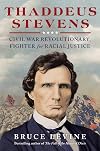
"Thaddeus Stevens" is not a deep, in-depth history about Stevens' personal and family life. Instead, it is a history of his political life and beliefs, which is what I was more interested in anyway. Stevens was a remarkable man, especially considering the time period he lived in. He was staunchly anti-slavery, fighting for equal rights for Black Americans, and supported public education, women's rights, Native American rights, and the rights of immigrants (in particular the large Chinese show more population in California), among other issues. He reminds me of Bernie Saunders, fighting for what he knew was correct and needed, despite what his colleagues and others thought and supported. He, more than Lincoln and some others, showed that the Civil War was about slavery, and pushed the passing of the 13th amendment abolishing slavery. He spent his entire life doing everything he could to end slavery and promote rights for the black freedmen. He was the leader in Congress to impeach the terrible president Andrew Johnson (passed in the House, lost by one vote in the Senate).
And a quote that could be taken out of today's headlines, author Bruce Levine says Thaddeus Stevens came to recognize "...extreme economic inequality as a threat to democracy". In 1865, Stevens himself said "It is impossible that any practical equality of rights can exist where a few thousand men monopolize the whole landed property". Hmm...
At 300 pages, a short book, but very interesting and very appropriate in these troubled times. show less
And a quote that could be taken out of today's headlines, author Bruce Levine says Thaddeus Stevens came to recognize "...extreme economic inequality as a threat to democracy". In 1865, Stevens himself said "It is impossible that any practical equality of rights can exist where a few thousand men monopolize the whole landed property". Hmm...
At 300 pages, a short book, but very interesting and very appropriate in these troubled times. show less

A much different perspective on the Civil War, focusing on slavery and Southern Whites' relationship to it. Levine makes clear, as do some other recent books, that slavery was the reason for the civil war and that the post-war Southern revisionist view of the war as a fight for states rights was nonsense. As this narrative shows, however, Southern planters (the largest slaveholders) certainly did employ states' rights as a reason not to heed the Confederate Government's calls to provide show more slaves to help the army, build fortifications, and in the last resort, become soldiers. In each case, the large planters reacted with fury about an over-reaching government taking their personal property! The author shows that the breakdown of the slave system within the South as invading Northern armies caused slaveholders to flee, losing most of their slaves in the process, was a major factor in the hard fought and overlong Union path to victory. Levine also shows how an overly forgiving North handed their lands back to the large slaveholders or to Northern entrepreneurs who hired ex-slave labor at rock bottom prices and began the exploitation that lasted, in its worse form, for perhaps a hundred years.
If you are worn out on the Civil War and Civil War books, you should still pick up this one and have your eyes opened a bit. show less
If you are worn out on the Civil War and Civil War books, you should still pick up this one and have your eyes opened a bit. show less
The Fall of the House of Dixie: The Civil War and the Social Revolution That Transformed the South by Bruce Levine
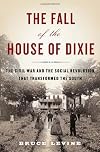
Great history books weave the writings of the past into a narrative to help the reader understand and feel the events, emotions and motivations of those times. Bruce Levine has written a great history book!
The haunting parallels of his quotes and citations to today's events are shivering. Citizen's United and Dred Scot? The speech given by Rand Paul days ago at CPAC about men resisting invasion of their rights to their "property" and the words of the slave masters are hair raisingly show more similar. The moves to Gerrymander Congressional districts and restrict voting rights, the dogma of the Tea Party and right wing Republicans, the rationalization that poverty is only because people will not work hard enough or refuse to work hard enough are all eerily reminiscent of the Civil War era rhetoric about slavery and rights of the wealthy and powerful. Even the trickle down economic theories we hear on Fox News and the "job creator" nonsense are all old ideas used by those who use to own people, controlling them with "stripes" (lashing with rough leather whips). The vilification of Lincoln is often only a few words different than those used now for President Obama.
The slave masters controlled the majority of Southerners by ignorance, rhetoric and pleas for their unique "Christian" doctrine. When one looks at the makeup of the current majority of the US House of Representatives it is too weird to be coincidence. There are numerous quotes from slave masters which document their designs to stay in power and preserve a form of slavery through laws to control former slaves economically.
Oh my, what we will do to each other for money and power over our fellow citizens on our short time on this rock. Will we ever take a lesson from history to move forward? I thank Providence for historians like Mr. Levine. show less
The haunting parallels of his quotes and citations to today's events are shivering. Citizen's United and Dred Scot? The speech given by Rand Paul days ago at CPAC about men resisting invasion of their rights to their "property" and the words of the slave masters are hair raisingly show more similar. The moves to Gerrymander Congressional districts and restrict voting rights, the dogma of the Tea Party and right wing Republicans, the rationalization that poverty is only because people will not work hard enough or refuse to work hard enough are all eerily reminiscent of the Civil War era rhetoric about slavery and rights of the wealthy and powerful. Even the trickle down economic theories we hear on Fox News and the "job creator" nonsense are all old ideas used by those who use to own people, controlling them with "stripes" (lashing with rough leather whips). The vilification of Lincoln is often only a few words different than those used now for President Obama.
The slave masters controlled the majority of Southerners by ignorance, rhetoric and pleas for their unique "Christian" doctrine. When one looks at the makeup of the current majority of the US House of Representatives it is too weird to be coincidence. There are numerous quotes from slave masters which document their designs to stay in power and preserve a form of slavery through laws to control former slaves economically.
Oh my, what we will do to each other for money and power over our fellow citizens on our short time on this rock. Will we ever take a lesson from history to move forward? I thank Providence for historians like Mr. Levine. show less
Confederate Emancipation: Southern Plans to Free and Arm Slaves during the Civil War by Bruce Levine
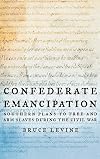
Using the halting efforts of the Confederate government to organized black military units at the stroke of midnight as a prism, Levine considers what this whole episode says about the weakness of Southern society in terms of achieving cohesive social action and how the willingness of the enslaved population to vote with their feet undermined Richmond's war effort. Essentially, Levine finds an effort to stage a revolution from above as was done in Prussia, Russia, and Japan to grant limited show more emancipation while maintaining the preponderant rights of the political classes; a grasping at straws that in the Confederacy's case was undermined by the overweening sense of denial displayed by a planter class only concerned with their local affairs. Regardless of your opinions regarding American social and political relations, the unwillingness of the planters to collectively do the hard thing in the face of imminent disaster should give you pause for thought.
I mark this book down slightly for two points. One, Levine could have dwelt a little more on how even if large numbers of Afro-Confederate soldiers could have been raised, the logistical wherewithal to do so really wasn't there in 1865. Two, while we hear from the non-slaveholders of the Confederacy, and their concerns about maintaining racial separation, we hear rather less from the planter substrate on whose behalf so much useless sacrifice was made. This is as opposed to their self-appointed spokesmen in the Confederate press. show less
I mark this book down slightly for two points. One, Levine could have dwelt a little more on how even if large numbers of Afro-Confederate soldiers could have been raised, the logistical wherewithal to do so really wasn't there in 1865. Two, while we hear from the non-slaveholders of the Confederacy, and their concerns about maintaining racial separation, we hear rather less from the planter substrate on whose behalf so much useless sacrifice was made. This is as opposed to their self-appointed spokesmen in the Confederate press. show less
Lists
Awards
You May Also Like


Associated Authors
Statistics
- Works
- 11
- Also by
- 3
- Members
- 1,047
- Popularity
- #24,609
- Rating
- 4.0
- Reviews
- 12
- ISBNs
- 27
- Languages
- 1