
Marybeth Lorbiecki
Author of Sister Anne's Hands (Picture Puffins)
About the Author
Marybeth Lorbiecki, M.A., has long been involved in the field of ecological ethics and conservation. Currently she is a developmental editor and the volunteer director of Interfaith Oceans (formerly Interfaith Ocean Ethics Campaign). Her book Following St. Francis: John Paul Il's Call for show more Ecological Action (Rizzoli Ex Libris, 2014) launched her into worldwide conversation about the intersection of faith and ecology. At the same time, she has remained a respected expert in the field as demonstrated by her ongoing speaking and writing engagements on Leopold and his land ethic. She has also served as an adjunct professor at the University of Wisconsin-River Falls. Besides Lorbiecki's nonfiction works for adults, she has over 25 award-winning children's books, most of which explore the relationships between people and the land, and to each other. show less
Works by Marybeth Lorbiecki
Of Things Natural, Wild, and Free: A Story About Aldo Leopold (A Carolrhoda Creative Minds Book) (1993) 26 copies
Things Natural, Wild, and Free: The Life of Aldo Leopold (Conservation Pioneers) (2011) 8 copies, 1 review
Tagged
Common Knowledge
- Gender
- female
Members
Reviews
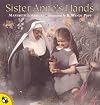
Anna is excited to start second grade with her new teacher Sister Anne. Sister Anne makes every subject in school fun and Anna doesn't understand when people comment on her skin color or why parents decide to pull students from her class. Sister Anne makes a point to teach her student's the hardships black people face and the importance of being kind to all people. When the year is up and sister Anne has to go, Anna makes her a card that demonstrates how hatred and racism are taught, not show more inherent.
I loved this book and the message it portrayed. Even in today's society racism is still a prevalent issue that needs to be discussed and this book does a great job of doing so. It also has beautiful illustrations to accompany it. I would read this to my class. show less
I loved this book and the message it portrayed. Even in today's society racism is still a prevalent issue that needs to be discussed and this book does a great job of doing so. It also has beautiful illustrations to accompany it. I would read this to my class. show less
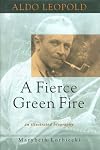
I have finished Aldo Leopold: A Fierce Green Fire by Marybeth Lorbiecki. It was short and I sometimes missed having greater detail about the life of this extraordinary man but I liked the illustrations and feel like I have a good understanding of both his life and times.
I think Leopold’s greatest lesson for us is how he merged his personal and professional lives into a spiritual whole that benefited the world. His early passion for the outdoors as both a watcher and a hunter forged a show more strong foundation of knowledge, skills and dispositions that made his path seem preordained. Professionally, he helped shape the Forest Service and national wildlife management practices. Personally, his love for the Shack was his personal chance to put his beliefs into practice in a very real way.
Also, the biography shows how Leopold himself learned about living with wilderness. While his path may have been preordained, he did not come into the world knowing the answers. Instead, he used his knowledge and skills to both investigate and learn. For instance, I was surprised at his attitude towards predators like wolves described early in the book. Certainly an environmentalist must understand their role in the natural world. But, I’m writing from a 21st century perspective. Leopold’s early attitude was part of the culture of the first half of the 20th century so it took him some time to break free. Leopold’s editor, Albert Hochbaum, described this learning process:
'Albert dashed off one more letter on the subject: Aldo’s unique gift was not that he was “an inspired genius,” he said, but that we was like “any other ordinary fellow trying to put two and two together.” The Professor simply “added up his sums better than most.” Wrong trails taken were as important as right one (p. 167)'.
The title of the book comes from Leopold’s own description of the moment when he realized he was on the wrong trail when it came to predators as he described fierce green fire in the eyes of the mother wolf he had shot:
'I was young then, and full of trigger-itch. I thought that because fewer wolves meant more deer, that no wolves would mean hunters’ paradise. But after seeing the green fire die, I sensed that neither the wolf nor the mountain agreed with such a view (p. 167)'.
Leopold was pragmatic about other people’s commitment to wildlife preservation. When he was accused of only wanting to preserve wildlife so it could be hunted, he suggested that hunters and conservationists needed to work together. He was also was also honest about his own impact on the world and described a middle way:
'I realize, that every time I turn on an electric light…I am ’selling out’ to the enemies of conservation. When I submit these thoughts to a printing press, I am helping to cut down the woods. When I pour cream in my coffee, I am helping to drain a marsh for cows to graze, and to exterminate the birds of Brazil…What to do? I see only two courses open to the likes of us. One is to go live on locusts in the wilderness, if there is any wilderness left (p. 144)'.
Lorbiecki goes on to describe Leopold’s other course: “The other, he explained, is to help businesses and consumers become conservation-minded so they find ways to enjoy some comforts of modern life without ruining the land (p. 114)'.
Like Woody Guthrie, Leopold was a prolific writer. He had things to tell the world and no matter what else was going on in his life, he wrote and published. He had good advice for his students who often had to go through multiple drafts before Leopold approved:
'Think of it this way. In spite of all the advances of modern science, it still takes seven waters to clean spinach for the pot…And for all my writings to this day, it still takes seven editings, sometimes seventeen, before I let it go off to press (p. 150).'
I wonder what Leopold would think about the more spontaneous nature of much blog writing?
I enjoyed the book, wanted more and have now moved on to Leopold’s own work: A Sand County Almanac. I’m reading the edition from the 60s that combined his original work with other writing. show less
I think Leopold’s greatest lesson for us is how he merged his personal and professional lives into a spiritual whole that benefited the world. His early passion for the outdoors as both a watcher and a hunter forged a show more strong foundation of knowledge, skills and dispositions that made his path seem preordained. Professionally, he helped shape the Forest Service and national wildlife management practices. Personally, his love for the Shack was his personal chance to put his beliefs into practice in a very real way.
Also, the biography shows how Leopold himself learned about living with wilderness. While his path may have been preordained, he did not come into the world knowing the answers. Instead, he used his knowledge and skills to both investigate and learn. For instance, I was surprised at his attitude towards predators like wolves described early in the book. Certainly an environmentalist must understand their role in the natural world. But, I’m writing from a 21st century perspective. Leopold’s early attitude was part of the culture of the first half of the 20th century so it took him some time to break free. Leopold’s editor, Albert Hochbaum, described this learning process:
'Albert dashed off one more letter on the subject: Aldo’s unique gift was not that he was “an inspired genius,” he said, but that we was like “any other ordinary fellow trying to put two and two together.” The Professor simply “added up his sums better than most.” Wrong trails taken were as important as right one (p. 167)'.
The title of the book comes from Leopold’s own description of the moment when he realized he was on the wrong trail when it came to predators as he described fierce green fire in the eyes of the mother wolf he had shot:
'I was young then, and full of trigger-itch. I thought that because fewer wolves meant more deer, that no wolves would mean hunters’ paradise. But after seeing the green fire die, I sensed that neither the wolf nor the mountain agreed with such a view (p. 167)'.
Leopold was pragmatic about other people’s commitment to wildlife preservation. When he was accused of only wanting to preserve wildlife so it could be hunted, he suggested that hunters and conservationists needed to work together. He was also was also honest about his own impact on the world and described a middle way:
'I realize, that every time I turn on an electric light…I am ’selling out’ to the enemies of conservation. When I submit these thoughts to a printing press, I am helping to cut down the woods. When I pour cream in my coffee, I am helping to drain a marsh for cows to graze, and to exterminate the birds of Brazil…What to do? I see only two courses open to the likes of us. One is to go live on locusts in the wilderness, if there is any wilderness left (p. 144)'.
Lorbiecki goes on to describe Leopold’s other course: “The other, he explained, is to help businesses and consumers become conservation-minded so they find ways to enjoy some comforts of modern life without ruining the land (p. 114)'.
Like Woody Guthrie, Leopold was a prolific writer. He had things to tell the world and no matter what else was going on in his life, he wrote and published. He had good advice for his students who often had to go through multiple drafts before Leopold approved:
'Think of it this way. In spite of all the advances of modern science, it still takes seven waters to clean spinach for the pot…And for all my writings to this day, it still takes seven editings, sometimes seventeen, before I let it go off to press (p. 150).'
I wonder what Leopold would think about the more spontaneous nature of much blog writing?
I enjoyed the book, wanted more and have now moved on to Leopold’s own work: A Sand County Almanac. I’m reading the edition from the 60s that combined his original work with other writing. show less
The watercolors are amazing, but the message is not very sophisticated. It is told from the viewpoint of Sister anne's white 2nd grade students. Sister Anne is a nun with dark skin (it is unclear how she identifies from the book) who is teaching in a white school in the 1960s. Anna is a white girl in her class, narrating the story. Sister Anne confronts the class with pictures of racial violence after someone flies an airplane into her with a racist poem. The class seems to shape up and show more respect the kind peaceful nun who gives them all a second chance. At the end, Anna gives her a card with her hand and Sister Anne's hand, and says she learned "now whenever I draw someone's hands-or big toes-I fill them in with browns and pinks and whites, reds and yellows and blues, polka dots, circles, and stripes." Problem #1: adding non-human 'polka-dots, circles, and stripes' dehumanizes the other colors. Problem #2: THAT'S what you took away from watching a woman struggle with your community's racism? Using all the colors in your oil pastel box? This one's going to the goodwill. show less
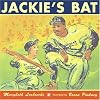
The narrator Joey is telling the story about how he was the bat boy for the Dodgers. Jackie Robinson just so happened to be a new team member at the time. A black man at that. The first black man on the team. Joey sees how everyone else treats Jackie so he does no different. He comes to realize that no matter how hard those people go at Jackie he doesn't budge. He continues to do for his team and plays a hand in the losing but playing a major hand in them winning. The more the Dodgers win, show more the more Jackie is liked. Joey also finally sees Jackie as the man he is and not how they were previously treating him. show less
Lists
Awards


You May Also Like


Associated Authors
Statistics
- Works
- 25
- Members
- 1,096
- Popularity
- #23,435
- Rating
- 4.2
- Reviews
- 63
- ISBNs
- 67
- Languages
- 1