
Works by Sarah Messer
Associated Works
Choice: True Stories of Birth, Contraception, Infertility, Adoption, Single Parenthood, and Abortion (2007) — Contributor — 94 copies, 4 reviews
Tagged
Common Knowledge
- Canonical name
- Messer, Sarah
- Birthdate
- 1966
- Gender
- female
- Occupations
- dichter
- Organizations
- University of North Carolina-Wilmington
- Nationality
- USA
- Places of residence
- Ann Arbor, Michigan, USA
- Associated Place (for map)
- USA
Members
Reviews
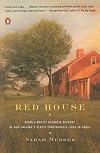
Red house : being a mostly accurate account of New England's oldest continuously lived-in house by Sarah Messer
I'm not one for history (except when it comes to war). That being said, this is the first non-fiction piece I've ever read that managed to fuse what seems like nonsensical history together with an overall theme of meaning. I wasn't simply reading a book stating how tall the chimney of Red House is and what color it is, I was reading a book describing a house as though it was the main character.
Indeed, Red House is the main character in this story. The reader starts out becoming familiar show more with the dad of the family more than even the narrator, but that slowly transitions when the narrator begins her research and begins to understand what the house really means to her, her family, and the Hatch families who came before.
I'll admit, for me, even though the book was better than expected, it was still painful at times, and it almost felt like I had completed a huge challenge when I finished the book. That doesn't mean I didn't like the writing style: I enjoyed the plot, the grammar was spot-on perfect, ...but, it just wasn't my personal favorite of the year. When it comes to non-fiction, I enjoy novels more along the lines of memoirs. Yes, this book does a good job of letting you understand who the narrator is through the house, but I wanted to know more. And I think it was intentional on the author's part to not deliver that since, duh, the book is about Red House, not the author! show less
Indeed, Red House is the main character in this story. The reader starts out becoming familiar show more with the dad of the family more than even the narrator, but that slowly transitions when the narrator begins her research and begins to understand what the house really means to her, her family, and the Hatch families who came before.
I'll admit, for me, even though the book was better than expected, it was still painful at times, and it almost felt like I had completed a huge challenge when I finished the book. That doesn't mean I didn't like the writing style: I enjoyed the plot, the grammar was spot-on perfect, ...but, it just wasn't my personal favorite of the year. When it comes to non-fiction, I enjoy novels more along the lines of memoirs. Yes, this book does a good job of letting you understand who the narrator is through the house, but I wanted to know more. And I think it was intentional on the author's part to not deliver that since, duh, the book is about Red House, not the author! show less
Red House: Being a Mostly Accurate Account of New England's Oldest Continuously Lived-in House by Sarah Messer
This book could have been so much better than it was - which is the truly disappointing thing.
The book tells the story of a house in southern Massachusetts that has been lived in (almost exclusively) by the same family from 1646 through the mid 1960's when a new, unrelated family, buys the house and lives there. The story is told in alternating chapters based on the historical knowledge for each generation of the original family then from the perspective of the current owners.
What went show more wrong is that neither perspective is well told. Knowing that there are limited records from the mid 1600's, the reader is not drawn to what happened at that time but there are long descriptions of the land and the house. My imagination couldn't really pull together what the area looked like in 1646 and how that changed in the subsequent eras. The perspective of the current residents was spotty and uneven. There is a paragraph near the end of the book, where the author (who grew up in the house as the 'current family') relays a conversation with an old boyfriend and goes into detail on what was on his tuna sandwich! I really didn't understand why the conversation (and subsequent actions) were even included never mind the tuna sandwich.
What does come across is how difficult it is to have a family house passed through the decades - the allure of history but the potential resentment that you could never create your own history but continue to live the history of your extended family. For the current family that lives there, they are living in a house with someone else history - the history they are making in their day-to-day live getting overshadowed by the history of the house and the generations of people that lived there previously.
I wanted to like this book but there is a lot that was wrong with it and not enough that drew me in. If this wasn't a book club book, I don't think I would have finished it. show less
The book tells the story of a house in southern Massachusetts that has been lived in (almost exclusively) by the same family from 1646 through the mid 1960's when a new, unrelated family, buys the house and lives there. The story is told in alternating chapters based on the historical knowledge for each generation of the original family then from the perspective of the current owners.
What went show more wrong is that neither perspective is well told. Knowing that there are limited records from the mid 1600's, the reader is not drawn to what happened at that time but there are long descriptions of the land and the house. My imagination couldn't really pull together what the area looked like in 1646 and how that changed in the subsequent eras. The perspective of the current residents was spotty and uneven. There is a paragraph near the end of the book, where the author (who grew up in the house as the 'current family') relays a conversation with an old boyfriend and goes into detail on what was on his tuna sandwich! I really didn't understand why the conversation (and subsequent actions) were even included never mind the tuna sandwich.
What does come across is how difficult it is to have a family house passed through the decades - the allure of history but the potential resentment that you could never create your own history but continue to live the history of your extended family. For the current family that lives there, they are living in a house with someone else history - the history they are making in their day-to-day live getting overshadowed by the history of the house and the generations of people that lived there previously.
I wanted to like this book but there is a lot that was wrong with it and not enough that drew me in. If this wasn't a book club book, I don't think I would have finished it. show less
Red house : being a mostly accurate account of New England's oldest continuously lived-in house by Sarah Messer
Sarah Messer tells a fascinating story about Marshfield, Massachusetts and the Red House her family came to inhabit when it was just over 300 years old, drawn from documents left behind by the house's former owners, interviews with families and neighbors, town records, and various local histories. The story has a charming but unsettling dreamlike quality, and reads easily, much more like fiction than history. It is as much a story about her quest to uncover the history of Red House and the show more Hatch family as it is about the ostensible subject itself, and as such, it is intimately concerned with the relationships between people and houses, specifically, between Red House and Messer herself.
Messer leaves a number of questions about the house unanswered, which is frustrating to me, and I think to her as well, though in the end she seems to brush this off. There apparently remains some question about when, exactly, the house was built, which is not resolved despite the discussion of different ways a date might be definitively established; neither is the question of why Messer's father suddenly changes his mind about the date the house was built ever answered. However, Messer provides extensive notes and a very thorough bibliography along with information about where and how to find her sources, and there are some excellent illustrations included. (I find myself wishing there were more.) The book is a little technical with respect to architecture and history, but not impenetrably so; it's an accessible read even for someone with no formal background in history, architecture, or archaeology.
One oddity: my edition (Penguin paperback, 2004) has a number of small but noticeable typographical errors. show less
Messer leaves a number of questions about the house unanswered, which is frustrating to me, and I think to her as well, though in the end she seems to brush this off. There apparently remains some question about when, exactly, the house was built, which is not resolved despite the discussion of different ways a date might be definitively established; neither is the question of why Messer's father suddenly changes his mind about the date the house was built ever answered. However, Messer provides extensive notes and a very thorough bibliography along with information about where and how to find her sources, and there are some excellent illustrations included. (I find myself wishing there were more.) The book is a little technical with respect to architecture and history, but not impenetrably so; it's an accessible read even for someone with no formal background in history, architecture, or archaeology.
One oddity: my edition (Penguin paperback, 2004) has a number of small but noticeable typographical errors. show less
Red house : being a mostly accurate account of New England's oldest continuously lived-in house by Sarah Messer
A biography of a house. Who knew? Going back and forth between the history of the Hatch family and the autobiographical history of the author's family this book tells the story of the inhabitants of the oldest continuously lived in house is New England.
It is often difficult to take in the details of a family's life, but more so when the author is writing about hers. This is warts and all. And yet the house survives the latest residents that have no familial connection.
It is often difficult to take in the details of a family's life, but more so when the author is writing about hers. This is warts and all. And yet the house survives the latest residents that have no familial connection.
You May Also Like


Associated Authors
Statistics
- Works
- 5
- Also by
- 3
- Members
- 240
- Popularity
- #94,568
- Rating
- 3.8
- Reviews
- 7
- ISBNs
- 6