
Tom Fort
Author of The A303: Highway to the Sun
Works by Tom Fort
Associated Works
Tagged
Common Knowledge
- Canonical name
- Fort, Tom
- Birthdate
- 20th Century
- Gender
- male
- Education
- Eton College
Balliol College, Oxford - Organizations
- BBC
- Agent
- United Agents
- Nationality
- UK
- Places of residence
- Oxfordshire, England, UK
- Associated Place (for map)
- England, UK
Members
Reviews

A tricky one to review. It's very well-written and an enjoyable read (in an often calming, cheerfully banal sort of way). The story of Johannes Schmidt in particular is fascinating and well-told.
My issue was with the writer's starting approach and biases therefore. He is fundamentally an angler, not a scientist or conservationist. He expends many words on tedious kit talk, the taste of the eel, and taking about other anglers in a sort of myth-building breathy way: most of whom he idolises as show more free-fighting renegades against a modern system of quotas, licenses, and environmental busybodyism.
But the fundamental issues are: 1. The eel is critically endangered. 2. Their decline affects and is affected by worldwide ecosystems. 3. Environmental and fishery agencies have policies in place to address this issue, and some are working, some are not. In comparison to this, some Boomer-generation white men who like to fish in their spare time and find their local Fisheries Officer annoying is very uninteresting. show less
My issue was with the writer's starting approach and biases therefore. He is fundamentally an angler, not a scientist or conservationist. He expends many words on tedious kit talk, the taste of the eel, and taking about other anglers in a sort of myth-building breathy way: most of whom he idolises as show more free-fighting renegades against a modern system of quotas, licenses, and environmental busybodyism.
But the fundamental issues are: 1. The eel is critically endangered. 2. Their decline affects and is affected by worldwide ecosystems. 3. Environmental and fishery agencies have policies in place to address this issue, and some are working, some are not. In comparison to this, some Boomer-generation white men who like to fish in their spare time and find their local Fisheries Officer annoying is very uninteresting. show less
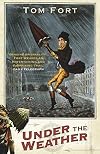
Well written in a journalist's type of way and lots of interesting information, though author does tend to digress maybe a bit too much at times. However, there is an index so it should be possible to relocate specific information if required. One particularly interesting point it makes is how much more dependent on the weather people were in the past
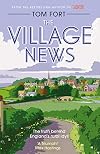
The English countryside has many quintessential images, the patchwork of fields, lanes with high hedges and sleepy villages nestled in between hills and dales. The village or hamlet has been a place of habitation for many hundreds of years in this country, a place that was deeply rooted in the locality, made from the materials that surrounded it and with a strong connection to the landscape. Some outgrew their original layout into towns and a few into cities, but the vast majority have show more remained as villages.
The role of the village has changed dramatically in the 20th and into the 21st Century; what once was a place where people rarely ventured from and generally lived all their lives, had a busy and purposeful existence, has now become a quaint place for commuters to live and second home owners to visit occasionally. Tom Fort wonders if there is still a life and soul to village life, and decides that the best way to find it is to climb on his faithful bicycle and go and find out for himself. Visiting villages from Foxton in Cambridgeshire to Pitton in Wiltshire, he considers at how village life has evolved and changed over the past 6000 years in our country. He visits the villages where there is still an active community and others where people hardly talk at all.
Fort writes in an amiable way that makes him quite endearing as he travels to all the village that add to the story of rural life. He mixes historical detail with encounters and personal anecdotes of his own village life when he was growing up and now in the village of Sonning Common. Rightly, he has a rant over the way that the homes that they build in villages now days completely lacking in any design and originality and any nod to the local area they are being built in and are just homogenised layouts repackaged by a marketing department to suit. There are no dramatic revelations in here, just a warm nostalgia for the past days with an acknowledgement of the positive and negative progress of life today in the English village. Really enjoyable read. show less
The role of the village has changed dramatically in the 20th and into the 21st Century; what once was a place where people rarely ventured from and generally lived all their lives, had a busy and purposeful existence, has now become a quaint place for commuters to live and second home owners to visit occasionally. Tom Fort wonders if there is still a life and soul to village life, and decides that the best way to find it is to climb on his faithful bicycle and go and find out for himself. Visiting villages from Foxton in Cambridgeshire to Pitton in Wiltshire, he considers at how village life has evolved and changed over the past 6000 years in our country. He visits the villages where there is still an active community and others where people hardly talk at all.
Fort writes in an amiable way that makes him quite endearing as he travels to all the village that add to the story of rural life. He mixes historical detail with encounters and personal anecdotes of his own village life when he was growing up and now in the village of Sonning Common. Rightly, he has a rant over the way that the homes that they build in villages now days completely lacking in any design and originality and any nod to the local area they are being built in and are just homogenised layouts repackaged by a marketing department to suit. There are no dramatic revelations in here, just a warm nostalgia for the past days with an acknowledgement of the positive and negative progress of life today in the English village. Really enjoyable read. show less
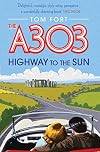
A gentle and engaging read as Fort examines the sights, history, and story of one of England’s most traveled roads. Following it on its westward journey from the outskirts of London to the West Country it provoked smiles of recognition, some good memories (especially when it reached the Wiltshire an Somerset chapters - as I drove many of those roads on a regular basis at one time), as well as quite a few moments of “I didn’t know that.” If the book has a flaw is that there is too show more much focus on getting to, and arriving at, Stonehenge and not enough on some of the lesser known history. I could also have done with less of the politics of road building and the coming and going of various transport ministers, and more about the people he encountered on the road. But any book that leaves you feeling nostalgic for breakfast at a Little Chef is definitely hitting the right notes. show less
Awards

You May Also Like


Statistics
- Works
- 12
- Also by
- 1
- Members
- 315
- Popularity
- #74,964
- Rating
- 3.5
- Reviews
- 11
- ISBNs
- 30
- Languages
- 1