
Benjamin Nugent
Author of American Nerd: The Story of My People
About the Author
Benjamin Nugent has written nonfiction for GQ, The New York Times Magazine, Time, New York, and n+1. His fiction has appeared in Tin House.
Works by Benjamin Nugent
Associated Works
A Truth Universally Acknowledged: 33 Great Writers on Why We Read Jane Austen (2009) — Contributor — 411 copies, 18 reviews
Tagged
Common Knowledge
- Canonical name
- Nugent, Benjamin
- Birthdate
- 1977
- Gender
- male
- Education
- Reed College (BA | English | 1999)
University of Iowa (MFA) - Occupations
- journalist
novelist
writer
professor - Organizations
- Southern New Hampshire University
- Awards and honors
- Terry Southern Prize (2019)
- Relationships
- Baker, Annie (sister)
- Nationality
- USA
- Birthplace
- Amherst, Massachusetts, USA
- Places of residence
- Los Angeles, California, USA
- Associated Place (for map)
- USA
Members
Reviews

A light, readable cultural history, meditation, and memoir on an infamous cultural type, "American Nerd" shouldn't be mistaken for a comprehensive study of the species. Still, Nugent is a likable writer and does a good enough job of tracing nerdiness along various historical, social, cultural, medical and economic axes to make this a useful tool for readers looking to better articulate or understand their own nerd identities. The two character sketches he includes here, which describe show more friends of his who used typically nerdy pursuits to escape from painful and chaotic home lives, can even be said to be moving, and he's admirably honest about his own experiences with socially undignified pastimes. Still, I'm disappointed that the "Revenge of the Nerds" movies earned several mentions while "Real Genius," a movie that feels truer to the nerd experience and treats it much more kindly, didn't even rate one.
I'm certain that many of the readers who pick up "American Nerd" will see a lot of themselves in the monomaniacal geeks and socially awkward superfans it describes. In an odd way, though, the book also made me question my own status as a nerd, a designation I've applied to myself at different points throughout my life. Nugent posits that an attraction to systems involving unambiguous rules and order and an aversion to the subtleties of human emotion and social interaction are the foundation of a nerd's worldview. Since I was a very average math student and am hopeless with machines, I just don't fit the profile. I'm a books-and-records dweeb exclusively, consider myself more intuitive than rational, and simply can't relate to most of the computer programmers, sci-fi fans, and gamers described in "American Nerd." This doesn't mean I'm always socially adept or that I don't have my obsessions, mind you, but Nugent's book made me think that it might be time to find myself a more accurate subcultural designation. Maybe I'll be the one to write "American Bookworm?" show less
I'm certain that many of the readers who pick up "American Nerd" will see a lot of themselves in the monomaniacal geeks and socially awkward superfans it describes. In an odd way, though, the book also made me question my own status as a nerd, a designation I've applied to myself at different points throughout my life. Nugent posits that an attraction to systems involving unambiguous rules and order and an aversion to the subtleties of human emotion and social interaction are the foundation of a nerd's worldview. Since I was a very average math student and am hopeless with machines, I just don't fit the profile. I'm a books-and-records dweeb exclusively, consider myself more intuitive than rational, and simply can't relate to most of the computer programmers, sci-fi fans, and gamers described in "American Nerd." This doesn't mean I'm always socially adept or that I don't have my obsessions, mind you, but Nugent's book made me think that it might be time to find myself a more accurate subcultural designation. Maybe I'll be the one to write "American Bookworm?" show less
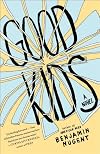
I just put this book down and had such a visceral reaction to the ending, or lack thereof, that I had to immediately write this review.
I have never been more disappointed with the ending of a book! It is sad, really, because I had so thoroughly enjoyed the writing style and the content of the book up 'til the last 2 chapters. I appreciated the narrator's way of speaking, having highlighted many phrases for awesome quotes for this review, and found myself really getting into the character, show more flawed and unreliable a narrator as he was. I could even detect a definite theme, complete with Aesopian moral, but then, it just...ended!
This is a book that reads like a memoir, but ends like a European slice of life flick. Josh has no epiphany. He doesn't grow up. His father does, or rather is seemingly forced to do so, but we can see that he really hasn't changed that much either.
On the plus side, this book has some awesome quotes! This author definitely has a masterful way with the language. The characters are certainly colorful, and Josh says some of the most interesting things. A few of my favorites are below:
"You can take Big Bird, and give Big Bird two heads, and Big Bird's a raptor from the abyss, a nightmare."
"The thought was so evil that I dropped it and ignored it, let it scurry like a cockroach into the dark..."
"I felt an urgent need to defend somebody. But I didn't know who I was supposed to defend..."
"Maybe this was how you moved through adulthood--always walking both directions at once, toward redemption and hell..." (This one is my favorite!)
************If you keep reading past this point, beware of spoilers!!!!**********
***********************SPOILERS BELOW THIS POINT*********************************
Josh Paquette, our narrator, spies his father kissing the mother of a beautiful girl in his grade, Khadijah Silvergate-Dunn. In fact, they witness the event together, which becomes the linchpin in their budding relationship and determines the course of the rest of Josh's life.
Because of this one kiss, Josh finds love, loses it, and vows to never be like his father, which of course dooms Josh to become almost exactly like him, including his father's obsessive desire to have an unobtainable artistic career and an equal obsessive longing for the girl he couldn't have. We watch from Josh's point of view, and hear his inner pining for Khadijah as he grows up. He mentally writes letters to her, and his each move is based on whether or not it would make her proud, as she becomes the figure he needs approval from instead of his father.
Once Josh finds a new love, Julie, who really mirrors Khadijah's mother although the narrator never seems to notice that, he seems to momentarily forget his obsession for Khadijah. As the two lovebirds get engaged, Khadijah re-enters his life, and again becomes his obsession.
We, the readers, see how ironically he has become exactly like his father. Furthermore, we can, probably, at this point see how this is going to end. The question becomes will he end up with Julie? Or Khadijah? Or, the third option, will he learn from losing them both and move on to truly grow up?
The true romantic in me wishes he would have ended up with Khadijah, while ending up with Julie would have an ending reminiscent of "My Best Friend's Wedding" (which I hated). The third option is the mature way to handle the situation, but requires him to have an epiphany of some sort in order for this reader to obtain closure.
I get the feeling that the third option is what the author was going for, but there was no true feeling of resolution. After his last encounter with Khadijah, he just goes on. She gave up, and he subsequently gave up on her as well. By the end, this book didn't have a single likable character. Josh is a bum. Khadijah has turned into a sad little version of her mother. Josh's dad is an alcoholic and headed to disaster (although I think he likes the constant state of crisis). Julie is a hateful, self-centered, Hollywood fake. And all the other characters were caricatures of real people from the beginning. show less
I have never been more disappointed with the ending of a book! It is sad, really, because I had so thoroughly enjoyed the writing style and the content of the book up 'til the last 2 chapters. I appreciated the narrator's way of speaking, having highlighted many phrases for awesome quotes for this review, and found myself really getting into the character, show more flawed and unreliable a narrator as he was. I could even detect a definite theme, complete with Aesopian moral, but then, it just...ended!
This is a book that reads like a memoir, but ends like a European slice of life flick. Josh has no epiphany. He doesn't grow up. His father does, or rather is seemingly forced to do so, but we can see that he really hasn't changed that much either.
On the plus side, this book has some awesome quotes! This author definitely has a masterful way with the language. The characters are certainly colorful, and Josh says some of the most interesting things. A few of my favorites are below:
"You can take Big Bird, and give Big Bird two heads, and Big Bird's a raptor from the abyss, a nightmare."
"The thought was so evil that I dropped it and ignored it, let it scurry like a cockroach into the dark..."
"I felt an urgent need to defend somebody. But I didn't know who I was supposed to defend..."
"Maybe this was how you moved through adulthood--always walking both directions at once, toward redemption and hell..." (This one is my favorite!)
************If you keep reading past this point, beware of spoilers!!!!**********
***********************SPOILERS BELOW THIS POINT*********************************
Josh Paquette, our narrator, spies his father kissing the mother of a beautiful girl in his grade, Khadijah Silvergate-Dunn. In fact, they witness the event together, which becomes the linchpin in their budding relationship and determines the course of the rest of Josh's life.
Because of this one kiss, Josh finds love, loses it, and vows to never be like his father, which of course dooms Josh to become almost exactly like him, including his father's obsessive desire to have an unobtainable artistic career and an equal obsessive longing for the girl he couldn't have. We watch from Josh's point of view, and hear his inner pining for Khadijah as he grows up. He mentally writes letters to her, and his each move is based on whether or not it would make her proud, as she becomes the figure he needs approval from instead of his father.
Once Josh finds a new love, Julie, who really mirrors Khadijah's mother although the narrator never seems to notice that, he seems to momentarily forget his obsession for Khadijah. As the two lovebirds get engaged, Khadijah re-enters his life, and again becomes his obsession.
We, the readers, see how ironically he has become exactly like his father. Furthermore, we can, probably, at this point see how this is going to end. The question becomes will he end up with Julie? Or Khadijah? Or, the third option, will he learn from losing them both and move on to truly grow up?
The true romantic in me wishes he would have ended up with Khadijah, while ending up with Julie would have an ending reminiscent of "My Best Friend's Wedding" (which I hated). The third option is the mature way to handle the situation, but requires him to have an epiphany of some sort in order for this reader to obtain closure.
I get the feeling that the third option is what the author was going for, but there was no true feeling of resolution. After his last encounter with Khadijah, he just goes on. She gave up, and he subsequently gave up on her as well. By the end, this book didn't have a single likable character. Josh is a bum. Khadijah has turned into a sad little version of her mother. Josh's dad is an alcoholic and headed to disaster (although I think he likes the constant state of crisis). Julie is a hateful, self-centered, Hollywood fake. And all the other characters were caricatures of real people from the beginning. show less
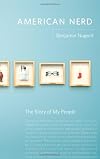
The Internet is awash with 'Nerd'. Nerd groups, nerd forums, definitions, delineations, 'What-Kind-Of-Nerd-Are-You' quizzes, on and on and on. Lots of casual chat and banter and bandwidth. Lots of fun, tempered by the occasional angry rage of nonacceptance and societal chagrin. All and all, nothing very significant.
Luckily, we have print.
Nugent is a nerd, and fully admits that it is a very nerdy thing to take seriously something usually treated very lightly, but no one has really done it show more before, so he might as well. Roughly the first half is spent defining the word 'nerd' and trying to figure out where it came from, which is probably the only time you will ever see Pride and Prejudice and Saturday Night Live as being a common influence for anything. He goes on to explore the world of the nerd both through active exploration and introspection on to his own dice rolling, Atari wielding childhood. He unexpectedly jumps from thought to thought, one moment looking at the Romantic disdain for intense intellectualism, to the Muscular Christianity of the 1880s, to Bill Murray with an almost ADD-like presentation. Indeed, the first half often feels unfinished and spare, more like a college paper than a book. For me, it came into its own when he got out of the socio-history and went into finding and talking to other nerds across the country. Most telling and heart wrenching are the childhood friends he finds, a decade and a half after he abandoned them to their nerdieness in an attempt to become 'normal'. Never before have I really thought that nerdy behavior and proclivities are not just casual preferences, but for many a survival tactic.
Nugent himself is a rather good young journalist. He clearly has all of the intelligence, cultural literacy, and wit as the likes of Klosterman without the painfully in-your-face irony and conceited pretension Chuck and his ilk tend to project. On a whole, American Nerd is not a stellar work of scholarship, nor a shining beacon of enlightenment for the socially inept of the nation; however, it is a readable, entertaining, thought provoking, and surprisingly moving treatise on the people who drive the technology, innovation, and imagination of much of the modern world. As he points out, all the great American heroes, the cowboys, jocks, surfers and gangsters, were created by the people sitting at the wrong lunch table in highschool. show less
Luckily, we have print.
Nugent is a nerd, and fully admits that it is a very nerdy thing to take seriously something usually treated very lightly, but no one has really done it show more before, so he might as well. Roughly the first half is spent defining the word 'nerd' and trying to figure out where it came from, which is probably the only time you will ever see Pride and Prejudice and Saturday Night Live as being a common influence for anything. He goes on to explore the world of the nerd both through active exploration and introspection on to his own dice rolling, Atari wielding childhood. He unexpectedly jumps from thought to thought, one moment looking at the Romantic disdain for intense intellectualism, to the Muscular Christianity of the 1880s, to Bill Murray with an almost ADD-like presentation. Indeed, the first half often feels unfinished and spare, more like a college paper than a book. For me, it came into its own when he got out of the socio-history and went into finding and talking to other nerds across the country. Most telling and heart wrenching are the childhood friends he finds, a decade and a half after he abandoned them to their nerdieness in an attempt to become 'normal'. Never before have I really thought that nerdy behavior and proclivities are not just casual preferences, but for many a survival tactic.
Nugent himself is a rather good young journalist. He clearly has all of the intelligence, cultural literacy, and wit as the likes of Klosterman without the painfully in-your-face irony and conceited pretension Chuck and his ilk tend to project. On a whole, American Nerd is not a stellar work of scholarship, nor a shining beacon of enlightenment for the socially inept of the nation; however, it is a readable, entertaining, thought provoking, and surprisingly moving treatise on the people who drive the technology, innovation, and imagination of much of the modern world. As he points out, all the great American heroes, the cowboys, jocks, surfers and gangsters, were created by the people sitting at the wrong lunch table in highschool. show less
I will point you to the Learned Fangirl’s review for more detail. Like her, I was struck by how male “my” people were. When he does notice women as other than girlfriends providing lunch to SCA attendees, he treats them with the welcome-to-the-zoo attitude he he fights for male nerds. “[T]here are a lot of nerds out there,” he reports, “who read romance novels the same way people read Hundred Years War-between-France-and-England-only-with-dragons novels.” Actually, they’re show more often the same people! This inability to see female nerds/fans I think actually has something to do with the otherwise puzzling repeated reference to Naomi Novik’s Temeraire series without the name. It’s like he senses that she’s sitting there, with the rest of us, at the intersection of fantasy about dragons and fantasy about hot man-on-man action, but he still can’t really see us and so we are (she is) unnameable. Aside from the media fan stuff, the same thing happens with his coverage of policy debate. He even notes that policy debate tournaments are hotbeds of heterosexual mating rituals, which logically necessitates that there are also girls there! I was one of them! Yes, it’s a peculiarly and nerdily masculinized subculture, but that doesn’t mean there are no girls. What did he think we were doing there? It surely wasn’t figuring out how to negotiate masculinity as identity, at least not in anything like the way he talks about. show less
You May Also Like


Associated Authors
Statistics
- Works
- 4
- Also by
- 5
- Members
- 719
- Popularity
- #35,294
- Rating
- 3.5
- Reviews
- 33
- ISBNs
- 22
- Languages
- 1