
Whitley Strieber
Author of Communion
About the Author
Whitley Strieber was born on June 13, 1945 in San Antonio, Texas. He received a B.A. from the University of Texas in 1968 and a certificate from the London School of Economics and Political Science. Before becoming an author, he worked at an advertising agency from 1970 to 1977, going from account show more supervisor to vice president. He is the author of several novels including The Wolfen, The Hunger, Superstorm, The Last Vampire, Lilith's Dream, 2012: The War for Souls, The Omega Point, Critical Mass, Melody Burning, and the Alien Hunter series. In 1987, he published Communion: A True Story, which described his personal encounters with extraterrestrials. His other non-fiction works include Transformation, Breakthrough: The Next Step, The Secret School, Solving the Communion Enigma: What Is to Come, and Miraculous Journey. He founded the Communion Foundation in 1989 to assist in establishing a productive relationship with alien beings. He is the host of the paranormal and fringe science-themed internet podcast, Dreamland, available on a weekly basis from his website, Unknown Country. (Bowker Author Biography) Whitley Strieber, the co-author of the recent "New York Times" "Coming Global Superstorm", is the author of two classic pieces of American horror fiction: "The Hunger" & "The Wolfen". He is also widely known for his multi-million-copy best-selling account of his own close encounter, "Communion: A True Story". He is engaged in the most advanced research being conducted into the physical evidence of close encounters, & the supernatural in general, today. (Publisher Provided) show less
Image credit:
www.vjbooks.com
Series
Works by Whitley Strieber
2012 6 copies
Transformation 2026 3 copies
Father Bob And Bobby 3 copies
Pain 3 copies
The Pool 3 copies
The Breakthrough (Transformation) 2 copies
The Properties Of The Beast 1 copy
Communion with Whitley Strieber: An Interview by Keith Curtis and Leigh Blackmore, Sydney, 1988 1 copy
The Barbed-Wire Kiss 1 copy
Associated Works
Prime Evil: New Stories by the Masters of Modern Horror (1988) — Contributor — 683 copies, 8 reviews
He Is Legend: An Anthology Celebrating Richard Matheson (2009) — Contributor — 208 copies, 6 reviews
Twilight Zone: 19 Original Stories on the 50th Anniversary (2009) — Contributor — 145 copies, 3 reviews
Vampires, Zombies, Werewolves and Ghosts: 25 Classic Stories of the Supernatural (Signet Classics) (2011) — Contributor — 54 copies, 1 review
The Omega Project: Near-Death Experiences, Ufo Encounters, and Mind at Large (1992) — Foreword — 44 copies, 2 reviews
A Haunting of Horrors, Volume 2: A Twenty-Book eBook Bundle of Horror and the Occult (2014) — Contributor — 10 copies
Fangoria Horror Magazine #25, February 1983 — Interview — 2 copies
Fear #16 — Interview — 1 copy
Alien Abduction: Answers [2022 TV documentary] — Actor — 1 copy
Tagged
Common Knowledge
- Legal name
- Strieber, Louis Whitley
- Birthdate
- 1945-06-13
- Gender
- male
- Education
- University of Texas, Austin (BA|1968)
London School of Economics and Political Science
London School of Film Technique (1968) - Occupations
- advertising
author - Organizations
- Communion Foundation
- Relationships
- Strieber, Anne (wife)
- Nationality
- USA
- Birthplace
- San Antonio, Texas, USA
- Places of residence
- San Antonio, Texas, USA
New York, New York, USA - Map Location
- Texas, USA
Members
Discussions
Whitley Strieber: Horror writer... in Thing(amabrarian)s That Go Bump in the Night (January 2009)
Reviews
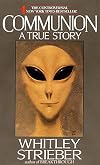
Communion is Strieber's autobiographical accounts of his abductions and interactions with aliens. The book describes what he is convinced are real events spread over many years.
This was a disappointing addition to Strieber's body of work. He's an excellent horror author. I tried to imagine this as just another horror story by him with a false framing story for verisimilitude, despite knowing going in that he truly believes in the abductions and alien interactions described therein. I even show more have some old pictures of my father reading this and tried to think of it as a way of connecting back to his experiences as a reader. I couldn't do it. I couldn't take it seriously. What I'm sure was supposed to feel menacing felt silly, what was supposed to feel hopeful felt ludicrous. The recovered memory tropes don't work as we know in the field of psychology that they're virtually always fictitious. The conspiracy theories and paranoia come across as mentally ill.
I guess, if you consider yourself a survivor of these sorts of abductions you'll probably enjoy this. It just makes me feel sad for Strieber though. show less
This was a disappointing addition to Strieber's body of work. He's an excellent horror author. I tried to imagine this as just another horror story by him with a false framing story for verisimilitude, despite knowing going in that he truly believes in the abductions and alien interactions described therein. I even show more have some old pictures of my father reading this and tried to think of it as a way of connecting back to his experiences as a reader. I couldn't do it. I couldn't take it seriously. What I'm sure was supposed to feel menacing felt silly, what was supposed to feel hopeful felt ludicrous. The recovered memory tropes don't work as we know in the field of psychology that they're virtually always fictitious. The conspiracy theories and paranoia come across as mentally ill.
I guess, if you consider yourself a survivor of these sorts of abductions you'll probably enjoy this. It just makes me feel sad for Strieber though. show less

Wow...coming off of Communion, I was prepared to intensely dislike anything alien related by Strieber, but I had my dad's old copy so I gave it a whirl. There could not possibly be more daylight between these two books. The difference made between framing an developing his ideas as fiction versus his own (probably riddled with mental illness) 'autobiographical' recollections is staggering. All of this taking into account that Strieber undoubtedly *believes* he's basing this fiction on show more fact.
Whereas Communion was plodding and practically unreadable, Majestic is reasonably paced, told from multiple viewpoints, and in a variety of styles (some of it epistolary) and pretty engaging. Majestic is ostensibly the recollections of man, relayed to a reporter, of the early days of the United States involvement with alien visitation, abduction, and focused primarily on events surrounding Roswell along with the governments plans to investigate, cover up, and defend against these 'threats'. The underlying premise being, the threat is really just us, and our choices as society and species are what indicate we're not worthy and ready to be part of something greater, but that others are going to do their best to help us be ready someday. In Strieber's, 'Beyond fear, there is another world,' I find shades of Murakami's 'Unclose your mind. You are not a prisoner. You are a bird in the sky, searching for dreams.'
Strieber is at his best here when he's doing dialogue or describing action. A few of the more introspective and psychedelic scenes drag a little, but the epistolary bits are spot on.
I was also surprised by the surprisingly sensitively handled and aware (despite some expected for the time light misogyny) he is in discussing homosexuality, trans identities, the long term harm caused by being closeted, and the dangers of not being able to live as one's true self. For the time, and from as far as I'm aware a straight, upper middle class, cis white older man who I don't *think* has publicly taken any stances on the issue it was a pleasant shock.
I'm glad I took the time to read this, despite my initial reservations. show less
Whereas Communion was plodding and practically unreadable, Majestic is reasonably paced, told from multiple viewpoints, and in a variety of styles (some of it epistolary) and pretty engaging. Majestic is ostensibly the recollections of man, relayed to a reporter, of the early days of the United States involvement with alien visitation, abduction, and focused primarily on events surrounding Roswell along with the governments plans to investigate, cover up, and defend against these 'threats'. The underlying premise being, the threat is really just us, and our choices as society and species are what indicate we're not worthy and ready to be part of something greater, but that others are going to do their best to help us be ready someday. In Strieber's, 'Beyond fear, there is another world,' I find shades of Murakami's 'Unclose your mind. You are not a prisoner. You are a bird in the sky, searching for dreams.'
Strieber is at his best here when he's doing dialogue or describing action. A few of the more introspective and psychedelic scenes drag a little, but the epistolary bits are spot on.
I was also surprised by the surprisingly sensitively handled and aware (despite some expected for the time light misogyny) he is in discussing homosexuality, trans identities, the long term harm caused by being closeted, and the dangers of not being able to live as one's true self. For the time, and from as far as I'm aware a straight, upper middle class, cis white older man who I don't *think* has publicly taken any stances on the issue it was a pleasant shock.
I'm glad I took the time to read this, despite my initial reservations. show less

Though Strieber is now more well-known for his abduction account books, he established himself as a fantasy/horror writer with unique twists on the old narratives. This one reexamines the werewolf myth, proposing that the ancient folk tales were based on a species of uber-intelligent and powerful wolfs that preyed primarily on humans, even using other cannibalistic humans to lure humans out of their hovels, thus sparking the vampire myths. Now, the wolves have taken up residence in human show more cities to prey on the fringe homeless and poor who won't be missed. But when some overzealous members of the pack kill and consume a couple of NYPD cops, their presence becomes known to some detectives. The battle is on for the pack to destroy the humans cognizant of their presence and protect packs throughout the world from notice.
There's some old fashioned sexism and misogyny based on the time of the book's publication but the book holds up to a modern reading, especially given the unique twist on the werewolf and vampire myth. Great fun and great read. Strieber deserves more attention beyond the abduction stuff.
4 1/2 bones!!!!!
Highly Recommended!!!!! show less
There's some old fashioned sexism and misogyny based on the time of the book's publication but the book holds up to a modern reading, especially given the unique twist on the werewolf and vampire myth. Great fun and great read. Strieber deserves more attention beyond the abduction stuff.
4 1/2 bones!!!!!
Highly Recommended!!!!! show less

Rating: 3.5 out of 5
Tone: Dark urban horror with police procedural elements
Best For: Fans of The Totem, The Rats, or Phase IV
Avoid If: You want tight pacing, consistent characters, or expect werewolves
The Wolfen starts with a chillingly brilliant concept: what if humanity wasn’t at the top of the food chain after all?
Set in the gritty underbelly of a 1970s cityscape, it weaves noir crime with something more primal lurking just outside our vision. It hints at an apex predator hiding in show more plain sight, choosing prey from society’s forgotten, and leaving behind only whispers. It’s unsettling in the best way — a horror that feels almost too plausible.
But the execution?
Smart premise meets clunky storytelling. The book over-explains what should remain mysterious. It swings wildly between stark terror and overwrought introspection, and it treats readers like they won’t “get it” unless told five different ways. There's also tonal dissonance: moments of real dread are undercut by awkward character beats and strange romantic tension that feels stapled in.
And while the idea is sound — truly terrifying, in fact — it suffers from what we’ll kindly call Wolfen-sposition™: too much talking, not enough doing. Just when the dread builds, the book slams the brakes for another round of exposition.
🔍 The Good:
Utterly compelling core idea
Rich, gritty 70s setting
Flashes of brilliance in the early urban horror sequences
🐾 The Frustrating:
Characters who feel unfinished or inconsistent
An overreliance on explanation instead of escalation
Repetitive themes that should have been sharper, not louder
If you go in for the concept, you'll find a lot to admire.
If you go in for the narrative ride, brace yourself — the pacing veers.
Final Word:
The Wolfen is a fascinating failure of a great idea — not quite horror, not quite thriller, not quite fully formed — but unforgettable in its ambition. Sometimes, that's enough to earn your attention. Just be ready to chew through some bone-dense prose to get to the marrow. show less
Tone: Dark urban horror with police procedural elements
Best For: Fans of The Totem, The Rats, or Phase IV
Avoid If: You want tight pacing, consistent characters, or expect werewolves
The Wolfen starts with a chillingly brilliant concept: what if humanity wasn’t at the top of the food chain after all?
Set in the gritty underbelly of a 1970s cityscape, it weaves noir crime with something more primal lurking just outside our vision. It hints at an apex predator hiding in show more plain sight, choosing prey from society’s forgotten, and leaving behind only whispers. It’s unsettling in the best way — a horror that feels almost too plausible.
But the execution?
Smart premise meets clunky storytelling. The book over-explains what should remain mysterious. It swings wildly between stark terror and overwrought introspection, and it treats readers like they won’t “get it” unless told five different ways. There's also tonal dissonance: moments of real dread are undercut by awkward character beats and strange romantic tension that feels stapled in.
And while the idea is sound — truly terrifying, in fact — it suffers from what we’ll kindly call Wolfen-sposition™: too much talking, not enough doing. Just when the dread builds, the book slams the brakes for another round of exposition.
🔍 The Good:
Utterly compelling core idea
Rich, gritty 70s setting
Flashes of brilliance in the early urban horror sequences
🐾 The Frustrating:
Characters who feel unfinished or inconsistent
An overreliance on explanation instead of escalation
Repetitive themes that should have been sharper, not louder
If you go in for the concept, you'll find a lot to admire.
If you go in for the narrative ride, brace yourself — the pacing veers.
Final Word:
The Wolfen is a fascinating failure of a great idea — not quite horror, not quite thriller, not quite fully formed — but unforgettable in its ambition. Sometimes, that's enough to earn your attention. Just be ready to chew through some bone-dense prose to get to the marrow. show less
Lists
Gen X Library (1)
Awards


You May Also Like


Associated Authors
Statistics
- Works
- 72
- Also by
- 35
- Members
- 9,613
- Popularity
- #2,493
- Rating
- 3.5
- Reviews
- 161
- ISBNs
- 419
- Languages
- 15
- Favorited
- 9