
Jerry Weissman
Author of Presenting to Win: The Art of Telling Your Story
About the Author
Jerry Weissman, founder of SUASIVE, Inc., is the world's #1 presentations coach. Known worldwide for his confidential executive coaching sessions, his private client list includes leaders at Salesforce, Netflix, Lyft, Twilio, Intuit, Cisco, and Microsoft. He has helped over 600 companies create show more successful IPO roadshows that have raised hundreds of billions of dollars. Weissman's best-selling books include Presentations in Action and Winning Strategies for Power Presentations. show less
Works by Jerry Weissman
The Power Presenter: Technique, Style, and Strategy from America's Top Speaking Coach (2009) 44 copies
Winning Strategies for Power Presentations: Jerry Weissman Delivers Lessons from the World's Best Presenters (2012) 9 copies
Presentation Skills That Work: Expert Advice from Jerry Weissman (Collection) (FT Press Delivers Collections) (2011) 7 copies
In the Line of Fire: How to Handle Tough Questions...When It Counts: How to Handle Tough Questions ...When It Counts (2005) 3 copies
Don't Make Them Think!: Creating the Best Flow for the Elements of any Great Presentation (FT Press Delivers Elements) (2010) 2 copies
Associated Works
Tagged
Common Knowledge
- Gender
- male
Members
Reviews
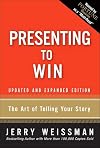
You have to be good if you’re going to sell more than 100,000 copies of a book about how to be a better presenter. Jerry Weissman is good. And he gets to the heart of great presentation skills by reminding us, throughout this wonderfully engaging book, of the importance of story if we want to hold the attention of audiences at a time when attention spans are as ephemeral as yesterday’s tweets. Whether we're new to the art of presentation or are experienced presenter-trainer-teachers show more benefitting from the useful reminders Weissman provides, he carries us through the presentation cycle with lots of guidance, including warnings of how we can go wrong: not offering clear points, not offering a clear benefit to our audiences (what's in it for them, not us), not creating a clear flow of thought and information in our work, offering more details than an audience can absorb, or creating presentations that last too long.
He also offers the structure that telling a good story provides: taking listeners from where they are (Point A) to where they need to be (Point B) in ways that focus on them rather than on us. He provides a concise survey of structures we can incorporate into presentations to make them flow and reminds us of the importance of "verbalization"--rehearsing our work out loud "just as you will on the day of your actual presentation" (p. 164) numerous times so that the story that is at the heart of all we do will flow naturally from us to those who are depending on us to make that all-important journey from Point A to Point B. Furthermore, he models the very skills he is trying to develop by incorporating presentation stories throughout his book in an effort to help us understand the process viscerally as well as intellectually. It's often the lines that seem to be most casually tossed off that take us most deeply to the heart of presentation professionalism. Writing about his attendance at investment banking conferences, he tells us that he is there "because they let me observe many presentations in one place, in a short time." And if someone of his experience and reputation is attending presentations to pick up tips, it makes us ask ourselves why we aren't equally engaged in seeing what others are doing if we're at all serious about continually honing our own skills. There's no mistaking the seriousness with which Weissman expects and encourages us to approach the art of presentation: "...every presentation is a mission-critical event" (p. 168). With that as our guiding light, we should all be on our way to successful and engaging experiences for those we serve. show less
He also offers the structure that telling a good story provides: taking listeners from where they are (Point A) to where they need to be (Point B) in ways that focus on them rather than on us. He provides a concise survey of structures we can incorporate into presentations to make them flow and reminds us of the importance of "verbalization"--rehearsing our work out loud "just as you will on the day of your actual presentation" (p. 164) numerous times so that the story that is at the heart of all we do will flow naturally from us to those who are depending on us to make that all-important journey from Point A to Point B. Furthermore, he models the very skills he is trying to develop by incorporating presentation stories throughout his book in an effort to help us understand the process viscerally as well as intellectually. It's often the lines that seem to be most casually tossed off that take us most deeply to the heart of presentation professionalism. Writing about his attendance at investment banking conferences, he tells us that he is there "because they let me observe many presentations in one place, in a short time." And if someone of his experience and reputation is attending presentations to pick up tips, it makes us ask ourselves why we aren't equally engaged in seeing what others are doing if we're at all serious about continually honing our own skills. There's no mistaking the seriousness with which Weissman expects and encourages us to approach the art of presentation: "...every presentation is a mission-critical event" (p. 168). With that as our guiding light, we should all be on our way to successful and engaging experiences for those we serve. show less
This book is overhyped. I have a great passion toward delivering powerful presentations and I found this book disappointing. While it will certainly be helpful to the absolute amateur, a lot of Weissman's techniques are mediocre at best. The best sections of the book had to do with the verbal and organizational aspects of giving a presentation - how to brainstorm, how to think of a presentation, how to construct a storyboard, and how the audience's mind works. The worst parts of this book show more were about the actual craft of creating a presentation - bad Powerpoint advice, bad graphics advice and especially bad advice on how to use bullet-points. Weissman conveys the key point correctly - keep visuals simple, including simple typography, simple use of text, simple use of graphs and images. But the examples he provides are not at all impressive.
If you are a complete beginner to delivering presentations, you may want to browse through this book for some decent advice. If you've been doing this type of work for a while, avoid this book and pick up something by Nancy Duarte or Garr Reynolds. They're both brilliant writers on this topic. show less
If you are a complete beginner to delivering presentations, you may want to browse through this book for some decent advice. If you've been doing this type of work for a while, avoid this book and pick up something by Nancy Duarte or Garr Reynolds. They're both brilliant writers on this topic. show less
I didn't encounter any ground-breaking information in this one. Not to say I didn't learn anything, just not anything revolutionary.
I did enjoy the examples shared in the book. They were well chosen and helped me to learn how to apply the techniques in the book.
I did enjoy the examples shared in the book. They were well chosen and helped me to learn how to apply the techniques in the book.
Wisdom – From a Master
Nearly everyone has found oneself in this situation. Standing in front of an audience, you are blindsided with a question you dread. Even worse yet, the question is one you have not anticipated.
Whether you are an interviewee, sales person, executive, teacher, student, employee or politician, you are judged based on how deftly you handle the situation.
Jerry Weissman, a corporate presentations coach, in this book provides the reader with the skills and techniques show more required to handle these confrontations. Citing compelling case studies from Presidential debates, corporate road shows and even a television situation comedy, Weissman guides the reader in how to control the exchange.
Using his techniques, the reader learns to avoid evasive, contentious and defensive responses to these difficult questions.
While the book does not provide the “right answers” to these difficult questions, it will arm the reader with an arsenal of skills to manage adversity and remain in control. show less
Nearly everyone has found oneself in this situation. Standing in front of an audience, you are blindsided with a question you dread. Even worse yet, the question is one you have not anticipated.
Whether you are an interviewee, sales person, executive, teacher, student, employee or politician, you are judged based on how deftly you handle the situation.
Jerry Weissman, a corporate presentations coach, in this book provides the reader with the skills and techniques show more required to handle these confrontations. Citing compelling case studies from Presidential debates, corporate road shows and even a television situation comedy, Weissman guides the reader in how to control the exchange.
Using his techniques, the reader learns to avoid evasive, contentious and defensive responses to these difficult questions.
While the book does not provide the “right answers” to these difficult questions, it will arm the reader with an arsenal of skills to manage adversity and remain in control. show less
You May Also Like


Associated Authors
Statistics
- Works
- 34
- Also by
- 1
- Members
- 890
- Popularity
- #28,790
- Rating
- 4.0
- Reviews
- 9
- ISBNs
- 108
- Languages
- 1