
Garr Reynolds
Author of Presentation Zen: Simple Ideas on Presentation Design and Delivery
About the Author
Garr Reynolds is the Author of the author of the best-selling books Presentation Zen and Presentation Zen Design, and a leading authority on presentation design and delivery. A sought-after speaker and consultant, his clients include many in the Fortune 500; A Writer, designer, musician, and show more long-time student of the Zen arts, he is currently Associate Professor Management at Kansai Gaidai University in Japan and Director of Design Matters Japan Garr's popular blog on presentation design and delivery is at www.presentationzen.com. show less
Image credit: via Goodreads
Works by Garr Reynolds
Presentation Zen Design: Simple Design Principles and Techniques to Enhance Your Presentations (2009) 292 copies, 2 reviews
The Naked Presenter: Delivering Powerful Presentations With or Without Slides (2010) 150 copies, 3 reviews
The Presentation Zen Way: Video Lessons on Simple Presentation Design and Delivery (Voices That Matter) (2010) 9 copies
Tagged
Common Knowledge
Members
Reviews
Presentation Zen: Simple Ideas on Presentation Design and Delivery (3rd Edition) (Voices That Matter) by Garr Reynolds

PowerPoint has always enabled people who are basically thick and dull to look clever.
Of course it’s boring - would you hold up cue cards to an audience and then READ THE SAME CUE CARDS - no? So why does a digital projector and PowerPoint make it a good idea?
But PowerPoint is worse than that - with PowerPoint you can put a buzzword next to a graph - next to a picture and with a swish fade effect and for some bizarre reason that makes the buzzword important.
People say - 'don't read the words show more on the slide'
Well, why HAVE the bloody slide then?
Does the slide say something MORE IMPORTANT than what you are saying? If it does well.. why aren't you just saying it?
In fact if what you are saying can be said just as well on a slide show, why bother turning up at all? Just press play and go home.
We HAVE a system of text and images that conveys information – it’s called the internet. It way better than PowerPoint and I don't need anyone talking over it while I look at it.
Death to PowerPoint.
Death to seminars.
Death to people who wear those clip microphones.
Bring back good speakers who can keep you interested and answer questions as they go along.
Powerpoint no more makes someone a presenter than having a typewriter makes them a novelist. But many people fail to notice that. I have sat through far too many dull presentations in my time, and succeeded in staying awake during some only by gnawing on my own wrist. show less
Of course it’s boring - would you hold up cue cards to an audience and then READ THE SAME CUE CARDS - no? So why does a digital projector and PowerPoint make it a good idea?
But PowerPoint is worse than that - with PowerPoint you can put a buzzword next to a graph - next to a picture and with a swish fade effect and for some bizarre reason that makes the buzzword important.
People say - 'don't read the words show more on the slide'
Well, why HAVE the bloody slide then?
Does the slide say something MORE IMPORTANT than what you are saying? If it does well.. why aren't you just saying it?
In fact if what you are saying can be said just as well on a slide show, why bother turning up at all? Just press play and go home.
We HAVE a system of text and images that conveys information – it’s called the internet. It way better than PowerPoint and I don't need anyone talking over it while I look at it.
Death to PowerPoint.
Death to seminars.
Death to people who wear those clip microphones.
Bring back good speakers who can keep you interested and answer questions as they go along.
Powerpoint no more makes someone a presenter than having a typewriter makes them a novelist. But many people fail to notice that. I have sat through far too many dull presentations in my time, and succeeded in staying awake during some only by gnawing on my own wrist. show less
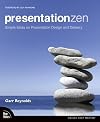
In a world committed to effective training-teaching-learning, publication of Garr Reynolds' beautifully produced and engagingly written book "Presentation Zen: Simple Ideas on Presentation Design and Delivery" three years ago would have resulted in the disappearance of "death by PowerPoint." The world seems to have other ideas. We still suffer through poorly designed PowerPoint presentations, where far too much text is crammed onto slides that are then read to painfully bored and show more tuned-out learners. Which is a shame since so much of what Reynolds suggests and displays throughout his book and on his ongoing Presentation Zen website makes so much sense and is so easy to incorporate into our work. "PowerPoint is not a method," he reminds us early in the book; "it is a tool that can be used effectively with appropriate design methods or ineffectively with inappropriate methods" (p. 12). Clarity and simplicity are the overarching themes he encourages us to explore and incorporate into our work. And if we needed proof that Reynolds cares as deeply about his audiences as we should care about ours, we find it explicitly in his admonition that "If your content is worth talking about, then bring energy and passion to your delivery. Every situation is different, but there is never an excuse for being dull" (p. 211). So let's hope his work continues to reach an ever-widening--and receptive--audience, and that dull presentations will eventually become little more than a dimly remembered nightmare. show less

Great information, but also a bit puffy. A book about clear presentation design that's less concise than it preaches should be problematic, but I disagree in the case of Presentation Zen because I think it allows a more thorough immersion for the readers who want it.
The real travesty is the sheer number of astonishingly terrible presentations forced upon captive audiences every day (I'm looking at you Corporate World). Anything to combat that is a win by my standards.
The real travesty is the sheer number of astonishingly terrible presentations forced upon captive audiences every day (I'm looking at you Corporate World). Anything to combat that is a win by my standards.
Presentation Zen Design: Simple Design Principles and Techniques to Enhance Your Presentations by Garr Reynolds
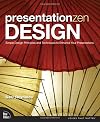
This follow-up to Garr Reynolds' first booklet isn't bad in itself. There is much valuable stuff in there. It just happens that most of it was already present in his first booklet. It is a nice and helpful present to Powerpoint challenged people and is an improvement over the previous booklet.
For owners of his previous book, though, this is a disappointment. More and more of the factors Reynolds treats are problems no longer. Anyone using Apple software will have to put in a lot of effort to show more even produce terrible slides. Even Powerpoint (out of the box) is getting better to help people create good presentations. Thus, Reynolds' advice on the right use of pictures feels dated and only scratches the surface.
Let me illustrate this with one of the slides he includes: On page 102, he "improves" the bullet-point slide "How will Japanese Airlines (JAL) reduce the workforce by 5000 (people)?" by expanding a small airplane picture to full size and slants the writing a bit to the left. This is just rearranging the deck-chairs on the Titanic. A true reworking of the presentation would rip out the undefined corporate speak ("normal attrition", etc.) and replace them with meaningful, concrete measures the company is going to undertake.
Similarly, he includes a colleague's advice to shoot and create your own images for a presentation, which is fine for a major project - but out of the question for everyone's weekly presentation. Presentation advice book authors need to shift their focus from helping people make their slides prettier to making their content understandable (more Minto, more Tufte!). It is not difficult to create emotional appeal to fight pollution, world hunger or save animals (as do most TED presentations). Adding a nicely designed frog is just the 2010 version of the Powerpoint bean figures. A good advice book should help with boring presentation matter (sales reports, etc.). This is a step backwards. show less
For owners of his previous book, though, this is a disappointment. More and more of the factors Reynolds treats are problems no longer. Anyone using Apple software will have to put in a lot of effort to show more even produce terrible slides. Even Powerpoint (out of the box) is getting better to help people create good presentations. Thus, Reynolds' advice on the right use of pictures feels dated and only scratches the surface.
Let me illustrate this with one of the slides he includes: On page 102, he "improves" the bullet-point slide "How will Japanese Airlines (JAL) reduce the workforce by 5000 (people)?" by expanding a small airplane picture to full size and slants the writing a bit to the left. This is just rearranging the deck-chairs on the Titanic. A true reworking of the presentation would rip out the undefined corporate speak ("normal attrition", etc.) and replace them with meaningful, concrete measures the company is going to undertake.
Similarly, he includes a colleague's advice to shoot and create your own images for a presentation, which is fine for a major project - but out of the question for everyone's weekly presentation. Presentation advice book authors need to shift their focus from helping people make their slides prettier to making their content understandable (more Minto, more Tufte!). It is not difficult to create emotional appeal to fight pollution, world hunger or save animals (as do most TED presentations). Adding a nicely designed frog is just the 2010 version of the Powerpoint bean figures. A good advice book should help with boring presentation matter (sales reports, etc.). This is a step backwards. show less
Lists
Awards

You May Also Like


Statistics
- Works
- 11
- Members
- 2,063
- Popularity
- #12,459
- Rating
- 4.0
- Reviews
- 23
- ISBNs
- 50
- Languages
- 10
- Favorited
- 1