
About the Author
Critically-praised author and communications expert Cliff Atkinson is revolutionizing the way people use Microsoft PowerPoint to present their ideas. In demand as both a speaker and a consultant, Cliff has taught his innovative Beyond Bullet Points (BBP) methodology to Fortune 500 companies, show more leading law firms, government agencies, and business schools. show less
Works by Cliff Atkinson
Beyond Bullet Points: Using Microsoft PowerPoint to Create Presentations That Inform, Motivate, and Inspire (2005) 653 copies, 13 reviews
The Backchannel: How Audiences are Using Twitter and Social Media and Changing Presentations Forever (2009) 30 copies, 1 review
Beyond Bullet Points: Using Microsoft® PowerPoint® to Create Presentations That Inform, Motivate, and Inspire (BPG-Other) 30 copies, 1 review
Tagged
Common Knowledge
- Gender
- male
Members
Reviews
Beyond bullet points : using Microsoft PowerPoint to create presentations that inform, motivate and inspire by Cliff Atkinson
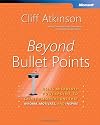
While Edward Tufte's The Cognitive Style of PowerPoint will continue to be, for me, the BEST book on making a good PowerPoint presentation, this book comes in second... and then there's a big jump to all others on the list. I can't believe I'm recommending a book published by Microsoft but this one is really good. With Atkinson's and Tufte's advice, I now regularly get compliments on my PowerPoint presentations.
I've also recommended this book to a few librarians when they've asked me how show more I've created my online animated tutorials; the advice here translates well to that forum.
Overall, a great book even if it can feel a little long in some areas. Hopefully the next edition is pared down a bit to make for a more enjoyable (and faster) read. show less
I've also recommended this book to a few librarians when they've asked me how show more I've created my online animated tutorials; the advice here translates well to that forum.
Overall, a great book even if it can feel a little long in some areas. Hopefully the next edition is pared down a bit to make for a more enjoyable (and faster) read. show less
Beyond Bullet Points: Using Microsoft PowerPoint to Create Presentations that Inform, Motivate, and Inspire by Cliff Atkinson
This book, sponsored by Microsoft, uses contemporary theories about communication to advocate that people stop using PowerPoint as a crutch and instead use it as a tool to tell a story. It accomplishes that task very effectively.
Most people use PowerPoint to delineate a series of statements to be used in a presentation. I've sat through many lectures in my education where lecturers merely regurgitate a series of messages already outlines on a slide deck. One can be pardoned for wondering show more whether one can get by with just reading print-outs of their slides in personal time.
Atkinson seeks to revise this problem, and he got Microsoft to publish his response. He makes PowerPoint a tool in the hands of a speaker to drive home central points in a talk. Warning against overcrowding slides, he advocates a simpler approach. He wants people to put only main points on slides because more material tends to confuse one's working memory, which can only handle between three and nine items at a time, depending on whose research you use.
He uses the motif of a story/narrative to center the presenter's ideas around in order to change/inform the audience's minds better. As such, he moves the center of a presentation from the presenter's delineations to the audience's cognitive processes. This shift makes communication much more effective.
A simple and easy read with good research to back it up and with stories to entertain. show less
Most people use PowerPoint to delineate a series of statements to be used in a presentation. I've sat through many lectures in my education where lecturers merely regurgitate a series of messages already outlines on a slide deck. One can be pardoned for wondering show more whether one can get by with just reading print-outs of their slides in personal time.
Atkinson seeks to revise this problem, and he got Microsoft to publish his response. He makes PowerPoint a tool in the hands of a speaker to drive home central points in a talk. Warning against overcrowding slides, he advocates a simpler approach. He wants people to put only main points on slides because more material tends to confuse one's working memory, which can only handle between three and nine items at a time, depending on whose research you use.
He uses the motif of a story/narrative to center the presenter's ideas around in order to change/inform the audience's minds better. As such, he moves the center of a presentation from the presenter's delineations to the audience's cognitive processes. This shift makes communication much more effective.
A simple and easy read with good research to back it up and with stories to entertain. show less
Beyond Bullet Points: Using Microsoft PowerPoint to Create Presentations That Inform, Motivate, and Inspire (Bpg- by Cliff Atkinson
Some of the general ideas in this book are solid but I really, really didn't like how it is based on an extended tutorial. By using this template he gives, it restricts thinking abstractly about how to apply this to your own presentations. I don't like books that constrain your thinking this much. He takes an approach many programming tutorial books might takes which is not helpful when dealing with presentations. Coding is a very structured process whereas there are many different show more presentation styles and ways of delivering content. So, this is a good book for extreme beginners or people who really need help but not for good speakers who want to know how to be more effective. For the latter person, you would be better off reading something like Edward Tufte to get a more generalizable understanding of presenting. show less
The Backchannel: How Audiences are Using Twitter and Social Media and Changing Presentations Forever by Cliff Atkinson
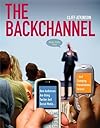
Cliff Atkinson's "The Backchannel" is a guide every bit as appealing and potentially influential in the world of backchannel learning as his "Beyond Bullet Points" remains for onsite-online presentations. The book entices us into the subject immediately through a chapter carrying the title "Why Are You Calling Me a #@*% on Twitter?" and helps us see how a tweeter with a large following (nearly 15,000 people as I’m writing this) and a well-known presenter clashed quite publicly when the show more presenter saw the tweeter' note with her derogatory remark about him. If you already sense that Atkinson' mastery of storytelling and training is a wonderful talent to see in action, you'e well on the way to understanding that his book has something for each of us regardless of whether we’re new to the backchannel or already fairly comfortable in that rapidly-lowing stream of words and thoughts and resources. He shows us how to join a backchannel. Entertainingly reviews the rewards and risks of backchannel engagement with copious amounts of screenshots to lead us down that path. Offers presentation tips to make us more effective in our use of Twitter and its backchannels. And leads us through the process of effectively dealing with those dreaded-yet-inevitable moments when a backchannel becomes dangerous. By the time we finish racing through this book and absorbing what we can, we're far more comfortable with and appreciative of all that backchannels offer, and much more aware of how to be effective and civil members of the Twitterverse and its various interconnected streams. show less
You May Also Like


Statistics
- Works
- 6
- Members
- 717
- Popularity
- #35,385
- Rating
- 3.5
- Reviews
- 15
- ISBNs
- 23
- Languages
- 4