
Sonny Whitelaw
Author of Blood Ties
Works by Sonny Whitelaw
Tagged
Common Knowledge
- Birthdate
- 1956-08-09
- Gender
- female
- Nationality
- Australia
- Birthplace
- Sydney, New South Wales, Australia
- Places of residence
- Sydney, New South Wales, Australia
Brisbane, Queensland, Australia - Associated Place (for map)
- Australia
Members
Reviews
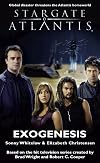
Exogenesis is simply a wonderful book for fans of Stargate Atlantis. The story is huge and layered, with each member of the cast having great moments. There is excitement and drama, loads of action, and fun interactions. Yet Exogenesis retains the human element so prevalent in Stargate Atlantis, in both its humor and its warmth. The characters are pitch-perfect in this big but fast-flowing narrative, each personality exactly as we came to know them through the five seasons — far too few show more for fans. Also present is the Ancients and the mythology of that. And the Wraith…maybe…
Exogenesis is a sprawling story, with pockets of characters in different locations, working toward a single goal, which is to save Atlantis and another world from a device that comes into play when two Ancients are discovered beneath Atlantis’s new home. In essence, this was like a tremendously well-written entry in the actual series, so big and emotional, so action packed that it surely would have been a two-parter — perhaps even a three episode arc. Because of all it entails, Exogenesis most certainly would have been one of the most remembered story-lines in the series had it been filmed.
Exogenesis is fun and action-packed, but there is tenderness here as well. Rodney’s story-line about love and loss and beauty being in the mind of the beholder — quite literally — is poignant and moving, particularly memorable. You feel like you’ve read more than a series novel based on a television series by the final page of this one; you feel like you’ve read a terrific science fiction adventure, period.
Sonny Whitelaw and Elizabeth Christensen have written something very special in the Stargate Atlantis franchise, a book that is as memorable as it is enjoyable. Big in page count and scope, yet somehow intimate and satisfying. A lovely and nostalgic read which is highly recommended for fans. show less
Exogenesis is a sprawling story, with pockets of characters in different locations, working toward a single goal, which is to save Atlantis and another world from a device that comes into play when two Ancients are discovered beneath Atlantis’s new home. In essence, this was like a tremendously well-written entry in the actual series, so big and emotional, so action packed that it surely would have been a two-parter — perhaps even a three episode arc. Because of all it entails, Exogenesis most certainly would have been one of the most remembered story-lines in the series had it been filmed.
Exogenesis is fun and action-packed, but there is tenderness here as well. Rodney’s story-line about love and loss and beauty being in the mind of the beholder — quite literally — is poignant and moving, particularly memorable. You feel like you’ve read more than a series novel based on a television series by the final page of this one; you feel like you’ve read a terrific science fiction adventure, period.
Sonny Whitelaw and Elizabeth Christensen have written something very special in the Stargate Atlantis franchise, a book that is as memorable as it is enjoyable. Big in page count and scope, yet somehow intimate and satisfying. A lovely and nostalgic read which is highly recommended for fans. show less

In essence, The Rhesus Factor is an eco-thriller. Set in the near future when the Gulf Stream has stopped, climate change is decidedly noticeable and drug-resistant epidemics are sweeping the Earth. Since it was written about ten years ago, some of the technology of our very near future isn't quite here (no space planes to hop across the pacific in a matter of hours, not even for the US Airforce) but some of her predictions are eerily true. There was a throwaway paragraph that included show more severe bushfires in southern Australia and Brisbane flooding, for example. Granted, those aren't exactly outlandish predictions, and the Gulf Stream is still with us, but still, some of the crazy weather Whitelaw describes doesn't feel like it's as outlandish as it would have been ten years ago.
The Rhesus Factor follows a handful of characters through dramatic climate change, the discovery of a virus which is on track to sterilising 99% of humanity, terrorist attacks, and assorted other emergencies. Some of the characters are clearly there to demonstrate consequences to ordinary folk, but most of them play some sort of governmental role (including scientific research) in mitigating the damage. A nice touch, I thought, was that almost all of the characters were quite competent and none of the disasters were because of any one person stuffing up. They were all just sort of inevitable.
My favourite character, and the one I felt was the most developed, was Kristin: an Australian marine engineer, initially based in Vanuatu, who has the unfortunate luck to be present for almost all the on-page explosions. (There are a lot of explosions.) Her back story, complete with an ex-boyfriend who has the emotional intelligence of a wet rag, is well drawn and she's not one of the people who knows everything up front, so it was nice to discover some of what was going on as she did. She also had a strong "Australian, no-nonsense" pragmatism which helped keep up the pace of the book (not that it was ever in any danger of dragging).
Another enjoyable character to read was the Australian Prime Minister. I suspect half the reason I liked him is because the world would be a better place if we had more political leaders that cut through bullshit and did what needed to be done. The other half is that his scenes — particularly some of the comments he makes when not in front of the press — were some of the most amusing and did a good job of diffusing some of the inherent doom of the novel. The most unbelievable aspect of both his character and the US President is that, before becoming politicians, both were scientists with ecology-related (I forget the specifics) PhDs. I just don't really buy that they got elected, especially the President, but it's a good thing for their world that they did.
I also enjoyed Australia being so central to many of the events taking place. Other prominent settings were Vanuatu and the US, but while the US was obligatory (greatest impact of Gulf Stream failure, powerful government), the Australian scenes were more lovingly carved. From the outback, down to Kristin complaining about Canberran weather.
The Rhesus Factor is a fast-paced, thriller crammed with one disaster after another. Set in the near future in a world a little bit more disease-ridden, with a slightly more altered climate than ours, it will keep you flipping/tapping the pages to find out what happens next. I should warn you though, Whitelaw set out to present a realistic picture of the near future. The only fabricated factor is, as the title will tell you, the Rhesus factor which acts as a catalyst for some disasters and an also-ran for others. There is no quick-fix offered in the novel and the ending isn't exactly a happy one — though it is somewhat hopeful. show less
The Rhesus Factor follows a handful of characters through dramatic climate change, the discovery of a virus which is on track to sterilising 99% of humanity, terrorist attacks, and assorted other emergencies. Some of the characters are clearly there to demonstrate consequences to ordinary folk, but most of them play some sort of governmental role (including scientific research) in mitigating the damage. A nice touch, I thought, was that almost all of the characters were quite competent and none of the disasters were because of any one person stuffing up. They were all just sort of inevitable.
My favourite character, and the one I felt was the most developed, was Kristin: an Australian marine engineer, initially based in Vanuatu, who has the unfortunate luck to be present for almost all the on-page explosions. (There are a lot of explosions.) Her back story, complete with an ex-boyfriend who has the emotional intelligence of a wet rag, is well drawn and she's not one of the people who knows everything up front, so it was nice to discover some of what was going on as she did. She also had a strong "Australian, no-nonsense" pragmatism which helped keep up the pace of the book (not that it was ever in any danger of dragging).
Another enjoyable character to read was the Australian Prime Minister. I suspect half the reason I liked him is because the world would be a better place if we had more political leaders that cut through bullshit and did what needed to be done. The other half is that his scenes — particularly some of the comments he makes when not in front of the press — were some of the most amusing and did a good job of diffusing some of the inherent doom of the novel. The most unbelievable aspect of both his character and the US President is that, before becoming politicians, both were scientists with ecology-related (I forget the specifics) PhDs. I just don't really buy that they got elected, especially the President, but it's a good thing for their world that they did.
I also enjoyed Australia being so central to many of the events taking place. Other prominent settings were Vanuatu and the US, but while the US was obligatory (greatest impact of Gulf Stream failure, powerful government), the Australian scenes were more lovingly carved. From the outback, down to Kristin complaining about Canberran weather.
The Rhesus Factor is a fast-paced, thriller crammed with one disaster after another. Set in the near future in a world a little bit more disease-ridden, with a slightly more altered climate than ours, it will keep you flipping/tapping the pages to find out what happens next. I should warn you though, Whitelaw set out to present a realistic picture of the near future. The only fabricated factor is, as the title will tell you, the Rhesus factor which acts as a catalyst for some disasters and an also-ran for others. There is no quick-fix offered in the novel and the ending isn't exactly a happy one — though it is somewhat hopeful. show less

This is one of the better TV tie-in books I've read. The plot was nice and meaty, with several twists that changed the landscape of the story significantly when they occurred, and the stakes were high enough that I found myself seriously wondering how they could possibly get the situation back to the tie-in-mandated status quo. The Atlantis characters were all written well - no one felt OOC in any major way, and they captured things like Sheppard's understated snark or Rodney and Zelenka's show more bickering very nicely. show less
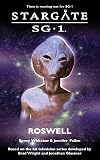
Sonny Whitelaw & Jennifer Fallon’s Stargate: SG-1 – Roswell takes place during the tenth season of the televisions series, with General Jack O’Neill temporarily in charge of the SGC amid the Ori and the Priors’ incursion into the Milky Way galaxy. When a mission goes wrong, SG-1 team members Dr. Daniel Jackson, Colonel Samantha Carter, Teal’c, and Colonel Cam Mitchell find themselves thrown back in time, buried under Cheyenne Mountain before the caves of the complex were dug and show more facing eventual suffocation. Meanwhile in the present, General Samantha Carter comes through the Stargate from the future to help O’Neill and Vala Mal Doran travel back in time with the puddle jumper from Atlantis to rescue SG-1 as well as the Asgard scientist An along the way.
Since the book uses time travel, Whitelaw and Fallon take the opportunity to work in several historical references. For example, a glitch in the time machine causes SG-1 to collide with a Jaffa Ha’tak resulting in the Tunguska blast of 1908. While stranded in 1908, SG-1 encounters a young H.P. Lovecraft, with Vala’s stories inspiring him to write his Cthulhu mythos (pg. 88). Teal’c, having worked to familiarize himself with Earth’s history, acts as the resident expert on the Roswell Incident, guiding the team as much as possible. Inevitably, things go horribly awry leading to the team being split up with Vala and Cam stranded in 1908 while the classic SG-1 continues on to Roswell in 1947. In a nice moment of verisimilitude, Whiteclaw and Fallon portray Daniel Jackson discussing Egyptian archeological finds in light of their impact on the Stargate program and referencing Zahi Hawass (pg. 299), a real-world well-known Egyptologist and the former Egyptian Minister of State for Antiquities Affairs. Unfortunately, the story itself suffers from the same overcomplicating that defined most of the time travel stories in Stargate: SG-1 after “1969,” perhaps the straightforward time travel story in that it was relatively self-contained and didn’t require the reader to accept that the characters’ actions created dead-end timelines with little or no consequence.
Though this is the ninth novel in the Fandemonium series, it occurs during the 10th season, with the books’ order in the series not reflecting their chronological order (book one during the 7th season, book two during the 1st, book three during the 7th, book four during the 5th, and so on). In terms of technical issues, the book seems to have been rushed to print as it contains numerous typographical errors such as unnecessary or misplaced commas or improperly conjugated verbs. Two examples two pages apart include the use of “following” in place of “followed” (pg. 265) and “turning” in place of “turned” (pg. 267). These issues notwithstanding, longtime fans of the series will find plenty to enjoy while Whitelaw and Fallon use the novel format to tell a story that would’ve been too complex and effect-heavy for television. show less
Since the book uses time travel, Whitelaw and Fallon take the opportunity to work in several historical references. For example, a glitch in the time machine causes SG-1 to collide with a Jaffa Ha’tak resulting in the Tunguska blast of 1908. While stranded in 1908, SG-1 encounters a young H.P. Lovecraft, with Vala’s stories inspiring him to write his Cthulhu mythos (pg. 88). Teal’c, having worked to familiarize himself with Earth’s history, acts as the resident expert on the Roswell Incident, guiding the team as much as possible. Inevitably, things go horribly awry leading to the team being split up with Vala and Cam stranded in 1908 while the classic SG-1 continues on to Roswell in 1947. In a nice moment of verisimilitude, Whiteclaw and Fallon portray Daniel Jackson discussing Egyptian archeological finds in light of their impact on the Stargate program and referencing Zahi Hawass (pg. 299), a real-world well-known Egyptologist and the former Egyptian Minister of State for Antiquities Affairs. Unfortunately, the story itself suffers from the same overcomplicating that defined most of the time travel stories in Stargate: SG-1 after “1969,” perhaps the straightforward time travel story in that it was relatively self-contained and didn’t require the reader to accept that the characters’ actions created dead-end timelines with little or no consequence.
Though this is the ninth novel in the Fandemonium series, it occurs during the 10th season, with the books’ order in the series not reflecting their chronological order (book one during the 7th season, book two during the 1st, book three during the 7th, book four during the 5th, and so on). In terms of technical issues, the book seems to have been rushed to print as it contains numerous typographical errors such as unnecessary or misplaced commas or improperly conjugated verbs. Two examples two pages apart include the use of “following” in place of “followed” (pg. 265) and “turning” in place of “turned” (pg. 267). These issues notwithstanding, longtime fans of the series will find plenty to enjoy while Whitelaw and Fallon use the novel format to tell a story that would’ve been too complex and effect-heavy for television. show less
Lists
Awards

You May Also Like


Associated Authors
Statistics
- Works
- 11
- Members
- 535
- Popularity
- #46,548
- Rating
- 3.6
- Reviews
- 19
- ISBNs
- 16
