
Bernard Wolfe (1915–1985)
Author of Limbo
About the Author
Works by Bernard Wolfe
The Bisquit Position 2 copies
The Girl With Rapid Eye Movements 2 copies
Self Portrait 2 copies
Associated Works
The Human Commitment - An Anthology of Contemporary Short Fiction — Contributor — 1 copy
Tagged
Common Knowledge
- Birthdate
- 1915-08-28
- Date of death
- 1985-10-27
- Gender
- male
- Occupations
- Yale University (1935)
- Nationality
- USA
- Birthplace
- New Haven, Connecticut, USA
- Place of death
- Calabasas, California, USA
- Associated Place (for map)
- USA
Members
Reviews

A one of a kind document, which is the best thing you can say about a book.
Milton Mezzrow (née Mesirow) grew up in the Jewish ghetto of Chicago, learned to play saxophone in juvenile lock-up, developed a deep affection for black culture, and lived a life of extraordinary acquaintances and experience. His memoir Really the Blues (1946) is a valuable piece of social history and a fascinating artifact in the American vernacular.
Mezzrow tells a story of the early days of jazz and a vibrant show more urban folk culture that was the consequence of the Great Migration and Prohibition and the role of Chicago as a terminus and hub. Jazz flowed out from Basin Street and Storyville as enterprising sorts escaping Jim Crow or looking to profit from the ban on booze brought new life and energy to cities from Memphis to Detroit. Gangsters, prostitutes and musicians worked the syndicate houses and speakeasies.
All the café owners we ever knew were more familiar with machine guns than they were with music.
As Mezzrow tells it, jazz appealed to the ‘unwashed and untidy,’ the rebellious; the music was synonymous with freedom, improvisation a kind of anarchism, disregarding rules and constraints. By the late-1920s, though, the ‘uncorrupted purists’ in Chicago, who looked to the south for inspiration, were losing out to big bands and written music and Tin Pan Alley. Mezzrow the traditionalist laments the evolution of the music (how easily does the anarchist turn reactionary, in the name of preserving purity), but he does acknowledge that the music of the Chicago School was derivative, ‘an imperfect reflection,’ since ‘jazz was the colored man’s music.’ He knew that the Chicago sound represented a ‘half-way house’ between the original New Orleans combos and whatever was to come.
The jazz-jive lingo by which Mezzrow relates his own enthusiastic fascination with the world around jazz music is by turns amusing and tiresome. He conjures some fabulously poetic similes. First hearing the blues hit him ‘like a millennium would hit a philosopher.’ The shoes of a criminal hanged from the gallows ‘swing easy in space, like a couple of tired crows.’ A late-1920s exodus of musicians to NY left the Chicago gang ‘sad as a map and twice as flat.’ Some bits sound like a film noir voice-over:
On my next job I found myself running with a literary ex-pug, a pistol-packing rabbi, and a pee-wee jockey whose only riding crop was a stick of marihuana.
There are passages on Mezzrow’s first experiment with opium in Detroit and on the Jimmy Noone Band’s ‘preachin’ blues’ rendered as wonderfully affective set pieces. Other stories are great good fun but sound suspiciously apocryphal—Louis Armstrong’s invention of scat singing, Bix Beiderbecke burying jugs of sour mash in the weeds around Hudson Lake summer resort, Mezzrow and his friends inventing the ‘jam session.’ There is an Appendix that provides a translation of a reefer-jive conversation between Mezzrow and a prospective client on a Harlem street corner, and a full Glossary of early-20th c. hipster terminology. Occasionally the argot got a bit purplish and I would put the book down for a few days, but it always recovered. You have to take it for what it is. Makes one wonder how the book was received when it came out in 1946.
What makes Really the Blues so valuable is Mezzrow’s distinctive take on some potent themes that recur regularly in the jazz bibliography: the notion of authenticity, popular entertainment v. art, regional styles or ‘schools,’ the evolution of jazz forms through distinct phases in a kind of punctuated equilibrium, and the thorny matter of race. By the time Mezzrow wrote the book in the mid-1940s, he had become convinced of his own negritude. As his collaborator Bernard Wolfe wrote subsequently, Mezzrow’s adoption of the black man’s music, slang, bearing and social modes was not just a case of transculturation—it was one man’s reincarnation myth.
Wolfe was a Korzybski enthusiast who served a stint as secretary to Leon Trotsky in Mexico and later as the private pornographer of an Oklahoma oil millionaire. His article “Ecstatic in Blackface: The Negro as a Song-and-Dance Man” (written in 1947 for the French journal Les Temps Modernes) appears as an appendix to the NYRB edition of Really the Blues. According to Wolfe, Mezzrow had fetishized the ‘simple and natural’ ways of the black man, his effortless ecstasy, his ‘genius for relaxed, high-spirited, unburdened living,’ and Wolfe wanted to shine a light on Mezzrow’s negrophilia. Where Mezzrow saw spontaneous emanation, Wolfe saw calculated performance. There is, observed Wolfe, ‘a nimble interplay of image, reflex, and false face across the caste lines which is death to all real spontaneity.’ The more a white audience relishes the Negro on stage as ‘authentic,’ the more must the Negro performer cling to the masks which they (whites) take for real faces. The truth about the Negro performer is that he is required to be a Negro impersonator. (John Howard Griffin’s Black Like Me provides discomfiting confirmation of the point.) Mezzrow seemed to have fooled himself, as the black man must fool the white man.
The ‘creative’ Negro, far from being his own spontaneous self, may actually be dramatizing the white man’s image of the ‘spontaneous’ Negro.
Wolfe sensed that a shift was underway in the 1940s—
…the extent to which (the Negro) really feels himself to be what the white man thinks he is is dwindling, and the extent to which he pretends to be this or that, to achieve certain effects among certain groups of whites, is on the rise. And in that murky space where the mechanical fades into the willful lies the source of most Negro art forms. If the shift is ever completed the mask will be thrown off entirely and a startling new crop of art forms will mushroom.
Bebop was coming to the fore just as Wolfe was writing, and so his observations carried a remarkable prescience. show less
Milton Mezzrow (née Mesirow) grew up in the Jewish ghetto of Chicago, learned to play saxophone in juvenile lock-up, developed a deep affection for black culture, and lived a life of extraordinary acquaintances and experience. His memoir Really the Blues (1946) is a valuable piece of social history and a fascinating artifact in the American vernacular.
Mezzrow tells a story of the early days of jazz and a vibrant show more urban folk culture that was the consequence of the Great Migration and Prohibition and the role of Chicago as a terminus and hub. Jazz flowed out from Basin Street and Storyville as enterprising sorts escaping Jim Crow or looking to profit from the ban on booze brought new life and energy to cities from Memphis to Detroit. Gangsters, prostitutes and musicians worked the syndicate houses and speakeasies.
All the café owners we ever knew were more familiar with machine guns than they were with music.
As Mezzrow tells it, jazz appealed to the ‘unwashed and untidy,’ the rebellious; the music was synonymous with freedom, improvisation a kind of anarchism, disregarding rules and constraints. By the late-1920s, though, the ‘uncorrupted purists’ in Chicago, who looked to the south for inspiration, were losing out to big bands and written music and Tin Pan Alley. Mezzrow the traditionalist laments the evolution of the music (how easily does the anarchist turn reactionary, in the name of preserving purity), but he does acknowledge that the music of the Chicago School was derivative, ‘an imperfect reflection,’ since ‘jazz was the colored man’s music.’ He knew that the Chicago sound represented a ‘half-way house’ between the original New Orleans combos and whatever was to come.
The jazz-jive lingo by which Mezzrow relates his own enthusiastic fascination with the world around jazz music is by turns amusing and tiresome. He conjures some fabulously poetic similes. First hearing the blues hit him ‘like a millennium would hit a philosopher.’ The shoes of a criminal hanged from the gallows ‘swing easy in space, like a couple of tired crows.’ A late-1920s exodus of musicians to NY left the Chicago gang ‘sad as a map and twice as flat.’ Some bits sound like a film noir voice-over:
On my next job I found myself running with a literary ex-pug, a pistol-packing rabbi, and a pee-wee jockey whose only riding crop was a stick of marihuana.
There are passages on Mezzrow’s first experiment with opium in Detroit and on the Jimmy Noone Band’s ‘preachin’ blues’ rendered as wonderfully affective set pieces. Other stories are great good fun but sound suspiciously apocryphal—Louis Armstrong’s invention of scat singing, Bix Beiderbecke burying jugs of sour mash in the weeds around Hudson Lake summer resort, Mezzrow and his friends inventing the ‘jam session.’ There is an Appendix that provides a translation of a reefer-jive conversation between Mezzrow and a prospective client on a Harlem street corner, and a full Glossary of early-20th c. hipster terminology. Occasionally the argot got a bit purplish and I would put the book down for a few days, but it always recovered. You have to take it for what it is. Makes one wonder how the book was received when it came out in 1946.
What makes Really the Blues so valuable is Mezzrow’s distinctive take on some potent themes that recur regularly in the jazz bibliography: the notion of authenticity, popular entertainment v. art, regional styles or ‘schools,’ the evolution of jazz forms through distinct phases in a kind of punctuated equilibrium, and the thorny matter of race. By the time Mezzrow wrote the book in the mid-1940s, he had become convinced of his own negritude. As his collaborator Bernard Wolfe wrote subsequently, Mezzrow’s adoption of the black man’s music, slang, bearing and social modes was not just a case of transculturation—it was one man’s reincarnation myth.
Wolfe was a Korzybski enthusiast who served a stint as secretary to Leon Trotsky in Mexico and later as the private pornographer of an Oklahoma oil millionaire. His article “Ecstatic in Blackface: The Negro as a Song-and-Dance Man” (written in 1947 for the French journal Les Temps Modernes) appears as an appendix to the NYRB edition of Really the Blues. According to Wolfe, Mezzrow had fetishized the ‘simple and natural’ ways of the black man, his effortless ecstasy, his ‘genius for relaxed, high-spirited, unburdened living,’ and Wolfe wanted to shine a light on Mezzrow’s negrophilia. Where Mezzrow saw spontaneous emanation, Wolfe saw calculated performance. There is, observed Wolfe, ‘a nimble interplay of image, reflex, and false face across the caste lines which is death to all real spontaneity.’ The more a white audience relishes the Negro on stage as ‘authentic,’ the more must the Negro performer cling to the masks which they (whites) take for real faces. The truth about the Negro performer is that he is required to be a Negro impersonator. (John Howard Griffin’s Black Like Me provides discomfiting confirmation of the point.) Mezzrow seemed to have fooled himself, as the black man must fool the white man.
The ‘creative’ Negro, far from being his own spontaneous self, may actually be dramatizing the white man’s image of the ‘spontaneous’ Negro.
Wolfe sensed that a shift was underway in the 1940s—
…the extent to which (the Negro) really feels himself to be what the white man thinks he is is dwindling, and the extent to which he pretends to be this or that, to achieve certain effects among certain groups of whites, is on the rise. And in that murky space where the mechanical fades into the willful lies the source of most Negro art forms. If the shift is ever completed the mask will be thrown off entirely and a startling new crop of art forms will mushroom.
Bebop was coming to the fore just as Wolfe was writing, and so his observations carried a remarkable prescience. show less
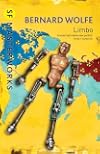
There is no star rating in need of greater explanation than three. When I give a book three stars, it can mean anything from forgettable indifference to fatally flawed masterpiece. A three star read can merit a measly short paragraph review or a lengthy essay. In the case of ‘Limbo’, the three stars are a compromise between the four stars (perhaps five?) I thought it deserved at first and the two (even one) I determined to give it two thirds in. Make no mistake, it is memorable, show more interesting, and thoughtfully written science fiction. Unfortunately, it is also poisonously misogynistic throughout and includes a repellent rape scene. The narrator’s Freudian justifications for his hatred of and violence towards women viscerally disgusted me. Thus the three star compromise, which I resent having to make. Quite possibly Wolfe was trying to make a point about gender relations, as ‘Limbo’ includes a great deal of philosophical and psychological musing on violence and war more generally. That said, how often are male readers faced with a man’s sudden and gratuitous rape in the narrative of a novel they were enjoying? How often do they have to read pages upon pages explaining the psychological justification for abusing their entire gender? Not very fucking often, I reckon. The whole novel also denies women any voice in the issues it mulls over. The narrative acknowledges sexism and racism, while treating them as inevitabilities. Given the originality and intelligence shown in other respects, these massive blind spots are all the more maddening.
That, then, is how I feel about ‘Limbo’. First published in 1952, it depicts a 1990 recovering from the third World War that decimated the globe in 1972. Nuclear exchanges, which entirely wiped out Europe and Africa, happened thanks to computers in the US and USSR which automatically escalated the conflict. After the computers were destroyed, ending the war, a peculiar peace movement swept the remaining population, calling on young men to renounce aggression by voluntarily amputating their limbs. The narrator of ‘Limbo’ is an army doctor who deserted towards the end of the war and hid on an unmapped island for 18 years, performing lobotomies on its native inhabitants. He sees this as a safer substitute for the trepanning they previously performed. When the peaceful island is suddenly visited by outsiders, the narrator Dr Martine (ironically, when I first read the name Martine I assumed he was a woman) returns to what remains of civilisation. Thus the structure is similar to a 19th century utopia/dystopia such as [b:Erewhon|516570|Erewhon (Erewhon , #1)|Samuel Butler|https://images.gr-assets.com/books/1175460304s/516570.jpg|924128], in which an outsider arrives in a strange place and debates the merit of its idiosyncrasies with the inhabitants.
This also explains the length of the book: Dr Martine is garrulous in the extreme and starts argumentative discussions with everyone he meets. To Wolfe’s credit, he pulls off this potentially turgid structure by making the debates genuinely interesting. (Whenever sex is discussed, though, they become horrifying.) There is a great deal of punning, word-play, and some experimental-seeming conceptual oddness. The back cover quotes [a:Thomas Disch|14930397|Thomas Disch|https://s.gr-assets.com/assets/nophoto/user/u_50x66-632230dc9882b4352d753eedf9396530.png] as claiming Limbo ‘represents a straight arrow pointing from the cautionary dystopias of Orwell and Huxley to the postwar absurdist mode of [b:Catch-22|168668|Catch-22 (Catch-22, #1)|Joseph Heller|https://images.gr-assets.com/books/1463157317s/168668.jpg|814330], Pynchon, and Phillip K Dick’. I would generally agree with that, as ‘Limbo’ definitely seems like a precursor to [b:Dr. Bloodmoney|636108|Dr. Bloodmoney|Philip K. Dick|https://images.gr-assets.com/books/1355321708s/636108.jpg|880666], for instance. The treatment of game theory also reminded me of Lem’s [b:Fiasco|28766|Fiasco|Stanisław Lem|https://images.gr-assets.com/books/1287614689s/28766.jpg|1762117]. Comparing ‘Limbo’ to [b:Catch-22|168668|Catch-22 (Catch-22, #1)|Joseph Heller|https://images.gr-assets.com/books/1463157317s/168668.jpg|814330] definitely clarifies a flaw in the former, though: Dr Martine is too self-important a narrator. He describes a sense of being unique, a world saviour, etc and rather than condemning his hubris, the narrative seems to validate it.
Despite all this critique, ‘Limbo’ is a novel I can definitely imagine recommending, albeit with careful caveats. Early on, I was struck with that odd serendipitous linkage between books you happen to be reading at the same time. This seemed to chime very closely with [b:NeuroTribes: The Legacy of Autism and the Future of Neurodiversity|22514020|NeuroTribes The Legacy of Autism and the Future of Neurodiversity|Steve Silberman|https://images.gr-assets.com/books/1421707890s/22514020.jpg|41957894]:
Those paragraphs could very well refer to autism, even be lifted from [b:NeuroTribes: The Legacy of Autism and the Future of Neurodiversity|22514020|NeuroTribes The Legacy of Autism and the Future of Neurodiversity|Steve Silberman|https://images.gr-assets.com/books/1421707890s/22514020.jpg|41957894]. Such thoughtful commentary initially made me warm to 'Limbo', until the misogyny really kicked in at the halfway mark. The second half then escalates events in a very compelling fashion. ‘Limbo’ explores the dynamics of aggression and pacifism in unique and weirdly fascinating style. The Freudian obsession with masochism is a bit much, however it seems to offer insight into the time of writing. Wolfe’s afterword shows a refreshing awareness that he’s writing about 1950’s problems rather than trying to predict 1990’s. Nonetheless, there is much that remains relevant today. As an example, the description of ‘neurotic aggression’ describes Trump supporters uncannily well: ‘Object of aggression is a ‘fantasised’ or artificially created enemy. Dosis: Slightest provocation - greatest aggression. Pseudo-aggression often used to provoke ‘masochistic pleasure’ expected from enemy’s retaliation. Defeat unconsciously expected.’
If it wasn’t for the dreadful hatred of women, I would have really enjoyed this novel. It's a distinctive piece of science fiction which asks the reader difficult questions. The misogyny isn’t just distasteful, though, it’s an intellectual flaw: what use is an examination of war and aggression if women’s voices are entirely ignored? Maybe one way to avoid apocalyptic world war might be to listen to the other half of the population for once. 'Limbo' doesn't bother to consider such a possibility. show less
That, then, is how I feel about ‘Limbo’. First published in 1952, it depicts a 1990 recovering from the third World War that decimated the globe in 1972. Nuclear exchanges, which entirely wiped out Europe and Africa, happened thanks to computers in the US and USSR which automatically escalated the conflict. After the computers were destroyed, ending the war, a peculiar peace movement swept the remaining population, calling on young men to renounce aggression by voluntarily amputating their limbs. The narrator of ‘Limbo’ is an army doctor who deserted towards the end of the war and hid on an unmapped island for 18 years, performing lobotomies on its native inhabitants. He sees this as a safer substitute for the trepanning they previously performed. When the peaceful island is suddenly visited by outsiders, the narrator Dr Martine (ironically, when I first read the name Martine I assumed he was a woman) returns to what remains of civilisation. Thus the structure is similar to a 19th century utopia/dystopia such as [b:Erewhon|516570|Erewhon (Erewhon , #1)|Samuel Butler|https://images.gr-assets.com/books/1175460304s/516570.jpg|924128], in which an outsider arrives in a strange place and debates the merit of its idiosyncrasies with the inhabitants.
This also explains the length of the book: Dr Martine is garrulous in the extreme and starts argumentative discussions with everyone he meets. To Wolfe’s credit, he pulls off this potentially turgid structure by making the debates genuinely interesting. (Whenever sex is discussed, though, they become horrifying.) There is a great deal of punning, word-play, and some experimental-seeming conceptual oddness. The back cover quotes [a:Thomas Disch|14930397|Thomas Disch|https://s.gr-assets.com/assets/nophoto/user/u_50x66-632230dc9882b4352d753eedf9396530.png] as claiming Limbo ‘represents a straight arrow pointing from the cautionary dystopias of Orwell and Huxley to the postwar absurdist mode of [b:Catch-22|168668|Catch-22 (Catch-22, #1)|Joseph Heller|https://images.gr-assets.com/books/1463157317s/168668.jpg|814330], Pynchon, and Phillip K Dick’. I would generally agree with that, as ‘Limbo’ definitely seems like a precursor to [b:Dr. Bloodmoney|636108|Dr. Bloodmoney|Philip K. Dick|https://images.gr-assets.com/books/1355321708s/636108.jpg|880666], for instance. The treatment of game theory also reminded me of Lem’s [b:Fiasco|28766|Fiasco|Stanisław Lem|https://images.gr-assets.com/books/1287614689s/28766.jpg|1762117]. Comparing ‘Limbo’ to [b:Catch-22|168668|Catch-22 (Catch-22, #1)|Joseph Heller|https://images.gr-assets.com/books/1463157317s/168668.jpg|814330] definitely clarifies a flaw in the former, though: Dr Martine is too self-important a narrator. He describes a sense of being unique, a world saviour, etc and rather than condemning his hubris, the narrative seems to validate it.
Despite all this critique, ‘Limbo’ is a novel I can definitely imagine recommending, albeit with careful caveats. Early on, I was struck with that odd serendipitous linkage between books you happen to be reading at the same time. This seemed to chime very closely with [b:NeuroTribes: The Legacy of Autism and the Future of Neurodiversity|22514020|NeuroTribes The Legacy of Autism and the Future of Neurodiversity|Steve Silberman|https://images.gr-assets.com/books/1421707890s/22514020.jpg|41957894]:
The lobotomists could not be acting purely out of altruistic desire to help the worried. No, they did not know enough to be sure that they were curing or alleviating anybody’s worry. So this was not entirely science; it was magic as well. Any ceremony performed in the absence of reasonable knowledge of cause and effect is magic. And in magic the need of the victim is less important than the need of the victimiser - medicine man, witch doctor, lobomist, or whatever.
[...]
Is deviation from locally approved norms always and everywhere to be taken as disease? Is it possible that in some communities the norms are defined too narrowly and severely, thus placing the onus of sickness on what are often non-pathological variations? Couldn’t many of these variations, stemming from unique subjective powers, enrich the life of a village, giving it a stimulating complexity, if the village were tolerant enough to see them as differences rather than diseases? Doesn’t the rigidity and narrowness of a village’s norms often drive a deviant from difference to disease?
Those paragraphs could very well refer to autism, even be lifted from [b:NeuroTribes: The Legacy of Autism and the Future of Neurodiversity|22514020|NeuroTribes The Legacy of Autism and the Future of Neurodiversity|Steve Silberman|https://images.gr-assets.com/books/1421707890s/22514020.jpg|41957894]. Such thoughtful commentary initially made me warm to 'Limbo', until the misogyny really kicked in at the halfway mark. The second half then escalates events in a very compelling fashion. ‘Limbo’ explores the dynamics of aggression and pacifism in unique and weirdly fascinating style. The Freudian obsession with masochism is a bit much, however it seems to offer insight into the time of writing. Wolfe’s afterword shows a refreshing awareness that he’s writing about 1950’s problems rather than trying to predict 1990’s. Nonetheless, there is much that remains relevant today. As an example, the description of ‘neurotic aggression’ describes Trump supporters uncannily well: ‘Object of aggression is a ‘fantasised’ or artificially created enemy. Dosis: Slightest provocation - greatest aggression. Pseudo-aggression often used to provoke ‘masochistic pleasure’ expected from enemy’s retaliation. Defeat unconsciously expected.’
If it wasn’t for the dreadful hatred of women, I would have really enjoyed this novel. It's a distinctive piece of science fiction which asks the reader difficult questions. The misogyny isn’t just distasteful, though, it’s an intellectual flaw: what use is an examination of war and aggression if women’s voices are entirely ignored? Maybe one way to avoid apocalyptic world war might be to listen to the other half of the population for once. 'Limbo' doesn't bother to consider such a possibility. show less
David Pringle in his introduction to my SF Masterworks copy said in 1985:
“That it was time that Limbo was recognised for what it is: the most ambitious work of Science fiction and one of the most successful ever to come out of America”
While I might agree with it being an ambitious work I would certainly quibble with it being the most successful: however you define most successful, Limbo ain’t it. Approach with caution any books labelled underground classic or forgotten classic and this show more has both labels. I can’t think that it sold very many copies when it was published in 1952 as it would not have appealed to many science fiction readers at the time and the truly science fiction nature of the book would have taken it far away from a more literary readership. It was originally published as a novel by Random House with the dust jacket claiming it as “a diabolic tale - mad merry and monstrous of men and women caught in the vortex of history yet to happen.” Its emergence as an underground classic in 1985 is also fraught with problems, although classing it as a science fiction novel certainly rings true. There is no getting away from the novels glorification of its treatment of women, whose only function seems to be the service of men, and more disturbingly aiding their masochistic tendencies. The novel is also badly structured and too long with its post Freudian analysis sometimes descending into mumbo-jumbo. Having said all of that, the novel does not lack ambition, it contains some brilliant ideas with writing that is several steps ahead of much science fiction writing at the time.
The central character of the novel is Doctor Martine whom we first encounter on an unmapped Pacific island in 1990. He is a neuro-surgeon performing lobotomies on the local native population at the request of the elders in efforts to drive the “mad dogs” from peoples brains (before Martine’s arrival they performed their own version of lobotomies with much lower recovery rates.) Dr Martine’s past life is sketched in and we learn that he is a fugitive from the third world war, which went nuclear destroying much of the population. The war effort was run by two opposing super computer type machines and Dr Martine’s escape from the war zone in 1972 was one of the first in history. His peaceful existence on the island is shattered by a visit from a company of survivors from the war, these new men all have prosthetic limbs that allow them to do super feats of running, jumping and all sorts of gymnastics. Martine decides to flee again but this time sets sail for America to learn what has happened in the intervening 18 years. He learns that the prosthetic limbs are an essential part of the Immob movement that now holds sway. Survivors from the war are determined to cure all aggressive tendencies and voluntary amputation of one, two, three or all four limbs is the ultimate goal of the new pacifists. The new computerised prosthetics however give these new men even more power, but they can easily be removed if aggression becomes an issue. Dr Martine finds to his horror that notes he made about aggressive tendencies back before the nuclear war are now seen as a sort of bible for the Immob movement. The element used in making the new super prosthetics is in very short supply and once again there are two rival factions based on the old East - West divide in competition for the scarce resource - another war looms.
The plot as good as it is, seems to be a vehicle on which the author can hang various theories and these are explored at length throughout the novel for example: voluntary amputation and how it differs from accidental amputation, the vol-amps are treated as heroes of the people in contradiction to how accidentally disabled people are normally treated. There are many theories about achieving peace through voluntary amputation or lobotomy and what effect this has on the volunteer: how is he restricted, when he loses the will or the ability to fight back, how much does voluntary amputation pander to man’s natural masochistic tendencies; a disturbing theory emerges that man is in his infancy at the mercy of his mother or his nurse and perhaps later his wife, he welcomes this suffering in a masochistic way and so can continue this in adulthood with voluntary amputation. How to make pacifism irreversible in a world where aggression is so necessary a part of mans psyche, that deep desire to hurt other people and to hurt yourself. Theories on all these themes are discussed at some length in the book almost totally from a male perspective. They are rehearsed and then rehashed later in such a way that some original thinking gets mixed up with much that hardly makes any sense at all.
And now we come to sex and particularly the orgasm. Bernard Wolfe seems to think himself something of an expert in this field and sexual couplings are described in some detail with some analysis afterwards. Sex with a voluntary amputee usually takes place with the prosthetics off (there have been far too many accidents with the inability to control them during the sex act). In the case of a quadro-amp this means almost complete passivity with the woman on top and in complete control (Women are not encouraged to join the Immob movement), this represents more masochism for the male as women can prolong the sex act for their own satisfaction. Women are represented largely as either being frigid or whores and it is only on the island in the Pacific where Dr Martin can experience a loving relationship with a native women. This is Doctor Martine committing rape with one of the new women in America after he has been the victim of the established passive sex:
“Youve had your fun” he said “its my turn now”
She Fought him, her body writhing with the effort to break her hold, but he was determined. Equal rights - he was not asking much, just equal rights. It was not going to be exactly the best he had ever had, but it was better than nothing. And didn’t she really want this after all? Rape was a pretty difficult business without a bit of ambivalence in the woman …………”
Wolfe goes on to describe the rape in some detail with Dr Martine thinking of other women in his past life who have denied him pleasure.
During these passages and some of the other theories that are expounded in the book I had to keep reminding myself that this was science fiction - a vision of a not very pleasant future, but they are written with such passion that I began to wonder if Wolfe actually believed that the human psyche is just as he is describing it in this novel. He backs up his theories with quotes from Sigmund Freud and there are plenty of literary references to Dostoevsky’s Notes from Underground as well as Mann’s Magic Mountain and even Melville’s Moby-Dick ( Captain Ahab was of course an involuntary amputee and so unable to control his aggression to the white whale). In Wolfe’s defence he gives Dr Martine a sense of humour (he can’t resist a good pun) and in a note afterwards titled “author’s notes and warnings” he refers to the irony and satire in the novel saying:
“This book, then, is a rather bilious rib on 1950 - on what 1950 might have been like if it had been allowed to fulfil itself, if it had gone on being 1950 only more and more so for the next four decades”
This doesn’t say much for 1950 as the humour is of the blackest kind.
It is a novel that is easy to criticise, it faults are there for all to see, but this should not get in the way of appreciating its startling originality, its courage in exploring areas of the human psyche and sexuality where many other authors would fear to tread and there is a great science fiction novel lurking amongst the verbiage. However I would struggle to give it more than a 3.5 rating. show less
“That it was time that Limbo was recognised for what it is: the most ambitious work of Science fiction and one of the most successful ever to come out of America”
While I might agree with it being an ambitious work I would certainly quibble with it being the most successful: however you define most successful, Limbo ain’t it. Approach with caution any books labelled underground classic or forgotten classic and this show more has both labels. I can’t think that it sold very many copies when it was published in 1952 as it would not have appealed to many science fiction readers at the time and the truly science fiction nature of the book would have taken it far away from a more literary readership. It was originally published as a novel by Random House with the dust jacket claiming it as “a diabolic tale - mad merry and monstrous of men and women caught in the vortex of history yet to happen.” Its emergence as an underground classic in 1985 is also fraught with problems, although classing it as a science fiction novel certainly rings true. There is no getting away from the novels glorification of its treatment of women, whose only function seems to be the service of men, and more disturbingly aiding their masochistic tendencies. The novel is also badly structured and too long with its post Freudian analysis sometimes descending into mumbo-jumbo. Having said all of that, the novel does not lack ambition, it contains some brilliant ideas with writing that is several steps ahead of much science fiction writing at the time.
The central character of the novel is Doctor Martine whom we first encounter on an unmapped Pacific island in 1990. He is a neuro-surgeon performing lobotomies on the local native population at the request of the elders in efforts to drive the “mad dogs” from peoples brains (before Martine’s arrival they performed their own version of lobotomies with much lower recovery rates.) Dr Martine’s past life is sketched in and we learn that he is a fugitive from the third world war, which went nuclear destroying much of the population. The war effort was run by two opposing super computer type machines and Dr Martine’s escape from the war zone in 1972 was one of the first in history. His peaceful existence on the island is shattered by a visit from a company of survivors from the war, these new men all have prosthetic limbs that allow them to do super feats of running, jumping and all sorts of gymnastics. Martine decides to flee again but this time sets sail for America to learn what has happened in the intervening 18 years. He learns that the prosthetic limbs are an essential part of the Immob movement that now holds sway. Survivors from the war are determined to cure all aggressive tendencies and voluntary amputation of one, two, three or all four limbs is the ultimate goal of the new pacifists. The new computerised prosthetics however give these new men even more power, but they can easily be removed if aggression becomes an issue. Dr Martine finds to his horror that notes he made about aggressive tendencies back before the nuclear war are now seen as a sort of bible for the Immob movement. The element used in making the new super prosthetics is in very short supply and once again there are two rival factions based on the old East - West divide in competition for the scarce resource - another war looms.
The plot as good as it is, seems to be a vehicle on which the author can hang various theories and these are explored at length throughout the novel for example: voluntary amputation and how it differs from accidental amputation, the vol-amps are treated as heroes of the people in contradiction to how accidentally disabled people are normally treated. There are many theories about achieving peace through voluntary amputation or lobotomy and what effect this has on the volunteer: how is he restricted, when he loses the will or the ability to fight back, how much does voluntary amputation pander to man’s natural masochistic tendencies; a disturbing theory emerges that man is in his infancy at the mercy of his mother or his nurse and perhaps later his wife, he welcomes this suffering in a masochistic way and so can continue this in adulthood with voluntary amputation. How to make pacifism irreversible in a world where aggression is so necessary a part of mans psyche, that deep desire to hurt other people and to hurt yourself. Theories on all these themes are discussed at some length in the book almost totally from a male perspective. They are rehearsed and then rehashed later in such a way that some original thinking gets mixed up with much that hardly makes any sense at all.
And now we come to sex and particularly the orgasm. Bernard Wolfe seems to think himself something of an expert in this field and sexual couplings are described in some detail with some analysis afterwards. Sex with a voluntary amputee usually takes place with the prosthetics off (there have been far too many accidents with the inability to control them during the sex act). In the case of a quadro-amp this means almost complete passivity with the woman on top and in complete control (Women are not encouraged to join the Immob movement), this represents more masochism for the male as women can prolong the sex act for their own satisfaction. Women are represented largely as either being frigid or whores and it is only on the island in the Pacific where Dr Martin can experience a loving relationship with a native women. This is Doctor Martine committing rape with one of the new women in America after he has been the victim of the established passive sex:
“Youve had your fun” he said “its my turn now”
She Fought him, her body writhing with the effort to break her hold, but he was determined. Equal rights - he was not asking much, just equal rights. It was not going to be exactly the best he had ever had, but it was better than nothing. And didn’t she really want this after all? Rape was a pretty difficult business without a bit of ambivalence in the woman …………”
Wolfe goes on to describe the rape in some detail with Dr Martine thinking of other women in his past life who have denied him pleasure.
During these passages and some of the other theories that are expounded in the book I had to keep reminding myself that this was science fiction - a vision of a not very pleasant future, but they are written with such passion that I began to wonder if Wolfe actually believed that the human psyche is just as he is describing it in this novel. He backs up his theories with quotes from Sigmund Freud and there are plenty of literary references to Dostoevsky’s Notes from Underground as well as Mann’s Magic Mountain and even Melville’s Moby-Dick ( Captain Ahab was of course an involuntary amputee and so unable to control his aggression to the white whale). In Wolfe’s defence he gives Dr Martine a sense of humour (he can’t resist a good pun) and in a note afterwards titled “author’s notes and warnings” he refers to the irony and satire in the novel saying:
“This book, then, is a rather bilious rib on 1950 - on what 1950 might have been like if it had been allowed to fulfil itself, if it had gone on being 1950 only more and more so for the next four decades”
This doesn’t say much for 1950 as the humour is of the blackest kind.
It is a novel that is easy to criticise, it faults are there for all to see, but this should not get in the way of appreciating its startling originality, its courage in exploring areas of the human psyche and sexuality where many other authors would fear to tread and there is a great science fiction novel lurking amongst the verbiage. However I would struggle to give it more than a 3.5 rating. show less
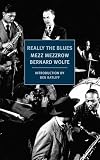
Started reading on beach in Spain, and almost gonged it 100 pages in. Tried again the next day, but instead of reading it as a straight memoir (it's not, or at least not a good one), I read it more in the spirit of _On the Road_ or _Fear and Loathing in Las Vegas_ - capturing an ethos of an era, even if it means telling a story that is too good to be true.
In that light I was able to finish of the 'ol Mezz. Will have to look up the numerous songs and compositions bragged on in the text.
In that light I was able to finish of the 'ol Mezz. Will have to look up the numerous songs and compositions bragged on in the text.
Lists
Awards

You May Also Like


Associated Authors
Statistics
- Works
- 24
- Also by
- 11
- Members
- 769
- Popularity
- #33,094
- Rating
- 3.8
- Reviews
- 17
- ISBNs
- 51
- Languages
- 6
- Favorited
- 3