

Ian Watson (1) (1943–2026)
Author of The Embedding
For other authors named Ian Watson, see the disambiguation page.
About the Author
British science fiction author Ian Watson was born in 1943. He received a first class Honors degree in English Literature in 1963 and a research degree in English and French 19th Century literature in 1965 from Balliol College, Oxford. After lecturing in literature and Futures Studies, he became a show more full-time author in 1976. His first novel, The Embedding, won the John W. Campbell Memorial Award and the French Prix Apollo. His novel The Jonah Kit won the British Science Fiction Association Award and the Orbit Award. He worked with Stanley Kubrick on story development for the movie A.I. Artificial Intelligence from 1990 to 1991. His poem True Love won the 2002 Rhysling Award from the Science Fiction Poetry Association. (Bowker Author Biography) show less
Image credit: www.ianwatson.info
Series
Works by Ian Watson
The Magazine of Fantasy and Science Fiction 67. Dinosaurier auf dem Broadway. (1983) — Contributor — 10 copies
The Magazine of Fantasy and Science Fiction 69. Nacht in den Ruinen. Eine Auswahl der besten Erzählungen. (1984) — Contributor — 9 copies
Weredog of Bucharest 3 copies
Cages 3 copies
The walker in the cemetary 3 copies
Palm Sunday 3 copies
One of Her Paths 3 copies
Tales From The Zombible 3 copies
Watto's Wisdom 3 copies
A Waterfall Of Lights 3 copies
Bohemian Rhapsody 3 copies
Long Stay 3 copies
Some Fast Thinking Needed 3 copies
Beloved Pig-Brother of the Daughter of the Pregnant Baby: a Transgenic Story of Genius 2 copies, 1 review
We Remember Babylon 2 copies
The Thousand Cuts 2 copies
Il libro del Fiume e delle Stelle 2 copies
Insight 1 copy
The China Cottage 1 copy
Dome of Whispers 1 copy
Returning Home 1 copy
Weird Tales # 339 April 2006 1 copy
A Speaker for the Wooden Sea 1 copy
The Shape of Murder 1 copy
Lover of Statues 1 copy
The Amber Room 1 copy
Bud [short story] 1 copy
A Virtual Population Crisis 1 copy
The Artistic Touch 1 copy
The Wild Hunt 1 copy
The Navigator's Children 1 copy
Separate Lives 1 copy
Nanoware Time [short story] 1 copy
Caucus Winter 1 copy
Nadia's Nectar [short story] 1 copy
Intelligent Design 2.0 1 copy
Alicia 1 copy
Associated Works
The Year's Best Science Fiction: Tenth Annual Collection (1993) — Contributor — 475 copies, 5 reviews
The Year's Best Fantasy and Horror: Second Annual Collection (1987) — Contributor — 207 copies, 1 review
The Year's Best Science Fiction: First Annual Collection (1984) — Contributor — 148 copies, 1 review
Solaris Rising: The New Solaris Book of Science Fiction (2011) — Contributor — 137 copies, 4 reviews
Nebula Awards 32: SFWA's Choices for the Best Science Fiction and Fantasy of the Year (1998) — Contributor — 98 copies, 1 review
Nebula Awards 31: SFWA's Choices For The Best Science Fiction And Fantasy Of The Year (Nebula Awards Showcase) (1997) — Contributor — 97 copies
Decalog 5: Wonders: Ten Stories, A Billon Years, An Infinite Universe (1997) — Contributor — 76 copies, 1 review
Glorifying Terrorism, Manufacturing Contempt: An Anthology (2006) — Contributor — 69 copies, 3 reviews
Nebula Awards 24: SFWA's Choices for the Best Science Fiction and Fantasy 1988 (1990) — Contributor — 61 copies
The Best Horror Stories from The Magazine of Fantasy & Science Fiction (1988) — Contributor — 52 copies, 1 review
Solaris Rising 3: The New Solaris Book of Science Fiction (2014) — Contributor — 47 copies, 6 reviews
Light Years and Dark: Science Fiction and Fantasy of and for Our Time (1984) — Contributor — 38 copies
Celebration: Commemorating the 50th Anniversary of the British Science Fiction Association (2008) — Contributor — 37 copies, 1 review
Pulsar: An Original Anthology of Science Fiction and Science Futures: No. 1 (1978) — Contributor — 27 copies
The Best Horror Stories from the Magazine of Fantasy & Science Fiction, Vol. II (1990) — Contributor — 20 copies
The Magazine of Fantasy and Science Fiction October 1981, Vol. 61, No. 4 (1981) — Contributor — 19 copies
The War of the Worlds: Fresh Perspectives on the H. G. Wells Classic (2005) — Contributor — 17 copies
Terra Nova. Antología de ciencia ficción contemporánea (Terra Nova, #1) (2012) — Contributor — 16 copies, 3 reviews
Isaac Asimov's Science Fiction Magazine: Vol. 10, No. 3 [March 1986] (1986) — Contributor — 16 copies
Isaac Asimov's Science Fiction Magazine: Vol. 10, No. 12 [December 1986] (1986) — Contributor — 14 copies
The Magazine of Fantasy and Science Fiction February 1985, Vol. 68, No. 2 (1985) — Contributor — 13 copies
The Magazine of Fantasy and Science Fiction June 1983, Vol. 64, No. 6 (1983) — Contributor — 11 copies
Die Fußangeln der Zeit. Die schönsten Zeitreise- Geschichten I. (1984) — Contributor, some editions — 11 copies
Stories of Hope and Wonder: In Support of the UK's Healthcare Workers (2020) — Contributor — 11 copies, 1 review
The Magazine of Fantasy and Science Fiction April 1981, Vol. 60, No. 4 (1981) — Contributor — 10 copies
The Magazine of Fantasy and Science Fiction July 1985, Vol. 69, No. 1 (1985) — Contributor — 9 copies
Magazine of Fantasy and Science Fiction 66. Im fünften Jahr der Reise. Eine Auswahl der besten Erzählungen. (1983) — Contributor, some editions — 9 copies
Johann Sebastian Bach Memorial Barbecue. Internationale Science Fiction Erzählungen. (1992) — Contributor — 4 copies
S-Fマガジン 1987年 10月号 — Contributor — 1 copy
Tagged
Common Knowledge
- Other names
- Watson, Jan
- Birthdate
- 1943-04-20
- Date of death
- 2026-04-13
- Gender
- male
- Education
- University of Oxford (Balliol College)
- Occupations
- university lecturer (literature, future studies)
novelist
short story writer
poet - Organizations
- Science Fiction and Fantasy Writers of America
Northampton Science Fiction Writers Group (founder) - Awards and honors
- Guest of Honour, Eastercon, UK (1981)
European Science Fiction Grandmaster, European SF Society (2024) - Relationships
- Macía, Cristina (widow)
- Nationality
- UK
- Birthplace
- North Shields, Northumberland, England, UK
- Places of residence
- Birmingham, Warwickshire, England, UK
Oxford, Oxfordshire, England, UK
Tanzania
Tokyo, Japan
Gijón, Spain - Place of death
- Gijón, Spain
- Map Location
- England, UK
Members
Discussions
26Shorts2026: ShortsRead --- Anisha's 2026 log in 26 Short Stories for 2026 (June 17)
Ian Watson? in Science Fiction Fans (February 2013)
Reviews

Ian Watson is another of those 'authors I can't believe I haven't read (except for his Interzone short stories)' and if it seems odd to start with what is essentially a media tie-in novel, well so what, I've enjoyed plenty of well-crafted examples of those over the years. This is a brilliant example because by God he leans in to this so hard he's almost vertical, embracing the dark gothic-horror future where a religio-fascist empire are the good guys and plumbing the torment and melodrama show more implicit in the set-up without a trace of irony but taking the opportunity to develop the operatic side of grimdark space opera, with titanic emotions and passions kept in check, while the protagonists are tiny and insignifcant against the scale of the conspiracy they incover, the god-emperor they serve and the overhwhelming comsic horror of chaos, here represented by grotesquely twisted sexual nightmares out of Clive Barker. show less

So, what do you get in Watson’s newest short story collection? (And, yes, it’s still available for sale despite my tardy review.) Semiotics, conspiracy theories, a lot of humor, erotica, fantasy, non-fantasy, mystery, alternate histories, satire, and the haunting presentce of Dan Brown’s The Da Vinci Code.
A lot of the stories didn’t completely work for me. But none bored me though several failed to inspire me to chew over exactly what went on at that end of them. And I liked some show more stories though not, usually, in an unreserved fashion
.
So, what’s with the Dan Brown thing?
He’s name checked in a couple of stories: “The Name of the Lavender” and “The Arc de Triomphe Code”.
The first title evokes Umberto Eco, but its story involves two agents from the CIA, not that CIA but the Conspiracy Investigation Agency, investigating a strange garden in Catania, Sicily and its strange monk gardeners. Brown’s protagonist is mocked for not being “able to parlare any foreign language”. Like so many stories in this collection, there is concern with semiotics, a word whose exact meaning I had to look up. I was unimpressed with the “insight” provided by the narrator, who works for the CIA’s “Metaphor Program”, that “the root of all language is metaphor, noises representing a mother, a tree, a rock”. Pretty banal. And the map is not the territory, and colors don’t exist except in the human mind, and objects are not really a clump of atoms but a diffusion. The Wikipedia entry didn’t convince me there was much practical benefit to this arid philosophizing. Well, Watson’s imagination seems fired by it, so that’s a benefit.
Like a great many stories here, there is wordplay involving similar sounding words from different languages and the allusions they suggest. Sometimes it works – mostly because Watson doesn’t drag any one story out for long. Sometimes it doesn’t. Mostly it strikes me as the linguistic equivalent of gematria which purports that words with equivalent mathematical equivalents are somehow similar and, thus, the objects they represent somehow similar with magic manipulation to follow.
But Watson’s frothy wordplay is often linked with characters of peculiar obsessions and foibles and, sometimes, it seemed rather mean-spirited in its look at certain characters. Which was fine. I like mean-spirited. Or maybe I myself was just meanly disposed to his many of his characters.
The character’s foibles and obsessions in “The Name of the Lavender” are a whole lot of good wine and food on the taxpayer dime and, in the case of the narrator’s female partner, a variety of phobias which plays out amusingly in the conclusion.
“The Arc de Triomphe Code” is much more successful – and even more mean spirited – with one Don Broon, from Dundee, Scotland living down and out in Paris and obsessed with creating his own Da Vinci Code-style bestseller. He tries to charm a young American woman into helping him spin out his … rather unformed, shall we say … opus about the meaning of the names of French generals on the titular monument. But then he finds himself a character in someone else’s novel. It’s one of three stories original to the collection.
And speaking of conspiracies …
Watson is interested in them. And so am I, so I enjoyed his “How We Came Back From Mars: Story That Cannot Be Told”. Our four astronaut heroes are saved from dying after a failed rocket strands them on Mars. Unfortunately, their unknown UFO savior drops them off at a spaghetti western movie studio in Spain, and that creates a lot of complications in explaining things. “Me and My Flying Saucer” is a trifle that looks at the same story from the perspective of the UFO owner.
Plenty of fun is provided by the title story, “The 1000 Year Reich”. That’s Reich as in Wilhelm Reich, but Watson is also playing with the idea of the Third Reich in this mixture of alternate history and Reich’s whacky theories. The alternate history comes in with the Nazis actually being able to occupy part of North America in World War Two, and the world is now split between the power blocs of Japan, America, and Germany with all three having moon bases, and it is on the moon that the story takes place. Reich’s whacky theories of orgone energy being used to control the weather turn out to be true – actually capable of way more than just controlling the weather. Orgone energy can reduce things to atoms, possibly subatomic particles. (Dear reader, I have actually sat in an orgone box. Nothing, absolutely nothing, happened.) The structure is a bit odd and “post-modern” in that Watson makes you aware you’re reading a story. The story starts out with a quote from “Orgopedia, the encyclopedia of freedom” about “Wilhelm Reich (24 March 1883 – eternity)”. And the characters are up to something interesting: creating subversive video games to beam down to the enslaved inhabitants of Earth.
“Blair’s War” is another alternate history but not nearly as inventive. The identity behind the title is obvious way before the ending which Watson seems to intend as startling. Most of the story’s interest and humor comes from Basque refugee girls, fleeing the Spanish Civil War, commenting on the language and manners of their English hosts. Still, Watson packs a bit of surprise in his end notes. In fact, all these stories have end notes which I think almost always adds to a collection’s interest.
And speaking of war, Watson, unknown to me, is regarded as the “man who invented how to write Warhammer 40K fiction”, and “In Golden Armour” is, I suppose (not ever actually read any), like such fiction – “dark and lurid and Gothic and psychotic”. (But fully copyright compliant, of course!) This tale of space combat seems to whiplash, in the ending, between opposing philosophies underlying man vs. alien war tales. It’s another original story.
However, “Faith Without Teeth” was just, for me, a jokey story (involving German puns based on Hegel and ichthyology) set in a weird, alternate East Berlin.
From a tribute anthology to Stanislaw Lem, comes Watson’s “The Tale of Trurl and the Great TanGent”. In “Locksley Hall”, Alfred, Lord Tennyson talked about the “fairy tales of science” and that’s what this is: a fairy tale of science from the far future where are two cybernetic heroes – constructors and contractors of multi-dimensions – undertake a quest to free ten ravishing cybermaidens. It’s a wonderful salute to Lem’s Cyberiad, stuffed with playful puns and metaphors.
Commissioned to go with an illustration, “The Wild Pig’s Collar” is a bit Silverbergian as Watson notes. Arianna Daybreak hails from the peripheral zone of the multiverse where many parallel Earths exist. Out there, something is trying to break through into the main human zone and it needs to home in on the few persons, like Arianna, who don’t exist in multiple versions in that universe. It reminded me a bit of Roger Zelazny’s Chronicles of Amber in its basic conceit of multiple worlds.
I suppose, if I would have cared more about its conceit, I would have liked “Breakfast in Bed” about two science journalists pondering whether they’ve discovered a mistake in the simulation we (or, at least, they) live. I’m sure Watson probably worked out the logic, and maybe he even justified the funny, chronologically significant spelling at the story’s end. I mostly liked the mocking of geek culture (e.g. Star Wars bedspread and borosilicate espresso cups).
But it was when Watson and co-author Roberto Quaglia mixed Brian Stablefordish speculation on genetic engineering with Indian corruption, reality tv, and crowdsourcing medical diagnosis to give us bestial pedophilia among other things, that things get way more bizarre than living in computer simulations. Mostly logical in its social and technological extrapolations and bizarre in its conclusions, I enjoyed the surreal “Beloved Pig-Brother of the Daughter of the Pregnant Baby”.
The remaining stories range from less bizarre but fantastical to quotidian (at least in setting).
Sure, there’s talk of quantum foam and bubble universes in “Forever Flowing Bubbles”, but it’s mostly a pub story about the virtues of Real British Ale and a homage to Arthur C. Clarke’s Tales from the White Hart.
“Red Squirrel” and “An Inspector Calls” both are “realistic” crime stories with unreliable narrators. Or maybe not. The endings of both are ambiguous and unsatisfying to me, but I liked the parts before. The former utilizes Spanish settings with Watson taking advantage of his relocation to that country. The latter features the neat idea of book titles found at the scene of the crime enabling, through semiotic intuition and magic, the narrator solving crimes.
“The Traveling Raven Problem” is short enough not to overstay its welcome as a story of a young apprentice to a Ravenmaster. He’s full of all sorts of novel ideas about replacing the ravens in a fantasy kingdom’s communication and code service.
“Spanish Fly” and “Having the Time of His Life” are fantastical erotic stories that, again, are engaging reads with unsatisfying ends. Describing the configuration of genitals is not much of a concern in these stories. They are more tales of sexual obsession and dominance. Yes, “Spanish Fly” does feature an aphrodisiacal insect, and there’s also a strange woman, perhaps a prostitute, who lures the protagonist in an obsessive quest for her reappearance. The second story is sort of an erotic version of H. G. Wells’ “The New Accelerator”. The accelerator here is Gwen, a woman who shows the protagonist she can stop time if she’s excited enough. And sex during the walk-through in an open house fits the bill. She’s surprised to find he can share her rate of time during those moments. Her claimed origins are interesting, but her new lover is a bit too jealous of her time.
Clearly, as I expected, Watson operates in a lot of registers. Despite being too fond of ambiguity and semiotic games, the subjects of human life he uses to play his games keep his stories interesting, if frustrating at times.
Not at all sorry I read this one, and I hope to read more Watson. show less
A lot of the stories didn’t completely work for me. But none bored me though several failed to inspire me to chew over exactly what went on at that end of them. And I liked some show more stories though not, usually, in an unreserved fashion
.
So, what’s with the Dan Brown thing?
He’s name checked in a couple of stories: “The Name of the Lavender” and “The Arc de Triomphe Code”.
The first title evokes Umberto Eco, but its story involves two agents from the CIA, not that CIA but the Conspiracy Investigation Agency, investigating a strange garden in Catania, Sicily and its strange monk gardeners. Brown’s protagonist is mocked for not being “able to parlare any foreign language”. Like so many stories in this collection, there is concern with semiotics, a word whose exact meaning I had to look up. I was unimpressed with the “insight” provided by the narrator, who works for the CIA’s “Metaphor Program”, that “the root of all language is metaphor, noises representing a mother, a tree, a rock”. Pretty banal. And the map is not the territory, and colors don’t exist except in the human mind, and objects are not really a clump of atoms but a diffusion. The Wikipedia entry didn’t convince me there was much practical benefit to this arid philosophizing. Well, Watson’s imagination seems fired by it, so that’s a benefit.
Like a great many stories here, there is wordplay involving similar sounding words from different languages and the allusions they suggest. Sometimes it works – mostly because Watson doesn’t drag any one story out for long. Sometimes it doesn’t. Mostly it strikes me as the linguistic equivalent of gematria which purports that words with equivalent mathematical equivalents are somehow similar and, thus, the objects they represent somehow similar with magic manipulation to follow.
But Watson’s frothy wordplay is often linked with characters of peculiar obsessions and foibles and, sometimes, it seemed rather mean-spirited in its look at certain characters. Which was fine. I like mean-spirited. Or maybe I myself was just meanly disposed to his many of his characters.
The character’s foibles and obsessions in “The Name of the Lavender” are a whole lot of good wine and food on the taxpayer dime and, in the case of the narrator’s female partner, a variety of phobias which plays out amusingly in the conclusion.
“The Arc de Triomphe Code” is much more successful – and even more mean spirited – with one Don Broon, from Dundee, Scotland living down and out in Paris and obsessed with creating his own Da Vinci Code-style bestseller. He tries to charm a young American woman into helping him spin out his … rather unformed, shall we say … opus about the meaning of the names of French generals on the titular monument. But then he finds himself a character in someone else’s novel. It’s one of three stories original to the collection.
And speaking of conspiracies …
Watson is interested in them. And so am I, so I enjoyed his “How We Came Back From Mars: Story That Cannot Be Told”. Our four astronaut heroes are saved from dying after a failed rocket strands them on Mars. Unfortunately, their unknown UFO savior drops them off at a spaghetti western movie studio in Spain, and that creates a lot of complications in explaining things. “Me and My Flying Saucer” is a trifle that looks at the same story from the perspective of the UFO owner.
Plenty of fun is provided by the title story, “The 1000 Year Reich”. That’s Reich as in Wilhelm Reich, but Watson is also playing with the idea of the Third Reich in this mixture of alternate history and Reich’s whacky theories. The alternate history comes in with the Nazis actually being able to occupy part of North America in World War Two, and the world is now split between the power blocs of Japan, America, and Germany with all three having moon bases, and it is on the moon that the story takes place. Reich’s whacky theories of orgone energy being used to control the weather turn out to be true – actually capable of way more than just controlling the weather. Orgone energy can reduce things to atoms, possibly subatomic particles. (Dear reader, I have actually sat in an orgone box. Nothing, absolutely nothing, happened.) The structure is a bit odd and “post-modern” in that Watson makes you aware you’re reading a story. The story starts out with a quote from “Orgopedia, the encyclopedia of freedom” about “Wilhelm Reich (24 March 1883 – eternity)”. And the characters are up to something interesting: creating subversive video games to beam down to the enslaved inhabitants of Earth.
“Blair’s War” is another alternate history but not nearly as inventive. The identity behind the title is obvious way before the ending which Watson seems to intend as startling. Most of the story’s interest and humor comes from Basque refugee girls, fleeing the Spanish Civil War, commenting on the language and manners of their English hosts. Still, Watson packs a bit of surprise in his end notes. In fact, all these stories have end notes which I think almost always adds to a collection’s interest.
And speaking of war, Watson, unknown to me, is regarded as the “man who invented how to write Warhammer 40K fiction”, and “In Golden Armour” is, I suppose (not ever actually read any), like such fiction – “dark and lurid and Gothic and psychotic”. (But fully copyright compliant, of course!) This tale of space combat seems to whiplash, in the ending, between opposing philosophies underlying man vs. alien war tales. It’s another original story.
However, “Faith Without Teeth” was just, for me, a jokey story (involving German puns based on Hegel and ichthyology) set in a weird, alternate East Berlin.
From a tribute anthology to Stanislaw Lem, comes Watson’s “The Tale of Trurl and the Great TanGent”. In “Locksley Hall”, Alfred, Lord Tennyson talked about the “fairy tales of science” and that’s what this is: a fairy tale of science from the far future where are two cybernetic heroes – constructors and contractors of multi-dimensions – undertake a quest to free ten ravishing cybermaidens. It’s a wonderful salute to Lem’s Cyberiad, stuffed with playful puns and metaphors.
Commissioned to go with an illustration, “The Wild Pig’s Collar” is a bit Silverbergian as Watson notes. Arianna Daybreak hails from the peripheral zone of the multiverse where many parallel Earths exist. Out there, something is trying to break through into the main human zone and it needs to home in on the few persons, like Arianna, who don’t exist in multiple versions in that universe. It reminded me a bit of Roger Zelazny’s Chronicles of Amber in its basic conceit of multiple worlds.
I suppose, if I would have cared more about its conceit, I would have liked “Breakfast in Bed” about two science journalists pondering whether they’ve discovered a mistake in the simulation we (or, at least, they) live. I’m sure Watson probably worked out the logic, and maybe he even justified the funny, chronologically significant spelling at the story’s end. I mostly liked the mocking of geek culture (e.g. Star Wars bedspread and borosilicate espresso cups).
But it was when Watson and co-author Roberto Quaglia mixed Brian Stablefordish speculation on genetic engineering with Indian corruption, reality tv, and crowdsourcing medical diagnosis to give us bestial pedophilia among other things, that things get way more bizarre than living in computer simulations. Mostly logical in its social and technological extrapolations and bizarre in its conclusions, I enjoyed the surreal “Beloved Pig-Brother of the Daughter of the Pregnant Baby”.
The remaining stories range from less bizarre but fantastical to quotidian (at least in setting).
Sure, there’s talk of quantum foam and bubble universes in “Forever Flowing Bubbles”, but it’s mostly a pub story about the virtues of Real British Ale and a homage to Arthur C. Clarke’s Tales from the White Hart.
“Red Squirrel” and “An Inspector Calls” both are “realistic” crime stories with unreliable narrators. Or maybe not. The endings of both are ambiguous and unsatisfying to me, but I liked the parts before. The former utilizes Spanish settings with Watson taking advantage of his relocation to that country. The latter features the neat idea of book titles found at the scene of the crime enabling, through semiotic intuition and magic, the narrator solving crimes.
“The Traveling Raven Problem” is short enough not to overstay its welcome as a story of a young apprentice to a Ravenmaster. He’s full of all sorts of novel ideas about replacing the ravens in a fantasy kingdom’s communication and code service.
“Spanish Fly” and “Having the Time of His Life” are fantastical erotic stories that, again, are engaging reads with unsatisfying ends. Describing the configuration of genitals is not much of a concern in these stories. They are more tales of sexual obsession and dominance. Yes, “Spanish Fly” does feature an aphrodisiacal insect, and there’s also a strange woman, perhaps a prostitute, who lures the protagonist in an obsessive quest for her reappearance. The second story is sort of an erotic version of H. G. Wells’ “The New Accelerator”. The accelerator here is Gwen, a woman who shows the protagonist she can stop time if she’s excited enough. And sex during the walk-through in an open house fits the bill. She’s surprised to find he can share her rate of time during those moments. Her claimed origins are interesting, but her new lover is a bit too jealous of her time.
Clearly, as I expected, Watson operates in a lot of registers. Despite being too fond of ambiguity and semiotic games, the subjects of human life he uses to play his games keep his stories interesting, if frustrating at times.
Not at all sorry I read this one, and I hope to read more Watson. show less
 This review was written for LibraryThing Early Reviewers.
Dense sci-fi from the lost age of Big Ideas. An astrophysicist named Hammond makes a disturbing discovery (or is it premature?) about the origin of the universe. The idea goes like this: Our universe is just a decaying echo of the Big Bang. The "real" universe (whatever this means, exactly) popped into existence in another, fundamentally inaccessible dimension that runs parallel to ours, but enjoys a more substantive existence, at least compared with the inescapably entropic nature of our show more own. Popularized by the media (after being pushed by the relentlessly self-promoting Hammond), this discovery causes political chaos worldwide. Meanwhile, the Soviets have been learning how to copy minds into machine codes using electromagnetic psychotronics. Unfortunately, this results in the original minds being erased. Their prime test subject is a cosmonaut, severely disabled after a harsh re-entry, and they've been experimenting (successfully) with injecting copies of the mind into various other subjects: a sperm whale named "Jonah" and a child. The whale is like a vehicle, whose navigations of the sea are now accompanied by echoes of the cosmonaut's broken mind. In fact, whales are sapient creatures (only toothed whales, however), with deeply alien minds and a fantastically abstruse language that takes shape as glyphic abstractions within the spermaceti. Ultimately, some in government decide to broadcast Hammond's theorem to the "whale computer" (a pod of whales with which Jonah has been interfacing) in order to falsify or validate it. Promptly, every toothed whale on the planet horrifyingly beaches itself in a collective act of mass suicide. Running through the novel, there dialogues between Hammond and a disillusioned Italian journalist (formerly a Marxist, now a eunuch), who militates against the inherent nihilism of Hammond's theorem and, instead, advocates for a somewhat ambivalent version of the many-worlds interpretation. Maybe from the whales' perspective, it's the humans who've all died, and now they swim undisturbed in an oceanic universe split off from ours. An especially striking image: Watson writes that toothed whales (sapient) have been "programming" baleen whales (non-sapient) to broadcast messages through their songs, which carry vast distances. Now the ocean echoes with Hammond's theorem, but no toothed whales remain to understand its import, or to change the channel. show less
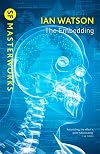
A promising book that felt like it never quite decided what it wanted to be, or wasn't willing to commit to any of the premises it brought up. Everything peters out, even when it technically doesn't - the culmination of the tribe's prophecies and dreams falls flat, as does the military stuff towards the end. The throwaway introduction of induced telepathy in the last few pages felt like a suitable stamp of authorial confusion. The embedded language thing doesn't actually go anywhere. I don't show more understand why this is considered a masterpiece. show less
Lists
Dead narrators (1)
SF Masterworks (1)
Awards


You May Also Like


Associated Authors
Statistics
- Works
- 219
- Also by
- 156
- Members
- 5,622
- Popularity
- #4,405
- Rating
- 3.4
- Reviews
- 154
- ISBNs
- 383
- Languages
- 16
- Favorited
- 7
