
Ande Parks
Author of Green Arrow: Quiver
About the Author
Series
Works by Ande Parks
Quick Stops: Anecdotes From the Annals of the Askewniverse (2023) — Illustrator — 3 copies, 1 review
Kato # 1 2 copies
Green Hornet 27: Outcast, Part Six of Six — Author — 1 copy
Green Hornet 19: The Devil You Know, Part Four — Author — 1 copy
Green Hornet 17: The Devil You Know: Part 2 — Author — 1 copy
Green Hornet 18: The Devil You Know, Part Three — Author — 1 copy
Kato # 3 1 copy
Kato # 4 1 copy
Kato # 5 1 copy
Bad Thoughts #1 1 copy
Species: Human Race #2 1 copy
Green Hornet 26: Outcast, Part Five of Six — Author — 1 copy
Kato # 2 1 copy
Green Hornet 20: Like My Father Before Me — Author — 1 copy
Green Hornet 21 — Author — 1 copy
Green Hornet 22: Outcast, Part One of Six — Author — 1 copy
Green Hornet 16: Red Hand: Part 1 — Author — 1 copy
Green Hornet 23: Outcast, Part Two of Six — Author — 1 copy
Green Hornet 25: Outcast, Part Four of Six — Author — 1 copy
Green Hornet 24: Outcast, Part Three of Six — Author — 1 copy
Kato # 6 1 copy
Associated Works
9-11: The World's Finest Comic Book Writers & Artists Tell Stories to Remember (2002) — Illustrator — 256 copies, 1 review
Mother Panic #3 — Illustrator — 1 copy
Strange Sports Stories (2015) #4 — Inker — 1 copy
Giant-Size Action Planet Halloween Special — Contributor — 1 copy
Tagged
Common Knowledge
- Birthdate
- 1964-10-01
- Gender
- male
- Occupations
- graphic novelist
comic book artist - Nationality
- USA
- Associated Place (for map)
- USA
Members
Reviews

Sounds of Violence collects the second part of Kevin Smith's run on Green Arrow, issues #11-15. Despite containing only about half as many issues as the previous volume, it still packs a satisfying punch. It consists of what are really three separate stories, but all three concern one thing: Oliver Queen's relationship to the people around him. If you read my review of the first volume of this series, you'll know that what I liked was Oliver's depiction as a great hero but a not-so-great man show more who tries his best. This volume continues that trend.
We're not going to handle these in quite the order they happen in the book; the second chapter, "Feast and Fowl" reignites Green Arrow and Black Canary's relationship, despite both of their wishes. It's a somewhat typical "feisty couple" story; the two bicker a lot and then end up in bed with one another after a workout. I'm a bit confused as to why the news reported that Green Arrow and Black Canary were fighting when they did it all in their civilian identities, but what the hey... I do like seeing the Riddler get smashed to a pulp. Also fun in this story is Green Arrow's fight with Hawkman-- you know that when Black Canary frets the two will be fighting with each other that they will be best buds, but Smith goes on to reverse his reversal in a great moment later on where they do end up fighting. Or rather, it's a great moment if you think women can't speak for themselves in their own relationships and desires, so it's also great when Black Canary knocks the two bickering men out. Though she does it naked, of course. It's a good story, though not really central to the book.
The first chapter, "Ultimate Speedy", is about his relationship with Mia Dearden, the teenage ex-prostitute he took in during Quiver. Mia wants to be the new Speedy, Green Arrow's sidekick, but Oliver doesn't think that's such a good idea; he doesn't want some kid cramping up his style. But as Mia points out, Roy Harper was Speedy to Oliver's Green Arrow back when he was fifteen years old, so what gives? What Oliver realizes as he cleans the streets with his son, new Green Arrow Connor Hawke, is that he likes having a younger person around to show the ropes, likes having someone admire him, likes being a father. But if he's going to actually admit that to himself... he also needs to actually act like a father for the first time in his life, and that means being responsible towards Mia. So no, she actually can't be the new Speedy, as much as both of them want it. It's a nice moment, unexpected in a superhero comic, though I'd worry that Mia's status as a civilian doesn't cause writers to not know what to do with here. I know she became Speedy later on, once Smith was off the title, and I hope it's not crap like when Byrne wrote a whole issue of Alpha Flight explaining why Heather Hudson couldn't be the new Guardian... and then as soon as he was off the title, Bill Mantlo made her the new Guardian because he didn't know what to do with such a unique character. But here, it's a nice little character vignette, showing us an Oliver Queen coming to terms with the idea of being a father for the first time in his life.
This is important to the last (and longest) story of the volume, "The Sounds of Violence". Here, the Green Arrows come up against Onomatopoeia, one of the creepiest comic-book villains I have seen in a long time. This guy's gimmick is that whenever he does something he verbalizes its sound effect first: so he says, "blam" and then he shoots you, "BLAM!" And that's all he says. You can't even see his face; he wears a full-head mask. Phil Hester's art really sells the moments where he just stares at Green Arrow, unanswering. We don't see why he does what he does, either; he's an indecipherable mystery. A simple but disturbing concept. An excellent villain to show the depths of feeling in the Oliver/Connor relationship, as Connor falls victim to Onomatopoeia. The scenes with Oliver and Onomatopoeia in the hospital room together, Oliver's arrow in the villain's mouth as Connor is operated on by desperate physicians, is fantastic. Though one wonders why Oliver just doesn't kill Onomatopoeia anyway, given that he's a known murderer surely going to resist arrest. The story here is simple-- a series of fight scenes interspersed with Ollie's regrets-- but it works really well. Smith has created a compelling set of characters in the past dozen issues, and he really capitalizes on that here.
The only problem I have here is that Onomatopoeia is annoyingly lucky; why can't Green Arrow ever quite get him when he nails so many other people throughout the book with ease. Is he just that good? It seems contrived, unless the villain has super-strength or other powers, but no one ever raises that as a possibility. Why can Onomatopoeia just shoot Connor when no one else can? The conceit of these sort of superhero stories is that the bullets never hit, so it jars when one does for no apparent reason. Things can be random like that in real life; it doesn't work so well in stories. Similarly, I didn't get why Oliver had such a hard time fighting Onomatopoeia, even with help from Black Canary, given the ease in which they took down the Riddler and five goons in the previous story. But it's a small quibble; I'd happily read another story about Onomatopoeia. Wiki tells me that though he never popped up in Green Arrow again, he did make it into a Batman story (also by Smith); I'll have to seek that out.
Sounds of Violence does exactly what I'd hoped the Green Arrow series would do after Quiver: move away from the continuity-heavy background and simply tell good stories about Green Arrow and surrounding characters with the set-up Smith had established. I feel like I don't have a lot to say about this book, but that's because it doesn't have anything big to say about humanity, the universe, or even Green Arrow himself. It sets itself modest goals of telling a cracking good superhero story with strong characterization and snappy dialogue and exceeds those goals well.
Green Arrow: « Previous in sequence | Next in sequence » show less
We're not going to handle these in quite the order they happen in the book; the second chapter, "Feast and Fowl" reignites Green Arrow and Black Canary's relationship, despite both of their wishes. It's a somewhat typical "feisty couple" story; the two bicker a lot and then end up in bed with one another after a workout. I'm a bit confused as to why the news reported that Green Arrow and Black Canary were fighting when they did it all in their civilian identities, but what the hey... I do like seeing the Riddler get smashed to a pulp. Also fun in this story is Green Arrow's fight with Hawkman-- you know that when Black Canary frets the two will be fighting with each other that they will be best buds, but Smith goes on to reverse his reversal in a great moment later on where they do end up fighting. Or rather, it's a great moment if you think women can't speak for themselves in their own relationships and desires, so it's also great when Black Canary knocks the two bickering men out. Though she does it naked, of course. It's a good story, though not really central to the book.
The first chapter, "Ultimate Speedy", is about his relationship with Mia Dearden, the teenage ex-prostitute he took in during Quiver. Mia wants to be the new Speedy, Green Arrow's sidekick, but Oliver doesn't think that's such a good idea; he doesn't want some kid cramping up his style. But as Mia points out, Roy Harper was Speedy to Oliver's Green Arrow back when he was fifteen years old, so what gives? What Oliver realizes as he cleans the streets with his son, new Green Arrow Connor Hawke, is that he likes having a younger person around to show the ropes, likes having someone admire him, likes being a father. But if he's going to actually admit that to himself... he also needs to actually act like a father for the first time in his life, and that means being responsible towards Mia. So no, she actually can't be the new Speedy, as much as both of them want it. It's a nice moment, unexpected in a superhero comic, though I'd worry that Mia's status as a civilian doesn't cause writers to not know what to do with here. I know she became Speedy later on, once Smith was off the title, and I hope it's not crap like when Byrne wrote a whole issue of Alpha Flight explaining why Heather Hudson couldn't be the new Guardian... and then as soon as he was off the title, Bill Mantlo made her the new Guardian because he didn't know what to do with such a unique character. But here, it's a nice little character vignette, showing us an Oliver Queen coming to terms with the idea of being a father for the first time in his life.
This is important to the last (and longest) story of the volume, "The Sounds of Violence". Here, the Green Arrows come up against Onomatopoeia, one of the creepiest comic-book villains I have seen in a long time. This guy's gimmick is that whenever he does something he verbalizes its sound effect first: so he says, "blam" and then he shoots you, "BLAM!" And that's all he says. You can't even see his face; he wears a full-head mask. Phil Hester's art really sells the moments where he just stares at Green Arrow, unanswering. We don't see why he does what he does, either; he's an indecipherable mystery. A simple but disturbing concept. An excellent villain to show the depths of feeling in the Oliver/Connor relationship, as Connor falls victim to Onomatopoeia. The scenes with Oliver and Onomatopoeia in the hospital room together, Oliver's arrow in the villain's mouth as Connor is operated on by desperate physicians, is fantastic. Though one wonders why Oliver just doesn't kill Onomatopoeia anyway, given that he's a known murderer surely going to resist arrest. The story here is simple-- a series of fight scenes interspersed with Ollie's regrets-- but it works really well. Smith has created a compelling set of characters in the past dozen issues, and he really capitalizes on that here.
The only problem I have here is that Onomatopoeia is annoyingly lucky; why can't Green Arrow ever quite get him when he nails so many other people throughout the book with ease. Is he just that good? It seems contrived, unless the villain has super-strength or other powers, but no one ever raises that as a possibility. Why can Onomatopoeia just shoot Connor when no one else can? The conceit of these sort of superhero stories is that the bullets never hit, so it jars when one does for no apparent reason. Things can be random like that in real life; it doesn't work so well in stories. Similarly, I didn't get why Oliver had such a hard time fighting Onomatopoeia, even with help from Black Canary, given the ease in which they took down the Riddler and five goons in the previous story. But it's a small quibble; I'd happily read another story about Onomatopoeia. Wiki tells me that though he never popped up in Green Arrow again, he did make it into a Batman story (also by Smith); I'll have to seek that out.
Sounds of Violence does exactly what I'd hoped the Green Arrow series would do after Quiver: move away from the continuity-heavy background and simply tell good stories about Green Arrow and surrounding characters with the set-up Smith had established. I feel like I don't have a lot to say about this book, but that's because it doesn't have anything big to say about humanity, the universe, or even Green Arrow himself. It sets itself modest goals of telling a cracking good superhero story with strong characterization and snappy dialogue and exceeds those goals well.
Green Arrow: « Previous in sequence | Next in sequence » show less
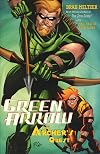
More of Ollie reacquainting himself with life. Most of this TPB is taken up by a road trip by Roy, the former Speedy, and Ollie. Their quest is getting back the stuff that wasn't destroyed by Shade (the man he tasked with destroying the stuff). Ollie's quest is retrieving the secrets that he hid.
This was definitely an onion of a story. And I really liked how Brad Meltzer peeled away the layers as the story unfolded. And the end, I didn't see it coming.
I also liked how much Roy there was in show more it (one of my favorite DC guys), and there was even some Oracle and a couple of actual panels of her too.
Then there was the art. At first I didn't love it, but, as I kept reading I think the story pulled me in and the art grew on me. Even though it was a bit more cartoon-y than I usually like. show less
This was definitely an onion of a story. And I really liked how Brad Meltzer peeled away the layers as the story unfolded. And the end, I didn't see it coming.
I also liked how much Roy there was in show more it (one of my favorite DC guys), and there was even some Oracle and a couple of actual panels of her too.
Then there was the art. At first I didn't love it, but, as I kept reading I think the story pulled me in and the art grew on me. Even though it was a bit more cartoon-y than I usually like. show less
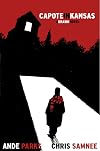
Truman Capote settles on the perfect idea for his next book - a "nonfiction novel" about the murder of a farm family in Kansas. To that end, he travels to the small Kansan town to interview family, neighbors, law enforcement, and the murderers.
This book is a fictionalized account through Capote's eyes as he works on his now famous In Cold Blood. Other than the ghost of Nancy Clutter that Capote converses with, it does seem pretty factual. Obviously, some conversations are imagined, but they show more seem more than possible. Due to the book being a slim volume, we only really see snippets of interactions, but you get a sense of Capote's relationships with Dewey, Perry, and others. (Of course, as someone who has read about Capote and the Clutter case, I know a lot about it; others who go into this book with no background may be miss out.)
The black and white illustrations seem sparse at first glance, but they actually convey a lot about setting, tone, and characters. There are several pages with no words at all where the illustrations tell the whole story.
All in all, this is an interesting and quick read for those interested in Capote and his connection to the Clutter family's murder case. show less
This book is a fictionalized account through Capote's eyes as he works on his now famous In Cold Blood. Other than the ghost of Nancy Clutter that Capote converses with, it does seem pretty factual. Obviously, some conversations are imagined, but they show more seem more than possible. Due to the book being a slim volume, we only really see snippets of interactions, but you get a sense of Capote's relationships with Dewey, Perry, and others. (Of course, as someone who has read about Capote and the Clutter case, I know a lot about it; others who go into this book with no background may be miss out.)
The black and white illustrations seem sparse at first glance, but they actually convey a lot about setting, tone, and characters. There are several pages with no words at all where the illustrations tell the whole story.
All in all, this is an interesting and quick read for those interested in Capote and his connection to the Clutter family's murder case. show less
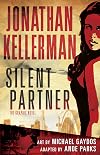
The first graphic adaptation derived from best-selling author Jonathan Kellerman's works, the compelling Silent Partner (based on the novel of the same name) follows renowned child psychologist Alex Delaware as he delves into the mystery surrounding the suicide of a former lover. His travails lead him through a harrowing array of mind games and duplicity. Though beautiful, the Gaydos art at times muddies the meandering, dense story. The lettering appears misplaced in several scenes causing show more some momentary confusion. Even with these flaws, Kellerman, Parks, and Gaydos manage to deliver a taut, psychological and ultimately satisfying drama. show less
Lists
Awards


You May Also Like


Associated Authors
Statistics
- Works
- 59
- Also by
- 14
- Members
- 1,358
- Popularity
- #18,930
- Rating
- 3.6
- Reviews
- 44
- ISBNs
- 71
- Languages
- 5