

Melissa Pritchard
Author of The Odditorium: Stories
About the Author
Works by Melissa Pritchard
A Solemn Pleasure: To Imagine, Witness, and Write (The Art of the Essay) (2015) 63 copies, 11 reviews
Salve Regina 1 copy
The Carnation Milk Palace 1 copy
Associated Works
The Best of the West 4: New Stories from the West Side of the Missouri (Vol. 4) (1991) — Contributor — 15 copies
Tagged
Common Knowledge
- Canonical name
- Pritchard, Melissa
- Birthdate
- 1948-12-12
- Gender
- female
- Education
- Convent of the Sacred Heart High School, Atherton, California, USA
Vermont College (MFA)
University of California, Santa Barbara (BA|Comparative Religions) - Occupations
- professor
Embedded journalist (Afghanistan)
short story writer
novelist
essayist - Organizations
- Afghan Women's Writing Project
Arizona State University - Short biography
- Melissa Pritchard is a Flannery O’Connor, Janet Heidinger Kafka, and Carl Sandburg award-winning author whose two previous short fiction collections were New York Times Notable Book and Editor’s Choice selections. She has also been an embedded journalist in Afghanistan and is a member of the Afghan Women’s Writing Project, which helps to promote literacy and education for Afghan women and girls. She lives in Arizona.
- Nationality
- USA
- Birthplace
- San Mateo, California, USA
- Places of residence
- San Mateo, California, USA
Evanston, Illinois, USA
Taos, New Mexico, USA
Tempe, Arizona, USA
Menlo Park, California, USA
Burlingame, California, USA - Associated Place (for map)
- USA
Members
Reviews
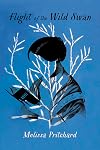
Keep the scientist, the statistician, the nurse. Preserve the myth. History a jumble of half-truths anyway. Let the fire eat her rage, her failures. Let her become what each generation needs her to be. A light to lead the others.
from Flight of the Wild Swan by Melissa Pritchard
This is the story of Florence Nightingale, one of the most remarkable women in history.
This is the story of a brilliant mind who chafed at society’s restricted roles for women and who believed she was the hands of show more God, called to heal.
This is the story of despair and torment. Florence was born to a comfortable life, expected to marry and produce a male heir to inherit her father’s estate. But she was drowning in the life of fireside gossip and tea. Only when her despair had reached it zenith was she allowed leaway to follow her dreams of becoming a nurse.
This is a story of conviction and courage, of self-denial and servitude. She went into hell on earth, the battlefield hospitals and dead houses, and ministered to the war wounded with dignity and care. When she arrived in Crimea, more soldiers were dying from disease than in battle. She brought cleanliness, healthy food, hope. The changes she instituted vastly reduced the death rate.
Sanitation, hygiene, statistics–these are my earthly Deities.
from Flight of the Wild Swan by Melissa Pritchard
This is a story of higher calling, of a universal faith. On a trip to Egypt her understanding of a higher power was broadened, deepened, became encompassing. She listened for God’s voice to lead her, but adhered to no one doctrine.
She shunned her growing fame, suppressed her own needs, was driven to work and serve past human endurance. Even after her health broke down, she continued her reform work, using her beloved mathematics and statistics to institute groundbreaking medical practices.
In the novel, a doctor complains about the “poor chaps” who were “bribed by a shilling and a pint of beer” and “marched into the field and slaughter.” He asks, “For what? For the queen. For land and sea. For pride of empire. For that and that alone, a generation dies.” And Florence is conflicted about her role as nurse, knowing that once recovered, her patients would be sent back to the front. She could not rest, but spent her nights in the wards, lighting her way with a lantern, becoming the mythic Lady of the Lamp as she ministered to the suffering.
Florence Nightingale soared into history and legend, but in these pages you will meet a very human, conflicted, inspired, unforgettable woman. From the claustrophobia of her family to the pestilence of the Scutari hospital, Pritchard pens haunting scenes, and the letters and diary entries in Florence’s voice brings her into vivid profile.
Thanks to the publisher for a free book. show less
from Flight of the Wild Swan by Melissa Pritchard
This is the story of Florence Nightingale, one of the most remarkable women in history.
This is the story of a brilliant mind who chafed at society’s restricted roles for women and who believed she was the hands of show more God, called to heal.
This is the story of despair and torment. Florence was born to a comfortable life, expected to marry and produce a male heir to inherit her father’s estate. But she was drowning in the life of fireside gossip and tea. Only when her despair had reached it zenith was she allowed leaway to follow her dreams of becoming a nurse.
This is a story of conviction and courage, of self-denial and servitude. She went into hell on earth, the battlefield hospitals and dead houses, and ministered to the war wounded with dignity and care. When she arrived in Crimea, more soldiers were dying from disease than in battle. She brought cleanliness, healthy food, hope. The changes she instituted vastly reduced the death rate.
Sanitation, hygiene, statistics–these are my earthly Deities.
from Flight of the Wild Swan by Melissa Pritchard
This is a story of higher calling, of a universal faith. On a trip to Egypt her understanding of a higher power was broadened, deepened, became encompassing. She listened for God’s voice to lead her, but adhered to no one doctrine.
She shunned her growing fame, suppressed her own needs, was driven to work and serve past human endurance. Even after her health broke down, she continued her reform work, using her beloved mathematics and statistics to institute groundbreaking medical practices.
In the novel, a doctor complains about the “poor chaps” who were “bribed by a shilling and a pint of beer” and “marched into the field and slaughter.” He asks, “For what? For the queen. For land and sea. For pride of empire. For that and that alone, a generation dies.” And Florence is conflicted about her role as nurse, knowing that once recovered, her patients would be sent back to the front. She could not rest, but spent her nights in the wards, lighting her way with a lantern, becoming the mythic Lady of the Lamp as she ministered to the suffering.
Florence Nightingale soared into history and legend, but in these pages you will meet a very human, conflicted, inspired, unforgettable woman. From the claustrophobia of her family to the pestilence of the Scutari hospital, Pritchard pens haunting scenes, and the letters and diary entries in Florence’s voice brings her into vivid profile.
Thanks to the publisher for a free book. show less
As a girl, I read I-don't-know-how-may Florence Nightingale bios, but they were largely the kind of hagiography handed out to children and nothing like Melissa Pritchard's Flight of the Wild Swan. Fictional biography is an odd genre because one wants to read it as truth, but one can't do that. I don't know how much the "real" Nightingale was like the Nightingale Pritchard gives us, but Pritchard's Nightingale is an excellent woman to spend time with: fierce, brilliant, furious about the show more limitations placed on her sex, querulous, impatient with family, and unrelenting in pursuit of the life she has envisioned for herself.
Flight of the Wild Swan—like many Bellevue Literary Press titles—is a book that helps us see beyond the simpler versions of stories we think we're familiar with. It offers an excellent read.
I received a free electronic review copy of this title from the publisher via Edelweiss; the opinions are my own. show less
Flight of the Wild Swan—like many Bellevue Literary Press titles—is a book that helps us see beyond the simpler versions of stories we think we're familiar with. It offers an excellent read.
I received a free electronic review copy of this title from the publisher via Edelweiss; the opinions are my own. show less
When I was younger, I didn't like short story collections. I felt teased by only a small portion of a larger story and frustrated when my search for a connecting thread turned up fruitless. Thankfully now, I have case aside my hesitancy and am enjoying short story collections, including my latest read, The Odditorium by Melissa Pritchard.
The Odditorium touches on multiple genres: Westerns, historical fiction, murder mysteries, religious fiction and more. To shape each story, Pritchard plucks show more out obscure people, places and events from history and the modern world. While I enjoyed all of the stories, here are a few of my favorites:
1. "Watanya Ciclia" is the story about the friendship between Annie Oakley and Sitting Bull. Sitting Bull watches Annie at a show, and eventually agrees to join Buffalo Bill Cody's Wild West Show, despite the boos and jeers, to spend time with Annie. The story is a touching tribute to two friends and sympathic view of the plight of Sitting Bull.
2. "Captain Brown and the Royal Victoria Military Hospital" is the longest story in the collection - and one many other readers didn't like. This story resonated with me, however. Captain Brown is an American naval surgeon who must convert a Victorian-era British military hospital into a feat of modern medicine - all before the Allied's planned attack on D-Day. Brown was fallible and honest, and despite his career successes, was guilty about decisions he made in his life. This would have made a wonderful novel.
3. "Patricide" takes place at the hotel that houses a courtyard played in by Edgar Allan Poe. Two sisters meet there to discuss their dying father. The oldest sister, Avis, who was to inherit her father's riches, was considered a disappointment by her father, and he cut Avis out of his will. When Signe, the other sister, sees the pain Avis is in from an arthritic knee, Signe wonders if she could kill her father now so she can rush the money to her ailing sister. Throughout the story, we learn about Signe's life, including a recent scandal from her job as a teacher. Mixed into the story are wonderful lines from Poe's poetry.
All in all, I was immersed in great storytelling and fantastic writing. I highly recommend The Odditorium to readers who enjoyed high-quality short stories and lovers of literary fiction. show less
The Odditorium touches on multiple genres: Westerns, historical fiction, murder mysteries, religious fiction and more. To shape each story, Pritchard plucks show more out obscure people, places and events from history and the modern world. While I enjoyed all of the stories, here are a few of my favorites:
1. "Watanya Ciclia" is the story about the friendship between Annie Oakley and Sitting Bull. Sitting Bull watches Annie at a show, and eventually agrees to join Buffalo Bill Cody's Wild West Show, despite the boos and jeers, to spend time with Annie. The story is a touching tribute to two friends and sympathic view of the plight of Sitting Bull.
2. "Captain Brown and the Royal Victoria Military Hospital" is the longest story in the collection - and one many other readers didn't like. This story resonated with me, however. Captain Brown is an American naval surgeon who must convert a Victorian-era British military hospital into a feat of modern medicine - all before the Allied's planned attack on D-Day. Brown was fallible and honest, and despite his career successes, was guilty about decisions he made in his life. This would have made a wonderful novel.
3. "Patricide" takes place at the hotel that houses a courtyard played in by Edgar Allan Poe. Two sisters meet there to discuss their dying father. The oldest sister, Avis, who was to inherit her father's riches, was considered a disappointment by her father, and he cut Avis out of his will. When Signe, the other sister, sees the pain Avis is in from an arthritic knee, Signe wonders if she could kill her father now so she can rush the money to her ailing sister. Throughout the story, we learn about Signe's life, including a recent scandal from her job as a teacher. Mixed into the story are wonderful lines from Poe's poetry.
All in all, I was immersed in great storytelling and fantastic writing. I highly recommend The Odditorium to readers who enjoyed high-quality short stories and lovers of literary fiction. show less
 This review was written for LibraryThing Early Reviewers.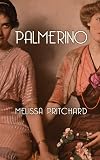
Vernon Lee, or Violet Paget, was by all accounts an immensely gifted and intelligent English essayist, art critic and writer of ghost stories. Befriended and admired, if sometimes feared, by her peers Lee was one of the leading lights of the Aesthetic Movement. She counted Henry James and Oscar Wilde as friends. John Singer Sargent’s portrait of her bears a remarkable likeness to Wilde. She also was a lover of women and had passionate relationships with three.
Melissa Pritchard’s novel, show more Palmerino, tells the story of Lee's fictional biographer’s (Sylvia Casey) stay at Lee’s former home, the villa Palmerino in Florence, Italy, now a rental property. Saddled with problems, not the least of which is her husband’s abandoning her for another man, Sylvia struggles with the memory of her subject as well as her own memories and the residua of both of their lives.
Sylvia’s story becomes braided with Lee’s or at least with a certain period of Lee’s life when she falls in love with Kit Anstruther-Thomson. Lee comes to haunt Sylvia as her spirit watches over her, mirroring the writer’s supernatural work. Lee’s story eventually dominates as did the woman herself.
Praise on the back cover calls the novel a “jewel” and that it is. Short, dense and brilliant it dazzles, reflecting light on all of its characters. Perhaps too short to be considered a masterpiece this novella does approach perfection and shows Ms. Pritchard at the height of her powers. It will be interesting to see if she is honored with a prize in 2014 or later. I recommend this book highly. show less
Melissa Pritchard’s novel, show more Palmerino, tells the story of Lee's fictional biographer’s (Sylvia Casey) stay at Lee’s former home, the villa Palmerino in Florence, Italy, now a rental property. Saddled with problems, not the least of which is her husband’s abandoning her for another man, Sylvia struggles with the memory of her subject as well as her own memories and the residua of both of their lives.
Sylvia’s story becomes braided with Lee’s or at least with a certain period of Lee’s life when she falls in love with Kit Anstruther-Thomson. Lee comes to haunt Sylvia as her spirit watches over her, mirroring the writer’s supernatural work. Lee’s story eventually dominates as did the woman herself.
Praise on the back cover calls the novel a “jewel” and that it is. Short, dense and brilliant it dazzles, reflecting light on all of its characters. Perhaps too short to be considered a masterpiece this novella does approach perfection and shows Ms. Pritchard at the height of her powers. It will be interesting to see if she is honored with a prize in 2014 or later. I recommend this book highly. show less
This review was written for LibraryThing Early Reviewers.Awards


You May Also Like


Associated Authors
Statistics
- Works
- 15
- Also by
- 5
- Members
- 329
- Popularity
- #72,115
- Rating
- 3.7
- Reviews
- 46
- ISBNs
- 31
- Languages
- 1
- Favorited
- 1
