
Ron Carlson (1) (1947–)
Author of Five Skies
For other authors named Ron Carlson, see the disambiguation page.
About the Author
Ron Carlson directs the graduate program in fiction at the University of California, Irvine.
Works by Ron Carlson
The Gold Lunch 1 copy
Associated Works
My Bookstore: Writers Celebrate Their Favorite Places to Browse, Read, and Shop (2012) — Contributor — 616 copies, 16 reviews
The Bastard on the Couch: 27 Men Try Really Hard to Explain Their Feelings About Love, Loss, Fatherhood, and Freedom (2004) — Contributor — 186 copies, 7 reviews
Hint Fiction: An Anthology of Stories in 25 Words or Fewer (2010) — Contributor — 147 copies, 26 reviews
Field of Fantasies: Baseball Stories of the Strange and Supernatural (2014) — Contributor — 46 copies
The Student Body: Short Stories about College Students and Professors (2001) — Contributor — 8 copies
Tagged
Common Knowledge
- Gender
- male
- Education
- University of Utah
- Occupations
- fiction writer
- Nationality
- USA
- Birthplace
- Logan, Utah, USA
- Associated Place (for map)
- Utah, USA
Members
Reviews

I've read a lot of single-author short story collections, and, as with almost any collection, the good ones have their 'wow' moments and their 'meh' moments. Carlson's "A Kind of Flying" is by far the most consistently strong collection of shorts I've read. I'd mark a dozen or so of the entries 'exceptional', and I there's not a single entry that I did not enjoy. Carlson seems quite comfortable in his own skin, and manages to give the sense that he's writing about what he knows, even when show more he's telling how "Bigfoot Stole My Wife".
Os. show less
Os. show less
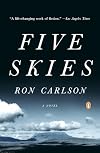
“The river came through this park winding in a perfect S and the sand and willows and twenty gigantic cottonwoods were half in the shade. The air rode down the river fragrant with water and willows.”
Three men get together for a construction project in Idaho. That is the gist. I love reading stories set in the modern West and Carlson seems to be the kind of author I enjoy but this was an uneven narrative and I am not sure I needed a description of building a ramp in painstaking detail. I show more still found plenty to admire. I like these three, flawed, rugged, characters and Carlson can certainly describe the great outdoors with a sense of beauty and serenity. The author is known as a short story writer and I wonder if I would appreciate him more, in that format. I will definitely give him another try. show less
Three men get together for a construction project in Idaho. That is the gist. I love reading stories set in the modern West and Carlson seems to be the kind of author I enjoy but this was an uneven narrative and I am not sure I needed a description of building a ramp in painstaking detail. I show more still found plenty to admire. I like these three, flawed, rugged, characters and Carlson can certainly describe the great outdoors with a sense of beauty and serenity. The author is known as a short story writer and I wonder if I would appreciate him more, in that format. I will definitely give him another try. show less
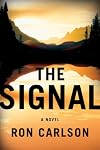
"The Signal:" Ron Carlson Charms a Reluctant Reader
Sometimes a key element in a novel -- the main character, the setting, etc. -- can be so inherently appealing to a particular reader that the book's success is guaranteed before the author earns it page by page. If an author's topic and the reader's interests coalesce, it's not that difficult for the story to capture the reader's approval and simply coast forward on a wave of good will.
This being the case, I must applaud the skill with which show more Ron Carlson drew me in to his most recent novel, The Signal, against my natural inclinations. Before proceeding further, I need to list two of my prejudices: 1. I am not a backwoods camper, and I never will be. I enjoy an afternoon hike in the mountains as much as the next person, but I'll never willingly subject myself to freezing overnight temperatures, dismal hygiene, and the icky prospect of pooping in the woods, no matter how many s'mores are offered in the bargain. 2. I generally do not enjoy books with protagonists who would dislike me if they met me. Life is full of enough challenges. Why should I invite imagined disdain from fictional characters?
Carlson's most recent novel is a "man's man of a book" (not my original phrase -- almost every reviewer makes this observation) that captures the raw power and sweeping beauty of one of the last expanses of Western wilderness -- the remote, mountainous backcountry of Wyoming -- and ties that power and beauty directly to the emotional landscape and interpersonal chemistry of the novel's two main characters, Mack and Vonnie. Vonnie, a high school girl from Chapel Hill, meets Mack during a dude ranch trip to Wyoming. Mack, the ranch owner's son, personifies the Western wilderness mystique that Vonnie craves like a drug, and their mutual love of the wilderness and each other leads to an on-again off-again relationship that eventually culminates in marriage.
Things happen. Mack's parents die, bills mount up, poverty begins to nip at the heels of the young couple, and even their yearly romantic forays into the far backcountry can't save them from the effects of Mack's wounded pride, the grind of failure, and the introduction of methamphetamine to the locals. A jail term ensues for Mack, Vonnie leaves town, and Mack's last hope is based on Vonnie's promise to go on one more backpacking trip with him into the Wyoming wilderness upon his release from jail. The bulk of Carlson's novel is the tale of their ill-fated 6-day camping trip, the beauty and the evil they encounter, and the ways in which broken relationships can and can't be mended.
Carlson's spare and beautiful prose, together with his tight control of the novel's mounting suspense, pulled me in to a book that I had no business liking. I would never be attracted to Mack or Vonnie in real life, and I'm sure the feeling would be mutual. One evening of beers and cheese fries at the local tavern with those two and they'd give me up as a lost cause ("What a stiff little snit. Was she actually wearing makeup base?"). Nevertheless, Carlson's clear, spare language drew me into the purity of their mutual attraction with conviction. He made me experience and understand the basis of their love for each other in spite of the fact that I couldn't be more different that either one of them. Similarly, his sensory descriptions of Mack and Vonnie's camping experience -- the toothsome delight of a day-old doughnut when you're ravished with hunger, the throat-warming jolt of boiled coffee on a frosty morning, the feel of a cool breeze on sweat-drenched denim when a backpack is taken off -- had the ability to tempt a non-naturechild like me to speculate that Mack and Vonnie might indeed be on to something.
If you like stories filled with remote wilderness, survivalist suspense, and characters that radiate self-reliance and a love of rugged simplicity, you'll enjoy this book. If you don't, there's a reasonable chance you'll still enjoy this book, and that says a lot about Ron Carlson's skill as a writer.
Note: Carlson's interjection of a subplot involving a lost transponder (thus, "The Signal") felt a bit forced, but I still consider the book to be one of his best. show less
Sometimes a key element in a novel -- the main character, the setting, etc. -- can be so inherently appealing to a particular reader that the book's success is guaranteed before the author earns it page by page. If an author's topic and the reader's interests coalesce, it's not that difficult for the story to capture the reader's approval and simply coast forward on a wave of good will.
This being the case, I must applaud the skill with which show more Ron Carlson drew me in to his most recent novel, The Signal, against my natural inclinations. Before proceeding further, I need to list two of my prejudices: 1. I am not a backwoods camper, and I never will be. I enjoy an afternoon hike in the mountains as much as the next person, but I'll never willingly subject myself to freezing overnight temperatures, dismal hygiene, and the icky prospect of pooping in the woods, no matter how many s'mores are offered in the bargain. 2. I generally do not enjoy books with protagonists who would dislike me if they met me. Life is full of enough challenges. Why should I invite imagined disdain from fictional characters?
Carlson's most recent novel is a "man's man of a book" (not my original phrase -- almost every reviewer makes this observation) that captures the raw power and sweeping beauty of one of the last expanses of Western wilderness -- the remote, mountainous backcountry of Wyoming -- and ties that power and beauty directly to the emotional landscape and interpersonal chemistry of the novel's two main characters, Mack and Vonnie. Vonnie, a high school girl from Chapel Hill, meets Mack during a dude ranch trip to Wyoming. Mack, the ranch owner's son, personifies the Western wilderness mystique that Vonnie craves like a drug, and their mutual love of the wilderness and each other leads to an on-again off-again relationship that eventually culminates in marriage.
Things happen. Mack's parents die, bills mount up, poverty begins to nip at the heels of the young couple, and even their yearly romantic forays into the far backcountry can't save them from the effects of Mack's wounded pride, the grind of failure, and the introduction of methamphetamine to the locals. A jail term ensues for Mack, Vonnie leaves town, and Mack's last hope is based on Vonnie's promise to go on one more backpacking trip with him into the Wyoming wilderness upon his release from jail. The bulk of Carlson's novel is the tale of their ill-fated 6-day camping trip, the beauty and the evil they encounter, and the ways in which broken relationships can and can't be mended.
Carlson's spare and beautiful prose, together with his tight control of the novel's mounting suspense, pulled me in to a book that I had no business liking. I would never be attracted to Mack or Vonnie in real life, and I'm sure the feeling would be mutual. One evening of beers and cheese fries at the local tavern with those two and they'd give me up as a lost cause ("What a stiff little snit. Was she actually wearing makeup base?"). Nevertheless, Carlson's clear, spare language drew me into the purity of their mutual attraction with conviction. He made me experience and understand the basis of their love for each other in spite of the fact that I couldn't be more different that either one of them. Similarly, his sensory descriptions of Mack and Vonnie's camping experience -- the toothsome delight of a day-old doughnut when you're ravished with hunger, the throat-warming jolt of boiled coffee on a frosty morning, the feel of a cool breeze on sweat-drenched denim when a backpack is taken off -- had the ability to tempt a non-naturechild like me to speculate that Mack and Vonnie might indeed be on to something.
If you like stories filled with remote wilderness, survivalist suspense, and characters that radiate self-reliance and a love of rugged simplicity, you'll enjoy this book. If you don't, there's a reasonable chance you'll still enjoy this book, and that says a lot about Ron Carlson's skill as a writer.
Note: Carlson's interjection of a subplot involving a lost transponder (thus, "The Signal") felt a bit forced, but I still consider the book to be one of his best. show less

Three men with differing backgrounds and ages work together on a construction project in the middle of the Idaho desert. They live in a tent on the job site and occasionally visit a small town about 20 miles away. Each is harboring an emotional wound from a traumatic experience. They form close bonds over the course of the project. They are able to forget their troubles for a while, as they lose themselves in their work, feeling pleasure in doing the job well.
This book is beautifully show more written. The prose is sparse. The plot is low key. The characters are deeply developed. The tone is melancholy. The scenery of southern Idaho is pained in words. It is a stark landscape, filled with sagebrush and rabbits. A river lies at the bottom of a gorge. There are many conversations related to engineering and building construction. The novel is structured such that dialogue is used to gradually reveal their character traits and backstories.
The narrative is propelled by the sense of wanting to know what is initially unknown. What are they trying to avoid by getting away from the world for a while? What is this project intended to accomplish? What will the men do after the project is finished?
Eventually, all is revealed, and it leads up to an intense conclusion. The dramatic ending is surprising after the laid-back pace in the early parts. I very much enjoyed this book of inner turmoil in the midst of natural beauty. show less
This book is beautifully show more written. The prose is sparse. The plot is low key. The characters are deeply developed. The tone is melancholy. The scenery of southern Idaho is pained in words. It is a stark landscape, filled with sagebrush and rabbits. A river lies at the bottom of a gorge. There are many conversations related to engineering and building construction. The novel is structured such that dialogue is used to gradually reveal their character traits and backstories.
The narrative is propelled by the sense of wanting to know what is initially unknown. What are they trying to avoid by getting away from the world for a while? What is this project intended to accomplish? What will the men do after the project is finished?
Eventually, all is revealed, and it leads up to an intense conclusion. The dramatic ending is surprising after the laid-back pace in the early parts. I very much enjoyed this book of inner turmoil in the midst of natural beauty. show less
Lists
Awards


You May Also Like


Associated Authors
Statistics
- Works
- 21
- Also by
- 21
- Members
- 1,507
- Popularity
- #17,057
- Rating
- 3.7
- Reviews
- 57
- ISBNs
- 80
- Languages
- 2
- Favorited
- 1
