
John Meaney
Author of Bone Song
About the Author
Image credit: Used with permission
Series
Works by John Meaney
From The Heart 2 copies
The Whisper of Disks {short story} 2 copies
Blood and Verse 2 copies
Necroflux Day 2 copies
The Swastika Bomb 2 copies
Lost Time 1 copy
Sideways From Now 1 copy
A Bitter Shade Of Blindsight 1 copy
Diva's Bones 1 copy
A Bitter Shade Of Mindsight 1 copy
Study in Shadow 1 copy
Associated Works
The Year's Best Science Fiction: Twentieth Annual Collection (2003) — Contributor — 524 copies, 1 review
Tagged
Common Knowledge
- Birthdate
- 1957
- Gender
- male
- Occupations
- IT consultant
- Short biography
- Meaney grew up in London and Slough, England. He has been studying martial arts since childhood and has a black belt in shotokan karate. Meaney originally studied at Birmingham University and holds a combined degree in Physics and Computer Science from the Open University. He has done postgraduate work at Oxford University and is a part time IT consultant.
- Nationality
- UK
- Birthplace
- Paddington, London, England, UK
- Places of residence
- London, England, UK
Slough, Berkshire, England, UK - Associated Place (for map)
- England, UK
Members
Reviews
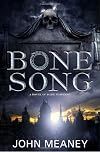
An intriguing but wildly inconsistent book.
Imagine, if you will, [a:J.D. Robb|17065|J.D. Robb|https://images.gr-assets.com/authors/1481138127p2/17065.jpg]'s "In Death" series redone with the deathworld of Chronicles of Riddick, the sensibility of a Batman graphic novel, and the magic of [b:California Bones|18490594|California Bones (Daniel Blackland, #1)|Greg Van Eekhout|https://images.gr-assets.com/books/1393646834s/18490594.jpg|25312108]. It's an unusual combination, a Dagwood sandwich of show more a book if you will, and much of my reading was occupied by puzzling out the details of the world.
"Donal sketched a fingertip salute to the shadows beyond the stone steps. Stuffing his hands in his overcoat pockets, he looked up at the two hundred stories of police HQ rearing upward, dark and uncompromising. It was late and cold and the sky appeared deep purple, heavily opaque. Somewhere near the top, Commissioner Vilnar's office waited. And reading between the lines of this morning's phone call, the commissioner had a new job lined up for him--something Donal was not going to enjoy."
The plot is straightforward: someone is killing artists to use their bones sooner than a natural death would allow. Donal Riordan is a highly respected New York City Tristopolis cop, whose job is his life. If he isn't on a case, he's practicing his marksmanship, going for a run or resting in his crummy little apartment in a dangerous side of town. Commissioner Vilnar assigns Riordan the job of protecting a famed opera singer while she is in town. The first half of the book centers around the protection detail, while the second is nominally about finding the conspirator(s). There's a missing-person side investigation that ends up dominating the majority of the second half of the book. There's also supposed to be political underpinnings to the main mystery, but it is not well integrated.
It's the world-building that intrigues here. There's hints of a chronic, quick-silver rain that is toxic to the skin, to the extent that Donal tends to spend his time running in the sewers catacombs (what isn't explained is why there are catacombs if the dead are burned for energy?) There are death-wolves that guard the doors of the police precinct, and seem to act as independent police agents. The desk sergeant is literally melded to his desk. There are non-human races, such as the cat-like people that staff the hospital/healing facilities.
However, the flip side to all the ideas is the extent to which they are developed. Much of it feels like 'sci-fi/fantasy' in the same way that J.D. Robb's books do: replace any given object or basic function with something fantastical and call it world-building. There's a comment about '25/9' instead of '24/7,' streets go up to the thousands, taxis are purple and instead of armor-piercing rounds, we have chitin-piercing rounds with a silver load.
At times, there's a little more depth, which leads to interesting mental routes. Mechanical devices are powered by indentured wraiths and the dead bones that provide 'thaumaturgical energy'. Death seems to come in many layers, with the wraiths resembling a disembodied consciousness and the zombies are bodies reliant on the energy from the bones. Wraiths and zombies are viewed as less-than-human, but unfortunately, the writing around it is largely generic and non-nuanced, resorting to obvious -ist comments. It'd be easy to replace 'zombies' with any other group and have a non-fantasy story, and the wraiths have a strong parallel in slavery-based cultures.
This is a book that is all over the ratings map, even among reading friends, with two giving it one-star, and two awarding four and five stars. It's not one that would be easy to recommend, but I can see it appealing to people who enjoyed [b:Two Serpents Rise|16059411|Two Serpents Rise (Craft Sequence, #2)|Max Gladstone|https://images.gr-assets.com/books/1355469010s/16059411.jpg|21846173] by Gladstone. I was frequently struck at how vivid some of the scenes were in my mind; I feel like there's something almost cinematic about it. Recently, I was discussing the concept of stretchy-books that push one's reading. This felt like one of them, not in terms of ethics or boundary-pushing writing skill, but in the wealth of ideas and their combination. I wanted to play longer in the world, so despite a variety of issues with plotting and world-building, I'll be giving it a read. show less
Imagine, if you will, [a:J.D. Robb|17065|J.D. Robb|https://images.gr-assets.com/authors/1481138127p2/17065.jpg]'s "In Death" series redone with the deathworld of Chronicles of Riddick, the sensibility of a Batman graphic novel, and the magic of [b:California Bones|18490594|California Bones (Daniel Blackland, #1)|Greg Van Eekhout|https://images.gr-assets.com/books/1393646834s/18490594.jpg|25312108]. It's an unusual combination, a Dagwood sandwich of show more a book if you will, and much of my reading was occupied by puzzling out the details of the world.
"Donal sketched a fingertip salute to the shadows beyond the stone steps. Stuffing his hands in his overcoat pockets, he looked up at the two hundred stories of police HQ rearing upward, dark and uncompromising. It was late and cold and the sky appeared deep purple, heavily opaque. Somewhere near the top, Commissioner Vilnar's office waited. And reading between the lines of this morning's phone call, the commissioner had a new job lined up for him--something Donal was not going to enjoy."
The plot is straightforward: someone is killing artists to use their bones sooner than a natural death would allow. Donal Riordan is a highly respected New York City Tristopolis cop, whose job is his life. If he isn't on a case, he's practicing his marksmanship, going for a run or resting in his crummy little apartment in a dangerous side of town. Commissioner Vilnar assigns Riordan the job of protecting a famed opera singer while she is in town. The first half of the book centers around the protection detail, while the second is nominally about finding the conspirator(s). There's a missing-person side investigation that ends up dominating the majority of the second half of the book. There's also supposed to be political underpinnings to the main mystery, but it is not well integrated.
It's the world-building that intrigues here. There's hints of a chronic, quick-silver rain that is toxic to the skin, to the extent that Donal tends to spend his time running in the sewers catacombs (what isn't explained is why there are catacombs if the dead are burned for energy?) There are death-wolves that guard the doors of the police precinct, and seem to act as independent police agents. The desk sergeant is literally melded to his desk. There are non-human races, such as the cat-like people that staff the hospital/healing facilities.
However, the flip side to all the ideas is the extent to which they are developed. Much of it feels like 'sci-fi/fantasy' in the same way that J.D. Robb's books do: replace any given object or basic function with something fantastical and call it world-building. There's a comment about '25/9' instead of '24/7,' streets go up to the thousands, taxis are purple and instead of armor-piercing rounds, we have chitin-piercing rounds with a silver load.
At times, there's a little more depth, which leads to interesting mental routes. Mechanical devices are powered by indentured wraiths and the dead bones that provide 'thaumaturgical energy'. Death seems to come in many layers, with the wraiths resembling a disembodied consciousness and the zombies are bodies reliant on the energy from the bones. Wraiths and zombies are viewed as less-than-human, but unfortunately, the writing around it is largely generic and non-nuanced, resorting to obvious -ist comments. It'd be easy to replace 'zombies' with any other group and have a non-fantasy story, and the wraiths have a strong parallel in slavery-based cultures.
This is a book that is all over the ratings map, even among reading friends, with two giving it one-star, and two awarding four and five stars. It's not one that would be easy to recommend, but I can see it appealing to people who enjoyed [b:Two Serpents Rise|16059411|Two Serpents Rise (Craft Sequence, #2)|Max Gladstone|https://images.gr-assets.com/books/1355469010s/16059411.jpg|21846173] by Gladstone. I was frequently struck at how vivid some of the scenes were in my mind; I feel like there's something almost cinematic about it. Recently, I was discussing the concept of stretchy-books that push one's reading. This felt like one of them, not in terms of ethics or boundary-pushing writing skill, but in the wealth of ideas and their combination. I wanted to play longer in the world, so despite a variety of issues with plotting and world-building, I'll be giving it a read. show less
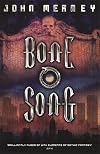
As others have stated, the world building here is really good. There's a certain romance to Meaney's gothic-deco city with its 200-storey skyscrapers bathed in eternal twilight. A place where witches ride alongside police detectives, hexes are often deadlier than bullets, and zombies can find true love. But he seems to spend so much time playing with his set pieces that he neglects to flesh out the story itself leaving us to wonder the whys and wherefores of a rather serpentine plot....in show more other words, what the hell is going on? Add to that an annoying habit of interjecting sentence fragments ad nauseam: "Do you...?" "Can you feel....?" "...the bones?" and you have a novel with some interesting passages undone by stretches of tedium. Would probably have been better as a manga giving the visuals a greater impact. show less
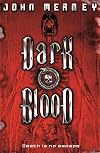
Bone Song and Dark Blood were the most sheer fun I had reading in 2008. The pace is breakneck, the worldbuilding is crazed, the genre-blending is complete (horror, New Weird, romance, urban fantasy, gritty detective novel, you name it, you’ll find it here). There are zombies, wraiths, singing bones, necromancers, and all other manner of magical beasties under a perpetually purple sky. Crime and politics live side by side, as always, and nothing is as noir as a dead opera diva. By no means show more am I going to tell you that Meaney is a stylist; you won’t be rereading sentences for their elegant word choice. But damned if you won’t take away a few images, including a few that you might not want to have permanent residence in your brain. There’s a lot to be said for a pair of books that can simply take you out of yourself for a handful of hours and take you to a place where the worries all belong to someone else. For a good time, these are your best bet. show less
An absolutely mind-blowing book, one of the best fantasies I've read in YEARS. Dark, dark, dark - this is a world powered by death, in a very literal sense. Wraiths and necromancy provide the security, technology, motivation, and power for the entire city...the entire world...and Meaney has developed an INCREDIBLY complex and engrossing cosmology around this concept. Add to that a very well-crafted police procedural/hardboiled crime novel, and you've got one of the most unique books I've show more ever had the pleasure of reading. Meaney pulls NO punches, and it's brilliant. show less
Awards


You May Also Like


Associated Authors
Statistics
- Works
- 49
- Also by
- 14
- Members
- 1,855
- Popularity
- #13,873
- Rating
- 3.6
- Reviews
- 55
- ISBNs
- 72
- Languages
- 3
- Favorited
- 7