
David Tyack (1930–2016)
Author of Tinkering toward Utopia: A Century of Public School Reform
About the Author
David Tyack is Vida Jacks Professor of Education and Professor of History Emeritus, Stanford University.
Image credit: via Stanford University
Works by David Tyack
Associated Works
Tagged
Common Knowledge
- Birthdate
- 1930-11-17
- Date of death
- 2016-10-27
- Gender
- male
- Nationality
- USA
- Associated Place (for map)
- USA
Members
Reviews
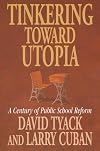
This slender but illustrative book traces this history of public education reforms across the 20th century. Two themes run through the book. The first is that public schools are set in their ways and very difficult to reform. The authors show that many reforms are "successful" in that they're widely adopted but don't actually improve education. Other reforms have changed teaching for the better and have succeeded so much that they've worked themselves into the basic nature of education so show more that they're not even seen as reforms. One example the authors give is the blackboard, a new technology adopted by schools that has become synonymous with education (even as they're becoming less common in classrooms). The second theme of the book is that proposals for reform are cyclical returning to the education policy debate generation after generation. While the authors acknowledge this is true, they also point out that the context in which these reforms are proposed is always changing, thus the implementation of these "same old" reforms can lead to very different outcomes as they address different problems.
As the title gives away, the authors find that incremental change and working through reforms by adapting to local needs are the most successful ways of carrying out educational reform that actually improves student learning and outcomes. Although the book was published 20 years ago, the issues discussed are very familiar to anyone involved in today's education policy debates, and it serves as a good bulwark against calls for sweeping reforms and disruptive panaceas to today's education problems.
Favorite Passages:
As the title gives away, the authors find that incremental change and working through reforms by adapting to local needs are the most successful ways of carrying out educational reform that actually improves student learning and outcomes. Although the book was published 20 years ago, the issues discussed are very familiar to anyone involved in today's education policy debates, and it serves as a good bulwark against calls for sweeping reforms and disruptive panaceas to today's education problems.
Favorite Passages:
"We want to probe the meaning of continuity in schooling as well as to understand change. Change, we believe, is not synonymous with progress. Sometimes preserving good practices in the face of challenges is a major achievement, and sometimes teachers have been wise to resist reforms that violated their professional judgment.show less
Although policy talk about reform has had a Utopian ring, actual reforms have typically been gradual and incremental. It may be fashionable to decry such change as piecemeal and inadequate, but over long periods of time such revisions of practice, adapted to local contexts, can substantially improve schools. Rather than seeing the hybridizing of reform ideas as a fault, we suggest it can be a virtue. Tinkering is one way of preserving what is valuable and reworking what is not." - p. 5
"Better schooling will result in the future - as it has in the past and does now - chiefly from the steady, reflective efforts of the practitioners who work in schools and from the contributions of the parents and citizens who support (while they criticize) public education. This might seem to be just common sense. But in planning reforms in recent years, policy elites have often bypassed teachers and discounted their knowledge of what schools are like today. ...
To the degree that teachers are out of the policy loop in designing and adopting school reforms, it is not surprising if they drag their feet in implementing them. Teachers so not have a monopoly on educational wisdom, but their first-hand perspectives on school and their responsibility for carrying out official policies argues for their centrality in school reform efforts." - p. 135
Would have been 4.5 because I thought that some chapters could have used greater detail. Drew significantly on the work of Richard Elmore and Milbrey McLaughlin.
I actually think it could have profited from a stronger voice, and could have been more critical.
Situating school reform in the context of efforts to reform public institutions (e.g. health sector) would also have been illuminating. Nevertheless, a very good book.
I actually think it could have profited from a stronger voice, and could have been more critical.
Situating school reform in the context of efforts to reform public institutions (e.g. health sector) would also have been illuminating. Nevertheless, a very good book.
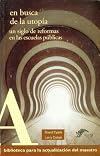
A través de una investigación histórica y crítica del desarrollo de la educación escolar en Estados Unidos durante más de un siglo, los autores revisan las diversas reformas educativas que se han implantado y han fracasado en busca de ideales que, en la realidad, no lograron una mejor calidad de la enseñanza y el aprendizaje.
Dec 5, 2024Spanish
Awards

You May Also Like


Associated Authors
Statistics
- Works
- 16
- Also by
- 1
- Members
- 433
- Popularity
- #56,453
- Rating
- 3.6
- Reviews
- 4
- ISBNs
- 26
- Languages
- 1