
Roland Emmerich
Author of Independence Day [1996 film]
About the Author
Series
Works by Roland Emmerich
Flight of the Phoenix / The Day After Tomorrow / Volcano (Triple Feature Video) — Director — 3 copies
Own the Moments: The Day After Tomorrow, the Happening, Jumper (2012) — Director — 2 copies
Day After Tomorrow/Volcano — Director — 2 copies
The Day After Tomorrow / Jumper 2 copies
The Day The Earth Stood Still [and] Independence Day (Double Feature Video) — Director — 1 copy
Independence Day / Day After Tomorrow Double Pack [Import anglais] — Director — 1 copy
Own the Moments: The Day After Tomorrow / The Day the Earth Stood Still — Director — 1 copy
Universal Soldier Quadrilogy [DVD] [1992] — Director — 1 copy
The Day After Tomorrow [and] Master and Commander (Double Feature Video) — Director — 1 copy
Associated Works
The Day After Tomorrow | I, Robot | The Day the Earth Stood Still (Triple Feature Video) (2011) — Director — 1 copy
Tagged
Common Knowledge
- Canonical name
- Emmerich, Roland
- Birthdate
- 1955-11-10
- Gender
- male
- Occupations
- film director
screenwriter - Nationality
- Germany
- Birthplace
- Stuttgart, Baden-Württemberg, Germany
- Associated Place (for map)
- Baden-Württemberg, Germany
Members
Reviews
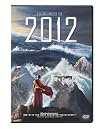
I had higher hopes for this. The action/natural disaster scenes are the best part of this movie, but the story/characters leave a lot to be desired and the way pull-ups were featured in this movie for the character of the little girl made me feel like the company that makes pull-ups paid to get plugged. I'm not making fun of little kids who wet the bed, but the way the pull-ups were mentioned more than once just felt out of place to me in a disaster flick.

In “Stargate,” Stephen Molstad ghostwrites Dean Devlin and Roland Emmerich’s adaptation of the 1994 film of the same name, focusing on Colonel Jack O’Neil and Egyptologist Dr. Daniel Jackson as they use an ancient alien artifact, called the StarGate, to lead a team to another world. Once there, they meet locals who work a mine for the god Ra and speak ancient Egyptian. When Ra – actually an alien who took the body of a boy as a host in 8,000 B.C. – returns, the locals work with show more the military officers and Dr. Jackson to overthrow him. The basic premise borrows from Erich von Däniken’s book, Chariots of the Gods?, which advanced the ancient astronaut thesis in which aliens aided human technological development and the humans contextualized their alien benefactors through the lens of their beliefs, giving rise to archaeological sites and finds the Nazca Lines, the Great Pyramids, and the Sarcophagus of Palenque.
While the novel, like Devlin and Emmerich’s film, differs in key details from the later Stargate SG-1 spin-off television series, the book also contains several notable differences from the film. Like the director’s cut of the film, Molstad makes the first scene of the “Stargate” novel a flashback to Ra’s human host prior to the alien’s arrival. In the book, though, the host’s name is Ra, which implies that the aliens played a role in developing Egyptian mythology rather than simply posing as pre-existing mythological figures. Later chapters confirm this (pgs. 188-189). Further, the human host Ra has some form of psychic ability prior to his abduction, where in the film he was simply the bravest of the nomadic humans and his curiosity about the aliens overcame his fear. Other changes include Colonel O’Neil being a member of the U.S. Marines rather than in the Air Force (pgs. 76-77) and General West uses more profanity than the film allowed (pg. 59). While neither the film nor this novel name the alien planet, the book changes the planet’s three moons to three suns (pg. 93) and gives it a captured asteroid for a single moon (pg. 124). Some relationships are depicted differently, as well. While in the film, O’Neil is distant, here he’s outright hostile to those under his command like Kawalsky. He and Daniel still don’t see eye-to-eye, but their working relationship is effectively nonexistent as a result.
Events are also more drawn-out in the book than the film’s runtime would allow, though that’s fairly standard for movie tie-in novels. Some of the other changes appear rather arbitrary and likely reflect Molstad working from an earlier draft of the script. As a movie tie-in, the book may have been rushed to print since it is littered with typos, most of which take the form of dropped letters in words. The most significant typo, though, occurs while the bomb is counting down. In the span of three pages, the countdown goes from 11:57 to 10:43 to 11:08 (pgs. 240-242). Fans of the franchise may enjoy the novel and some of the differences it offers, but it’s unlikely to appeal to those unfamiliar with the spin-off television series. show less
While the novel, like Devlin and Emmerich’s film, differs in key details from the later Stargate SG-1 spin-off television series, the book also contains several notable differences from the film. Like the director’s cut of the film, Molstad makes the first scene of the “Stargate” novel a flashback to Ra’s human host prior to the alien’s arrival. In the book, though, the host’s name is Ra, which implies that the aliens played a role in developing Egyptian mythology rather than simply posing as pre-existing mythological figures. Later chapters confirm this (pgs. 188-189). Further, the human host Ra has some form of psychic ability prior to his abduction, where in the film he was simply the bravest of the nomadic humans and his curiosity about the aliens overcame his fear. Other changes include Colonel O’Neil being a member of the U.S. Marines rather than in the Air Force (pgs. 76-77) and General West uses more profanity than the film allowed (pg. 59). While neither the film nor this novel name the alien planet, the book changes the planet’s three moons to three suns (pg. 93) and gives it a captured asteroid for a single moon (pg. 124). Some relationships are depicted differently, as well. While in the film, O’Neil is distant, here he’s outright hostile to those under his command like Kawalsky. He and Daniel still don’t see eye-to-eye, but their working relationship is effectively nonexistent as a result.
Events are also more drawn-out in the book than the film’s runtime would allow, though that’s fairly standard for movie tie-in novels. Some of the other changes appear rather arbitrary and likely reflect Molstad working from an earlier draft of the script. As a movie tie-in, the book may have been rushed to print since it is littered with typos, most of which take the form of dropped letters in words. The most significant typo, though, occurs while the bomb is counting down. In the span of three pages, the countdown goes from 11:57 to 10:43 to 11:08 (pgs. 240-242). Fans of the franchise may enjoy the novel and some of the differences it offers, but it’s unlikely to appeal to those unfamiliar with the spin-off television series. show less

If you want an honest and unbiased film on the American Revolutionary War you should probably look elsewhere, but viewed as a fantasy, I find this a memorable, gripping war film with an excellent cast (Isaacs, Wilkinson, Auberjonis, Logue, Cooper, Baldwin, etc.) about a father reluctantly taking up arms when his children are threatened. It is in no way original, but it is well executed and to my mind, very entertaining and even emotional.
Classic Mel Gibson, before he went crazy. Overall a pretty solid movie set in the Revolutionary War.
Lists
Films (1)
Awards


You May Also Like


Associated Authors
Statistics
- Works
- 53
- Also by
- 5
- Members
- 6,193
- Popularity
- #3,966
- Rating
- 3.6
- Reviews
- 51
- ISBNs
- 93
- Languages
- 6