

Robert Cowley
Author of What If? The World's Foremost Military Historians Imagine What Might Have Been
About the Author
Robert Cowley is the cofounder & editor of "MHQ: The Quarterly Journal of Military History" & the editor of the anthology "Experience of War". (Bowker Author Biography)
Series
Works by Robert Cowley
What If? The World's Foremost Military Historians Imagine What Might Have Been (1999) — Editor — 1,937 copies, 27 reviews
What If? 2: Eminent Historians Imagine What Might Have Been (2001) — Editor — 1,088 copies, 11 reviews
What Ifs? of American History : Eminent Historians Imagine What Might Have Been (2003) — Editor — 537 copies, 7 reviews
Experience of War: An Anthology of Articles from Mhq : The Quarterly Journal of Military History (1992) 93 copies
The Killing Season: The Autumn of 1914, Ypres, and the Afternoon That Cost Germany a War (2024) 49 copies
MHQ: The Quarterly Journal of Military History — Autumn 1988 (1988) — Editor and Author "The Tunnels of Hill 60" — 25 copies
MHQ: The Quarterly Journal of Military History — Spring 1992 (1992) — Editor and Author "Invasion Jitters, 1942" — 21 copies
MHQ: The Quarterly Journal of Military History — Summer 1989 (1989) — Editor and Author "Albert and the Yser" — 20 copies
MHQ: The Quarterly Journal of Military History — Autumn 1993 (1993) — Editor and Co-Author "A Bundle of Presumptions" — 20 copies
MHQ: The Quarterly Journal of Military History — Summer 1992 (1992) — Editor and Author "What Happened at Celtic Wood?" — 20 copies
MHQ: The Quarterly Journal of Military History — Spring 1998 (1998) — Editor-in-Chief and Author "Massacre of the Innocents" and "The Soviet Invasion of Japan" — 17 copies
MHQ: The Quarterly Journal of Military History — Summer 1995 (1995) — Author "The Somme: The Last 140 Days" — 14 copies
MHQ: The Quarterly Journal of Military History — Autumn 1990 (1990) — Editor and Author "The Mourning Parents" — 12 copies
MHQ: The Quarterly Journal of Military History — Summer 1994 (1994) — Editor and Author "The Strategic View: The Stakes of 1915" — 11 copies
MHQ: The Quarterly Journal of Military History — Winter 1995 (1994) — Editor and Author "The Prophet Armed" — 11 copies
MHQ: The Quarterly Journal of Military History — Winter 1994 (1993) — Editor and Author "The Unreal City" — 10 copies
What If...? Vol. 3: The World's Foremost Military Historians Imagine What Might Have Been (audio) (2000) 5 copies
Was wäre gewesen, wenn? 2 copies
The Road Not Taken... Some of the Foremost Students of Military History Imagine What Might Have Been 1 copy
Fitzgerald and the Jazz Age 1 copy
Și dacă...? 1 copy
Associated Works
I Wish I'd Been There: Twenty Historians Bring to Life Dramatic Events That Changed America (2006) — Contributor — 302 copies, 3 reviews
Poilu The World War I Notebooks of Corporal Louis Barthas, Barrelmaker, 1914-1918 (1997) — Afterword, some editions — 202 copies, 3 reviews
What Might Have Been : Leading Historians on Twelve 'What Ifs' of History (2004) — Contributor — 197 copies, 6 reviews
Battlegrounds : Geography and the Art of Warfare (2003) — Introduction, some editions — 150 copies, 2 reviews
MHQ: The Quarterly Journal of Military History — Winter 2000 (1999) — Author "Greatest Campaign: Firestorm Over Japan" — 10 copies
Tagged
Common Knowledge
- Birthdate
- 1934-12-16
- Gender
- male
- Education
- Harvard College (1956)
- Occupations
- military historian
editor - Relationships
- Cowley, Malcolm (father)
- Nationality
- USA
- Places of residence
- New York, New York, USA
Connecticut, USA - Associated Place (for map)
- USA
Members
Reviews
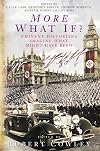
Another excellent collection of counterfactual historical essays edited by Robert Cowley. All are well-written and well-argued (some, naturally, more than others); the topics are all well-chosen and the book is certainly not a waste of your time. Counterfactual history exercises are often sniffed at, but Cowley successfully argues for the legitimacy of the approach: "There is no better way of understanding what did happen in history than to contemplate what very well might have happened. show more Counterfactual history has a way of making the stakes of a confrontation stand out in relief." (pg. xvii).
By mapping out contrary routes, the historians here shatter the complacency regarding what "we have come to accept as the natural course of world history" (pg. 102) and, in doing so, throw into sharp emphasis just how important certain factors were to a certain event, and how important a certain event was to historical developments. The counterfactual scenarios are all thought-provoking and some are scarily real and immediate. Anything that challenges complacency about the inevitability of things – not least the Disneyland moral that good always triumphs over evil just because – is very welcome in our worrying times. (The undermining of Brexit, the impact of mass migration, the assault on political freedoms… we can't just assume our worldview will be safe just because it is right.) The readability and high scholarship of the book is just a massive bonus to this timely reminder. show less
By mapping out contrary routes, the historians here shatter the complacency regarding what "we have come to accept as the natural course of world history" (pg. 102) and, in doing so, throw into sharp emphasis just how important certain factors were to a certain event, and how important a certain event was to historical developments. The counterfactual scenarios are all thought-provoking and some are scarily real and immediate. Anything that challenges complacency about the inevitability of things – not least the Disneyland moral that good always triumphs over evil just because – is very welcome in our worrying times. (The undermining of Brexit, the impact of mass migration, the assault on political freedoms… we can't just assume our worldview will be safe just because it is right.) The readability and high scholarship of the book is just a massive bonus to this timely reminder. show less

A compelling collection of articles from some of our finest military historians, speculating on how the course of history might have changed had certain events turned out differently. Far from indulging in "idle parlour games" – which, as the introduction notes, was the phrase used by E. H. Carr to dismiss counterfactual history – What If? is intellectually rigorous and often chillingly plausible. Outcomes of some of the various speculations include: a world in which the show more Abrahamic religions of Christianity and Islam never emerged; a Europe ravaged by the Mongols, killing off all potential of an Enlightenment; a colonial USA still beholden to the British Empire; a separate Confederate States of America after Robert E. Lee's victory in the American Civil War; a Japanese invasion of Hawaii in World War Two after a crushing American defeat at Midway; and the atomic destruction of Berlin after a failed D-Day invasion.
As editor Robert Cowley suggests in his introduction, these are about more than just historians and anoraks indulging in their hobbies; What If? throws into sharp relief just how much of the historical course of events – which often seems so inevitable in retrospect – actually rests on a knife edge. Above all, we are reminded of the importance of the element of chance and luck: if Ogadai Khan had not died and the Mongol invasion of Europe had continued under his leadership; if the British officer who had George Washington in his gunsights had pulled the trigger; if the American dive-bombers at Midway had stumbled across the Japanese carriers just a few minutes too late. It is particularly remarkable to note just how close and how often the American War of Independence came to disaster (those jammy Yanks). To further underline this, a persistent theme in the articles comprising What If? is the fickleness of the weather: preventing Cornwallis from retreating at Yorktown; saving Washington at Brooklyn Heights; allowing a 36-hour window of storm-free weather for the D-Day landings to take place. As Cowley notes in one introduction: "Often, in military history, the dominoes fall where the wind blows them." (pg. 341).
I did have one of two minor qualms about the book – with a keen emphasis on 'minor'. There were a few more spelling mistakes than I would have expected; not a great deal but enough for me to remark on it. I found Cowley's habitual use of the word 'us' – meaning the Americans – in his introductions to the articles a bit irritating, and I found Thomas Fleming's article on the American Revolution a bit jingoistic at times. Speculating on a British victory, for example, he says: "Within a year or two at most, Americans would have been on their way to becoming replicas of the Canadians, tame, humble colonials in the triumphant British empire, without an iota of the independent spirit that has been the heart of the nation's identity." (pg. 166). I found this to be a little bit silly and a somewhat provincial view of American exceptionalism; in reality, the Canadians have as much a claim to be 'the land of the free' as their rebellious neighbours.
Overall, however, I thoroughly enjoyed the book; I don't indulge my passion for military history as much as I used to and What If? really got the juices flowing again. I picked it up expecting to only enjoy the later articles about modern history (which is more my area) but the ones that have stuck in my mind are the ones on ancient history. Here, there is more wiggle-room for speculations and tangents, for the sole reason that they took place so long ago, and consequently they allow us to imagine a world fundamentally different from the one we live in now. To give just one thought-provoking example: the close-fought naval battle at Salamis. Previously, Ancient Greek democracy had judged citizenship based on ownership of land. Victory at Salamis was won by landless oarsmen and sailors, leading to a more universal interpretation of citizenship (pg. 33). How different would our inheritance of Greek democracy have been if this battle had not been won? What would be our Western principles of governance, law and society? It is incredible to speculate on the world we might be living in if a certain storm hadn't subsided, a certain bullet hadn't missed, or a certain man hadn't been in the right place at the right time. What If? shows, to quote the Duke of Wellington, just how 'near-run a thing' a lot of crucial historical turning points have been. In this respect the book provides a valuable – and entertaining – service. It helps us understand the dynamics of history: its ebbs and flows, its twists and turns that make it such an enduringly fascinating subject. show less
As editor Robert Cowley suggests in his introduction, these are about more than just historians and anoraks indulging in their hobbies; What If? throws into sharp relief just how much of the historical course of events – which often seems so inevitable in retrospect – actually rests on a knife edge. Above all, we are reminded of the importance of the element of chance and luck: if Ogadai Khan had not died and the Mongol invasion of Europe had continued under his leadership; if the British officer who had George Washington in his gunsights had pulled the trigger; if the American dive-bombers at Midway had stumbled across the Japanese carriers just a few minutes too late. It is particularly remarkable to note just how close and how often the American War of Independence came to disaster (those jammy Yanks). To further underline this, a persistent theme in the articles comprising What If? is the fickleness of the weather: preventing Cornwallis from retreating at Yorktown; saving Washington at Brooklyn Heights; allowing a 36-hour window of storm-free weather for the D-Day landings to take place. As Cowley notes in one introduction: "Often, in military history, the dominoes fall where the wind blows them." (pg. 341).
I did have one of two minor qualms about the book – with a keen emphasis on 'minor'. There were a few more spelling mistakes than I would have expected; not a great deal but enough for me to remark on it. I found Cowley's habitual use of the word 'us' – meaning the Americans – in his introductions to the articles a bit irritating, and I found Thomas Fleming's article on the American Revolution a bit jingoistic at times. Speculating on a British victory, for example, he says: "Within a year or two at most, Americans would have been on their way to becoming replicas of the Canadians, tame, humble colonials in the triumphant British empire, without an iota of the independent spirit that has been the heart of the nation's identity." (pg. 166). I found this to be a little bit silly and a somewhat provincial view of American exceptionalism; in reality, the Canadians have as much a claim to be 'the land of the free' as their rebellious neighbours.
Overall, however, I thoroughly enjoyed the book; I don't indulge my passion for military history as much as I used to and What If? really got the juices flowing again. I picked it up expecting to only enjoy the later articles about modern history (which is more my area) but the ones that have stuck in my mind are the ones on ancient history. Here, there is more wiggle-room for speculations and tangents, for the sole reason that they took place so long ago, and consequently they allow us to imagine a world fundamentally different from the one we live in now. To give just one thought-provoking example: the close-fought naval battle at Salamis. Previously, Ancient Greek democracy had judged citizenship based on ownership of land. Victory at Salamis was won by landless oarsmen and sailors, leading to a more universal interpretation of citizenship (pg. 33). How different would our inheritance of Greek democracy have been if this battle had not been won? What would be our Western principles of governance, law and society? It is incredible to speculate on the world we might be living in if a certain storm hadn't subsided, a certain bullet hadn't missed, or a certain man hadn't been in the right place at the right time. What If? shows, to quote the Duke of Wellington, just how 'near-run a thing' a lot of crucial historical turning points have been. In this respect the book provides a valuable – and entertaining – service. It helps us understand the dynamics of history: its ebbs and flows, its twists and turns that make it such an enduringly fascinating subject. show less
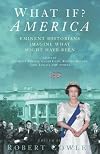
A third and final collection of erudite essays on historical might-have-beens, edited by Robert Cowley. Aside from two pieces reproduced from the first What If? book ('What the Fog Wrought' and 'If the Lost Order Hadn't Been Lost', which are both excellent), these are all new essays, and whether they explore underappreciated moments in American history ('His Accidency' John Tyler, for example, or the Northwest Conspiracy) or more bread-and-butter speculations that nevertheless remain fresh show more (what if no Pearl Harbor, or Dallas 1963, or Watergate?), they are all fascinating to read. After three books, I am still charmed and completely unfatigued by the studious-yet-racy style of many of the essays, and it is a shame that there has not been a fourth collection ('what if no 9/11?', for example) when the writing and the concept are both so consistently strong.
Focusing solely on the United States, this third book lacks some of the richness and variety of the two eon-spanning volumes that preceded it, but the short history of the American republic has been one so eventful that there is still much fruitful what-if territory to be explored in this bounteous land of opportunity. show less
Focusing solely on the United States, this third book lacks some of the richness and variety of the two eon-spanning volumes that preceded it, but the short history of the American republic has been one so eventful that there is still much fruitful what-if territory to be explored in this bounteous land of opportunity. show less
I was a bit disappointed in this collection, but it was mostly a personal taste. Some of the writers' styles were not to my liking. But several of the stories seemed to fall short of their promise, focusing more on the history around their chosen event and just suggestions of alternate sequences of events. The history of the potato was very interesting and the author raised some real question about what could have happened if any of a number of events had varied, but he did not write any show more real alternate stories. I felt this story didn't deliver what the book promised.
Some of the stories worked very well, exploring Churchill's politics and his influence on WWII.
Overall, I suspect the scope of speculative fiction doesn't work well with the short story format. show less
Some of the stories worked very well, exploring Churchill's politics and his influence on WWII.
Overall, I suspect the scope of speculative fiction doesn't work well with the short story format. show less
You May Also Like


Associated Authors
Statistics
- Works
- 87
- Also by
- 6
- Members
- 5,396
- Popularity
- #4,619
- Rating
- 3.5
- Reviews
- 53
- ISBNs
- 91
- Languages
- 9