
Peter G. Tsouras
Author of Rising Sun Victorious : The Alternate History of How the Japanese Won the Pacific War
About the Author
Born and raised in Las Vegas, Nevada. after army service in the US and Germany Peter G. Tsouras retired from the US Army Reserve in 1994 in the rank of lieutenant colonel. After his army service Peter worked for the U.S. Army Intelligence and Threat Analysis Center (now the National Ground show more Intelligence Center) and the Defense Intelligence Agency. A highly respected military historian, author/editor of thirty-two books, he has also written the critically-claimed alternative histories on D-Day, Gettysburg, and Waterloo. show less
Image credit: From Potomac Books: http://www.potomacbooksinc.com/Books/AuthorDetail.aspx?id=1187
Series
Works by Peter G. Tsouras
Rising Sun Victorious : The Alternate History of How the Japanese Won the Pacific War (2001) 197 copies, 4 reviews
Third Reich Victorious : The Alternate History of How the Germans Won the War (2002) 166 copies, 1 review
Warlords of Ancient Mexico: How the Mayans and Aztecs Ruled for More Than a Thousand Years (2014) 68 copies
Panzers on the Eastern Front: General Erhard Raus and his Panzer Divisions in Russia, 1941-1945 (World War II German Debriefs) (2002) 54 copies
Major General George H. Sharpe and The Creation of American Military Intelligence in the Civil War (2018) 43 copies
The 'Great Patriotic War': The Illustrated History of the Soviet Union at War With Germany, 1941-1945 (1992) 32 copies
Warriors' Words: A Quotation Book: From Sesostris III to Schwarzkopf 1871 BC to AD 1991 (1992) 26 copies
Bayonets, Balloons & Ironclads: Britain and France Take Sides with the South (Britannia's First Trilogy) (2015) 23 copies
Associated Works
The Anvil of War: German Generalship in Defense on the Eastern Front (1994) — Editor, some editions — 47 copies
The Great “What Ifs” of the American Civil War: Historians Tackle the Conflict’s Most Intriguing Possibilities (2022) — Foreword — 20 copies
MHQ: The Quarterly Journal of Military History — Spring 1994 (1994) — Author "Omaha Beach: A Scenario for Disaster" — 18 copies
Tagged
Common Knowledge
- Canonical name
- Tsouras, Peter G.
- Birthdate
- 1948
- Gender
- male
- Occupations
- soldier
military historian
author
military intelligence analyst - Organizations
- United States Army
Battelle Corporation
US Army National Ground Intelligence Center - Nationality
- USA
- Places of residence
- Alexandria, Virginia, USA
- Associated Place (for map)
- Virginia, USA
Members
Reviews
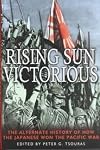
I think there’s a general consensus that WWII in Europe was “a near-run thing”; that if the Germans had been a little smarter or luckier or the Allies a little stupider or less lucky, we’d all living in the Thousand Year Reich now. The Pacific war seems to be a different story; the perception is that blindness to their weaknesses and American strengths doomed the Japanese, no matter what they did.
Despite the subtitle (“The Alternative History of How the Japanese Won the Pacific show more War”) this is a collection of essays of various plausible and implausible events that might have made WWII in the Pacific come out differently. Each one is stand alone, without assuming the previous have taken place. The possibilities are:
* The “Go North” faction wins and Japan attacks the Soviet Union in 1941. The critical assumption is that the Sorge spy ring is cracked and Sorge is turned, feeding false information to the Russians. The scenario also requires that Siberian troops get sent west much earlier, thus disappearing in the great encirclements of the summer of 1941 rather than showing up in the nick of time at the gates of Moscow, and the USSR collapses.
* For political reasons the US dusts off War Plan Orange and sends the entire navy west at the start of the war (which begins with the invasion of the Philippines, not Pearl Harbor). The USN learns about the Zero and the Long Lance on the high seas, not at Pearl, and even American production can’t recover and we sue for peace.
* Pearl Harbor is even more disastrous; the carriers are caught, a third wave destroys the shops and fuel tanks, and the Nevada sinks in the channel instead of beaching.
* The Japanese figure out that we have broken their codes after Coral Sea; plus the Yorktown is lost there, leaving us with one fewer carrier and Yamamoto with a revised plan. (What happens at Midway isn’t played out).
* McCluskey turns the wrong way at Midway; all the Japanese carriers survive and all three American carriers are lost. The next targets for the IJN are Oahu, San Diego, and the Panama Canal. (This one ends in a draw - the introduction of the proximity fuse and better organization of American air defenses drive off the Japanese. However, the implications for the war in Europe and North Africa are considerable, as the US abandons the Germany first strategy and leaves the British and Russians to fend for themselves.)
* Invasion of Australia - not very convincing. Even the Japanese couldn’t get victory disease so bad as to commit themselves to that. And it fails.
* The Guadalcanal invasion fails - presumably the US licks its wounds and tries again.
* Invasion of India; the Japanese are driven out eventually but the diversion and exhaustion of Allied strength in a land war in Asia results in a negotiated peace.
* Kurita presses on at Leyte and the American invasion forces are smashed. A negotiated peace leaves the Japanese in control of China.
* Even four atomic bombings don’t convince the Japanese to give up (the Emperor is kidnapped before he can make the surrender recording. The resulting invasion of Kyushu is a bloodbath. (Unlike the rest of the essays, which are straightforward narratives, this is presented as a lecture at the Naval War College in 1946. It doesn’t work very well.)
I don’t know. It’s hard to imagine The Greatest Generation giving up on anything. On the other hand, there’s always a tendency to think that the way things happened is the way they had to happen; the complaint that some of the scenarios presented here are very unlikely stumbles on the fact that many of the things that actually happened were unlikely, too. There’s a lot of effort here in concocting fictional orders of battle and radio messages and etc.; paradoxically, it doesn’t seem as exciting as actual accounts of the real war. I think this one’s worth three stars - pick it up at the library. show less
Despite the subtitle (“The Alternative History of How the Japanese Won the Pacific show more War”) this is a collection of essays of various plausible and implausible events that might have made WWII in the Pacific come out differently. Each one is stand alone, without assuming the previous have taken place. The possibilities are:
* The “Go North” faction wins and Japan attacks the Soviet Union in 1941. The critical assumption is that the Sorge spy ring is cracked and Sorge is turned, feeding false information to the Russians. The scenario also requires that Siberian troops get sent west much earlier, thus disappearing in the great encirclements of the summer of 1941 rather than showing up in the nick of time at the gates of Moscow, and the USSR collapses.
* For political reasons the US dusts off War Plan Orange and sends the entire navy west at the start of the war (which begins with the invasion of the Philippines, not Pearl Harbor). The USN learns about the Zero and the Long Lance on the high seas, not at Pearl, and even American production can’t recover and we sue for peace.
* Pearl Harbor is even more disastrous; the carriers are caught, a third wave destroys the shops and fuel tanks, and the Nevada sinks in the channel instead of beaching.
* The Japanese figure out that we have broken their codes after Coral Sea; plus the Yorktown is lost there, leaving us with one fewer carrier and Yamamoto with a revised plan. (What happens at Midway isn’t played out).
* McCluskey turns the wrong way at Midway; all the Japanese carriers survive and all three American carriers are lost. The next targets for the IJN are Oahu, San Diego, and the Panama Canal. (This one ends in a draw - the introduction of the proximity fuse and better organization of American air defenses drive off the Japanese. However, the implications for the war in Europe and North Africa are considerable, as the US abandons the Germany first strategy and leaves the British and Russians to fend for themselves.)
* Invasion of Australia - not very convincing. Even the Japanese couldn’t get victory disease so bad as to commit themselves to that. And it fails.
* The Guadalcanal invasion fails - presumably the US licks its wounds and tries again.
* Invasion of India; the Japanese are driven out eventually but the diversion and exhaustion of Allied strength in a land war in Asia results in a negotiated peace.
* Kurita presses on at Leyte and the American invasion forces are smashed. A negotiated peace leaves the Japanese in control of China.
* Even four atomic bombings don’t convince the Japanese to give up (the Emperor is kidnapped before he can make the surrender recording. The resulting invasion of Kyushu is a bloodbath. (Unlike the rest of the essays, which are straightforward narratives, this is presented as a lecture at the Naval War College in 1946. It doesn’t work very well.)
I don’t know. It’s hard to imagine The Greatest Generation giving up on anything. On the other hand, there’s always a tendency to think that the way things happened is the way they had to happen; the complaint that some of the scenarios presented here are very unlikely stumbles on the fact that many of the things that actually happened were unlikely, too. There’s a lot of effort here in concocting fictional orders of battle and radio messages and etc.; paradoxically, it doesn’t seem as exciting as actual accounts of the real war. I think this one’s worth three stars - pick it up at the library. show less
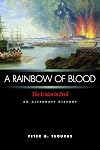
Peter Tsouras’s second volume in his “Britannia’s Fist” trilogy picks up near where his first one left off. Having entered the war as a result of a naval incident off the coast of Ireland, the British have occupied parts of Maine and upstate New York. Portland lies under siege, and the Royal Navy has broken the blockade of the South, though at considerable cost. Now with new life breathed into the Confederate cause, a French army marches up from Mexico to aid in the recapture of New show more Orleans and Lee outmaneuvers Meade to strike as Washington itself. Yet with the Copperhead rebellion broken in the Midwest, the battle-hardened Union responds to the new threats, aided by a host of new technologies. But will it be enough to save the United States from its host of enemies?
The Civil War is as well-trodden a subject for alternate history as it is for military history. Yet Tsouras’s book stands out for two reasons. The first is his divergence point; his use of the controversy of the Laird Rams as the reason for the war’s expansion, is original and it allows him to portray a more advanced conflict than is justifiably possible in similar novels. The second is his expertise. With a background in military intelligence, Tsouras brings considerable knowledge of martial affairs, which adds to the verisimilitude to his narrative. These two elements often combine to make for dramatic descriptions of battles in places like Kennebunk and Claverack, accounts that are among the high points of this book.
Yet the strengths of Tsouras’s book are counterbalanced by glaring flaws. Often his narrative is interrupted by long descriptions of regimental histories and uniforms that show off Tsouras’s research but do little to advance the story. Some of that effort would have been better spent familiarizing himself with the broader historical background, as his plot exposes some disappointing gaps in his knowledge. His portrayal of Benjamin Disraeli as the Conservative Party leader in 1863 is a particularly large whopper given how he develops his plot (and one that gives added meaning to Angus Hawkins’s choice of [b:The Forgotten Prime Minister|5621730|The Forgotten Prime Minister The 14th Earl of Derby, Volume II Achievement 1851-1869|Angus Hawkins|https://images.gr-assets.com/books/1348190776s/5621730.jpg|5793125] as his title of his biography of the man who was, in fact, the actual leader of the Tories at that time). Errors such as this can temper the enjoyment of the novel and raise doubts about the depth of his research in non-military affairs. Hopefully Tsouras will address these weaknesses while building upon his strengths in the final volume, which holds promise for a dramatic end to his alternate history series. show less
The Civil War is as well-trodden a subject for alternate history as it is for military history. Yet Tsouras’s book stands out for two reasons. The first is his divergence point; his use of the controversy of the Laird Rams as the reason for the war’s expansion, is original and it allows him to portray a more advanced conflict than is justifiably possible in similar novels. The second is his expertise. With a background in military intelligence, Tsouras brings considerable knowledge of martial affairs, which adds to the verisimilitude to his narrative. These two elements often combine to make for dramatic descriptions of battles in places like Kennebunk and Claverack, accounts that are among the high points of this book.
Yet the strengths of Tsouras’s book are counterbalanced by glaring flaws. Often his narrative is interrupted by long descriptions of regimental histories and uniforms that show off Tsouras’s research but do little to advance the story. Some of that effort would have been better spent familiarizing himself with the broader historical background, as his plot exposes some disappointing gaps in his knowledge. His portrayal of Benjamin Disraeli as the Conservative Party leader in 1863 is a particularly large whopper given how he develops his plot (and one that gives added meaning to Angus Hawkins’s choice of [b:The Forgotten Prime Minister|5621730|The Forgotten Prime Minister The 14th Earl of Derby, Volume II Achievement 1851-1869|Angus Hawkins|https://images.gr-assets.com/books/1348190776s/5621730.jpg|5793125] as his title of his biography of the man who was, in fact, the actual leader of the Tories at that time). Errors such as this can temper the enjoyment of the novel and raise doubts about the depth of his research in non-military affairs. Hopefully Tsouras will address these weaknesses while building upon his strengths in the final volume, which holds promise for a dramatic end to his alternate history series. show less
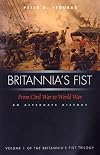
A believer in contingency above all else in history, Tsouras makes a good case for how the British enabling of the Confederate naval war could have become the flash point for the entry of the European powers into the American Civil War. For what is essentially an extended data-dump with a novelistic narrative it's quite readable, with much of the story being told from the perspective of George H. Sharp, who in real life was the senior intelligence officer of the the Army of the Potomac and show more who in this story gets the chance to form a Central Intelligence Bureau.
Anyway, I can easily see Harry Turtledove fans getting a lot of enjoyment out of this work; I certainly did, and I look forward to the follow-on books.
However, Tsouras does himself no favors by adopting a snide tone in his introduction, such as dismissing the "idiocies of Karl Marx and his disciples" or citing the "sublime message of a Galilean rabbi" as one of his examples of contingency in action. Irreligious left-wingers read alternate history novels too after all! If I didn't appreciate Tsouras' previous work I probably would have tossed the book aside right there as simply shaping up to be some sort of annoying polemic. This is not to mention that since Marx and Engels were great commentators on period international affairs they would make useful characters in this series; just saying. show less
Anyway, I can easily see Harry Turtledove fans getting a lot of enjoyment out of this work; I certainly did, and I look forward to the follow-on books.
However, Tsouras does himself no favors by adopting a snide tone in his introduction, such as dismissing the "idiocies of Karl Marx and his disciples" or citing the "sublime message of a Galilean rabbi" as one of his examples of contingency in action. Irreligious left-wingers read alternate history novels too after all! If I didn't appreciate Tsouras' previous work I probably would have tossed the book aside right there as simply shaping up to be some sort of annoying polemic. This is not to mention that since Marx and Engels were great commentators on period international affairs they would make useful characters in this series; just saying. show less
The second book in Tsouras' docudrama of an American Civil War turning into a world war, one finds the Federal forces scattered to the winds in the second half of 1863, as Washington has to contend with threats (semi-spoilers ensue) from a Franco-Confederate army marching on the Mississippi theatre, to a Copperhead rebellion in the Old Northwest, to thwarting an Anglo-Canadian field force in New York, to the assertion of British sea power in the wake of the action off Charleston; never mind show more the historical war theatres of Tennessee and Northern Virginia. While some of the Amazon reviewers felt that Tsouras stacked the deck a little too much in ways I don't care to mention here, my own sense is that a good balance was kept in giving a sense of luck and surprise to the alternate campaigns. About my only gripe is that there could have been a bit closer editing at the typographical level. In anycase I look forward to the third book with great enthusiasm, as I'm having as much fun with this series as I've had with any alternate history in awhile. show less
You May Also Like


Associated Authors
Statistics
- Works
- 29
- Also by
- 3
- Members
- 1,848
- Popularity
- #13,924
- Rating
- 3.5
- Reviews
- 19
- ISBNs
- 130
- Languages
- 3
- Favorited
- 4