
Alvin I. Goldman (1938–2024)
Author of Epistemology and Cognition
About the Author
Alvin L. Goldman, Board of Governors Professor at Rutgers, The State University of New Jersey, has been one of the leading epistemologists of the last 40 years, championing the causal theory of knowing, process reliabilism, epistemic externalism, and social epistemology. In other philosophical show more areas, he is a leading proponent of the simulation theory of mindreading and a major contributor to the metaphysics of action. He has long practiced interdisciplinary philosophy, with links to cognitive science, law, political theory, and economics. show less
Works by Alvin I. Goldman
Values and morals : essays in honor of William Frankena, Charles Stevenson, and Richard Brandt (1978) — Editor — 11 copies
A Causal Theory of Knowing 2 copies
Associated Works
Tagged
Common Knowledge
- Birthdate
- 1938-10-01
- Date of death
- 2024-08-04
- Gender
- male
- Education
- Princeton University (Ph.D., Philosophy)
- Occupations
- Professor of Philosophy, Rutgers University
- Awards and honors
- President, American Philosophical Association Pacific Division (1991-92)
Berger Memorial Prize in the Philosophy of Law (2001) - Relationships
- Smith, Holly (wife)
Members
Reviews
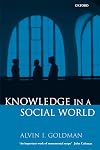
I've seldom been more disappointed with the structure of a philosophical book than with this one. The author attempts to put together very general analyses of broad social systems. I think he misapplies his method and fails to find the right vantage points. His analyses don't yield any interesting insights.
After a couple of introductory chapters the author presents his theoretical framework for social epistemology in chapter 3. He understands social epistemology as "a discipline that show more evaluates social practices along truth-linked dimensions" (p.69). I thought he explained his plan well in general terms, but when he puts the plan into action he underestimates the difficulty of "evaluating social practices". Many of the "practices" he investigates are so broad that it would be a lifetime's work to analyze them epistemologically. Instead of thinking the matter through he seems more than happy to settle for a general review of earlier literature and a tentative, unspecific argument. The few conclusions he manages to eke out are uninteresting and obvious.
This applies particularly to chapters 8-10, where the practices under study are science, law and democracy, respectively. In the chapter on science he presents the standard literature for undergraduate studies in the philosophy of science, but I don't see how it is relevant for social epistemology. The only conclusion he can muster is that science is better than non-science in answering the sorts of questions that science seeks to answer! In chapter 9 he tries to act as the epistemological referee between the common law and civil law traditions. This hopelessly difficult task doesn't move a single step toward resolution in his weak analysis which simply cites a few earlier studies and laments the difficulty of studying this problem in practice.
He then pulls a peculiar trick in chapter 10 on democracy. He begins by defining voter knowledge as true belief (voters have knowledge only if they correctly anticipate future policies) and then proceeds to an obvious conclusion: the more voters know, the better democratic systems will work. The purpose of this circular argument was lost on me. The true epistemological problem would seem to lie in the initial presupposition: how could voters ever hope to acquire true beliefs about how their vote will impact policy? How can democracy work if they don't? The author reviews some concrete proposals from political science for improving voter knowledge, but the philosophical questions lie elsewhere.
In conclusion, the author's method for "evaluating social practices" amounts to little more than a few offhand guesses on how practices might be improved, with no real argument to back them up. He leans heavily on previous work and struggles to say anything that hasn't been said before. I was quite disappointed and I would think there are better avenues for epistemological investigations of social phenomena. The vague conclusions that pass for social epistemology in this book will only give it a bad name. show less
After a couple of introductory chapters the author presents his theoretical framework for social epistemology in chapter 3. He understands social epistemology as "a discipline that show more evaluates social practices along truth-linked dimensions" (p.69). I thought he explained his plan well in general terms, but when he puts the plan into action he underestimates the difficulty of "evaluating social practices". Many of the "practices" he investigates are so broad that it would be a lifetime's work to analyze them epistemologically. Instead of thinking the matter through he seems more than happy to settle for a general review of earlier literature and a tentative, unspecific argument. The few conclusions he manages to eke out are uninteresting and obvious.
This applies particularly to chapters 8-10, where the practices under study are science, law and democracy, respectively. In the chapter on science he presents the standard literature for undergraduate studies in the philosophy of science, but I don't see how it is relevant for social epistemology. The only conclusion he can muster is that science is better than non-science in answering the sorts of questions that science seeks to answer! In chapter 9 he tries to act as the epistemological referee between the common law and civil law traditions. This hopelessly difficult task doesn't move a single step toward resolution in his weak analysis which simply cites a few earlier studies and laments the difficulty of studying this problem in practice.
He then pulls a peculiar trick in chapter 10 on democracy. He begins by defining voter knowledge as true belief (voters have knowledge only if they correctly anticipate future policies) and then proceeds to an obvious conclusion: the more voters know, the better democratic systems will work. The purpose of this circular argument was lost on me. The true epistemological problem would seem to lie in the initial presupposition: how could voters ever hope to acquire true beliefs about how their vote will impact policy? How can democracy work if they don't? The author reviews some concrete proposals from political science for improving voter knowledge, but the philosophical questions lie elsewhere.
In conclusion, the author's method for "evaluating social practices" amounts to little more than a few offhand guesses on how practices might be improved, with no real argument to back them up. He leans heavily on previous work and struggles to say anything that hasn't been said before. I was quite disappointed and I would think there are better avenues for epistemological investigations of social phenomena. The vague conclusions that pass for social epistemology in this book will only give it a bad name. show less

Dokumentarfilm über die Zeremonie, mit der ein jüdischer Junge die religiöse Mündigkeit in seiner Gemeinde erlangt:
Morris Podolsky, ein 13jähriger jüdischer Junge aus Kanada, besucht nach dem üblichen Schulunterricht noch die hebräische Schule, um sich in hebräischer Sprache und Schrift, in den schwierigen musikalischen Intonationen der alten jüdischen Gebete und im Brauchtum seines Volkes unterweisen zu lassen. Ein paar Tage vor dem Einsegnungsfest besucht Morris den Rabbiner der show more Gemeinde, der ihm die große Bedeutung des Tages, an dem er ein Bar Mitzvah, ein 'Sohn der religiösen Pflicht und Verantwortung' sein wird, erklärt. Die Weihe des Bar Mitzvah ist ein Teil des üblichen Gottesdienstes am Sabbat-Morgen. Jeden Sabbat wird der Wochenabschnitt aus der Thora verlesen, die die Fünf Bücher Mosis enthält. Der letzte, der an diesem Tag aufgerufen wird, ist der 'Bar Mitzvah'. Indem Morris, über die Thora gebeugt, die heiligen Gesänge intoniert, verpflichtet und weiht er sich dem jüdischen Glauben, er ist zum Träger der jüdischen Überlieferung geworden. Es folgt eine kurze, persönliche Ansprache des Rabbiners an Morris, der ihn noch einmal ermahnt, seinen Glauben treu zu bewahren. Dann wünscht er ihm Glück und beendet seine Worte mit dem Segen für den jungen Bar Mitzvah.
This short documentary, produced in Ottawa with a 13-year-old Jewish boy actually becoming 'Bar Mitzvah' (roughly equivalent of 'confirmed' in Christian churches) is particularly timely. Recently a Toronto rabbi spoke out publicly against the increasing tendency to make Bar Mitzvah more of a festive occasion than one of deeply religious significance. He was widely reported. The party side, however, is not touched on in this straightforward account of a boy preparing for and going through the ceremony of Bar Mitzvah. Seen first in Hebrew school, he then goes to his rabbi, who puts him at his ease then gets serious. Except for brief shots of his family, the rest of the film simply shows the actual ceremony. Lad finally takes over from the cantor and chants passages of the Torah, receives a Bible, then goes down to be greeted as a man by his parents. show less
Morris Podolsky, ein 13jähriger jüdischer Junge aus Kanada, besucht nach dem üblichen Schulunterricht noch die hebräische Schule, um sich in hebräischer Sprache und Schrift, in den schwierigen musikalischen Intonationen der alten jüdischen Gebete und im Brauchtum seines Volkes unterweisen zu lassen. Ein paar Tage vor dem Einsegnungsfest besucht Morris den Rabbiner der show more Gemeinde, der ihm die große Bedeutung des Tages, an dem er ein Bar Mitzvah, ein 'Sohn der religiösen Pflicht und Verantwortung' sein wird, erklärt. Die Weihe des Bar Mitzvah ist ein Teil des üblichen Gottesdienstes am Sabbat-Morgen. Jeden Sabbat wird der Wochenabschnitt aus der Thora verlesen, die die Fünf Bücher Mosis enthält. Der letzte, der an diesem Tag aufgerufen wird, ist der 'Bar Mitzvah'. Indem Morris, über die Thora gebeugt, die heiligen Gesänge intoniert, verpflichtet und weiht er sich dem jüdischen Glauben, er ist zum Träger der jüdischen Überlieferung geworden. Es folgt eine kurze, persönliche Ansprache des Rabbiners an Morris, der ihn noch einmal ermahnt, seinen Glauben treu zu bewahren. Dann wünscht er ihm Glück und beendet seine Worte mit dem Segen für den jungen Bar Mitzvah.
This short documentary, produced in Ottawa with a 13-year-old Jewish boy actually becoming 'Bar Mitzvah' (roughly equivalent of 'confirmed' in Christian churches) is particularly timely. Recently a Toronto rabbi spoke out publicly against the increasing tendency to make Bar Mitzvah more of a festive occasion than one of deeply religious significance. He was widely reported. The party side, however, is not touched on in this straightforward account of a boy preparing for and going through the ceremony of Bar Mitzvah. Seen first in Hebrew school, he then goes to his rabbi, who puts him at his ease then gets serious. Except for brief shots of his family, the rest of the film simply shows the actual ceremony. Lad finally takes over from the cantor and chants passages of the Torah, receives a Bible, then goes down to be greeted as a man by his parents. show less
Jul 2, 2024Italian
Lists
You May Also Like


Associated Authors
Statistics
- Works
- 19
- Also by
- 3
- Members
- 456
- Popularity
- #53,830
- Rating
- 3.9
- Reviews
- 2
- ISBNs
- 52
- Languages
- 2
- Favorited
- 1