

Anthony Huxley (1920–1992)
Author of Green Inheritance: Saving the Plants of the World
About the Author
Image credit: Anthony Huxley
Works by Anthony Huxley
The Country Diary Book of Creating a Wild Flower Garden (1986) — Editor; Introduction — 71 copies, 1 review
Dictionary of gardening 6 copies
Garden terms simplified 3 copies
Cacti and Succulents 2 copies
Sorbus L. — Editor — 1 copy
Il pianeta delle piante 1 copy
Fleurs de montagne 1 copy
House plants 1 copy
Associated Works
A Vision of Eden: The Life and Work of Marianne North (1980) — Foreword, some editions — 183 copies, 5 reviews
Tagged
Common Knowledge
- Legal name
- Huxley, Anthony Julian
- Birthdate
- 1920-12-02
- Date of death
- 1992-12-26
- Gender
- male
- Education
- Trinity College, Cambridge
Dauntsey's School - Occupations
- horticulturist
botanist
writer
photographer - Organizations
- Amateur Gardening (Editor, 1967-1971)
Royal Horticultural Society Dictionary of Gardening (General Editor, 1988-1992)
Royal Horticultural Society (Vice-President, 1991)
Royal Air Force
Ministry of Aircraft Production
British Overseas Airways Corporation - Awards and honors
- Veitch Memorial Medal
- Relationships
- Huxley, Julian (father)
Huxley, Aldous (uncle)
Huxley, Leonard (grandfather)
Huxley, Thomas Henry (great-grandfather)
Huxley, Matthew (cousin) - Nationality
- UK
- Birthplace
- London, Middlesex, England, UK
- Places of residence
- Surbiton, Surrey, England, UK
Oxford, Oxfordshire, England, UK
London, Middlesex, England, UK - Place of death
- Surbiton, Surrey, England, UK
- Burial location
- Watts Cemetery, Compton, Surrey, England, UK
- Associated Place (for map)
- England, UK
Members
Reviews

How does one review such a hallowed tome as this, perhaps only a fool dares!
The four volume RHS Dictionary of Gardening was first published in 1951, this New edition is presented with a quite different layout, and more extensive in its coverage with much additional material. The compilers had the benefit of computers too in compiling and collating the information.
Its aim is to provide the garden with all the information he needs today to pursue his interests. But how far can one collection show more of books go towards that end?
It certainly goes further than any single work I know. Covering nearly 4,000 genera of plants, and around 50,000 plants based the work of 500 contributors, advisors and researchers it is without question comprehensive. While essentially a reference text book it does include about 375 line illustrations. It also includes entries on horticultural practices etc. It is unsurprisingly arranged as an A-Z. Each genus has an introduction including notes on cultivation and propagation followed by a list of plants providing a botanical description and the plants place of origin. USAD Zone hardness designations are also often included. These descriptions are somewhat sterile and devoid of comment as one would expect, and as with any dictionary a number of abbreviations are used. A glossary is included to explain the botanical terms.
Work on this edition stared in 1987, and was ten years in the making, that in itself presents a problem of keeping up to date. Does it live up to its claims? There is no question that this is a most comprehensive work, but it is not all inclusive, it is possible to find plants that are not included here. The information is also on occasion questionable. While this edition was compiled in the 1980-90s, many of the sources used are much earlier, so some of the information is by today's standards quite old, and not always reliable. I have found on more than one occasion details such as propagation methods given for a particular genus which today's experts in that field do not accept as viable.
Of course with so much information it is easy to find fault, but it is worth bearing in mind that this is not an infallible gardeners' bible. However it is a monumental work, and a very useful source of reference containing in one place information that one would otherwise have to search for. It is also worth bearing in mind that despite its possible errors it is probably a lot more reliable than an internet search, where one has to be very careful to check the authenticity and accuracy of the information found. show less
The four volume RHS Dictionary of Gardening was first published in 1951, this New edition is presented with a quite different layout, and more extensive in its coverage with much additional material. The compilers had the benefit of computers too in compiling and collating the information.
Its aim is to provide the garden with all the information he needs today to pursue his interests. But how far can one collection show more of books go towards that end?
It certainly goes further than any single work I know. Covering nearly 4,000 genera of plants, and around 50,000 plants based the work of 500 contributors, advisors and researchers it is without question comprehensive. While essentially a reference text book it does include about 375 line illustrations. It also includes entries on horticultural practices etc. It is unsurprisingly arranged as an A-Z. Each genus has an introduction including notes on cultivation and propagation followed by a list of plants providing a botanical description and the plants place of origin. USAD Zone hardness designations are also often included. These descriptions are somewhat sterile and devoid of comment as one would expect, and as with any dictionary a number of abbreviations are used. A glossary is included to explain the botanical terms.
Work on this edition stared in 1987, and was ten years in the making, that in itself presents a problem of keeping up to date. Does it live up to its claims? There is no question that this is a most comprehensive work, but it is not all inclusive, it is possible to find plants that are not included here. The information is also on occasion questionable. While this edition was compiled in the 1980-90s, many of the sources used are much earlier, so some of the information is by today's standards quite old, and not always reliable. I have found on more than one occasion details such as propagation methods given for a particular genus which today's experts in that field do not accept as viable.
Of course with so much information it is easy to find fault, but it is worth bearing in mind that this is not an infallible gardeners' bible. However it is a monumental work, and a very useful source of reference containing in one place information that one would otherwise have to search for. It is also worth bearing in mind that despite its possible errors it is probably a lot more reliable than an internet search, where one has to be very careful to check the authenticity and accuracy of the information found. show less
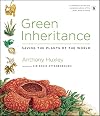
This kind of book is the kind that I loved growing up and easily makes a companion to a first year university botany class. It's straight forward, has good watercolor and ink illustrations, and surveys the plant world and its interactions with the human world.

First part of book describes wildflowers found by month of flowering. Type of plant, size, flowering time, how to sow and cultivate, position and other notes. Each plant beautifully illustrated with a coloured sketch.
Final pages include 6 coloured sketches of planting plans, a brief section on woldlife in the garden and which flowers will attract butterflies.
Final pages include 6 coloured sketches of planting plans, a brief section on woldlife in the garden and which flowers will attract butterflies.

Anyone with an interest in the salt waters of the earth will find this book fascinating.
Lists
You May Also Like


Associated Authors
Statistics
- Works
- 64
- Also by
- 5
- Members
- 812
- Popularity
- #31,426
- Rating
- 3.9
- Reviews
- 6
- ISBNs
- 79
- Languages
- 5