
Leland Ryken
Author of Dictionary of Biblical Imagery
About the Author
Leland Ryken (PhD, University of Oregon) served as professor of English at Wheaton College for nearly fifty years. He has authored or edited over fifty books, including The Word of God in English and A Complete Handbook of Literary Forms in the Bible. He is a frequent speaker at the Evangelical show more Theological Society's annual meetings and served as literary stylist for the English Standard Version Bible. Glenda Faye Mathes (BLS, University of Iowa) is a professional writer with a passion for literary excellence. She has authored over a thousand articles and several nonfiction books as well as the Matthew in the Middle fiction series. Glenda has been the featured speaker at women's conferences and at seminars for prison inmates. show less
Image credit: Zondervan Publishing House
Series
Works by Leland Ryken
The Word of God in English: Criteria for Excellence in Bible Translation (2002) 642 copies, 2 reviews
The Christian Imagination: The Practice of Faith in Literature and Writing (Writers' Palette Book) (1981) 438 copies
40 Favorite Hymns on the Christian Life: A Closer Look at Their Spiritual and Poetic Meaning (2019) 336 copies, 2 reviews
Preach the Word: Essays on Expository Preaching: In Honor of R. Kent Hughes (2007) — Editor — 302 copies, 1 review
Understanding English Bible Translation: The Case for an Essentially Literal Approach (2009) 246 copies, 1 review
Pastors in the Classics: Timeless Lessons on Life and Ministry from World Literature (2012) 138 copies, 2 reviews
The Legacy of the King James Bible: Celebrating 400 Years of the Most Influential English Translation (2011) 132 copies, 3 reviews
Culture in Christian Perspective: A Door to Understanding and Enjoying the Arts (Critical Concern Book) (1986) 107 copies
How Bible Stories Work: A Guided Study of Biblical Narrative (Reading the Bible As Literature) (2015) 103 copies, 1 review
Recovering the Lost Art of Reading: A Quest for the True, the Good, and the Beautiful (2021) 86 copies, 4 reviews
Bible Translation Differences: Criteria for Excellence in Reading and Choosing a Bible Translation (2004) 57 copies
Jesus the Hero: A Guided Literary Study of the Gospels (Reading the Bible As Literature) (2016) 45 copies, 1 review
Short Sentences Long Remembered: A Guided Study of Proverbs and Other Wisdom Literature (Reading the bible as literature) (2016) 43 copies, 1 review
Symbols and Reality: A Guided Study of Prophecy, Apocalypse, and Visionary Literature (Reading the bible as literature) (2016) — Author — 38 copies, 1 review
Letters of Grace and Beauty: A Guided Literary Study of New Testament Epistles (2016) 37 copies, 1 review
The Heart in Pilgrimage: A Treasury of Classic Devotionals on the Christian Life (2022) 35 copies, 1 review
How Bible Stories Work (Reading the Bible as Literature): A Guided Study of Biblical Narrative 1 copy
Sfinti In Lume 1 copy
Shakespeare Handbook 1 copy
Associated Works
On Reading Well: Finding the Good Life through Great Books (2018) — Foreword — 799 copies, 6 reviews
Understanding Scripture: An Overview of the Bible's Origin, Reliability, and Meaning (2012) — Contributor — 246 copies
Making Higher Education Christian: The History and Mission of Evangelical Colleges in America (1987) — Contributor — 24 copies
Tagged
Common Knowledge
- Canonical name
- Ryken, Leland
- Birthdate
- 1942-05-17
- Gender
- male
- Education
- Central College (now Central University of Iowa; B.A.|1964)
University of Oregon (Ph.D|1968) - Occupations
- professor (literature)
- Organizations
- Modern Language Association
Milton Society of America
Evangelical Theological Society
Conference on Christianity and Literature
Wheaton College - Relationships
- Ryken, Philip Graham (son)
- Nationality
- USA
- Birthplace
- New Sharon, Iowa, USA
- Places of residence
- New Sharon, Iowa, USA (birth)
Pella, Iowa, USA
Wheaton, Illinois, USA - Map Location
- USA
Members
Reviews
The Legacy of the King James Bible: Celebrating 400 Years of the Most Influential English Translation by Leland Ryken
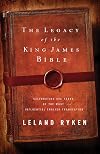
A balanced review, or a balanced book, should tell both good and bad. So:
The Good: This book gives well-deserved praise to one of the noblest feats of English literature.
The Bad: It doesn't do its job of balancing things.
Let's say straight out that the King James Version is a great piece of prose, and well worth reading and knowing; it has deeply influenced our language and idiom. And this book gives a mostly accurate, if much too brief, overview of its history, and gives genuine reasons show more why, as a piece of writing, it is superior to all that came after or since.
The problem is, the King James Version isn't just some random piece of prose. It's a Bible translation. And that places certain requirements upon it: A proper translation needs to accurately reflect the nature of what it is translating.
Even here, there is good and bad. As author Leland Ryken notes, the King James Version is in many ways a better representation of its underlying Greek and Hebrew texts than the versions that have come since (Revised Version, Revised Standard Version, New English Bible, New International Version, New Revised Standard Version, Revised English Bible, and all the various idiosyncratic and personal translations). Of major modern translations, only the New American Standard Bible could be called more literal, and the NASB has other problems that make it unreliable (in addition to being frequently incomprehensible due to its very literalness).
But, as author Ryken does not note, the Greek New Testament in particular is in koine Greek -- the everyday Greek of New Testament times. It isn't even particularly grammatical, especially in the Gospel of Mark and the Apocalypse, both clearly written by people who were native Aramaic speakers and who struggled with Greek. Should a translation of this Greek text be brilliant, grammatical, and archaic? (And, yes, the KJV was archaic even when it was published, since it so often repeated the wording of previous Bibles such as Tyndale's, and English had evolved a lot in the century between Tyndale and James VI and I.) The KJV correctly translates the words of the Received Text of the Greek Bible -- but it doesn't at all translate the style.
And did you note those words "Received Text" in that last sentence? You should have -- because that's an even more important reason why the King James Bible fails as a Bible translation. The King James Bible is based on the printed Greek Bibles of Stephanus and Beza, both in turn based on the very first printed Greek Bible, Erasmus's. Which was based on a handful of late, bad manuscripts; it is simply not a good reflection of what the original authors wrote.
The Hebrew has a different set of textual problems, where the King James translators are less at fault -- but they make more errors in the Hebrew Bible, simply because knowledge of Hebrew and cognate languages in Europe was very limited in the seventeenth century.
Ryken mentions briefly that we now have better texts of the Bible -- but he doesn't stress it, and it seems as if he doesn't understand it. Case in point: On page 53, he quotes (nineteenth century Anglican) Bishop B. F. Westcott as saying, "From the middle of the seventeenth century, the King's Bible has been the acknowledged Bible of the English-speaking nations throughout the world simply because it is the best."
Ryken does not mention that Westcott was one of the editors of the Westcott and Hort Greek Testament that finally and firmly showed that the Received Text was not an acceptable basis for a translation (since Westcott and Hort, only the New King James version has been so benighted as to translate the Received Text; even the theologically very conservative New International Version frequently includes the readings of the older, better manuscripts). Nor does Ryken mention that Westcott was one of the translators of the Revised Version, the translation the English church intended to replace the King James Version -- by quoting Westcott out of context as he does, he functionally ignores Westcott's life's work. I don't know what other sources are so abused, but I know that there are at least some.
To top it all off, this is an irritating book to read, because it's full of fact-boxes and lists that interrupt the flow and misdirect the attention. I bought this book knowing that I don't approve of the King James Version -- but I do consider it important. The way this volume is presented makes the KJV feel like a cheap high school crib, even though the overall thread is to praise the KJV excessively.
The King James Bible deserves to be preserved and praised. It does not deserve to be used as a Bible translation. And that is a point that this book fails to make. By all means, read this book for its praise of the KJV. But only after you've read a book that tells you its "down side." show less
The Good: This book gives well-deserved praise to one of the noblest feats of English literature.
The Bad: It doesn't do its job of balancing things.
Let's say straight out that the King James Version is a great piece of prose, and well worth reading and knowing; it has deeply influenced our language and idiom. And this book gives a mostly accurate, if much too brief, overview of its history, and gives genuine reasons show more why, as a piece of writing, it is superior to all that came after or since.
The problem is, the King James Version isn't just some random piece of prose. It's a Bible translation. And that places certain requirements upon it: A proper translation needs to accurately reflect the nature of what it is translating.
Even here, there is good and bad. As author Leland Ryken notes, the King James Version is in many ways a better representation of its underlying Greek and Hebrew texts than the versions that have come since (Revised Version, Revised Standard Version, New English Bible, New International Version, New Revised Standard Version, Revised English Bible, and all the various idiosyncratic and personal translations). Of major modern translations, only the New American Standard Bible could be called more literal, and the NASB has other problems that make it unreliable (in addition to being frequently incomprehensible due to its very literalness).
But, as author Ryken does not note, the Greek New Testament in particular is in koine Greek -- the everyday Greek of New Testament times. It isn't even particularly grammatical, especially in the Gospel of Mark and the Apocalypse, both clearly written by people who were native Aramaic speakers and who struggled with Greek. Should a translation of this Greek text be brilliant, grammatical, and archaic? (And, yes, the KJV was archaic even when it was published, since it so often repeated the wording of previous Bibles such as Tyndale's, and English had evolved a lot in the century between Tyndale and James VI and I.) The KJV correctly translates the words of the Received Text of the Greek Bible -- but it doesn't at all translate the style.
And did you note those words "Received Text" in that last sentence? You should have -- because that's an even more important reason why the King James Bible fails as a Bible translation. The King James Bible is based on the printed Greek Bibles of Stephanus and Beza, both in turn based on the very first printed Greek Bible, Erasmus's. Which was based on a handful of late, bad manuscripts; it is simply not a good reflection of what the original authors wrote.
The Hebrew has a different set of textual problems, where the King James translators are less at fault -- but they make more errors in the Hebrew Bible, simply because knowledge of Hebrew and cognate languages in Europe was very limited in the seventeenth century.
Ryken mentions briefly that we now have better texts of the Bible -- but he doesn't stress it, and it seems as if he doesn't understand it. Case in point: On page 53, he quotes (nineteenth century Anglican) Bishop B. F. Westcott as saying, "From the middle of the seventeenth century, the King's Bible has been the acknowledged Bible of the English-speaking nations throughout the world simply because it is the best."
Ryken does not mention that Westcott was one of the editors of the Westcott and Hort Greek Testament that finally and firmly showed that the Received Text was not an acceptable basis for a translation (since Westcott and Hort, only the New King James version has been so benighted as to translate the Received Text; even the theologically very conservative New International Version frequently includes the readings of the older, better manuscripts). Nor does Ryken mention that Westcott was one of the translators of the Revised Version, the translation the English church intended to replace the King James Version -- by quoting Westcott out of context as he does, he functionally ignores Westcott's life's work. I don't know what other sources are so abused, but I know that there are at least some.
To top it all off, this is an irritating book to read, because it's full of fact-boxes and lists that interrupt the flow and misdirect the attention. I bought this book knowing that I don't approve of the King James Version -- but I do consider it important. The way this volume is presented makes the KJV feel like a cheap high school crib, even though the overall thread is to praise the KJV excessively.
The King James Bible deserves to be preserved and praised. It does not deserve to be used as a Bible translation. And that is a point that this book fails to make. By all means, read this book for its praise of the KJV. But only after you've read a book that tells you its "down side." show less
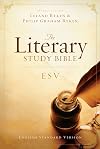
I really, really wish that I could give this study Bible a better rating. Really. Because I believe with all my heart that a "literary" (synchronic) approach to Scripture is the ultimately proper and most fruitful way to interpret this sacred Book and avoids many of the pitfalls of the typical scholarly "historical" (diachronic) approach.
However, I must be honest: I found most of the study notes in this Bible pretty unhelpful overall. First, they were too broadly "literary"; I felt very show more often like most of these notes could have been placed in an edition of Shakespeare's plays without many modifications. It seems the "Bible" was missing in their overall "Bible as literature" approach. Furthermore, the notes were annoyingly repetitive. Finally, and this probably can't be helped, but the study notes showed definite theological bias. I suppose if I were more Reformed in my theology, this might be a strength rather than a weakness, but since I am NOT Reformed, there were a few remarks that made me grind my teeth.
Most enraging: The assertion that the book of Romans is the most systematized theological statement in all of Scripture and is, therefore, perhaps the greatest biblical book (if the authors must choose one). First, that comment completely ignores the "occasional" nature of Romans (a feature of epistolary writing they constantly emphasize with every OTHER epistle). Second, and much more important, this really seems to "betray" the literary approach to Scripture. Basically, the gist of the claim is this: "This book is the most important/best book in the Bible because it fits best with our Western rationalist assumptions." Unfortunately (or fortunately), systematic theology has never been and never will be "great literature." That books like Job or Genesis or Psalms or the Gospels got "passed over" for the "best book in the Bible" designation in a book dedicated to a LITERARY appreciation of the Bible is absolutely inexcusable. show less
However, I must be honest: I found most of the study notes in this Bible pretty unhelpful overall. First, they were too broadly "literary"; I felt very show more often like most of these notes could have been placed in an edition of Shakespeare's plays without many modifications. It seems the "Bible" was missing in their overall "Bible as literature" approach. Furthermore, the notes were annoyingly repetitive. Finally, and this probably can't be helped, but the study notes showed definite theological bias. I suppose if I were more Reformed in my theology, this might be a strength rather than a weakness, but since I am NOT Reformed, there were a few remarks that made me grind my teeth.
Most enraging: The assertion that the book of Romans is the most systematized theological statement in all of Scripture and is, therefore, perhaps the greatest biblical book (if the authors must choose one). First, that comment completely ignores the "occasional" nature of Romans (a feature of epistolary writing they constantly emphasize with every OTHER epistle). Second, and much more important, this really seems to "betray" the literary approach to Scripture. Basically, the gist of the claim is this: "This book is the most important/best book in the Bible because it fits best with our Western rationalist assumptions." Unfortunately (or fortunately), systematic theology has never been and never will be "great literature." That books like Job or Genesis or Psalms or the Gospels got "passed over" for the "best book in the Bible" designation in a book dedicated to a LITERARY appreciation of the Bible is absolutely inexcusable. show less
Recovering the Lost Art of Reading: A Quest for the True, the Good, and the Beautiful by Leland Ryken
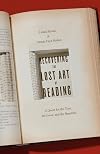
Summary: An invitation to artful reading, considering its decline, different kinds of literature and how we read them, and the art of reading well to discover goodness, truth, and beauty.
Much has been made over the supposed decline in reading, and contradictory statistics that show a rise in reading (especially during the pandemic). What is evident is that how and what we read has gone through changes. We read more on screens and audio and browse and scroll. There are questions about the show more loss of the ability to attend to longform writing.
The two authors of this book, one a literature professor, the other a professional writer, and both lovers of literature contend that what may be in decline is artful readers and have written this book to describe what it means to recover this art. They write:
“Reading a book immerses oneself into an extensive work. When this is done receptively and thoughtfully, it becomes artful reading. Some people call it “deep reading” and believe it is in deep trouble” (p. 23).
The authors believe that in our loss of artful or deep reading, we have lost leisure, self transcendence, contact with the past and with essential human experience, edification and an enlarged vision. The writers, drawing upon a Christian perspective, advocate for participation that both receives and responds to what the author has written, both actively listening (“obeying” in its original sense) and responding. It discerns both one’s own perspective and that of the author. In Dorothy Sayers words, there is the Book as Thought, the Book as Written, and the Book as Read.
Moving on from this introduction to artful reading, the authors consider what literature is in its different kinds. They note with sadness the shift from “literature” to “texts” in contemporary literary studies, but maintain the language of literature, distinguishing it from expository writing as concerned with the concrete rather than the abstract. The axiom of literature is to “show, not tell.” They further describe literature as experiential, concrete, universal, interpretive, and artistic. They defend the importance of literature as a portrayal of human experience, for seeing ideas rightly, and for the enjoyment of beauty. It transports us into imagined worlds, giving us renewed perspective on our own as well as refreshment.
They consider how we read different types of literature: story, poetry, novels, fantasy, children’s books, creative non-fiction and the Bible as a literary work. I so valued their simple instruction for poetry–slow down! In the reading of fantasy, they distinguish between escape and escapism, noting with C.S. Lewis that reading is always an escape, but one that ought give fresh perspective on the human condition. They address how to choose good books for children and the vital importance of reading and talking about books together.
The last part of the book returns to the recovery of the art of reading. Fundamentally, we recover by discovering good books and the good, the true, and the beautiful within them. We discern and assess the truth-claims in a book. We consider the moral perspective of the book–does it make the good or the evil attractive and who is valorized? We notice the use of language to point toward beauty, and the beautiful God. They describe excellence in beginnings, middles and ends.
All of this only makes sense in the context of our reading choices. They encourage us to embrace our freedom to read and observe in very practical terms the time thieves that rob us of precious hours. They consider how we choose good books and the role good literature plays in creativity and in one’s spiritual life.
I think one of the most valuable aspects of this book is the encouragement of leisurely, slow, and reflective engagement with good works, whatever their genre. They help us attend to plot, character, setting, and behind all this, the perspective of the author and the insights we gain into our common human condition. Their invitation to be participants in the work with the author while continuing to discern strikes a good balance.
I would have liked to see some book recommendations for those wanting to recover the art. Certainly, the authors mention books throughout, and the ones mentioned are worthwhile, but some bibliographies might have helped. Also while the authors discuss goodness and evil in literature, they don’t discuss beauty and ugliness, only beauty. The ugliness of the post-nuclear world in Cormac McCarthy’s The Road is a crucial offset to the beauty of the love of father and son. Sometimes, Christian literature seems too beautiful, in ways trite and artificial. The beauty and the healing comfort of Lothlorien gains its power from the horrors of Moria and the loss of Gandalf.
Those who practice any art always have a sense they could be better at their art. Reading is also an art. This book reminded me of ways I may be ever-improving at that art. I can work to remove the distractions to attentive reading. I may slow down, especially to savor a poem. I may re-read great works. I may attend to the story and the questions it opens up about the universal human condition. I may allow the book to enlarge my perspective if I give myself to it both attentively and discerningly, both open and observant. Ryken and Mathes invite us, whether the neophyte or the seasoned reader, to an ever-growing practice of the art of reading. After all, it is not how much, but how well we read.
____________________________
Disclosure of Material Connection: I received a complimentary review copy of this book from the publisher in exchange for an honest review. The opinions I have expressed are my own. show less
Much has been made over the supposed decline in reading, and contradictory statistics that show a rise in reading (especially during the pandemic). What is evident is that how and what we read has gone through changes. We read more on screens and audio and browse and scroll. There are questions about the show more loss of the ability to attend to longform writing.
The two authors of this book, one a literature professor, the other a professional writer, and both lovers of literature contend that what may be in decline is artful readers and have written this book to describe what it means to recover this art. They write:
“Reading a book immerses oneself into an extensive work. When this is done receptively and thoughtfully, it becomes artful reading. Some people call it “deep reading” and believe it is in deep trouble” (p. 23).
The authors believe that in our loss of artful or deep reading, we have lost leisure, self transcendence, contact with the past and with essential human experience, edification and an enlarged vision. The writers, drawing upon a Christian perspective, advocate for participation that both receives and responds to what the author has written, both actively listening (“obeying” in its original sense) and responding. It discerns both one’s own perspective and that of the author. In Dorothy Sayers words, there is the Book as Thought, the Book as Written, and the Book as Read.
Moving on from this introduction to artful reading, the authors consider what literature is in its different kinds. They note with sadness the shift from “literature” to “texts” in contemporary literary studies, but maintain the language of literature, distinguishing it from expository writing as concerned with the concrete rather than the abstract. The axiom of literature is to “show, not tell.” They further describe literature as experiential, concrete, universal, interpretive, and artistic. They defend the importance of literature as a portrayal of human experience, for seeing ideas rightly, and for the enjoyment of beauty. It transports us into imagined worlds, giving us renewed perspective on our own as well as refreshment.
They consider how we read different types of literature: story, poetry, novels, fantasy, children’s books, creative non-fiction and the Bible as a literary work. I so valued their simple instruction for poetry–slow down! In the reading of fantasy, they distinguish between escape and escapism, noting with C.S. Lewis that reading is always an escape, but one that ought give fresh perspective on the human condition. They address how to choose good books for children and the vital importance of reading and talking about books together.
The last part of the book returns to the recovery of the art of reading. Fundamentally, we recover by discovering good books and the good, the true, and the beautiful within them. We discern and assess the truth-claims in a book. We consider the moral perspective of the book–does it make the good or the evil attractive and who is valorized? We notice the use of language to point toward beauty, and the beautiful God. They describe excellence in beginnings, middles and ends.
All of this only makes sense in the context of our reading choices. They encourage us to embrace our freedom to read and observe in very practical terms the time thieves that rob us of precious hours. They consider how we choose good books and the role good literature plays in creativity and in one’s spiritual life.
I think one of the most valuable aspects of this book is the encouragement of leisurely, slow, and reflective engagement with good works, whatever their genre. They help us attend to plot, character, setting, and behind all this, the perspective of the author and the insights we gain into our common human condition. Their invitation to be participants in the work with the author while continuing to discern strikes a good balance.
I would have liked to see some book recommendations for those wanting to recover the art. Certainly, the authors mention books throughout, and the ones mentioned are worthwhile, but some bibliographies might have helped. Also while the authors discuss goodness and evil in literature, they don’t discuss beauty and ugliness, only beauty. The ugliness of the post-nuclear world in Cormac McCarthy’s The Road is a crucial offset to the beauty of the love of father and son. Sometimes, Christian literature seems too beautiful, in ways trite and artificial. The beauty and the healing comfort of Lothlorien gains its power from the horrors of Moria and the loss of Gandalf.
Those who practice any art always have a sense they could be better at their art. Reading is also an art. This book reminded me of ways I may be ever-improving at that art. I can work to remove the distractions to attentive reading. I may slow down, especially to savor a poem. I may re-read great works. I may attend to the story and the questions it opens up about the universal human condition. I may allow the book to enlarge my perspective if I give myself to it both attentively and discerningly, both open and observant. Ryken and Mathes invite us, whether the neophyte or the seasoned reader, to an ever-growing practice of the art of reading. After all, it is not how much, but how well we read.
____________________________
Disclosure of Material Connection: I received a complimentary review copy of this book from the publisher in exchange for an honest review. The opinions I have expressed are my own. show less
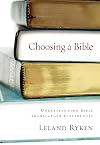
This was underwhelming. It felt polemic, with an author who either didn't understand the complexity of what he was talking about or one who wasn't willing to reveal that, lest it weaken his argument.
To pick on one example, on page 16 he says 'the NIV does not preserve what the original says with the phrase "the Lord of hosts".' Naturally, the original is Hebrew, so it does not say that; in fact, it seems that the Hebrew צְבָאוֹת would be better translated "armies", giving us "the show more Lord of armies" and I would argue whatever the Hebrew said, "the Lord of hosts" would be a bad translation into modern English. (This seems part of a pattern; page 28-29, sections 8 and 9, are all about preserving the often obscure KJV language, not because it is a more faithful translation, but because it is perceived as more literary or beautiful. It never seems to be considered that those goals might be in conflict.)
Likewise, on page 20 he mentions '"the obedience of faith" as it appears in the original text'; even though he mentions Greek, he doesn't touch at all on the actual original text. From his examples, it strikes me as blindly regurgitating the Greek as English without understanding it well enough to actually form it as good English. Is the correct preposition "of"? I don't know Greek, but I know enough of enough languages to know that prepositions are a serious bane of language learners, and one preposition in a foreign language can be best translated by any number of prepositions in English, depending on context. Instead of wrestling with how to process the Greek into English without fixing one interpretation or producing word salad, he proclaims "the obedience of faith" as the original and goes on. (Likewise, on page 28, he says that "The goal is to know what the original authors said. If they passed difficulties on to their readers, translators need to do the same." Does he fail to understand that what might be difficult to a translator now might not have been difficult to a reader then?)
On page 19, he complains that 'Dynamic equivalent translators ... change words that are considered either difficult or "not how we would say it";', which leaves me questioning if he understands what translation means!
The thesis statement, as summarized by myself, is that we should translate words, not meaning. To this effect, near the end of the work (page 21), he quotes "someone" as saying "if the words are taken from us, the exact meaning is of itself lost"*. To which I raise a glass and say "traduttore, traditore." We take from the original its languages and its words and force upon it our language and our words, and hope to preserve what cannot possibly survive. One can not translate words; one must translate meaning, if the output is to be understandable English. There's points struck home about overly paraphrasing translations, but the argument is lost when he declares his side correct without wrestling with the depths of the issue.
* In a endnote, he offers as source From Eternity to Eternity by Erich Sauer as translated by G. H. Land. I do not know the context of the original, but I have to wonder if G. H. Land was more in touch with the irony than Ryken was. show less
To pick on one example, on page 16 he says 'the NIV does not preserve what the original says with the phrase "the Lord of hosts".' Naturally, the original is Hebrew, so it does not say that; in fact, it seems that the Hebrew צְבָאוֹת would be better translated "armies", giving us "the show more Lord of armies" and I would argue whatever the Hebrew said, "the Lord of hosts" would be a bad translation into modern English. (This seems part of a pattern; page 28-29, sections 8 and 9, are all about preserving the often obscure KJV language, not because it is a more faithful translation, but because it is perceived as more literary or beautiful. It never seems to be considered that those goals might be in conflict.)
Likewise, on page 20 he mentions '"the obedience of faith" as it appears in the original text'; even though he mentions Greek, he doesn't touch at all on the actual original text. From his examples, it strikes me as blindly regurgitating the Greek as English without understanding it well enough to actually form it as good English. Is the correct preposition "of"? I don't know Greek, but I know enough of enough languages to know that prepositions are a serious bane of language learners, and one preposition in a foreign language can be best translated by any number of prepositions in English, depending on context. Instead of wrestling with how to process the Greek into English without fixing one interpretation or producing word salad, he proclaims "the obedience of faith" as the original and goes on. (Likewise, on page 28, he says that "The goal is to know what the original authors said. If they passed difficulties on to their readers, translators need to do the same." Does he fail to understand that what might be difficult to a translator now might not have been difficult to a reader then?)
On page 19, he complains that 'Dynamic equivalent translators ... change words that are considered either difficult or "not how we would say it";', which leaves me questioning if he understands what translation means!
The thesis statement, as summarized by myself, is that we should translate words, not meaning. To this effect, near the end of the work (page 21), he quotes "someone" as saying "if the words are taken from us, the exact meaning is of itself lost"*. To which I raise a glass and say "traduttore, traditore." We take from the original its languages and its words and force upon it our language and our words, and hope to preserve what cannot possibly survive. One can not translate words; one must translate meaning, if the output is to be understandable English. There's points struck home about overly paraphrasing translations, but the argument is lost when he declares his side correct without wrestling with the depths of the issue.
* In a endnote, he offers as source From Eternity to Eternity by Erich Sauer as translated by G. H. Land. I do not know the context of the original, but I have to wonder if G. H. Land was more in touch with the irony than Ryken was. show less
Lists
Awards

You May Also Like


Associated Authors
Statistics
- Works
- 72
- Also by
- 4
- Members
- 9,788
- Popularity
- #2,439
- Rating
- 3.9
- Reviews
- 48
- ISBNs
- 180
- Languages
- 2
- Favorited
- 1
