
M.K. Asante
Author of Buck: A Memoir
About the Author
Works by M.K. Asante
Tagged
Common Knowledge
- Gender
- male
- Relationships
- Asante Welsh, Kariamu (parent)
Asante, Molefi Kete (parent) - Birthplace
- Harare, Zimbabwe
- Associated Place (for map)
- Harare, Zimbabwe
Members
Reviews
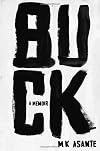
"The fall in Killadelphia. Outside is the color of cornbread and blood. Change hangs in the air like the sneaks on the live wires behind my crib."
I received a copy of this book via NetGalley in exchange for an honest review.
Every American teenager goes through a period of rebellion as s/he tries to figure out who s/he is, apart from the parents. But for no other group in America is this transition as dangerous as for young black men. Malo's older brother is in jail. His father is always show more traveling; his mother, depressed. His schools: some give him a pass and don't require him to do much of anything, long as he keeps playing basketball. Others are more like a holding pen, the teachers flat out telling the students "I'm just here for the paycheck."
It's amazing that any of them make it out of there alive, and sadly, too many don't. Malo loses his best friend, Amir, and afterward, the funeral director takes him and his friends in the back room.
"He shows us the coffins and tells us, 'The little ones, for teenagers like y’all, are my best sellers and business is booming! Booming!'"
The best memoirs let you crawl inside the skin of someone who's not like you, and MAKE you feel it, as if it is your own life. I was not only feeling for and with Malo, I was actually nodding to the raw beauty and poetry of hip-hop lyrics, the way they perfectly fit the narrative of the story.
I also got a glimpse inside his mother's head, through her journal entries, which Malo reads/shares here. She is battling her depression so hard; like a lot of people, the drugs sometimes help and sometimes turn her into a zombie, but she keep fighting for her younger son until finally, she finds a school that "gets" him. They make him write, and in writing, he finds his own voice.
"Holding the pen this way, snug and firm in my fist, makes me feel like I can write my future, spell out my destiny in sharp strokes."
I couldn't help thinking of "A mind is a terrible thing to waste," yet we do waste so many minds, so many bright young men and women of all colors and ethnicities COULD give back so much. If only we tried a little harder, found the key to reaching them, instead of warehousing them in school until they are 18, then warehousing them in jail ever after.
There are many definitions of the word "buck;" it's a term for a person, for money, for an act of rebellion, or of sex, and in the end, M.K. Asante claims it for his own.
"Became a doer, dream pursuer, purpose-driven
Past meets the future
In between no longer and not yet
Rise up, young buck, never forget"
This book is going to stay with me for a long time. show less
I received a copy of this book via NetGalley in exchange for an honest review.
Every American teenager goes through a period of rebellion as s/he tries to figure out who s/he is, apart from the parents. But for no other group in America is this transition as dangerous as for young black men. Malo's older brother is in jail. His father is always show more traveling; his mother, depressed. His schools: some give him a pass and don't require him to do much of anything, long as he keeps playing basketball. Others are more like a holding pen, the teachers flat out telling the students "I'm just here for the paycheck."
It's amazing that any of them make it out of there alive, and sadly, too many don't. Malo loses his best friend, Amir, and afterward, the funeral director takes him and his friends in the back room.
"He shows us the coffins and tells us, 'The little ones, for teenagers like y’all, are my best sellers and business is booming! Booming!'"
The best memoirs let you crawl inside the skin of someone who's not like you, and MAKE you feel it, as if it is your own life. I was not only feeling for and with Malo, I was actually nodding to the raw beauty and poetry of hip-hop lyrics, the way they perfectly fit the narrative of the story.
I also got a glimpse inside his mother's head, through her journal entries, which Malo reads/shares here. She is battling her depression so hard; like a lot of people, the drugs sometimes help and sometimes turn her into a zombie, but she keep fighting for her younger son until finally, she finds a school that "gets" him. They make him write, and in writing, he finds his own voice.
"Holding the pen this way, snug and firm in my fist, makes me feel like I can write my future, spell out my destiny in sharp strokes."
I couldn't help thinking of "A mind is a terrible thing to waste," yet we do waste so many minds, so many bright young men and women of all colors and ethnicities COULD give back so much. If only we tried a little harder, found the key to reaching them, instead of warehousing them in school until they are 18, then warehousing them in jail ever after.
There are many definitions of the word "buck;" it's a term for a person, for money, for an act of rebellion, or of sex, and in the end, M.K. Asante claims it for his own.
"Became a doer, dream pursuer, purpose-driven
Past meets the future
In between no longer and not yet
Rise up, young buck, never forget"
This book is going to stay with me for a long time. show less
In his memoir Buck, MK Asante traces his days as a teenager in North Philadelphia, searching for solid ground in his constantly shifting, dangerous world. Though he was raised in a supportive household, Asante (then known as Malo) struggles as successive changes turn his home inside out: his brother is in prison across the country, his father leaves and his mother is in and out on the edge of mental illness. With few options, full of untamed anger and emotion, Malo looks to the street as his show more new family.
Woven into Malo's story are excerpts from his mother's diary, which he finds himself reading while she is hospitalized. Her voice gives insight into the family while her concern for her sons act as a stark contrast to the increasingly violent life Malo is living. In haunting passages she makes it clear that writing is a family strength, something Malo won't realize until he makes his way through several schools and finally sits down with a piece of paper in the right one.
"I realize that school and education don't go hand in hand, that school and education can be as distant or as close as sex and love."
Written in a voice that flows with the poetic beauty of hip hop, Buck is a testament to the impact of education, the bonds of family and the power of the written word. MK Asante has written an unforgettable memoir that will stay with you long after the final page.
Full Review: www.rivercityreading.com show less
Asante's memoir is not the first about an African American man to overcome the streets. It isn't the scariest, or most dramatic. If anything, the book starts of slowly. I was not initially drawn in. Yet as I read, I became captivated by the delicately drawn personalities; Asante brings the people in his book to life on the page. They are three dimensional, flawed and very human. His beautiful writing, sprinkled throughout with quotes from hip-hop songs, is evocative.
There are no heroes. show more There is, at book's end, redemption. It is not simplistic, though we know it had to end this way or the book would not have materialized. Yet it is believable. As the reader, you are left knowing that things are on the upswing for Asante and his family.
One odd note: One of the most important people in the book (and presumably in Asante's life) is left out of the credits. I found this very curious, and would love to know why he didn't include Nia.
If you are a fan of the inner city memoir, this book will not disappoint. If you have never read one before, this one is a great place to start - not sensationalized, very matter of fact yet with heart. If, however, you've read some and feel that you've had your fill - or that you only want to read more of them if they are truly unique - you may want to give this one a pass. Although well-written, the story is timeworn.
I received my copy of this book from the Goodreads First Reads giveaway program. show less
There are no heroes. show more There is, at book's end, redemption. It is not simplistic, though we know it had to end this way or the book would not have materialized. Yet it is believable. As the reader, you are left knowing that things are on the upswing for Asante and his family.
One odd note: One of the most important people in the book (and presumably in Asante's life) is left out of the credits. I found this very curious, and would love to know why he didn't include Nia.
If you are a fan of the inner city memoir, this book will not disappoint. If you have never read one before, this one is a great place to start - not sensationalized, very matter of fact yet with heart. If, however, you've read some and feel that you've had your fill - or that you only want to read more of them if they are truly unique - you may want to give this one a pass. Although well-written, the story is timeworn.
I received my copy of this book from the Goodreads First Reads giveaway program. show less
 This review was written for LibraryThing Early Reviewers.
This was intense. It was definitely out of my comfort zone and so you should take my review with a grain of salt. It did have a happy ending, mostly, and maybe that sort of redemption story is problematic for some. The redemptive ending is likely part of why I liked it, ultimately. And also, I applaud the writing style for being unapologetic. And I thought it was unique and powerful how he integrated lyrics throughout, eventually leading up to his own.
I had this memoir sitting on my show more bookshelf for years. I finally picked it up and I’m so glad I did. show less
I had this memoir sitting on my show more bookshelf for years. I finally picked it up and I’m so glad I did. show less
Awards


You May Also Like


Statistics
- Works
- 5
- Members
- 251
- Popularity
- #91,085
- Rating
- 3.9
- Reviews
- 12
- ISBNs
- 13
