
About the Author
Stephen R. Bown is the author of ten books on the history of exploration, science and ideas. His works have been published in many territories and translated into nine languages. He has won the BC Book Prize, the Alberta Book Award and the William Mills Prize for Polar Books, and his book Island of show more the Blue Foxes, for shortlisted for the RBC Taylor Prize. Born in Ottawa, he now live near Banff in the Canadian Rockies. show less
Image credit: photo by Nicky Brink
Works by Stephen R. Bown
Scurvy: How a Surgeon, a Mariner, and a Gentlemen Solved the Greatest Medical Mystery of the Age of Sail (2003) 424 copies, 16 reviews
A Most Damnable Invention: Dynamite, Nitrates, and the Making of the Modern World (2005) 118 copies, 4 reviews
Island of the Blue Foxes: Disaster and Triumph on the World's Greatest Scientific Expedition (A Merloyd Lawrence Book) (2017) 100 copies, 7 reviews
White Eskimo: Knud Rasmussen's Fearless Journey into the Heart of the Arctic (A Merloyd Lawrence Book) (2015) 66 copies, 1 review
Madness, Betrayal and the Lash: The Epic Voyage of Captain George Vancouver (2008) 57 copies, 3 reviews
Sightseers and Scholars: Scientific Travellers in the Golden Age of Natural History (2002) 12 copies
The Golden Age of Piracy: A Short History of Privateers, Buccaneers and Pirates in the Caribbean (2012) 8 copies
Forgotten Highways: Wilderness Journeys Down the Historic Trails of the Canadian Rockies (2007) 7 copies
Great American Naturalists: 200 Years of Adventure and Discovery on the Ultimate Scientific Quest (Explorers of the Americas Series) (2012) 3 copies
L'isola delle volpi azzurre. Disastro e trionfo della più grande spedizione scientifica di tutti i tempi (2023) 3 copies, 1 review
MOVING IN CANADA: What You Need to Know Before Relocating to a New Province or Territory (1999) 2 copies
Milligan and the Preacher 1 copy
Tagged
Common Knowledge
- Birthdate
- 1967-07-22
- Gender
- male
- Education
- University of Alberta
- Occupations
- non-fiction writer
- Short biography
- Stephen R. Bown was born in Ottawa and studied history at the University of Alberta. He has long been interested in the history of science and exploration and is the author or co-author of numerous articles and several books, including Forgotten Highways: Wilderness Journeys Down the Historic Trails of the Canadian Rockies and the internationally acclaimed Scurvy: How a Surgeon, a Mariner and a Gentleman Solved the Greatest Medical Mystery of the Age of Sail. Bown lives in the Canadian Rockies with his wife and two young children.
- Nationality
- Canada
- Birthplace
- Ottawa, Ontario, Canada
- Places of residence
- Rocky Mountains, Canada
- Associated Place (for map)
- Canada
Members
Reviews
Scurvy: How a Surgeon, a Mariner, and a Gentleman Solved the Greatest Medical Mystery of the Age of Sail by Stephen R. Bown
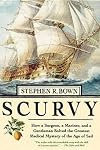
"Scurvy" is gruesomely informative but a fantastic read!
Ascorbic acid or Vitamin C, is like glue for tissues and without it the body quite literally fall apart. It is horrifying. Teeth and nails fall out, muscles deteriorate, skin becomes blotched and fragile, and even wounds can reopen. More sailors died to scurvy than all the shipwrecks combined. Ch. 3 covers Lord Anson's 4-yr voyage, the worst medical disaster at sea. The 18th c. was peak Age of Sail and scurvy was worse than ever. The show more first major study was made by Dr. James Lind of Haslar Naval Hospital. Lind, unlike many other physicians, was apprenticed to a ship’s surgeon and saw scurvy first hand. Through experimentation, he recognized the critical consumption of certain produce. While he couldn't pinpoint the vitamin itself, positing that scurvy resulted from an “alkaline imbalance,” he knew that sailors needed fresher provisions, not malt or "meat slush." His attempt was a juice called “rob.” It could be stored, but in hindsight, the process quickly defeated the vitamin's potency. But Lind doesn't quite have the clout to convince the Admiralty. David MacBride, another scurvy theorist, proposes wort of malt as a preventative instead. An experiment was proposed for the harrowing voyages of the Endeavor, flagship of Capt. James Cook. The wort was hardly useful, but thankfully Cook was sharp enough to anchor anywhere for fresh supplies. I don't care for Cook, but he never lost a man to scurvy. However this isn't what the Royal Society's John Pringle wanted to hear, and the record was purposefully distorted. Enter Gilbert Blane, gentleman and personal physician to Admiral Sir George Rodney. On his own expense he distributed the info and bombarded the Admiralty. In 1795 lemon juice became a daily ration.
Of course, had the Brits known the preventative for scurvy a lot sooner, the American Revolution might've ended differently! show less
Ascorbic acid or Vitamin C, is like glue for tissues and without it the body quite literally fall apart. It is horrifying. Teeth and nails fall out, muscles deteriorate, skin becomes blotched and fragile, and even wounds can reopen. More sailors died to scurvy than all the shipwrecks combined. Ch. 3 covers Lord Anson's 4-yr voyage, the worst medical disaster at sea. The 18th c. was peak Age of Sail and scurvy was worse than ever. The show more first major study was made by Dr. James Lind of Haslar Naval Hospital. Lind, unlike many other physicians, was apprenticed to a ship’s surgeon and saw scurvy first hand. Through experimentation, he recognized the critical consumption of certain produce. While he couldn't pinpoint the vitamin itself, positing that scurvy resulted from an “alkaline imbalance,” he knew that sailors needed fresher provisions, not malt or "meat slush." His attempt was a juice called “rob.” It could be stored, but in hindsight, the process quickly defeated the vitamin's potency. But Lind doesn't quite have the clout to convince the Admiralty. David MacBride, another scurvy theorist, proposes wort of malt as a preventative instead. An experiment was proposed for the harrowing voyages of the Endeavor, flagship of Capt. James Cook. The wort was hardly useful, but thankfully Cook was sharp enough to anchor anywhere for fresh supplies. I don't care for Cook, but he never lost a man to scurvy. However this isn't what the Royal Society's John Pringle wanted to hear, and the record was purposefully distorted. Enter Gilbert Blane, gentleman and personal physician to Admiral Sir George Rodney. On his own expense he distributed the info and bombarded the Admiralty. In 1795 lemon juice became a daily ration.
Of course, had the Brits known the preventative for scurvy a lot sooner, the American Revolution might've ended differently! show less
Island of the Blue Foxes: Disaster and Triumph on the World's Greatest Scientific Expedition (A Merloyd Lawrence Book) by Stephen R. Bown
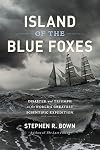
In the 18th century, the whole of Siberia was populated by barely 300,000 people. In 1725, it was the mission of Vitus Bering, Aleksei Chirikov, Lieut. Spangberg and a "cavalcade" of men and horses to make their way across Siberia into the uncharted Pacific. Even after forcefully conscripting several local horses and native men, they make it as far as the Strait and are forced to turn back. But the First Kamchatka Expedition was only a prelude to the disaster that was to come. In 1730, show more Bering convinced the imperial court for a second attempt, but was burdened by ambitious royal demands. He is joined by Lieut. Waxell, Georg Steller and a squad of prominent scientists in two ships, the "Saint Paul" and the "Saint Peter." Ten years later, Anna Bering was still waiting for her husband's return, but ti was not to be. The St. Paul barely limped back, its crew ravaged by scurvy and no St. Peter or Vitus in sight. It is only thanks to Steller's memoirs and Waxell's insistence on proper documentation out of fear of Russian bureaucracy that we know the details of this expensive venture that cost so many lives.
I was already familiar with Stephen Bown's narrative style after reading "Scurvy", so I knew I wouldn't be disappointed. This was such a harrowing tale, much in the same vein as Pitzer's "Icebound." The only reason this one didn't get 5/5 was because the author does repeat themselves sometimes. It's such an engaging story with so few character to keep track of, that the little reminders and call-back references throughout were unnecessary. What I absolutely loved - and wish more authors would do - is that Bown consistently names the date. How long they encamped, sailed, when they left or died, everything has a date. This is super helpful to the reader because the expedition took years to complete. I always appreciate a tidy timeline. Bown doesn't glorify Bering either, and gives even the quarrelsome Steller his due credit. There are no winners in this expedition though, only survivors. show less
I was already familiar with Stephen Bown's narrative style after reading "Scurvy", so I knew I wouldn't be disappointed. This was such a harrowing tale, much in the same vein as Pitzer's "Icebound." The only reason this one didn't get 5/5 was because the author does repeat themselves sometimes. It's such an engaging story with so few character to keep track of, that the little reminders and call-back references throughout were unnecessary. What I absolutely loved - and wish more authors would do - is that Bown consistently names the date. How long they encamped, sailed, when they left or died, everything has a date. This is super helpful to the reader because the expedition took years to complete. I always appreciate a tidy timeline. Bown doesn't glorify Bering either, and gives even the quarrelsome Steller his due credit. There are no winners in this expedition though, only survivors. show less
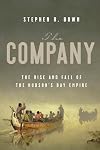
An unexpectedly great read. The Hudson's Bay Company history runs in parallel to the history of Canada (at least from my perspective) and is a well researched, well written account of the times and places and people, and the changes in attitudes from the 17th to the 19th centuries. The competition with the US over the Old Oregon Territory, the native tribes and their worlds at the intersection of the European world. It's all here, warts and all. The beginning of Chapter Sixteen, "Getting show more older is like climbing a mountain..." is a great poetic metaphor for aging and what comes with it. Highly recommended. show less
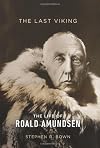
Bown's biography of the great polar explorer is the perfect antidote to a winter's day. Reading of Amundsen's travails, I guarantee you will automatically feel warm by comparison.
As Bown points out, children in Anglophone countries were educated to admire Scott's tragic failure ahead of the man who actually achieved the goal of reaching the South Pole. Amundsen's achievements were relegated to footnote status, and this book has done a lot to rectify that and give this great man due show more credit.
Bown's book is no hagiography though, and he is adept at identifying the character flaws and mis-steps that in some ways blighted Amundsen's career and reputation. Despite his global fame, he never reached a point of financial security or domestic harmony, and he burnt most of his bridges with the people and organisations that would have supported him. These outcomes were due to a certain level of naivety outside of his own sphere of expertise, and also a function of his uncompromising attitude towards achieving his goals. Of course this latter characteristic was a key contributor to his success, but it may have also contained the seeds of his downfall.
The book provides detailed accounts of Amundsen's major expeditions, and brings both the hardships and the characters involved to life. Strangely, what should be a dramatic highlight of the book - the final attainment of the South Pole - is dealt with in a perfunctory and downbeat manner that was quite puzzling. On the whole though, this was a gripping story that added greatly to my understanding of a man poorly treated by history. show less
As Bown points out, children in Anglophone countries were educated to admire Scott's tragic failure ahead of the man who actually achieved the goal of reaching the South Pole. Amundsen's achievements were relegated to footnote status, and this book has done a lot to rectify that and give this great man due show more credit.
Bown's book is no hagiography though, and he is adept at identifying the character flaws and mis-steps that in some ways blighted Amundsen's career and reputation. Despite his global fame, he never reached a point of financial security or domestic harmony, and he burnt most of his bridges with the people and organisations that would have supported him. These outcomes were due to a certain level of naivety outside of his own sphere of expertise, and also a function of his uncompromising attitude towards achieving his goals. Of course this latter characteristic was a key contributor to his success, but it may have also contained the seeds of his downfall.
The book provides detailed accounts of Amundsen's major expeditions, and brings both the hardships and the characters involved to life. Strangely, what should be a dramatic highlight of the book - the final attainment of the South Pole - is dealt with in a perfunctory and downbeat manner that was quite puzzling. On the whole though, this was a gripping story that added greatly to my understanding of a man poorly treated by history. show less
Lists
Awards


You May Also Like


Statistics
- Works
- 24
- Members
- 1,791
- Popularity
- #14,366
- Rating
- 3.8
- Reviews
- 48
- ISBNs
- 93
- Languages
- 4
