
Astolphe de Custine (1790–1857)
Author of Letters from Russia
About the Author
Image credit: Wikipedia
Works by Astolphe de Custine
Mémoires et voyages ou Lettres à diverses époques, pendant des courses en Suisse, en Calabre, en Angleterre et en Écosse (2009) 4 copies
Russia 4 copies
Rusia, ayer como hoy 1 copy
Россия в 1839 году 1 copy
Tagged
Common Knowledge
- Canonical name
- Custine, Astolphe de
- Legal name
- Custine, Astolphe-Louis-Léonor, Marquis de
- Other names
- Marquis de Custine
- Birthdate
- 1790-03-18
- Date of death
- 1857-10-18
- Gender
- male
- Occupations
- travel writer
- Relationships
- De Sabran, Delphine (mother)
- Nationality
- France
- Birthplace
- Niderviller, Lorraine, France
- Places of residence
- Lorraine, France
St Petersburg, Russian Empire - Place of death
- Saint-Gratien, Val-d'Oise, France
- Burial location
- Auquainville, Calvados, France
- Associated Place (for map)
- France
Members
Reviews
Edit to add: I just realized that Custine was the French aristocrat in the film Russian Ark.
This was almost like reading a great epic in some ways, with the hero a man on a quest to find a beautiful truth. Instead, he finds himself traveling through a bleak, oppressive landscape where the truth he seeks is a miserable, twisted thing held captive by a ruthless villain.
After the opening section about the author's childhood experiences during the French Revolution, which was chilling, I was show more engrossed in his initial descriptions of Russia:
"I was entering the empire of Fear.... Thus, I was afraid and I was sad... out of politeness... to be like everybody else."
"This automaton population resembles one side of a chessboard, where a single individual causes the movements of all the pieces, but where the adversary is invisible."
Then, in the middle part, as Custine continued on his quest for the truth about Russia, the characters got much crankier and the pace slowed down a bit. (Which is also similar to many fantasy epics I've read, though a bit of editorial pruning would have been welcome, to be honest.)
Despite his occasional meandering asides, I adored Custine's insightful comments, his intelligence and civility. However, he definitely has his prejudices. (Nothing too surprising, and maybe less than one might expect from a 19th century French aristocrat.) I did find it somewhat amusing to read the author refer to the "natural slovenliness and inborn filthiness" and general barbarity of the Russians, given that I remember Castiglione making similar comments about the French a few centuries earlier.
But even with those chastisements, it was hard to tell who the real villain of the story was. Was it the indolent, generally uneducated, obsequiously polite slaves (i.e., everyone not the emperor) or was it their ruler, born into a position which allowed for two apparent options: rule with an iron fist or die at the fists of others? Custine was on a quest for truth, and the one group blocked his access to it on the orders of the other.
However, by the end the only consistent villain was the culture, the government, the system which defined everyone's roles. As Custine observed, self-preservation was gained through strict adherence to those roles and not just apathy, but deliberate ignorance and cynicism about the people who occupied them. The suit is more important than the man in it, and self-interest always wins over compassion. Even those who rebelled against the czar, the traitors and terrorists, demonstrated those same tyrannical characteristics.
Custine, who initially prided himself on his superiority, became aware of his own susceptibility to the attitudes he condemned:
"In France, where they respect life, even that of a brute creation, if my postilion had not thought of rescuing the colt, I should have obliged him to stop. I should myself have appealed to the peasants for aid, and should not have proceeded on my journey until I had seen the animal in safety. Here, I aided in destroying him by an unmerciful silence. Who would be proud of his virtues, when forced to acknowledge that they depend upon circumstances more than upon self?"
And how can such attitudes be changed? Custine didn't know, but he was afraid of what the future would bring. After accomplishing his quest to find the truth about Russia, he fled back to France to release it -- with the hope that Russia would not follow show less
This was almost like reading a great epic in some ways, with the hero a man on a quest to find a beautiful truth. Instead, he finds himself traveling through a bleak, oppressive landscape where the truth he seeks is a miserable, twisted thing held captive by a ruthless villain.
After the opening section about the author's childhood experiences during the French Revolution, which was chilling, I was show more engrossed in his initial descriptions of Russia:
"I was entering the empire of Fear.... Thus, I was afraid and I was sad... out of politeness... to be like everybody else."
"This automaton population resembles one side of a chessboard, where a single individual causes the movements of all the pieces, but where the adversary is invisible."
Then, in the middle part, as Custine continued on his quest for the truth about Russia, the characters got much crankier and the pace slowed down a bit. (Which is also similar to many fantasy epics I've read, though a bit of editorial pruning would have been welcome, to be honest.)
Despite his occasional meandering asides, I adored Custine's insightful comments, his intelligence and civility. However, he definitely has his prejudices. (Nothing too surprising, and maybe less than one might expect from a 19th century French aristocrat.) I did find it somewhat amusing to read the author refer to the "natural slovenliness and inborn filthiness" and general barbarity of the Russians, given that I remember Castiglione making similar comments about the French a few centuries earlier.
But even with those chastisements, it was hard to tell who the real villain of the story was. Was it the indolent, generally uneducated, obsequiously polite slaves (i.e., everyone not the emperor) or was it their ruler, born into a position which allowed for two apparent options: rule with an iron fist or die at the fists of others? Custine was on a quest for truth, and the one group blocked his access to it on the orders of the other.
However, by the end the only consistent villain was the culture, the government, the system which defined everyone's roles. As Custine observed, self-preservation was gained through strict adherence to those roles and not just apathy, but deliberate ignorance and cynicism about the people who occupied them. The suit is more important than the man in it, and self-interest always wins over compassion. Even those who rebelled against the czar, the traitors and terrorists, demonstrated those same tyrannical characteristics.
Custine, who initially prided himself on his superiority, became aware of his own susceptibility to the attitudes he condemned:
"In France, where they respect life, even that of a brute creation, if my postilion had not thought of rescuing the colt, I should have obliged him to stop. I should myself have appealed to the peasants for aid, and should not have proceeded on my journey until I had seen the animal in safety. Here, I aided in destroying him by an unmerciful silence. Who would be proud of his virtues, when forced to acknowledge that they depend upon circumstances more than upon self?"
And how can such attitudes be changed? Custine didn't know, but he was afraid of what the future would bring. After accomplishing his quest to find the truth about Russia, he fled back to France to release it -- with the hope that Russia would not follow show less

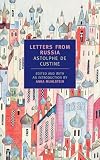
With an introduction by Simon Sebag Montefiore.
The De Custine family was victim of the French Revolution. In his Foreword the Marquis tells:
"I went to Russia in search of arguments against representative government. I returned from Russia a partisan of constitutions"
The journal was put on the black list of forbidden publications by the Soviets.
The De Custine family was victim of the French Revolution. In his Foreword the Marquis tells:
"I went to Russia in search of arguments against representative government. I returned from Russia a partisan of constitutions"
The journal was put on the black list of forbidden publications by the Soviets.

"Lettere dalla Russia" (titolo originale "La Russie en 1839") è un'opera di Astolphe de Custine, un aristocratico e scrittore francese, pubblicata per la prima volta nel 1843. Il libro è una raccolta di lettere che de Custine scrisse durante il suo viaggio in Russia nel 1839, offrendo un resoconto dettagliato e spesso critico delle sue osservazioni sulla società, la politica e la cultura russa dell'epoca.
De Custine visitò la Russia durante il regno dello zar Nicola I, un periodo show more caratterizzato da un forte autoritarismo e da una rigida censura. Le sue lettere descrivono in modo vivido la vita quotidiana, le istituzioni politiche, la religione e i costumi del popolo russo. L'autore non risparmia critiche al sistema autocratico russo, che vedeva come oppressivo e retrogrado rispetto alle idee liberali e progressiste dell'Europa occidentale. I temi principali del libro ci sono:Autocrazia e repressione. De Custine critica duramente il governo autoritario dello zar, descrivendo un sistema basato sulla paura e sulla repressione delle libertà individuali. Società e cultura: L'autore osserva le differenze culturali tra la Russia e l'Europa occidentale, spesso con un tono di superiorità culturale. Tuttavia, offre anche spunti interessanti sulla mentalità e le tradizioni russe. Religione: De Custine esamina il ruolo della Chiesa ortodossa russa e il suo rapporto con lo stato, notando come la religione fosse strumentalizzata per mantenere il controllo sulla popolazione.
Lo stile di de Custine è vivace e spesso polemico, con un tono che oscilla tra il sarcastico e il disincantato. Le sue osservazioni sono spesso acute e penetranti, anche se a volte possono apparire condiscendenti o eccessivamente critiche. Nonostante ciò, il libro è considerato una delle prime e più influenti analisi occidentali della Russia, e ha avuto un impatto significativo sulla percezione dell'Impero russo in Europa.
"Lettere dalla Russia" ha suscitato molte polemiche sia in Russia che in Europa. In Russia, il libro fu bandito e de Custine fu visto come un nemico dello stato. In Europa, invece, l'opera fu accolta con interesse, anche se non mancarono le critiche per il tono spesso pregiudizievole e per alcune generalizzazioni eccessive. "Lettere dalla Russia" di Astolphe de Custine rimane un'opera fondamentale per chiunque sia interessato alla storia e alla cultura russa del XIX secolo. Nonostante le sue opinioni spesso controverse, il libro offre una prospettiva unica e stimolante su un periodo cruciale della storia russa, e continua a essere un punto di riferimento per gli studiosi e i lettori interessati a comprendere le radici dell'autoritarismo russo e le dinamiche culturali dell'epoca. show less
De Custine visitò la Russia durante il regno dello zar Nicola I, un periodo show more caratterizzato da un forte autoritarismo e da una rigida censura. Le sue lettere descrivono in modo vivido la vita quotidiana, le istituzioni politiche, la religione e i costumi del popolo russo. L'autore non risparmia critiche al sistema autocratico russo, che vedeva come oppressivo e retrogrado rispetto alle idee liberali e progressiste dell'Europa occidentale. I temi principali del libro ci sono:Autocrazia e repressione. De Custine critica duramente il governo autoritario dello zar, descrivendo un sistema basato sulla paura e sulla repressione delle libertà individuali. Società e cultura: L'autore osserva le differenze culturali tra la Russia e l'Europa occidentale, spesso con un tono di superiorità culturale. Tuttavia, offre anche spunti interessanti sulla mentalità e le tradizioni russe. Religione: De Custine esamina il ruolo della Chiesa ortodossa russa e il suo rapporto con lo stato, notando come la religione fosse strumentalizzata per mantenere il controllo sulla popolazione.
Lo stile di de Custine è vivace e spesso polemico, con un tono che oscilla tra il sarcastico e il disincantato. Le sue osservazioni sono spesso acute e penetranti, anche se a volte possono apparire condiscendenti o eccessivamente critiche. Nonostante ciò, il libro è considerato una delle prime e più influenti analisi occidentali della Russia, e ha avuto un impatto significativo sulla percezione dell'Impero russo in Europa.
"Lettere dalla Russia" ha suscitato molte polemiche sia in Russia che in Europa. In Russia, il libro fu bandito e de Custine fu visto come un nemico dello stato. In Europa, invece, l'opera fu accolta con interesse, anche se non mancarono le critiche per il tono spesso pregiudizievole e per alcune generalizzazioni eccessive. "Lettere dalla Russia" di Astolphe de Custine rimane un'opera fondamentale per chiunque sia interessato alla storia e alla cultura russa del XIX secolo. Nonostante le sue opinioni spesso controverse, il libro offre una prospettiva unica e stimolante su un periodo cruciale della storia russa, e continua a essere un punto di riferimento per gli studiosi e i lettori interessati a comprendere le radici dell'autoritarismo russo e le dinamiche culturali dell'epoca. show less

" Le livre le plus intelligent écrit .sur la Russie par un étranger ", s'écriait Herzen en 1843. Par un paradoxe qui va très loin la postérité a fini par ratifier le jugement du grand ancêtre en exil de tous les contestataires russes de nos jours. Best-seller tombé dans l'oubli et redécouvert en U.R.S.S. par l'édition clandestine et en Occident au moment de la guerre froide, la Russie en 1839 a, si l'on veut comprendre celle d'aujourd'hui, la même importance que pour les show more Etats-Unis La Démocratie en Amérique de Tocqueville. Le réquisitoire de grand style, qu'au milieu du siècle dernier dressait cet aristocrate libéral, paraît mieux s'appliquer à la Russie de Staline et même de Brejnev qu'à l'Empire des tsars. Pourquoi ? show less
Lists
You May Also Like


Associated Authors
Statistics
- Works
- 23
- Members
- 647
- Popularity
- #39,005
- Rating
- 3.9
- Reviews
- 4
- ISBNs
- 47
- Languages
- 7