
Jay L. Garfield
Author of Losing Ourselves: Learning to Live without a Self
About the Author
Jay L. Garfield is Kwan lm Thong Hood Cho Professor of Humanities and Head of Studies in Philosophy at Yale-NUS College, Professor of Philosophy at the National University of Singapore, Recurrent Visiting Professor of Philosophy at yale University, Doris Silbert professor in the Humanities and show more Professor of Philosophy at Smith College. Professor of Philosophy at Melbourne University and Adjunct Professor of Philosophy at the Central University of Tibetan Studies, Professor Garfield teaches and pursues research in the philosophy of mind, foundations of cognitive science, logic, philosophy of language, Buddhist philosophy, cross-cultural hermeneutics, ethics and epistemology. show less
Works by Jay L. Garfield
The Meaning of Life: Perspectives from the World's Great Intellectual Traditions (2011) 63 copies, 1 review
Modularity in Knowledge Representation and Natural-Language Understanding (Bradford Books) (1987) — Editor — 29 copies
How to Lose Yourself: An Ancient Guide to Letting Go (Ancient Wisdom for Modern Readers) (2025) 14 copies, 1 review
Trans Buddhism 1 copy
Associated Works
The Fundamental Wisdom of the Middle Way: Nagarjuna's Mulamadhyamakakarika (1993) — Translator, some editions — 640 copies, 8 reviews
Fate, Time, and Language: An Essay on Free Will (2010) — Epilogue, some editions — 252 copies, 2 reviews
Ocean of Reasoning: A Great Commentary on Nagarjuna's Mulamadhyamakakarika (2006) — Translator, some editions — 99 copies
Tagged
Common Knowledge
- Canonical name
- Garfield, Jay L.
- Legal name
- Garfield, Jay Lazar
- Birthdate
- 1955-11-13
- Gender
- male
- Education
- University of Pittsburgh (MA|1976|Ph.D|1986)
Oberlin College (BA|1975) - Occupations
- professor
philosopher - Organizations
- Smith College
University of Melbourne
University of Tasmania
Hampshire College - Awards and honors
- Australian Academy of the Humanities (Fellow, 2016)
Academy of Finland (Fellow, 1986)
Michael Bennett Memorial Philosophical Essay Prize (1980) - Short biography
- Prof Garfield’s research addresses topics inthe foundations of cognitive science and the philosophy of mind; the history of Indian philosophy during the colonial period; topics in ethics, epistemology and the philosophy of logic; methodology in cross-cultural interpretation; and Buddhist philosophy, particularly Indo-Tibetan Madhyamaka and Yogācāra.
- Nationality
- USA
Australia - Places of residence
- Amherst, Massachusetts, USA
- Associated Place (for map)
- Massachusetts, USA
Members
Reviews

The Meaning of Life taught by Professor Jay L. Garfield was a wonderful experience.
In the last year or so I have tried to look into my life in a more meaningful and deeper way. This line of thinking began to manifest itself once I became a father. I wanted to be someone that my daughter could emulate. And so the question "Who am I?" began to surface.
I had looked into the subject of Philosophy a couple of times and I would always end up feeling overwhelmed by the amount of different schools show more of thought, each with their own beliefs and terminology. I didn't know where to begin. This course served as a guiding hand in the quest for studying my life and my place in the world.
Professor Garfield does a great job at narrating the courses. He's very thorough and breaks down the ideas behind Stoicism, Buddhism, Taoism and many others. I learned about the ideas and thoughts of Nietzsche, Hume, Kant, Mill, Gandhi, Lame Deer and the 14th Dalai Lama.
The course doesn't aim to answer that grand question "What is the meaning of life?" It simply provides multiple viewpoints from different thinkers and then lets you marinate on those ideas. This was a great introductory course and it certainly expanded my horizons. I also plan on reading the texts of the many philosophers I learned about. Highly recommended! show less
In the last year or so I have tried to look into my life in a more meaningful and deeper way. This line of thinking began to manifest itself once I became a father. I wanted to be someone that my daughter could emulate. And so the question "Who am I?" began to surface.
I had looked into the subject of Philosophy a couple of times and I would always end up feeling overwhelmed by the amount of different schools show more of thought, each with their own beliefs and terminology. I didn't know where to begin. This course served as a guiding hand in the quest for studying my life and my place in the world.
Professor Garfield does a great job at narrating the courses. He's very thorough and breaks down the ideas behind Stoicism, Buddhism, Taoism and many others. I learned about the ideas and thoughts of Nietzsche, Hume, Kant, Mill, Gandhi, Lame Deer and the 14th Dalai Lama.
The course doesn't aim to answer that grand question "What is the meaning of life?" It simply provides multiple viewpoints from different thinkers and then lets you marinate on those ideas. This was a great introductory course and it certainly expanded my horizons. I also plan on reading the texts of the many philosophers I learned about. Highly recommended! show less
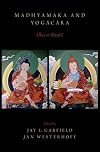
Madhyamaka and Yogacara are the two principal schools of Mahayana Buddhist philosophy. While Madhyamaka asserts the ultimate emptiness and conventional reality of all phenomena, Yogacara is usually considered to be idealistic. This collection of essays addresses the degree to which these philosophical approaches are consistent or complementary.
Indian and Tibetan doxographies often take these two schools to be philosophical rivals. They are grounded in distinct bodies of sutra literature and show more adopt what appear to be very different positions regarding the analysis of emptiness and the status of mind. Madhyamaka-Yogacara polemics abound in Indian Buddhist literature, and Tibetan doxographies regard them as distinct systems. Nonetheless, scholars have tried to synthesize the two positions for centuries. This volume offers new essays by prominent experts on both these traditions, who address the question of the degree to which these philosophical approaches should be seen as rivals or as allies. In answering the question of whether Madhyamaka and Yogacara can be considered compatible, contributors engage with a broad range of canonical literature, and relate the texts to contemporary philosophical problems. show less
Indian and Tibetan doxographies often take these two schools to be philosophical rivals. They are grounded in distinct bodies of sutra literature and show more adopt what appear to be very different positions regarding the analysis of emptiness and the status of mind. Madhyamaka-Yogacara polemics abound in Indian Buddhist literature, and Tibetan doxographies regard them as distinct systems. Nonetheless, scholars have tried to synthesize the two positions for centuries. This volume offers new essays by prominent experts on both these traditions, who address the question of the degree to which these philosophical approaches should be seen as rivals or as allies. In answering the question of whether Madhyamaka and Yogacara can be considered compatible, contributors engage with a broad range of canonical literature, and relate the texts to contemporary philosophical problems. show less
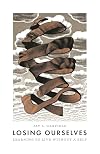
A fairly abstract, but interesting book about how we think about the sense of "the self" we carry around with us and making an argument against that sense.
How to Lose Yourself: An Ancient Guide to Letting Go (Ancient Wisdom for Modern Readers) by Jay L. Garfield
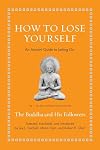
How to Lose Yourself presents translations from three Buddhist traditions: Indian, Tibetan, and Chinese. These teachings explore how releasing our attachment to the self awakens us to the true nature of all things, liberating us from the anxiety, fear, greed, and hatred that are the root causes of suffering.
The Indian selections are drawn from the Pali Canon, whilst the Tibetan passages feature Jay L. Garfield’s translations of Nagarjuna’s ‘Fundamental Verses on the Middle Way’ and show more Candrakirti’s ‘Introduction to the Middle Way’.
The Chinese Chan selections include Robert H. Sharf’s translations from ‘The Treatise on No-Mind’ (Wuxin Lun, 無心論), traditionally attributed to Bodhidharma.
I have included an extract from Bodhidharma’s work here, as it is less widely known.
Q: What is mind? How can I put my mind at peace? A: You must neither postulate a mind, nor try to compel a state of peace. That is what is called peace. Q: If there is no mind, how does one practice the Way? A: The Way is not something to be contemplated by the mind. How could the Way be in the mind? Q: If the Way is not something to be contemplated by the mind, then how should one contemplate it? A: If there is contemplation, then there is mental activity, and mental activity of any kind runs counter to the Way. When there is no contemplation, there is no mind, and no mind is the True Way. Q: Do all living beings really have minds or not? A: To believe that living beings have minds is to get things backward. It is precisely because people contrive a mind where there is none that they engender delusion.
An additional feature of How to Lose Yourself is its parallel-text format, with the original languages appearing on the left-hand page and English translations on the right. show less
The Indian selections are drawn from the Pali Canon, whilst the Tibetan passages feature Jay L. Garfield’s translations of Nagarjuna’s ‘Fundamental Verses on the Middle Way’ and show more Candrakirti’s ‘Introduction to the Middle Way’.
The Chinese Chan selections include Robert H. Sharf’s translations from ‘The Treatise on No-Mind’ (Wuxin Lun, 無心論), traditionally attributed to Bodhidharma.
I have included an extract from Bodhidharma’s work here, as it is less widely known.
Q: What is mind? How can I put my mind at peace? A: You must neither postulate a mind, nor try to compel a state of peace. That is what is called peace. Q: If there is no mind, how does one practice the Way? A: The Way is not something to be contemplated by the mind. How could the Way be in the mind? Q: If the Way is not something to be contemplated by the mind, then how should one contemplate it? A: If there is contemplation, then there is mental activity, and mental activity of any kind runs counter to the Way. When there is no contemplation, there is no mind, and no mind is the True Way. Q: Do all living beings really have minds or not? A: To believe that living beings have minds is to get things backward. It is precisely because people contrive a mind where there is none that they engender delusion.
An additional feature of How to Lose Yourself is its parallel-text format, with the original languages appearing on the left-hand page and English translations on the right. show less
Lists
You May Also Like


Associated Authors
Statistics
- Works
- 25
- Also by
- 4
- Members
- 496
- Popularity
- #49,830
- Rating
- 4.1
- Reviews
- 5
- ISBNs
- 62
- Languages
- 1
- Favorited
- 1