
Stephen Batchelor (1) (1953–)
Author of Buddhism Without Beliefs: A Contemporary Guide to Awakening
For other authors named Stephen Batchelor, see the disambiguation page.
About the Author
A former Buddhist monk, Stephen Batchelor has written several books attempting to make Buddhist accessible and understandable to the Western reader. These books include The Awakening of the West: The Encounter of Buddhist and Western Culture, and Buddhism Without Beliefs: A Contemporary Guide to show more Awakening. (Bowker Author Biography) show less
Works by Stephen Batchelor
The Awakening of the West: The Encounter of Buddhism and Western Culture (1994) 143 copies, 2 reviews
The Psychology of Awakening: Buddhism, Science, and Our Day-to-Day Lives (1999) — Editor — 92 copies, 1 review
The Jewel in the Lotus: A Guide to the Buddhist Traditions of Tibet (A Wisdom Basic Book) (1987) 56 copies, 1 review
Lost Empire of the Silk Road, Buddhist Art from Khara Khoto Xxiiith Century (1993) — Author — 8 copies
Associated Works
A Guide to the Bodhisattva Way of Life (1992) — Translator, some editions — 1,672 copies, 19 reviews
Rude Awakenings: Two Englishmen on Foot in Buddhism's Holy Land (2005) — Foreword, some editions — 59 copies, 3 reviews
Tagged
Common Knowledge
- Birthdate
- 1953-04-07
- Gender
- male
- Education
- Watford Grammar School
Tibet Institute Rikon
Rabten Choeling - Occupations
- Buddhist teacher
contributing editor - Organizations
- Tricycle Magazine
Gaia House
Tibetan Monastic Institute, Rikon, Switzerland
Library of Tibetan Works and Archives, Dharamshala, India
Bodhi College - Relationships
- Batchelor, Martine (wife)
- Nationality
- UK
- Birthplace
- Dundee, Scotland, UK
- Places of residence
- Dundee, Scotland, UK
Dharmasala, India
Rikon, Switzerland
Germany
London, England, UK
Sharpham, England, UK (show all 7)
Aquitaine, France - Map Location
- Scotland, UK
Members
Reviews
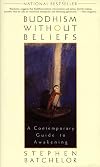
Batchelor consciously re-envisions Buddhism for the modern West, stripping it of the religious and cultural relics of the places where Buddhism has flourished and refocusing on its core messages and the needs of the West. Toward the end, Batchelor explains his view that Buddhism has been crystallized for each new civilization and historical period through the genius and imagination of a small number of people -- which is exactly what Batchelor does in this book.
Rather than on the exegesis, I show more want to riff for a moment on the prescience of worrying in 1997 that dharma practice "could end up being swallowed by something else, such as psychotherapy or contemplative Christianity". I find the clinicalization example particularly fraught, as mindfulness is a go-to treatment for anxiety, depression, and stress and a new corporate buzzword. Since much of the interest in (and trendiness of) those practices is completely divorced from wider persistent practice, I worry they will flare up and then be exhausted without the community aspect that is core to social cohesion and happiness. This book is situated around core truths -- mixing non-Buddhist ones with Buddhism -- and has lasting power because of it.
So, recommended. This is a thin book with an enormous purpose. show less
Rather than on the exegesis, I show more want to riff for a moment on the prescience of worrying in 1997 that dharma practice "could end up being swallowed by something else, such as psychotherapy or contemplative Christianity". I find the clinicalization example particularly fraught, as mindfulness is a go-to treatment for anxiety, depression, and stress and a new corporate buzzword. Since much of the interest in (and trendiness of) those practices is completely divorced from wider persistent practice, I worry they will flare up and then be exhausted without the community aspect that is core to social cohesion and happiness. This book is situated around core truths -- mixing non-Buddhist ones with Buddhism -- and has lasting power because of it.
So, recommended. This is a thin book with an enormous purpose. show less
"In this simple but important volume, Stephen Batchelor reminds us that the Buddha was not a mystic who claimed privileged, esoteric knowledge of the universe, but a man who challenged us to understand the nature of anguish, let go of its origins, and bring into being a way of life that is available to us all. What Buddha taught, says Batchelor, is not something to believe in, but something do -- and as he explains clearly and compellingly, it is a practice that we can engage in, regardless show more of our background or beliefs, as we live every day on the path to awakening."
~~back cover
I have been reading about the different styles or systems of Buddhism, and although I was intrigued, somehow I didn't get the resonance I was looking for. This book provided that resonance. the author strips away the various different belief systems within Buddhism and goes straight to the foundation: understanding the nature of anguish, learning to let go of the origins of anguish, and learning to live with the space of "I don't know." This make so much more sense to me -- a belief in the nature of humans to cling to their perception of reality which leads inevitably to anguish, and a way to unlearn that perception. No belief system, no holy beings, just a way of learning to understand. So simple, yet so difficult. show less
~~back cover
I have been reading about the different styles or systems of Buddhism, and although I was intrigued, somehow I didn't get the resonance I was looking for. This book provided that resonance. the author strips away the various different belief systems within Buddhism and goes straight to the foundation: understanding the nature of anguish, learning to let go of the origins of anguish, and learning to live with the space of "I don't know." This make so much more sense to me -- a belief in the nature of humans to cling to their perception of reality which leads inevitably to anguish, and a way to unlearn that perception. No belief system, no holy beings, just a way of learning to understand. So simple, yet so difficult. show less
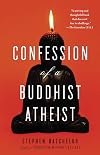
Batchelor's Confession jumped out at me as I walked by shelves at the library -- no forethought, none of my usual checking of reviews, just an orange book, into my hand, into my car.
What I want to comment most on in this book is its parallelism to and its role for Christianity. The first touchpoint is the title: Batchelor's Confession must be intended, I imagine, as an allusion or even a Western Buddhist version of Augustine's Confessions. Augustine's book tells the story of his conversion show more to Christianity and it performs some theological exegesis on core Christian beliefs, provides some spiritual meditations, and talks through Augustine's own theological insights. It was written relatively early in Christian history, and it is an important and defining text in the Christian canon, though not for most lay practitioners. Batchelor's book is very, and surprisingly, similar, mixing autobiography with explanations of Buddhist theology, and -- though this may suggest some authorial hubris if it was intentional -- I have a sense that it is intended to play a similar formative and historical role in defining and documenting the experiences and beliefs of an early Western Buddhist. (I say this because I am convinced that Buddhism will, over the course of the next hundred years and beyond, become an increasingly common presence in the West.)
The second touchpoint is on the need for a Western re-envisioning of Buddhism. Batchelor touches on this point in the book repeatedly, at one point telling the Dalai Lama a purely historical perspective on how Buddhism adapted to each new Eastern culture it came in contact with, and the Dalai Lama thinking hard about whether this perspective was valid. After some thought, the Dalai Lama rejected it, and noted that the statues they used were statues of Indian-looking people -- he didn't see the perspective that the statues always look like some vaguely exotic version of local people that was apparent to Batchelor (and me, and, I'd hazard, many of us). I had a similar experience when a Zen abbot suggested that the Western students of Zen not feel the need to abandon their own religions, but rather to take the pieces that were useful to them from the Buddhist practices and apply them simultaneously. Underlying both of these stories is a sense that a Western mindset is different, and it will have different interpretations and needs and insights into the same scriptures than those of the source communities. The abbot's approach to this cognitive dissonance was that his core religion not change for the West, but he also would not require renunciation of the core beliefs of Western Christians, Jews, atheists, and others. Batchelor's approach to this cognitive dissonance is different -- he seems to argue that a new version of Buddhism should be developed (and is implicitly being developed), which speaks to Westerners and which Westerners can wholly adopt. I am biased in favor of Batchelor's view. I suspect that the abbot's perspective is what it is because the current period is a period of transition for Buddhism, and once there is a Western version of Buddhism that has a set of beliefs and a set of communities that are fully palatable to Western sensibilities, there will be less need to argue for the acceptability of mixing and matching Western and Buddhist perspectives.
And finally, the third touchpoint regards a radical Christian theologian and philosopher Don Cupitt, whom Batchelor calls out as being more aligned to his own beliefs than any Buddhist leader. Now, I have not (yet) read any Don Cupitt, but the impression I have is that he argues for a version of Christianity that does away with a lot of the trappings that make current Westerners uncomfortable. He believes that the current Western non-religious state is more ethical in many ways that the religious teachings, and that our beliefs and actions should be based in our actual experiences rather than beliefs in an ineffable God. To me, the idea that Batchelor (who bridges Buddhism and the West from his origins as a Buddhist), and Cupitt (who bridges the West and Buddhism from his origins as a Christian) have arrived at such similar places in their theology is meaningful, and the fact that it speaks to me and others suggests that it may speak to many others, and may be the path forward for spirituality in the only-somewhat religious and very-evidence-seeking West, which continues to shed mainstream Christians and Jews as anything more than cultural believers.
This book is part autobiography, part discussion of the role of Buddhism in the West, part discussion of the source of Batchelor's beliefs about Buddhism. For theological ideas, I got the sense that many of those ideas are more directly addressed in Batchelor's other books. For this book, I would recommend it to those who are fascinated when studying the ways in which religions make truth for their cultures and adapt to their environments, and who feel connected when studying an Augustine-style personalization about how individuals connect to their religions. There's a lot to chew on here, but for me it didn't quite hang together as much as I'd have liked. (To be fair, I never liked Augustine all that much either, though again the ideas stuck with me.) show less
What I want to comment most on in this book is its parallelism to and its role for Christianity. The first touchpoint is the title: Batchelor's Confession must be intended, I imagine, as an allusion or even a Western Buddhist version of Augustine's Confessions. Augustine's book tells the story of his conversion show more to Christianity and it performs some theological exegesis on core Christian beliefs, provides some spiritual meditations, and talks through Augustine's own theological insights. It was written relatively early in Christian history, and it is an important and defining text in the Christian canon, though not for most lay practitioners. Batchelor's book is very, and surprisingly, similar, mixing autobiography with explanations of Buddhist theology, and -- though this may suggest some authorial hubris if it was intentional -- I have a sense that it is intended to play a similar formative and historical role in defining and documenting the experiences and beliefs of an early Western Buddhist. (I say this because I am convinced that Buddhism will, over the course of the next hundred years and beyond, become an increasingly common presence in the West.)
The second touchpoint is on the need for a Western re-envisioning of Buddhism. Batchelor touches on this point in the book repeatedly, at one point telling the Dalai Lama a purely historical perspective on how Buddhism adapted to each new Eastern culture it came in contact with, and the Dalai Lama thinking hard about whether this perspective was valid. After some thought, the Dalai Lama rejected it, and noted that the statues they used were statues of Indian-looking people -- he didn't see the perspective that the statues always look like some vaguely exotic version of local people that was apparent to Batchelor (and me, and, I'd hazard, many of us). I had a similar experience when a Zen abbot suggested that the Western students of Zen not feel the need to abandon their own religions, but rather to take the pieces that were useful to them from the Buddhist practices and apply them simultaneously. Underlying both of these stories is a sense that a Western mindset is different, and it will have different interpretations and needs and insights into the same scriptures than those of the source communities. The abbot's approach to this cognitive dissonance was that his core religion not change for the West, but he also would not require renunciation of the core beliefs of Western Christians, Jews, atheists, and others. Batchelor's approach to this cognitive dissonance is different -- he seems to argue that a new version of Buddhism should be developed (and is implicitly being developed), which speaks to Westerners and which Westerners can wholly adopt. I am biased in favor of Batchelor's view. I suspect that the abbot's perspective is what it is because the current period is a period of transition for Buddhism, and once there is a Western version of Buddhism that has a set of beliefs and a set of communities that are fully palatable to Western sensibilities, there will be less need to argue for the acceptability of mixing and matching Western and Buddhist perspectives.
And finally, the third touchpoint regards a radical Christian theologian and philosopher Don Cupitt, whom Batchelor calls out as being more aligned to his own beliefs than any Buddhist leader. Now, I have not (yet) read any Don Cupitt, but the impression I have is that he argues for a version of Christianity that does away with a lot of the trappings that make current Westerners uncomfortable. He believes that the current Western non-religious state is more ethical in many ways that the religious teachings, and that our beliefs and actions should be based in our actual experiences rather than beliefs in an ineffable God. To me, the idea that Batchelor (who bridges Buddhism and the West from his origins as a Buddhist), and Cupitt (who bridges the West and Buddhism from his origins as a Christian) have arrived at such similar places in their theology is meaningful, and the fact that it speaks to me and others suggests that it may speak to many others, and may be the path forward for spirituality in the only-somewhat religious and very-evidence-seeking West, which continues to shed mainstream Christians and Jews as anything more than cultural believers.
This book is part autobiography, part discussion of the role of Buddhism in the West, part discussion of the source of Batchelor's beliefs about Buddhism. For theological ideas, I got the sense that many of those ideas are more directly addressed in Batchelor's other books. For this book, I would recommend it to those who are fascinated when studying the ways in which religions make truth for their cultures and adapt to their environments, and who feel connected when studying an Augustine-style personalization about how individuals connect to their religions. There's a lot to chew on here, but for me it didn't quite hang together as much as I'd have liked. (To be fair, I never liked Augustine all that much either, though again the ideas stuck with me.) show less
It's a good book, and I generally like Stephen Batchelor. But I have two main problems with this book: 1) he tends let his poetic flourishes -- which I usually love -- get away from him, sometimes making his prose seem a bit empty. Words for the sake of words. I don't that's actually a fair assessment of the book -- it's just how I felt while reading it. And 2) -- and MUCH more importantly -- I was expecting a book on how one doesn't need to embrace Buddhism as a religion, by faith alone, show more but, while he does deliver on that score (and sometimes beautifully), he tends to take an all-or-nothing antagonistic approach to all belief systems whatsoever. So not only does he come off sounding like he's attacking all faith-based religions, he also winds up conflating "faith" with "belief," which I think is a mistake. A "belief," I was taught in all my (non-religious) philosophy classes, was something you had determined to be true through logical deduction; it is mutable, because if, through logical challenge, that belief gets proven untrue, you change the belief, but it still is rooted in whatever logic you have access to at the time you adopted the belief. That is NOT the same thing as faith, which, as anyone who's seen Miracle on 34th Street can tell you, is believing in something IN THE ABSENCE of critical thinking and logical analysis. That Batchelor is attacking any approach to Buddhism seems a bit strange to me, but I get why -- he's acting as a kind of "wrathful deity" lashing out at misguided beliefs, as any good philosopher would do. What Batchelor intends to attack in this book is lay Buddhism's evolution into exactly the kind of blind faith-based religion the historical Buddha was trying to move away from, full of "magic" ritual and authoritarian dogma. But what he winds up attacking is any sense of believing in anything; his approach is a stark, almost angry agnosticism. And what I keep wondering is, if we can't take anything on authority -- from the teachings, say, or from the teachers -- then what do we mean when we say we take refuge in the Buddha, the Dharma, and the Sangha? What is refuge if not a kind of belief?
So, the book is fascinating to read and terrific fodder for hard thinking, but ultimately, it kind of falls flat for me. I miss the poetic language of his other books, where he seems almost in love with Buddhism. show less
So, the book is fascinating to read and terrific fodder for hard thinking, but ultimately, it kind of falls flat for me. I miss the poetic language of his other books, where he seems almost in love with Buddhism. show less
Lists
You May Also Like


Associated Authors
Statistics
- Works
- 21
- Also by
- 8
- Members
- 4,062
- Popularity
- #6,196
- Rating
- 4.0
- Reviews
- 80
- ISBNs
- 105
- Languages
- 8
- Favorited
- 2
