
Nick Groom
Author of The Gothic: A Very Short Introduction
About the Author
Nick Groom traces the true origins of the vampire: from the Enlightenment, when the creature embodied human fears about the theology, philosophy, medicine, and science, to more recent times, when it emerged as an unlikely hero of the marginalized and exclude.
Works by Nick Groom
Associated Works
Tagged
Common Knowledge
- Canonical name
- Groom, Nick
- Legal name
- Groom, Nicholas Michael
- Birthdate
- 1966
- Gender
- male
- Education
- Bedford Modern School
University of Oxford (Hertford College) - Occupations
- Professor of English Literature
- Organizations
- University of Exeter
- Short biography
- Nicholas Michael Groom FRSA (born 1966) is Professor of English Literature at the University of Exeter, an author on subjects ranging from the history of the Union Jack to Thomas Chatterton, has edited several books and regularly appears on television, radio and at literary festivals as an authority on English Literature, seasonal customs, J. R. R. Tolkien, the ‘Gothic’ and ‘British’ and 'English' identities. Due to his extensive work on the Gothic, especially on the history of vampires, he has become known as the 'Prof of Goth' in the media and has written several articles on the Goth scene, including essays on the singer, Nick Cave.
https://en.wikipedia.org/wiki/Nick_Gro... - Nationality
- UK
- Places of residence
- Dartmoor, Devon, England, UK
- Associated Place (for map)
- England, UK
Members
Reviews
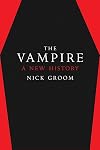
I became disappointed with this book as it progressed. My go-to text on the history of the vampire has always been Paul Barber's close-to-definitive 1988 book 'Vampires, Burial and Death', also published by Yale, so I was expecting something that might replace it nearly forty years later.
This is not to say that Groom's 'new history' does not add a lot of new material but it falls into two types - the factual which is very useful and the theoretical which is much less so. The theoretical show more involves far too much 'interpretation' sometimes based on academic over-thinking.
If I was ever to come across a vampire (which I admit is extremely unlikely) I would want Barber by my side although Groom might be very useful if I ever find myself with someone claiming to be one (which is quite likely given the strange circles I move in).
Let us deal with the positives. Groom is concerned not with the 'thing-in-itself' (the imagined vampire as presence) but with the idea or ideology of vampires and vampires - how the vampire was culturally created leading to the central text, the Testament, which is Bram Stoker's 'Dracula'.
The baseline history is, of course, well known - I recommend Christopher Frayling's collection of texts and commentary 'Vampyres' [the Second Edition of 1991] as sufficient guide - but Groom's deep research gives us much more detail on the cultural history and the meaning of 'vampire'.
The first half of the book is intelligent and even exciting as he traces how a confusion of folkloric beliefs get shaped into a cultural phenomenon in which the thing 'becomes' and has to be explained away against the elite beliefs and anxieties of the time.
Similarly, although there is some distressing overthinking going on by this point, the culmination of this process and its adoption by the romantic movement and as metaphor is made into the 'ultimate literary thing' which Stoker created for us in a masterwork of research and imagination - 'Dracula'.
Where it begins to slide is at that point where there is confusion between the metaphorical appropriation of the vampire (as cultural tool and weapon) and respect for the idea or the thing in itself. These two are very different phenomena and should not be confused.
The point of inflexion is the political use of vampirism in the revolutionary war against capitalism. Capitalism is another idea that has become a 'thing' and it has no more fundamental reality than does the vampire, a point that should have been made.
The malign depressive anti-capitalist influence of Mark Fisher and of continental philosophy seems to intrude at this point with a nod to other fashionable theories like eco-criticism and feminism. Fine but these tell us little about the vampire only about what the vampire should be and is not.
It is interesting how the metaphor has been used in history but this is supposed to be a history of the vampire and not of social or cultural warfare deploying the vampire. The exploration of the vampire as it was and is are what should matter. The theory should be critiqued, not accepted.
It is also somewhat hackneyed territory. Bit by bit Groom (admittedly showing some restraint) starts to take over-seriously the work of those whose profession is to find things that may not be there as Gothic Studies, eco-criticism, feminist studies or whatever.
To his credit he pushes aside over-excitable post-colonial theory about Dracula as the imperial 'other' and some similar recently fashionable ideas but always in passing and oddly without much argument. It is as if he feels obliged to make obeisance to the rest of the tribe and upset no one.
The historian of literature and ideas thus gets steadily displaced by the indirect ideological necessities of contemporary academia. The narrative starts to collapse because the use of the vampire for ulterior purposes is not separated clearly from attempts at understanding and explaining it as it is.
Of course, the boundary between the two is in the grey zone but it should be clear which side actually holds territory - is the vampire being used for a purpose or is the vampire to be understood in more existential terms, as a problem in itself, as it was in the eighteenth century?
As I read the book, I was gratified that for once an academic did not mention Brexit. I thought we might even get away without eco-criticism until the penultimate page introduced us to vampires posing questions of conservation and ecology ... er, really. I can see the nod to the students!
The book closes with a reference to the potato that was so risible (a nod to the anti-colonialists) that I swear that Groom must have been taking the piss. The vampire is, apparently, as political as the potato in the context of the Irish origins of one Bram Stoker. This is stretching it a bit to say the least.
The memetics of vampirism need to be carefully separated from the investigation of the thing, the phenomenon, whether believed to be real vampires, or vampirism as existential to a belief system or vampirism as expression of existential psychological turmoil or meaning.
When Karl Marx uses vampirism none of these apply - he does not believe they are real, vampires are not existential to scientific materialism and none of his writings use vampires to express something existentially important to the individual or society. It is just a trope.
At the other end of the scale, trying to pull current ideological concerns out of past beliefs or needs is almost insulting to those who lived in the past. It is like telling them we can know their minds better than they can. It is political and ideological and so not serious. Some humility is in order.
I have absolutely no problem with theory and interpretation but it needs flagging up and separating from 'history proper'. The boundaries between categories must be made more clear. Imposing the thought patterns of today uncritically on the past is always problematic.
At the end of the day, if you no longer believe in the possibility of the vampire, then the vampire can only be a tool or weapon for polemic use or an entertainment although, as entertainment, it sometimes still reaches into something existentially important that is still rarely discussed.
'Twilight' or 'Interview with a Vampire' remain far more interesting than academic theory about the vampire's meaning to conservation and ecology unless we are prepared to be as objectively critical about current ideological forms as we are about those of the eighteenth century.
We should not be taking (say) feminist, eco-critical, intersectional or colonial studies at face value as true any more than we take Jesuit, Calvinist or philosophe views of vampires at face value. They must be described objectively and not 'believed' in. Academic detachment is lacking about itself.
Above all, we should recognise that something was at stake for the eighteenth century in whether vampires did or did not exist. There is little at stake except careers in twentieth and twenty-first century explorations but then maybe careers class as existential.
To be fair, Groom more than once reaches a little deeper into psychological territory through his intelligent reading of literature (when he can shake off the ideologues) but it would have been good to have had more than that and less of the memetics and nods to contemporary theory.
The book stays in the library because the research on new facts (with voluminous foot notes), the appreciation of 'Dracula' and the analyses of what vampirism meant until it was no longer believed in and became fully metaphorical is well worth reading.
The disappointment is only in this shift from taking the vampire seriously as existential risk and as an artistic guide to sometimes inexpressible human anxieties towards its over-thought or cavalier brute use in struggles where modern ideology is almost certainly privileged over past lived life.
If there is a grumpiness in my review, it is because I am getting a tired of spending money on books where excellent and detailed research that informs has to be overlaid with interpretative theory where either the moods of the author or the politics of the academy show through. show less
This is not to say that Groom's 'new history' does not add a lot of new material but it falls into two types - the factual which is very useful and the theoretical which is much less so. The theoretical show more involves far too much 'interpretation' sometimes based on academic over-thinking.
If I was ever to come across a vampire (which I admit is extremely unlikely) I would want Barber by my side although Groom might be very useful if I ever find myself with someone claiming to be one (which is quite likely given the strange circles I move in).
Let us deal with the positives. Groom is concerned not with the 'thing-in-itself' (the imagined vampire as presence) but with the idea or ideology of vampires and vampires - how the vampire was culturally created leading to the central text, the Testament, which is Bram Stoker's 'Dracula'.
The baseline history is, of course, well known - I recommend Christopher Frayling's collection of texts and commentary 'Vampyres' [the Second Edition of 1991] as sufficient guide - but Groom's deep research gives us much more detail on the cultural history and the meaning of 'vampire'.
The first half of the book is intelligent and even exciting as he traces how a confusion of folkloric beliefs get shaped into a cultural phenomenon in which the thing 'becomes' and has to be explained away against the elite beliefs and anxieties of the time.
Similarly, although there is some distressing overthinking going on by this point, the culmination of this process and its adoption by the romantic movement and as metaphor is made into the 'ultimate literary thing' which Stoker created for us in a masterwork of research and imagination - 'Dracula'.
Where it begins to slide is at that point where there is confusion between the metaphorical appropriation of the vampire (as cultural tool and weapon) and respect for the idea or the thing in itself. These two are very different phenomena and should not be confused.
The point of inflexion is the political use of vampirism in the revolutionary war against capitalism. Capitalism is another idea that has become a 'thing' and it has no more fundamental reality than does the vampire, a point that should have been made.
The malign depressive anti-capitalist influence of Mark Fisher and of continental philosophy seems to intrude at this point with a nod to other fashionable theories like eco-criticism and feminism. Fine but these tell us little about the vampire only about what the vampire should be and is not.
It is interesting how the metaphor has been used in history but this is supposed to be a history of the vampire and not of social or cultural warfare deploying the vampire. The exploration of the vampire as it was and is are what should matter. The theory should be critiqued, not accepted.
It is also somewhat hackneyed territory. Bit by bit Groom (admittedly showing some restraint) starts to take over-seriously the work of those whose profession is to find things that may not be there as Gothic Studies, eco-criticism, feminist studies or whatever.
To his credit he pushes aside over-excitable post-colonial theory about Dracula as the imperial 'other' and some similar recently fashionable ideas but always in passing and oddly without much argument. It is as if he feels obliged to make obeisance to the rest of the tribe and upset no one.
The historian of literature and ideas thus gets steadily displaced by the indirect ideological necessities of contemporary academia. The narrative starts to collapse because the use of the vampire for ulterior purposes is not separated clearly from attempts at understanding and explaining it as it is.
Of course, the boundary between the two is in the grey zone but it should be clear which side actually holds territory - is the vampire being used for a purpose or is the vampire to be understood in more existential terms, as a problem in itself, as it was in the eighteenth century?
As I read the book, I was gratified that for once an academic did not mention Brexit. I thought we might even get away without eco-criticism until the penultimate page introduced us to vampires posing questions of conservation and ecology ... er, really. I can see the nod to the students!
The book closes with a reference to the potato that was so risible (a nod to the anti-colonialists) that I swear that Groom must have been taking the piss. The vampire is, apparently, as political as the potato in the context of the Irish origins of one Bram Stoker. This is stretching it a bit to say the least.
The memetics of vampirism need to be carefully separated from the investigation of the thing, the phenomenon, whether believed to be real vampires, or vampirism as existential to a belief system or vampirism as expression of existential psychological turmoil or meaning.
When Karl Marx uses vampirism none of these apply - he does not believe they are real, vampires are not existential to scientific materialism and none of his writings use vampires to express something existentially important to the individual or society. It is just a trope.
At the other end of the scale, trying to pull current ideological concerns out of past beliefs or needs is almost insulting to those who lived in the past. It is like telling them we can know their minds better than they can. It is political and ideological and so not serious. Some humility is in order.
I have absolutely no problem with theory and interpretation but it needs flagging up and separating from 'history proper'. The boundaries between categories must be made more clear. Imposing the thought patterns of today uncritically on the past is always problematic.
At the end of the day, if you no longer believe in the possibility of the vampire, then the vampire can only be a tool or weapon for polemic use or an entertainment although, as entertainment, it sometimes still reaches into something existentially important that is still rarely discussed.
'Twilight' or 'Interview with a Vampire' remain far more interesting than academic theory about the vampire's meaning to conservation and ecology unless we are prepared to be as objectively critical about current ideological forms as we are about those of the eighteenth century.
We should not be taking (say) feminist, eco-critical, intersectional or colonial studies at face value as true any more than we take Jesuit, Calvinist or philosophe views of vampires at face value. They must be described objectively and not 'believed' in. Academic detachment is lacking about itself.
Above all, we should recognise that something was at stake for the eighteenth century in whether vampires did or did not exist. There is little at stake except careers in twentieth and twenty-first century explorations but then maybe careers class as existential.
To be fair, Groom more than once reaches a little deeper into psychological territory through his intelligent reading of literature (when he can shake off the ideologues) but it would have been good to have had more than that and less of the memetics and nods to contemporary theory.
The book stays in the library because the research on new facts (with voluminous foot notes), the appreciation of 'Dracula' and the analyses of what vampirism meant until it was no longer believed in and became fully metaphorical is well worth reading.
The disappointment is only in this shift from taking the vampire seriously as existential risk and as an artistic guide to sometimes inexpressible human anxieties towards its over-thought or cavalier brute use in struggles where modern ideology is almost certainly privileged over past lived life.
If there is a grumpiness in my review, it is because I am getting a tired of spending money on books where excellent and detailed research that informs has to be overlaid with interpretative theory where either the moods of the author or the politics of the academy show through. show less
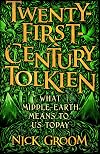
I thoroughly enjoyed that!
If I say it's 5⭐ then that's from a Tolkienista perspective, so you'll need to judge for yourself how trustworthy you find my rating 😏
Groom has interesting perspectives on Tolkien's process, intent and legacy. I found it most engaging when dealing with Tolkien's life and works, the chapters on other adaptations, principally Peter Jackson's films, marginally less so, though I'll return to the Hobbit films more open-mindedly.
If I say it's 5⭐ then that's from a Tolkienista perspective, so you'll need to judge for yourself how trustworthy you find my rating 😏
Groom has interesting perspectives on Tolkien's process, intent and legacy. I found it most engaging when dealing with Tolkien's life and works, the chapters on other adaptations, principally Peter Jackson's films, marginally less so, though I'll return to the Hobbit films more open-mindedly.
This review is written with a GPL 4.0 license and the rights contained therein shall supersede all TOS by any and all websites in regards to copying and sharing without proper authorization and permissions. Crossposted at WordPress, Blogspot & Librarything by Bookstooge’s Exalted Permission
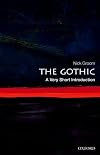
Title: The Gothic
Series: A Very Short Introduction
Author: Nick Groom
Rating: 3.5 of 5 Stars
Genre: Non-Fiction
Pages: 167
Words: 46.5K
Synopsis:
From Libraything.com
The Gothic is wildly diverse. It can refer show more to ecclesiastical architecture, supernatural fiction, cult horror films, and a distinctive style of rock music. It has influenced political theorists and social reformers, as well as Victorian home décor and contemporary fashion. Nick Groom shows how the Gothic has come to encompass so many meanings by telling the story of the Gothic from the ancient tribe who sacked Rome to the alternative subculture of the present day.
This unique Very Short Introduction reveals that the Gothic has predominantly been a way of understanding and responding to the past. Time after time, the Gothic has been invoked in order to reveal what lies behind conventional history. It is a way of disclosing secrets, whether in the constitutional politics of seventeenth-century England or the racial politics of the United States. While contexts change, the Gothic perpetually regards the past with fascination, both yearning and horrified. It reminds us that neither societies nor individuals can escape the consequences of their actions.
The anatomy of the Gothic is richly complex and perversely contradictory, and so the thirteen chapters here range deliberately widely. This is the first time that the entire story of the Gothic has been written as a continuous history: from the historians of late antiquity to the gardens of Georgian England, from the mediaeval cult of the macabre to German Expressionist cinema, from Elizabethan Revenge Tragedy to American consumer society, from folk ballads to vampires, from the past to the present.
My Thoughts:
This book gives me hope for this series. Of course, it may just be that the author thinks in the same patterns I do and that that is what I found engaging about this book. Whatever it was, this is the VSI book that I'll be comparing the rest of the series to until I find a better one.
I was fascinated with how Groom connects the dots from the Goth tribes (and gives us a glimpse into the fight among historians about what that even means) to the Gothic arctitecture to how that falling out of favor led to the gothic novel and how the ideas behind those novels leads to the music bands of today. I don't know how solidly his workmanship would stand up if I had doctorates of one sort or another, but as an Introduction, this was everything I could have asked for.
I used the word “fascinating” and I think that pretty much describes my reaction to the whole book. Groom explores the ideas and philosophies behind each phase of The Gothic (and you know how weird it sounds to add the capital “The” every time? Makes me feel that I need to sound a trumpet and shout “The Gothic” has entered the room!”) and how one slowly melded into the next. The whole cause and effect is what I liked about this book.
In short, a top notch entry in the VSI series and a great read even if you have no interest in …. (wait for it.... * trumpets *) The Gothic!
★★★☆½ show less
Title: The Gothic
Series: A Very Short Introduction
Author: Nick Groom
Rating: 3.5 of 5 Stars
Genre: Non-Fiction
Pages: 167
Words: 46.5K
Synopsis:
From Libraything.com
The Gothic is wildly diverse. It can refer show more to ecclesiastical architecture, supernatural fiction, cult horror films, and a distinctive style of rock music. It has influenced political theorists and social reformers, as well as Victorian home décor and contemporary fashion. Nick Groom shows how the Gothic has come to encompass so many meanings by telling the story of the Gothic from the ancient tribe who sacked Rome to the alternative subculture of the present day.
This unique Very Short Introduction reveals that the Gothic has predominantly been a way of understanding and responding to the past. Time after time, the Gothic has been invoked in order to reveal what lies behind conventional history. It is a way of disclosing secrets, whether in the constitutional politics of seventeenth-century England or the racial politics of the United States. While contexts change, the Gothic perpetually regards the past with fascination, both yearning and horrified. It reminds us that neither societies nor individuals can escape the consequences of their actions.
The anatomy of the Gothic is richly complex and perversely contradictory, and so the thirteen chapters here range deliberately widely. This is the first time that the entire story of the Gothic has been written as a continuous history: from the historians of late antiquity to the gardens of Georgian England, from the mediaeval cult of the macabre to German Expressionist cinema, from Elizabethan Revenge Tragedy to American consumer society, from folk ballads to vampires, from the past to the present.
My Thoughts:
This book gives me hope for this series. Of course, it may just be that the author thinks in the same patterns I do and that that is what I found engaging about this book. Whatever it was, this is the VSI book that I'll be comparing the rest of the series to until I find a better one.
I was fascinated with how Groom connects the dots from the Goth tribes (and gives us a glimpse into the fight among historians about what that even means) to the Gothic arctitecture to how that falling out of favor led to the gothic novel and how the ideas behind those novels leads to the music bands of today. I don't know how solidly his workmanship would stand up if I had doctorates of one sort or another, but as an Introduction, this was everything I could have asked for.
I used the word “fascinating” and I think that pretty much describes my reaction to the whole book. Groom explores the ideas and philosophies behind each phase of The Gothic (and you know how weird it sounds to add the capital “The” every time? Makes me feel that I need to sound a trumpet and shout “The Gothic” has entered the room!”) and how one slowly melded into the next. The whole cause and effect is what I liked about this book.
In short, a top notch entry in the VSI series and a great read even if you have no interest in …. (wait for it.... * trumpets *) The Gothic!
★★★☆½ show less

This book traces the word gothic and all the groups and movements that have been associated with it throughout history, from migration-period Germanic tribes to present-day horror movies, American Gothic, and goths. I was familiar with the broad outline of the story (Goths > non-Italian styles coming in from north of the alps > medieval > horror with medieval-style trappings > creepy stylish horror), but this book focused that view and added a few steps.
In particular, Groom argues that show more Early Modern book collections of protestant tales of gruesome persecutions (to counter Catholic saints’ lives) were instrumental in connecting the horror aspects to the notion of the Gothic. While very interesting -- I knew nothing about this -- that chapter dragged a little, though. Groom also delves into political debates of the 17th and 18th centuries, highlighting the use of gothic as a term for homegrown, nationalistic attitudes (as opposed to Mediterranean or Roman-legacy). The focus, annoyingly, is laser-focused on England; whatever was going on on the Continent earns barely a mention.
Groom develops a view of 'the gothic' as broadly a counter-cultural one, which allows him to unite all the disparate movements that have been called ‘gothic’ under a single viewpoint. I’m not so sure if that is a useful way of looking at it, but I guess that is where the book moves into LitCrit territory instead of History. It’s an interesting perspective, and one that allows Groom to tie in many things that I would not necessarily have termed gothic: Lovecraft and pseudo-rebellious horror aficionados, to name only a few more or less contemporary examples.
Still: this book does more than simply enumerate and it tries to tie up its various threads into a single, red-coloured plait. And that is precisely the job that a trained literary historian should do in a book like this. show less
In particular, Groom argues that show more Early Modern book collections of protestant tales of gruesome persecutions (to counter Catholic saints’ lives) were instrumental in connecting the horror aspects to the notion of the Gothic. While very interesting -- I knew nothing about this -- that chapter dragged a little, though. Groom also delves into political debates of the 17th and 18th centuries, highlighting the use of gothic as a term for homegrown, nationalistic attitudes (as opposed to Mediterranean or Roman-legacy). The focus, annoyingly, is laser-focused on England; whatever was going on on the Continent earns barely a mention.
Groom develops a view of 'the gothic' as broadly a counter-cultural one, which allows him to unite all the disparate movements that have been called ‘gothic’ under a single viewpoint. I’m not so sure if that is a useful way of looking at it, but I guess that is where the book moves into LitCrit territory instead of History. It’s an interesting perspective, and one that allows Groom to tie in many things that I would not necessarily have termed gothic: Lovecraft and pseudo-rebellious horror aficionados, to name only a few more or less contemporary examples.
Still: this book does more than simply enumerate and it tries to tie up its various threads into a single, red-coloured plait. And that is precisely the job that a trained literary historian should do in a book like this. show less
Lists
Awards


You May Also Like


Associated Authors
Statistics
- Works
- 13
- Also by
- 7
- Members
- 657
- Popularity
- #38,399
- Rating
- 3.5
- Reviews
- 10
- ISBNs
- 40
- Languages
- 4