

Amy Jacques Garvey
Author of Africa for Africans; Or, The Philosophy and Opinions of Marcus Garvey
About the Author
Works by Amy Jacques Garvey
The Philosophy and Opinions of Marcus Garvey: Or, Africa for the Africans, Volumes 1 & 2 (2022) 1 copy
Garvery & garveyism 1 copy
Black Power 1 copy
Associated Works
Words of Fire: An Anthology of African-American Feminist Thought (1995) — Contributor — 265 copies, 1 review
Tagged
Common Knowledge
There is no Common Knowledge data for this author yet. You can help.
Members
Reviews
The Philosophy and Opinions of Marcus Garvey, Or, Africa for the Africans (The New Marcus Garvey Library, No. 9) by Marcus Garvey
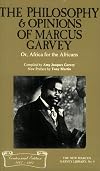
In 1919 the militant Marcus Garvey, president and founder of the Universal Negro Improvement Association (UNIA) created the Black Star Line, a shipping company whose goal was to help black people wishing for it to leave the racist USA to go and settle in Africa. To do so, obviously, he needed ships; and so he encouraged members of his associations to mail him money for investments. All went well, until one of those ship never got sold to him, investors lost their money, and the transaction show more went bust. Since it had all been made through mail, he was accused of fraud and sentenced to five years in prison. So much for the big dream!
The case was crucial, for it crystallised opinions regarding his person. Was he a genuine militant at the service of 'his' people, but so naïve an utopian that he got ripped by unscrupulous business men? Or just a scammer finally caught for his cheats? Once in jail, his wife Amy Jacques Garvey decided to fight for his honour: she went on to publish his speeches, letters, and notes to show who he truly was, his thoughts, his dream. The first volume of such endeavour was published in 1923, the second in 1925, both are here reunited in one single tome. Here we go: the ideas of one of the most famous (infamous?) Black man then alive...
For him it all started from a simple statement of fact: white people will never consider black people as their equals. Whose fighting for integration are, as far as he is concerned, mere uncle Toms; naïve, meek, clueless when it comes to racial issues. W. E. Du Bois, especially, gets criticised mercilessly... The solution, for him, lies in fact in segregation. If all 'races' are equal and capable of cooperating when necessary (eg trade) they must not mixed with each other, less interbreed. You get it: here's racism, defended by someone who should have known better. There is no excuse - when W.E. Du Bois is labelled 'a monstrosity' for being mixed race, or, again, you remember his negotiations with the KKK, you guess what to expect of his 'opinions'...
His ideas, for sure, are shocking and populist. However, one have to put them back into the context of their time. First, his racism. Being Jamaican, he just transplanted the mindset of a British colony, obsessed with skin colours and race, to the USA. Then, on the racial issue in America. The Reconstruction era was undeniably an utter failure; even decades later, during WWI, when black people went on to fight and die in Europe for their country it changed absolutely nothing for their rights back home. As such, his views were surely simplistic and crass, but they reflected a then boiling anger and frustration. Hence the reason he supported anti-colonial movements. Hence the reason why he would support the ideal of colonising Liberia. Hence the reason why the 'Back to Africa' exodus will have its share of popularity and gain some sort of momentum.
Populist leader and entrepreneur at the head of a movement that will count hundred of thousand of members worldwide, it's quite obvious he was considered as a problem - both for white segregationists, and, black people who had nothing to do with such delusion but campaigned for integration. His trial (those transcripts are reproduced in here) were then the perfect opportunity to get rid of him. Cunny politics surely, but then what? In my opinion, there's not much to gain from this book. It's long -more than 500 pages- and unsurprisingly and boringly repetitive. He nails his 'philosophy' again and again, the same points bashed like an old refrain which shows, bottom line, how poor his ideas truly were. Populism is an intellectual vacuum, whether black or white, regardless of the context. He played upon prejudice, especially racist, he could then, ultimately, only failed.
Here's a must read to understand him, but don't expect something deep and challenging! show less
The case was crucial, for it crystallised opinions regarding his person. Was he a genuine militant at the service of 'his' people, but so naïve an utopian that he got ripped by unscrupulous business men? Or just a scammer finally caught for his cheats? Once in jail, his wife Amy Jacques Garvey decided to fight for his honour: she went on to publish his speeches, letters, and notes to show who he truly was, his thoughts, his dream. The first volume of such endeavour was published in 1923, the second in 1925, both are here reunited in one single tome. Here we go: the ideas of one of the most famous (infamous?) Black man then alive...
For him it all started from a simple statement of fact: white people will never consider black people as their equals. Whose fighting for integration are, as far as he is concerned, mere uncle Toms; naïve, meek, clueless when it comes to racial issues. W. E. Du Bois, especially, gets criticised mercilessly... The solution, for him, lies in fact in segregation. If all 'races' are equal and capable of cooperating when necessary (eg trade) they must not mixed with each other, less interbreed. You get it: here's racism, defended by someone who should have known better. There is no excuse - when W.E. Du Bois is labelled 'a monstrosity' for being mixed race, or, again, you remember his negotiations with the KKK, you guess what to expect of his 'opinions'...
His ideas, for sure, are shocking and populist. However, one have to put them back into the context of their time. First, his racism. Being Jamaican, he just transplanted the mindset of a British colony, obsessed with skin colours and race, to the USA. Then, on the racial issue in America. The Reconstruction era was undeniably an utter failure; even decades later, during WWI, when black people went on to fight and die in Europe for their country it changed absolutely nothing for their rights back home. As such, his views were surely simplistic and crass, but they reflected a then boiling anger and frustration. Hence the reason he supported anti-colonial movements. Hence the reason why he would support the ideal of colonising Liberia. Hence the reason why the 'Back to Africa' exodus will have its share of popularity and gain some sort of momentum.
Populist leader and entrepreneur at the head of a movement that will count hundred of thousand of members worldwide, it's quite obvious he was considered as a problem - both for white segregationists, and, black people who had nothing to do with such delusion but campaigned for integration. His trial (those transcripts are reproduced in here) were then the perfect opportunity to get rid of him. Cunny politics surely, but then what? In my opinion, there's not much to gain from this book. It's long -more than 500 pages- and unsurprisingly and boringly repetitive. He nails his 'philosophy' again and again, the same points bashed like an old refrain which shows, bottom line, how poor his ideas truly were. Populism is an intellectual vacuum, whether black or white, regardless of the context. He played upon prejudice, especially racist, he could then, ultimately, only failed.
Here's a must read to understand him, but don't expect something deep and challenging! show less
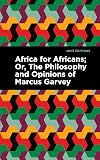
I received this book through the Early Reviewers program not knowing what the book is about, really. I picked it because I saw Africa in the title & Africa is a place that I don't know enough about. Well, the book is only marginally about Africa and mostly about how African-Americans and their struggle for equality. I had never heard of Marcus Garvey or the Universal Negro Improvement Association before reading the book and that is a shame.
Marcus Garvey was a Black Jamaican who founded the show more Universal Negro Improvement Association and they were "competitors" (for lack of a better word) with W.E.B. Du Bois and the National Association for Advancement of Colored People. I knew about Du Bois and that he has fallen out of favor with historians for reasons that I wasn't clear on before reading the book, and you have to live under a rock to live in the USA and not know about the NAACP.
Personally, I would classify Garvey and Du Bois as both racist/colorist by modern standards. Garvey disdained light-skinned blacks and advocated segregation and racial purity laws to keep Black people black. Du Bois actively discriminated against dark-skinned Blacks and the NAACP in the early 1900s had only people who could pass as white as their public representatives.
In this book, Garvey advocates for Black people to immigrate to Africa and to improve the standard of living in Africa to better than Europe/America. He doesn't see any way for true equality to happen without Africa becoming THE world power or at least equivalent to the white world. He was writing this in the 1920s and it's debatable whether it is true. I think that he would have been shocked to find out that Obama became the president before Africa became either an economic or military powerhouse. Colonialism was thrown off....but replaced with corruption. Garvey talks about the corruption during his time and not much has changed. I'm hopeful that the internet and the free exchange of information about who's corrupt will eventually bring about a more just society in Africa. Africa has truly immense potential that is just being wasted; the natural and human resources of Africa are being squandered currently.
What has aged well is his opinion that the Great War (World War I) was going to lead to World War II because of the punitive nature of the "peace" deal. Garvey really understands that revenge doesn't take you to good places.
I didn't read the entire book; half of it is a transcript of the trial where he was framed for a crime he didn't commit. The US government now acknowledges that he was innocent and that the forces of racism and politics combined to send him to jail and then deported. The first half of the book is a series of short sermons, speeches, letters, and essays that I found quite enlightening, even though I disagree with him on many points.
His anti-miscegenation screeds sound entirely too much like the racist BS that white supremacists write, though he writes from a Black supremacist view. Black is beautiful, brown is beautiful, and white is beautiful. The very dark skin of a South Sudanese person is stunning and I appreciate it very much. However, it is not better or worse than any other shade of skin and one should celebrate and enjoy the color of skin that God chooses for them. It is my hope that racism will slowly die out due to so many mixed-race couples and children and the inability to determine through appearances what race a person is. (After all, the idea of different races is extremely unscientific. We have no race categories for Arabic people, Sri Lankans, indigenous Australians, Nepalese, Hispanic people, etc., etc. Lumping an Inuit with a Waodani is hardly scientific. The most "scientific" we can get is different ethnicities, though that is a very fluid category with most white Americans and Brits/French/Germans being quite the mutts.)
I recommend this book to anyone who wants to learn more about the civil rights movement and Black history from a primary source. I don't agree with his philosophy and opinions fully, but I believe that it is very useful for scholars and philosophers and historians to understand that era.
Since this book is now out of copyright and the book publisher is a new one, I should probably also provide a review of the Mint Editions binding. Mint Editions is printing books on demand. What I received was a POD hardcover. When you look at the book closely, you can tell that a softcover book was glued into a hardcover jacket. There is no fabric on the spine of the book and it is not sewn together. I don't think that the binding will hold up as well as a sewn binding. The hardcover itself feels very nice & sturdy. It's most certainly better than a softcover, but probably not as durable as a hardcover if you are going to be frequently using the book. show less
Marcus Garvey was a Black Jamaican who founded the show more Universal Negro Improvement Association and they were "competitors" (for lack of a better word) with W.E.B. Du Bois and the National Association for Advancement of Colored People. I knew about Du Bois and that he has fallen out of favor with historians for reasons that I wasn't clear on before reading the book, and you have to live under a rock to live in the USA and not know about the NAACP.
Personally, I would classify Garvey and Du Bois as both racist/colorist by modern standards. Garvey disdained light-skinned blacks and advocated segregation and racial purity laws to keep Black people black. Du Bois actively discriminated against dark-skinned Blacks and the NAACP in the early 1900s had only people who could pass as white as their public representatives.
In this book, Garvey advocates for Black people to immigrate to Africa and to improve the standard of living in Africa to better than Europe/America. He doesn't see any way for true equality to happen without Africa becoming THE world power or at least equivalent to the white world. He was writing this in the 1920s and it's debatable whether it is true. I think that he would have been shocked to find out that Obama became the president before Africa became either an economic or military powerhouse. Colonialism was thrown off....but replaced with corruption. Garvey talks about the corruption during his time and not much has changed. I'm hopeful that the internet and the free exchange of information about who's corrupt will eventually bring about a more just society in Africa. Africa has truly immense potential that is just being wasted; the natural and human resources of Africa are being squandered currently.
What has aged well is his opinion that the Great War (World War I) was going to lead to World War II because of the punitive nature of the "peace" deal. Garvey really understands that revenge doesn't take you to good places.
I didn't read the entire book; half of it is a transcript of the trial where he was framed for a crime he didn't commit. The US government now acknowledges that he was innocent and that the forces of racism and politics combined to send him to jail and then deported. The first half of the book is a series of short sermons, speeches, letters, and essays that I found quite enlightening, even though I disagree with him on many points.
His anti-miscegenation screeds sound entirely too much like the racist BS that white supremacists write, though he writes from a Black supremacist view. Black is beautiful, brown is beautiful, and white is beautiful. The very dark skin of a South Sudanese person is stunning and I appreciate it very much. However, it is not better or worse than any other shade of skin and one should celebrate and enjoy the color of skin that God chooses for them. It is my hope that racism will slowly die out due to so many mixed-race couples and children and the inability to determine through appearances what race a person is. (After all, the idea of different races is extremely unscientific. We have no race categories for Arabic people, Sri Lankans, indigenous Australians, Nepalese, Hispanic people, etc., etc. Lumping an Inuit with a Waodani is hardly scientific. The most "scientific" we can get is different ethnicities, though that is a very fluid category with most white Americans and Brits/French/Germans being quite the mutts.)
I recommend this book to anyone who wants to learn more about the civil rights movement and Black history from a primary source. I don't agree with his philosophy and opinions fully, but I believe that it is very useful for scholars and philosophers and historians to understand that era.
Since this book is now out of copyright and the book publisher is a new one, I should probably also provide a review of the Mint Editions binding. Mint Editions is printing books on demand. What I received was a POD hardcover. When you look at the book closely, you can tell that a softcover book was glued into a hardcover jacket. There is no fabric on the spine of the book and it is not sewn together. I don't think that the binding will hold up as well as a sewn binding. The hardcover itself feels very nice & sturdy. It's most certainly better than a softcover, but probably not as durable as a hardcover if you are going to be frequently using the book. show less
 This review was written for LibraryThing Early Reviewers.
I'm reviewing the Mint Editions version of this book, which contains all of the original material, i.e., about 550 pages of Garvey's essays. The book in any edition is phenomenal for anyone researching Garvey's life & thought but this edition is a beautifully bound hardback with a one-page introduction warning readers that Garvey's writings may not always be the easiest pill for some to swallow. I'll let you find out why -- it's all about context. So, while Garvey's work is thrilling, it can show more also be disturbing for some. Highly recommended for anyone studying Garvey. show less
This review was written for LibraryThing Early Reviewers.The Philosophy and Opinions of Marcus Garvey, Or, Africa for the Africans (The New Marcus Garvey Library, No. 9) by Marcus Garvey
A collection of the writings and speeches of Marcus Garvey from over 100 years ago. Many of these address the grievances that black people in America have, and ways to fix the issues. Additionally, they address the need for religion and for blacks to not stray from God and his teachings. As is common for the time, there are many instances where part of one writing or speech finds it's way into another writing or speech. Overall, very eloquent and intelligently done.
This review was written for LibraryThing Early Reviewers.Lists
You May Also Like


Associated Authors
Statistics
- Works
- 6
- Also by
- 3
- Members
- 264
- Popularity
- #87,285
- Rating
- 4.2
- Reviews
- 6
- ISBNs
- 29
