

Jeffrey C. Stewart
Author of 1001 Things Everyone Should Know About African American History
About the Author
Jeffrey C. Stewart is Professor of Black Studies at the University of California, Santa Barbara. He is the author of Paul Robeson: Artist and Citizen and 1001 Things Everyone Should Know About African American History.
Image credit: via AAAS
Works by Jeffrey C. Stewart
Associated Works
Tagged
Common Knowledge
- Birthdate
- 1950
- Gender
- male
- Nationality
- USA
- Birthplace
- Chicago, Illinois, USA
- Associated Place (for map)
- Illinois, USA
Members
Reviews
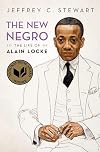
Though regarded as the "dean" of the Harlem Renaissance, Alain LeRoy Locke's name is not one that usually comes to mind when most people think of the movement. Yet it was the Philadelphia-born philosopher who provided much of the intellectual framework for it, most notably with his concept of the "New Negro." That Jeffrey Stewart uses the name as the title for his in-depth biography of Locke both highlights its role in defining Locke's legacy and the degree to which it was a product of show more Locke's own life and experiences.
The only child of middle-class parents, Locke grew up in Gilded Age Philadelphia. Stewart stresses the predominant role Locke's mother Mary played in his life, particularly in inculcating a passion for education. Graduating from Harvard, Locke became a celebrity among African Americans by becoming the nation's first black Rhodes scholar, though he was frustrated in his efforts to complete his degree there. Returning to America, he started teaching at Howard University, moving from education to philosophy after earning his doctorate at Harvard. Yet it was his work on race that would endure, particularly with his promotion of African and African-American culture in both art and literature. Though the Renaissance as a movement declined by the end of the 1920s, Locke had succeeded in redefining African American identity in ways that embraced their heritage while reaffirming its place in American life.
Locke's role in this has long deserved its due, and Stewart has provided it. His biography provides readers with a deeply perceptive study of Locke's life and achievements, one that situates them both within his time and the circumstances of his life. His is especially good at describing the central role Locke's homosexuality played in his life, which is no small achievement considering the degree to which such matters often went unspoken back then. That doing so requires a degree of supposition on Stewart's part is understandable, but his judgments are reasoned and well-argued. Together it makes for a masterful achievement, one that gives Locke the recognition he deserves for his many accomplishments. show less
The only child of middle-class parents, Locke grew up in Gilded Age Philadelphia. Stewart stresses the predominant role Locke's mother Mary played in his life, particularly in inculcating a passion for education. Graduating from Harvard, Locke became a celebrity among African Americans by becoming the nation's first black Rhodes scholar, though he was frustrated in his efforts to complete his degree there. Returning to America, he started teaching at Howard University, moving from education to philosophy after earning his doctorate at Harvard. Yet it was his work on race that would endure, particularly with his promotion of African and African-American culture in both art and literature. Though the Renaissance as a movement declined by the end of the 1920s, Locke had succeeded in redefining African American identity in ways that embraced their heritage while reaffirming its place in American life.
Locke's role in this has long deserved its due, and Stewart has provided it. His biography provides readers with a deeply perceptive study of Locke's life and achievements, one that situates them both within his time and the circumstances of his life. His is especially good at describing the central role Locke's homosexuality played in his life, which is no small achievement considering the degree to which such matters often went unspoken back then. That doing so requires a degree of supposition on Stewart's part is understandable, but his judgments are reasoned and well-argued. Together it makes for a masterful achievement, one that gives Locke the recognition he deserves for his many accomplishments. show less
Alain Locke is a name that even most educated African Americans don’t know. In the early twentieth century, he was the first African American Rhodes Scholar selected to study at Oxford. He pursued a career as a philosopher, received a PhD from Harvard, and taught at Howard University, the premier black institution in America. Most importantly, he helped spark the Harlem Renaissance of the 1920s and onward. He birthed the concept of the New Negro – that black people can reinvent show more themselves around the arts to play a meaningful role in American society.
Interestingly, he lived life as a closeted homosexual. His love life was marked with instability as he moved from one lover to another. He fed off the energy that his lovers provided to him, but he was about 80 years too soon for stable homosexual relationships. I ponder what kind of impact Locke might have in contemporary society with the dual-minority status as black and gay.
This book is a long book – 944 pages. Although Stewart deals with intellectual issues with care (as one should with a philosopher), I wonder whether a 600-page book (with tightened prose and a more rapid narrative) might have an even greater effect in the marketplace. But then again, this book did win the National Book Award, so Stewart can’t be too far off.
For me, this book provided an exposure to the pre-civil-rights lives of African Americans. Its focus is not on the American South (where I live), but on the urban North. Locke mainly aimed to provide inspiration of black voices in cities. Nonetheless, he lived in DC under segregated conditions. He never lived to see the freedoms of cultural integration. However, he did anticipate such movements and sought to promulgate its effect through art. This art tied back to Africa as its source and used African forms as its methodology. Like many a black intellectual, he was tired of judging success from the vantage point of the white European tradition.
Was Locke effective? When one considers the scope of the last 100 years of American history, one cannot help but say yes, Locke was effective. Black artistry – both in its refined sense and also in its popular sense – dominates the American cultural landscape. It resides in the mainstream of culture, and its sophistication has led to the acceptance of blacks into that mainstream. Stewart leaves us with the (correct) impression that Locke would be proud of the legacy he helped to leave for his country and his people. show less
Interestingly, he lived life as a closeted homosexual. His love life was marked with instability as he moved from one lover to another. He fed off the energy that his lovers provided to him, but he was about 80 years too soon for stable homosexual relationships. I ponder what kind of impact Locke might have in contemporary society with the dual-minority status as black and gay.
This book is a long book – 944 pages. Although Stewart deals with intellectual issues with care (as one should with a philosopher), I wonder whether a 600-page book (with tightened prose and a more rapid narrative) might have an even greater effect in the marketplace. But then again, this book did win the National Book Award, so Stewart can’t be too far off.
For me, this book provided an exposure to the pre-civil-rights lives of African Americans. Its focus is not on the American South (where I live), but on the urban North. Locke mainly aimed to provide inspiration of black voices in cities. Nonetheless, he lived in DC under segregated conditions. He never lived to see the freedoms of cultural integration. However, he did anticipate such movements and sought to promulgate its effect through art. This art tied back to Africa as its source and used African forms as its methodology. Like many a black intellectual, he was tired of judging success from the vantage point of the white European tradition.
Was Locke effective? When one considers the scope of the last 100 years of American history, one cannot help but say yes, Locke was effective. Black artistry – both in its refined sense and also in its popular sense – dominates the American cultural landscape. It resides in the mainstream of culture, and its sophistication has led to the acceptance of blacks into that mainstream. Stewart leaves us with the (correct) impression that Locke would be proud of the legacy he helped to leave for his country and his people. show less
I have never heard of Alain Locke. And yet I had heard of several of the writers he mentored, such as Langston Hughes. I had heard of the research area his efforts intiated, Black Studies. And yet, it seems odd, given his personal views, his becoming a pioneer of Black is Beautiful, is almost an anomaly. Locke was a horrible snob and really didn't like Negroes. And yet, the work of his life was to begin the idea that Blacks are valuable and beautiful and intellilgent. As I look at the show more difference of how Blacks were taught to view themselves within overriding US White Culture at the turn of the 19th to 20th century, compared with expectations and opportunities today, there is no way to compare. Not there is not still a long way to go, but the difference is amazing.
But being Black was not his only challenge. Locke was also gay at a time when that was not acceptable at all. Stewart attempted to give the reader a sense of what it was like for Locke, seeking to be a leader while having to keep a critical part of his real self hidden. At times it seemed Stewart spent too much time on the gay aspect of Locke's life, giving some readers a sense of frustration and a desire to say "enough already; I get it. He was gay.". Yet, in retrospect, how else might Stewart have shared with us the frustration and irritation Locke felt. show less
But being Black was not his only challenge. Locke was also gay at a time when that was not acceptable at all. Stewart attempted to give the reader a sense of what it was like for Locke, seeking to be a leader while having to keep a critical part of his real self hidden. At times it seemed Stewart spent too much time on the gay aspect of Locke's life, giving some readers a sense of frustration and a desire to say "enough already; I get it. He was gay.". Yet, in retrospect, how else might Stewart have shared with us the frustration and irritation Locke felt. show less
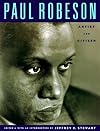
Brings together 18 scholars and historians to the most detailed and balanced look at Robeson to date.
Awards


You May Also Like


Associated Authors
Statistics
- Works
- 6
- Also by
- 2
- Members
- 464
- Popularity
- #53,000
- Rating
- 3.9
- Reviews
- 8
- ISBNs
- 18
- Favorited
- 1