
Imani Perry
Author of South to America: A Journey Below the Mason-Dixon to Understand the Soul of a Nation
About the Author
Imani Perry is the Hughes-Rogers Professor of African American Studies at Princeton University and the author of six books.
Image credit: The Nation
Works by Imani Perry
South to America: A Journey Below the Mason-Dixon to Understand the Soul of a Nation (2022) 733 copies, 21 reviews
Looking for Lorraine: The Radiant and Radical Life of Lorraine Hansberry (2018) 258 copies, 7 reviews
More Beautiful and More Terrible: The Embrace and Transcendence of Racial Inequality in the United States (2011) 54 copies
south to America 1 copy
Associated Works
Four Hundred Souls: A Community History of African America, 1619-2019 (2021) — Contributor — 1,157 copies, 25 reviews
You Are Your Best Thing: Vulnerability, Shame Resilience, and the Black Experience (2021) — Contributor — 320 copies, 4 reviews
Sing a Black Girl's Song: The Unpublished Work of Ntozake Shange (2023) — Editor; Narrator, some editions — 30 copies, 1 review
Quality Education as a Constitutional Right: Creating a Grassroots Movement to Transform Public Schools (2010) — Contributor — 22 copies
Tagged
Common Knowledge
- Birthdate
- 1972
- Gender
- female
- Education
- Concord Academy
Yale University (BA)
Harvard Law School (JD)
Harvard University (PhD)
Georgetown University Law Center (LLM) - Occupations
- Professor, African American Studies, Princeton University
- Nationality
- USA
- Birthplace
- Birmingham, Alabama, USA
- Places of residence
- Massachusetts, USA
Chicago, Illinois, USA
Philadelphia area, Pennsylvania, USA - Map Location
- USA
Members
Reviews
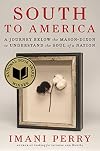
Travels through fraught landscapes in the American South.
Perry, professor of African American studies at Princeton, melds memoir, travel narrative, and history in an intimate, penetrating journey through the South, from the Mason-Dixon Line to Florida, West Virginia, and the Bahamas. “Paying attention to the South,” she asserts, “allows us to understand much more about our nation, and about how our people, land, and commerce work in relation to one another, often cruelly, and about how show more our tastes and ways flow from our habits.” At Harpers Ferry in West Virginia, she met a Confederate reenactor—playacting she derides. Yet she found him endearing, empathizing with his yearning “to live inside history, to know its nooks and crannies, to imagine the everyday.” A native Alabaman, Perry is the daughter of civil rights activists, a White Jewish father who left the North to teach at a historically Black college and a Black mother whose family had migrated to Birmingham. Although the author has lived in Cambridge, Boston, Chicago, and Philadelphia, to her, home is “deep” within the “red earth” of Alabama. She reflects on her own experiences of racism as a biracial woman and explores ways that Blacks have adapted historically, and she engagingly chronicles her visits to communities that embody the term “broken oasis,” efforts of Black Americans to embrace the nation’s politics and culture while remaining independent. They were destroyed, she notes, “by the habits of White Supremacy.” In progressive cities and rural towns, the author finds plenty of evidence of “the plantation South, with its Black vernacular, its insurgency, and also its brutal masculinity, its worship of Whiteness, its expulsion and its massacres, its self-defeating stinginess and unapologetic pride”—in short, the essence of America. The South, she notes, is “conservative in the sense of conservation. But what that means is not in fact easily described in political terms.”
A graceful, finely crafted examination of America’s racial, cultural, and political identity. Perry always delivers.
-Kirkus Review show less
Perry, professor of African American studies at Princeton, melds memoir, travel narrative, and history in an intimate, penetrating journey through the South, from the Mason-Dixon Line to Florida, West Virginia, and the Bahamas. “Paying attention to the South,” she asserts, “allows us to understand much more about our nation, and about how our people, land, and commerce work in relation to one another, often cruelly, and about how show more our tastes and ways flow from our habits.” At Harpers Ferry in West Virginia, she met a Confederate reenactor—playacting she derides. Yet she found him endearing, empathizing with his yearning “to live inside history, to know its nooks and crannies, to imagine the everyday.” A native Alabaman, Perry is the daughter of civil rights activists, a White Jewish father who left the North to teach at a historically Black college and a Black mother whose family had migrated to Birmingham. Although the author has lived in Cambridge, Boston, Chicago, and Philadelphia, to her, home is “deep” within the “red earth” of Alabama. She reflects on her own experiences of racism as a biracial woman and explores ways that Blacks have adapted historically, and she engagingly chronicles her visits to communities that embody the term “broken oasis,” efforts of Black Americans to embrace the nation’s politics and culture while remaining independent. They were destroyed, she notes, “by the habits of White Supremacy.” In progressive cities and rural towns, the author finds plenty of evidence of “the plantation South, with its Black vernacular, its insurgency, and also its brutal masculinity, its worship of Whiteness, its expulsion and its massacres, its self-defeating stinginess and unapologetic pride”—in short, the essence of America. The South, she notes, is “conservative in the sense of conservation. But what that means is not in fact easily described in political terms.”
A graceful, finely crafted examination of America’s racial, cultural, and political identity. Perry always delivers.
-Kirkus Review show less
Thanks Ecco Books for the gifted ARC copy.
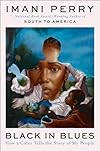
I loved the concept of blue as the overarching theme. Perry examines Blackness through a series of essays with topics such as indigo, blue jays, and blues music. The structure and style did not follow a typical narrative for historical nonfiction work. Perry addresses motivation and form of the book early on in the chapter ‘Writing in Color’, adding context to her choices.
My reading experience felt akin to listening to jazz. Areas of writing show more were tight while others meandered lyrically. Topics danced around between literal and figurative ‘blues’ with some topics being quite loud. These ebbs and flows produced a song of Black culture and history.
In the middle of the ‘Blue Pots’ chapter, I got sidetracked researching Commeraw pottery and then realized it was 2am! I had unintentionally stayed up way too late that night, engrossed in reading. Despite not always knowing where things were going and desiring more from certain essays, I really enjoyed this book overall. If I had to sum it up in one word, I’d choose “curious”. There’s a lot here and a lot to read more about. I tabbed numerous pages to revisit. show less
I loved the concept of blue as the overarching theme. Perry examines Blackness through a series of essays with topics such as indigo, blue jays, and blues music. The structure and style did not follow a typical narrative for historical nonfiction work. Perry addresses motivation and form of the book early on in the chapter ‘Writing in Color’, adding context to her choices.
My reading experience felt akin to listening to jazz. Areas of writing show more were tight while others meandered lyrically. Topics danced around between literal and figurative ‘blues’ with some topics being quite loud. These ebbs and flows produced a song of Black culture and history.
In the middle of the ‘Blue Pots’ chapter, I got sidetracked researching Commeraw pottery and then realized it was 2am! I had unintentionally stayed up way too late that night, engrossed in reading. Despite not always knowing where things were going and desiring more from certain essays, I really enjoyed this book overall. If I had to sum it up in one word, I’d choose “curious”. There’s a lot here and a lot to read more about. I tabbed numerous pages to revisit. show less
Perry writes in beautiful prose about how race and racism have shaped America and American culture from its very beginning and continues to be a driving factor in all facets of our modern lives, specifically honing in on the Southern States history and impact. She combines well researched history with personal stories of her own Southern background and family, along with cultural references to music, art and food.
I listened to the audio version of this book that Perry narrates. Her lyrical show more voice mezmerizes the reader and belies some of the horrific historic events that she writes about.
I have this feeling that this book is going to be at the top of the every Red States' Banned book lists, which is such a shame, because it is a book every American should be required to read. show less
I listened to the audio version of this book that Perry narrates. Her lyrical show more voice mezmerizes the reader and belies some of the horrific historic events that she writes about.
I have this feeling that this book is going to be at the top of the every Red States' Banned book lists, which is such a shame, because it is a book every American should be required to read. show less

This was a really deeply thoughtful biography; Perry manages to balance her personal investments in telling Hansberry's life story alongside Hansberry's actual life, and does so much work to draw out what is radical in her work. I found it really compelling, and a very easy and accessible read, even for people who are unfamiliar with Hansberry's work or maybe only have hear of Raisin in the Sun. It definitely made me want to look at her work more closely. The chapters about her friendship show more with James Baldwin and Nina Simone both were so powerful, and the connections made between her work and that of Baldwin were both so powerful.
Sometimes Perry seems too into her role as not!biographer, in resisting speculation in particular earlier in the book, and then seems to give that up fairly easily later in the book; frankly I'm fine with the latter, but I wish she toned down the former, if only because it disrupts the narrative a little bit. In some ways I appreciate how she draws attention to certain practices of biographers that often go unnoticed, but I think just committing--speculating on her pain is frankly not that different from speculating on her relationships, and I think it's fine to acknowledge that! But that was not enough to really distract me from the power of this book wholly, and I really strongly recommend it. show less
Sometimes Perry seems too into her role as not!biographer, in resisting speculation in particular earlier in the book, and then seems to give that up fairly easily later in the book; frankly I'm fine with the latter, but I wish she toned down the former, if only because it disrupts the narrative a little bit. In some ways I appreciate how she draws attention to certain practices of biographers that often go unnoticed, but I think just committing--speculating on her pain is frankly not that different from speculating on her relationships, and I think it's fine to acknowledge that! But that was not enough to really distract me from the power of this book wholly, and I really strongly recommend it. show less
Lists
Awards


You May Also Like


Associated Authors
Statistics
- Works
- 11
- Also by
- 7
- Members
- 1,638
- Popularity
- #15,683
- Rating
- 4.0
- Reviews
- 43
- ISBNs
- 51
- Favorited
- 1
