
Caitlin Macy
Author of Mrs
Works by Caitlin Macy
Associated Works
Tagged
Common Knowledge
- Birthdate
- 1971
- Gender
- female
- Education
- Yale University
- Places of residence
- New York, New York, USA
- Associated Place (for map)
- New York, USA
Members
Reviews
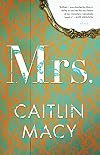
The fundamental flaw in Caitlin Macy's novel, Mrs., is that she assumes readers are going to care about the über-wealthy New York socialites with their nannies, multi-million dollar apartments complete with doormen, and places for their children among the toniest private preschools in the city. I do not see this happening. In fact, given the fervor over the recent tax changes and the growing divide between the haves and the have-nots, I see the exact opposite occurring. It is difficult to show more feel sorry for or find empathy for the social elite and their scandals when so many others in the world are struggling to put food on the table.
This is not to mention that pretty much every character within the novel is fairly despicable. In the scenes that take place in front of the school and among the various other interactions of the parents, the story does call to mind Big Little Lies, except the women and men in Ms. Macy's care even less about their children and more about how the world perceives them. They are pretentious, self-obsessed, and completely oblivious to the real world. We are supposed to fall under the spell of Phillipa's mysterious confidence and take pity on her past. We are supposed to empathize with Minnie as she attempts to break into this new social circle. We are supposed to see ourselves in Gwen as the most "normal" mother of the bunch. Except we don't because there is nothing to connect these characters with the readers.
Philippa remains aloof and untouchable even once we know her most sacred and shameful secret. Minnie remains a social climber, anxious to make it into the top milieu and stay there. As for Gwen, while other readers might find her wholesomeness and the sacrifices made for the sake of her family admirable, I could not do so. I got a kick out of the fact that she was the only mother to actually cook real meals for her family, but there is a forcefulness behind her domesticity that is bothersome.. It is as if Ms. Macy needed someone to whom readers would relate and created Gwen to fit that mold, except she missed out on one crucial detail. The reasons for Gwen becoming and remaining a stay-at-home mother never ring true. Neither does she provide an adequate explanation given how much time Gwen spends reminiscing about and longing for her former career. Ms. Macy spends little time explaining why Gwen gives up her beloved job and practically no time explaining why she continues to remain home. All of the reasons mothers stay home do not apply to Gwen's situation, so it makes no sense and is yet another black spot within the story.
Another element that disconnects the readers from the story is the criminal investigation over which Gwen's husband obsesses. The story occurs just after one of the numerous investing scandals of the early 2000s. The husbands and fathers of the novel are mostly men involved in the investing business. Considering the recession that occurred after these scandals hit the front pages, it is difficult to find sympathy with anyone who earns their money in that field. To make things worse, Ms. Macy constructs her novel in such a manner that assumes readers understand the ins and outs of the world of trading, so there is little explanation to help readers understand what is illegal about certain transactions or why. The obscene amounts of money made by these traders and the lifestyle they afford sets them apart from everyday readers and is a tiny bit disgusting given how many people lost their homes and livelihoods as a result of the investing scandals.
Mrs. may be social critique but it is social critique of the one-percenters. Frankly, it is difficult to get upset about these so-called social elite tearing themselves apart over a scandal or three. Moreover, the subject of class and privilege is too divisive right now for her story to be in step with the times. This is not escapist literature, as one cannot escape to such a back-stabbing, false world of gossip, innuendo, and mimicry. It is a heavy novel, with topics that are anything but light. Neither is it amusing because the fact remains there is a social strata that lives this way. Mrs. is the type of novel that would be more successful were the country in the midst of an economic boom and political harmony. As it stands, it is the wrong story for the wrong time, and each page is a reminder of the great divide that separates us more every day. show less
This is not to mention that pretty much every character within the novel is fairly despicable. In the scenes that take place in front of the school and among the various other interactions of the parents, the story does call to mind Big Little Lies, except the women and men in Ms. Macy's care even less about their children and more about how the world perceives them. They are pretentious, self-obsessed, and completely oblivious to the real world. We are supposed to fall under the spell of Phillipa's mysterious confidence and take pity on her past. We are supposed to empathize with Minnie as she attempts to break into this new social circle. We are supposed to see ourselves in Gwen as the most "normal" mother of the bunch. Except we don't because there is nothing to connect these characters with the readers.
Philippa remains aloof and untouchable even once we know her most sacred and shameful secret. Minnie remains a social climber, anxious to make it into the top milieu and stay there. As for Gwen, while other readers might find her wholesomeness and the sacrifices made for the sake of her family admirable, I could not do so. I got a kick out of the fact that she was the only mother to actually cook real meals for her family, but there is a forcefulness behind her domesticity that is bothersome.. It is as if Ms. Macy needed someone to whom readers would relate and created Gwen to fit that mold, except she missed out on one crucial detail. The reasons for Gwen becoming and remaining a stay-at-home mother never ring true. Neither does she provide an adequate explanation given how much time Gwen spends reminiscing about and longing for her former career. Ms. Macy spends little time explaining why Gwen gives up her beloved job and practically no time explaining why she continues to remain home. All of the reasons mothers stay home do not apply to Gwen's situation, so it makes no sense and is yet another black spot within the story.
Another element that disconnects the readers from the story is the criminal investigation over which Gwen's husband obsesses. The story occurs just after one of the numerous investing scandals of the early 2000s. The husbands and fathers of the novel are mostly men involved in the investing business. Considering the recession that occurred after these scandals hit the front pages, it is difficult to find sympathy with anyone who earns their money in that field. To make things worse, Ms. Macy constructs her novel in such a manner that assumes readers understand the ins and outs of the world of trading, so there is little explanation to help readers understand what is illegal about certain transactions or why. The obscene amounts of money made by these traders and the lifestyle they afford sets them apart from everyday readers and is a tiny bit disgusting given how many people lost their homes and livelihoods as a result of the investing scandals.
Mrs. may be social critique but it is social critique of the one-percenters. Frankly, it is difficult to get upset about these so-called social elite tearing themselves apart over a scandal or three. Moreover, the subject of class and privilege is too divisive right now for her story to be in step with the times. This is not escapist literature, as one cannot escape to such a back-stabbing, false world of gossip, innuendo, and mimicry. It is a heavy novel, with topics that are anything but light. Neither is it amusing because the fact remains there is a social strata that lives this way. Mrs. is the type of novel that would be more successful were the country in the midst of an economic boom and political harmony. As it stands, it is the wrong story for the wrong time, and each page is a reminder of the great divide that separates us more every day. show less
I’m not ashamed to admit that one of my go-to genres is Wealthy People Behaving Badly. There is just something about reading (or watching) people with stupid amounts of money acting foolish and, hopefully, getting caught doing it. It’s the small, petty part of my psyche, but I own it. When I read the synopsis for Caitlin Macy’s new novel Mrs. I thought I’d struck gold. Something juicy to sink my brain into. The ingredients are there—rich women clustering every day outside their show more children’s private elementary school, gossiping, some richer than others, and secrets all around (almost a trope now that Big, Little Lies blew it up on HBO)—but does Macy bring them together and get the pot to boil in time?
Just as the school is the central location for much of the drama in Mrs., Philippa Lye is the character around whom mystery swirls. Beautiful and aloof, she is the woman all the other women want to acquire as a friend. At the opposite end of the spectrum is Gwen Hogan, a quiet woman who most often gets mistaken for a nanny at pick-up. She has no interest in any of the social scheming but she knows Philippa from their hometown. Her husband, Dan is a U.S. District Attorney, prosecuting financial crimes in Manhattan. He has a vendetta against, John Curtis a hedge fund manager with shady financial dealings who has recently returned to NYC with a new wife and a stepdaughter who gets immediately accepted at St. Timothy's, an unheard-of feat. The circle closes with Philippa’s husband, Jed Skinker, who runs his family-founded bank and who soon seems to be in some kind of business arrangement with John.
Macy gives Mrs. a lot of ways to go but the novel doesn’t begin to move until the last quarter when the key plot point is revealed. Prior to this, there are plenty of hints about all the main characters, but the overwhelming feeling is one of reserve and ennui. Even when the truth starts to come out, as Gwen and Dan are discussing what is happening around them, they are talking at each other without understanding the other’s point. It makes for confusion and the sense that none of these people belong together. It isn’t even a case of antagonism or animosity; all the couples interact with the emotion and intimacy of chess pieces. Macy moves them around the board well enough but they are stiff and almost completely devoid of emotion.
Marketing blurbs liken Mrs. to Henry James’s masterpiece The House of Mirth, but honestly, that comparison is as overworked as anything suspenseful being called “the next Gone Girl”. STOP. IT. How the plot or theme relate to the James novel I couldn’t say. The only similarity is in the writing style—cerebral, with the minutia of the characters’ lives and very little action, much like many of the classics. If you are a contemporary reader then Mrs. is going to feel like the Sahara, shimmering with the hope of a drama oasis far off in the distance. If you are a reader ready to slow down and willing to wait, Macy writes well in exposing the not-so-pleasant aspects of people with wealth and, ultimately, explodes secrets everywhere. show less
Just as the school is the central location for much of the drama in Mrs., Philippa Lye is the character around whom mystery swirls. Beautiful and aloof, she is the woman all the other women want to acquire as a friend. At the opposite end of the spectrum is Gwen Hogan, a quiet woman who most often gets mistaken for a nanny at pick-up. She has no interest in any of the social scheming but she knows Philippa from their hometown. Her husband, Dan is a U.S. District Attorney, prosecuting financial crimes in Manhattan. He has a vendetta against, John Curtis a hedge fund manager with shady financial dealings who has recently returned to NYC with a new wife and a stepdaughter who gets immediately accepted at St. Timothy's, an unheard-of feat. The circle closes with Philippa’s husband, Jed Skinker, who runs his family-founded bank and who soon seems to be in some kind of business arrangement with John.
Macy gives Mrs. a lot of ways to go but the novel doesn’t begin to move until the last quarter when the key plot point is revealed. Prior to this, there are plenty of hints about all the main characters, but the overwhelming feeling is one of reserve and ennui. Even when the truth starts to come out, as Gwen and Dan are discussing what is happening around them, they are talking at each other without understanding the other’s point. It makes for confusion and the sense that none of these people belong together. It isn’t even a case of antagonism or animosity; all the couples interact with the emotion and intimacy of chess pieces. Macy moves them around the board well enough but they are stiff and almost completely devoid of emotion.
Marketing blurbs liken Mrs. to Henry James’s masterpiece The House of Mirth, but honestly, that comparison is as overworked as anything suspenseful being called “the next Gone Girl”. STOP. IT. How the plot or theme relate to the James novel I couldn’t say. The only similarity is in the writing style—cerebral, with the minutia of the characters’ lives and very little action, much like many of the classics. If you are a contemporary reader then Mrs. is going to feel like the Sahara, shimmering with the hope of a drama oasis far off in the distance. If you are a reader ready to slow down and willing to wait, Macy writes well in exposing the not-so-pleasant aspects of people with wealth and, ultimately, explodes secrets everywhere. show less
This novel of the Upper East Side Elite Mom Squad of Manhattan is set in 2009, after the financial crash, and in another land, far, far, away from most of us. It's an intimate look at what the women who abandon their careers for motherhood do with their time (mostly hire nannies). There's also a strong plot about bank fraud and an accompanying saga of friendship and loyalty, and incredibly heartbreaking redemption and punishment in the denouement. The writing could be a bit tighter - the show more structure is built a bit flimsily upon women and men whose PoVs are seemingly superfluous to those of the main characters - making it somewhat difficult at launch, but the novel as a whole is most memorable and evokes a surprising mélange of compassion and contempt.
Quotes: "The truth was, people didn't want to go back in time to stop Hitler; they wanted to scoop up Manhattan real estate on the crazy cheap, see Dylan in a café, maybe."
"Tell yourself it's the details that scar children for life and you avoid the inconvenient truth that it is in fact the ongoing themes. Control. Disappointment. Entitlement. Narcissism. Deprivation. Frustration. Sorrow." show less
Quotes: "The truth was, people didn't want to go back in time to stop Hitler; they wanted to scoop up Manhattan real estate on the crazy cheap, see Dylan in a café, maybe."
"Tell yourself it's the details that scar children for life and you avoid the inconvenient truth that it is in fact the ongoing themes. Control. Disappointment. Entitlement. Narcissism. Deprivation. Frustration. Sorrow." show less
Tales of the rich folks living on the Upper East Side of NYC, told in the viewpoints of many different people, even a 7-year-old girl. Virtually all of these people are unlikable, and I found myself not really caring what happened to them - and if it was something bad? Oh well, boo hoo.
Awards

You May Also Like


Associated Authors
Statistics
- Works
- 5
- Also by
- 1
- Members
- 476
- Popularity
- #51,803
- Rating
- 3.3
- Reviews
- 11
- ISBNs
- 33
- Favorited
- 1