
Sylvia Olsen
Author of Yellow Line
About the Author
Image credit: sylviaolsen.ca
Works by Sylvia Olsen
Tagged
Common Knowledge
- Birthdate
- 1955
- Gender
- female
- Education
- University of Victoria
- Occupations
- children's book author
knitter - Nationality
- Canada
- Birthplace
- Victoria, British Columbia, Canada
- Places of residence
- Vancouver Island, British Columbia, Canada
Tsartlip First Nation - Associated Place (for map)
- British Columbia, Canada
Members
Reviews
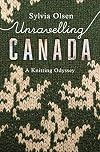
I really loved this book about knitting and travelling and history. I'm just sorry I didn't get into the workshops the author held as she travelled across Canada from BC to Newfoundland (or as the inner front flap describes it "from the Salish Sea to the Atlantic Ocean").
Sylvia Olsen has been knitting for a long time but she is also a knitting historian with a Ph.D. in the field. Her knowledge of knitting styles, particularly bulky sweater types, is prodigious. The well-known heavy sweaters show more with animals or hockey logos are often worn by men but in most cases they will have been knitted by women. (I knew of one notable exception when I was grown up as a neighbouring farmer knit a number of sweaters.) They are called by various names, Cowichan, Siwash, curling, and maybe Mary Maxim or Buffalo for two of the largest wool and pattern companies. Sylvia Olsen is adamant that the Cowichan name only applies to handknit sweaters from the Coast Salish indigenous peoples. In fact, the Cowichan Tribes have registered the names "Cowichan" and "Genuine Cowichan" and "Genuine Cowichan Approved" as trademarks. Olsen married into the Tsartlip First Nation when she was seventeen. She would often knit with her mother-in-law who taught her the techniques and designs.
Sylvia and her partner Tex conceived the idea of this tour in part to publicize Sylvia's book "Knitting Stories" and teach the colourwork technique used by the Coast Salish peoples. But Sylvia also wanted to hear stories from other knitters across Canada so each stop would be a workshop and storytelling. And because of her connection to First Nations people she wanted to explore more of their history all across Canada. She hoped she would be able to answer the question "What is a Canadian?" She says she didn't get a definitive answer but she has these final thoughts:
"If knitters represent what it is to be Canadian, then we are a country of hard-working, caring, creative people leading meaningul lives. We are interested in who we are and where we come from. We are intentional and brave, read to hear the tough stories of our past and use them to forge a new future."
A complete joy to read even if you aren't a knitter. show less
Sylvia Olsen has been knitting for a long time but she is also a knitting historian with a Ph.D. in the field. Her knowledge of knitting styles, particularly bulky sweater types, is prodigious. The well-known heavy sweaters show more with animals or hockey logos are often worn by men but in most cases they will have been knitted by women. (I knew of one notable exception when I was grown up as a neighbouring farmer knit a number of sweaters.) They are called by various names, Cowichan, Siwash, curling, and maybe Mary Maxim or Buffalo for two of the largest wool and pattern companies. Sylvia Olsen is adamant that the Cowichan name only applies to handknit sweaters from the Coast Salish indigenous peoples. In fact, the Cowichan Tribes have registered the names "Cowichan" and "Genuine Cowichan" and "Genuine Cowichan Approved" as trademarks. Olsen married into the Tsartlip First Nation when she was seventeen. She would often knit with her mother-in-law who taught her the techniques and designs.
Sylvia and her partner Tex conceived the idea of this tour in part to publicize Sylvia's book "Knitting Stories" and teach the colourwork technique used by the Coast Salish peoples. But Sylvia also wanted to hear stories from other knitters across Canada so each stop would be a workshop and storytelling. And because of her connection to First Nations people she wanted to explore more of their history all across Canada. She hoped she would be able to answer the question "What is a Canadian?" She says she didn't get a definitive answer but she has these final thoughts:
"If knitters represent what it is to be Canadian, then we are a country of hard-working, caring, creative people leading meaningul lives. We are interested in who we are and where we come from. We are intentional and brave, read to hear the tough stories of our past and use them to forge a new future."
A complete joy to read even if you aren't a knitter. show less
I seem to enjoy everything that Sylvia Olsen writes. I can’t help but relax into what she says because it is so personable and personal, so simple and so wise. So here we go from BC to Nfld, in the car with her and Tex, questioning, observing, dropping into lots of cozy yarn shops that are so much more than that of course, thinking and learning about Canadian issues like borders, bridges, our history. I’ll probably give this as a gift and could easily read it again.

Sylvia Olsen has worked in her family’s wool business and as a knitting historian, and has several designs to her credit. In Unravelling Canada, Olsen set out to explore knitting across Canada and answer questions of Canadian identity. She began in British Columbia, where she lives. Sylvia and her partner Tex drove cross-country, stopping in every province to meet knitters and hold workshops on Canadian knitting traditions.
This sounded really promising, but ended up being too lightweight show more for my interests. I’m an avid knitter and have learned about the history of the craft, as well as traditional designs from Great Britain and Europe. I was eager to broaden my knowledge, but Olsen offered only the most basic explanation of Canada’s Cowichan and White Buffalo sweaters, with no supporting photos or drawings. As a US citizen, I found her discussion of Canadian identity somewhat helpful. It increased my awareness of ways in which Canadians are reckoning with their country’s past and hoping to forge a better, more inclusive future. But again, Olsen did not go deep into this topic, relying instead on repeated mentions of indigenous culture that didn’t really go anywhere. And finally, by the time Sylvia and Tex reached the eastern part of the country it felt like her attention span was wearing out. After listing several yarn shops in Nova Scotia she admitted she hadn’t actually visited most of them and hoped to do so in the future! Compared to her coverage of British Columbia and Alberta, it felt rushed.
I’ve read elsewhere that Olsen’s tour across Canada was at least in part intended to promote a recently-published book, which might explain the lack of research to apply towards her thesis for this book. That’s too bad. show less
This sounded really promising, but ended up being too lightweight show more for my interests. I’m an avid knitter and have learned about the history of the craft, as well as traditional designs from Great Britain and Europe. I was eager to broaden my knowledge, but Olsen offered only the most basic explanation of Canada’s Cowichan and White Buffalo sweaters, with no supporting photos or drawings. As a US citizen, I found her discussion of Canadian identity somewhat helpful. It increased my awareness of ways in which Canadians are reckoning with their country’s past and hoping to forge a better, more inclusive future. But again, Olsen did not go deep into this topic, relying instead on repeated mentions of indigenous culture that didn’t really go anywhere. And finally, by the time Sylvia and Tex reached the eastern part of the country it felt like her attention span was wearing out. After listing several yarn shops in Nova Scotia she admitted she hadn’t actually visited most of them and hoped to do so in the future! Compared to her coverage of British Columbia and Alberta, it felt rushed.
I’ve read elsewhere that Olsen’s tour across Canada was at least in part intended to promote a recently-published book, which might explain the lack of research to apply towards her thesis for this book. That’s too bad. show less

Set in 1957, this should now be considered "historical fiction", as modern kids wouldn't be able to understand the economics or social setting otherwise.
Bobby, 10 yrs old, gets a job at a marina to help support his family. He would like to join a fishing contest to win the new bike offered as prize. The contest is almost won by a spoiled child whose father & uncle really catch the fish, but honesty wins out.
Written for pre-teens, with a strong focus on how being responsible brings unforeseen show more rewards. Good descriptive details. show less
Bobby, 10 yrs old, gets a job at a marina to help support his family. He would like to join a fishing contest to win the new bike offered as prize. The contest is almost won by a spoiled child whose father & uncle really catch the fish, but honesty wins out.
Written for pre-teens, with a strong focus on how being responsible brings unforeseen show more rewards. Good descriptive details. show less
Lists
Awards


You May Also Like


Associated Authors
Statistics
- Works
- 20
- Members
- 598
- Popularity
- #42,015
- Rating
- 4.0
- Reviews
- 28
- ISBNs
- 69
- Languages
- 1
- Favorited
- 1