
Peter Gelderloos
Author of How Nonviolence Protects the State
About the Author
Image credit: Peter Gelderloos
Works by Peter Gelderloos
The Solutions are Already Here: Strategies for Ecological Revolution from Below (2022) 49 copies, 1 review
Consensus: A New Handbook for Grassroots Social, Political, and Environmental Groups (2006) 46 copies
They Will Beat the Memory Out of Us: Forcing Nonviolence on Forgetful Movements (2024) 37 copies, 1 review
Learning From Ferguson 3 copies
Diagnostic of the Future: Between the Crisis of Democracy and the Crisis of Capitalism: A Forecast 3 copies
Veganism is a Consumer Activity 2 copies
Elitist Language 1 copy
The Function of Prison 1 copy
Against the War on Terrorism 1 copy
Anarchism as Reality 1 copy
A anarquia funciona 1 copy
Before the Big Change 1 copy
Seeing an Iraqi Resistance 1 copy
What's Missing is Solidarity: The Decline of Resistance From the Red Scare to the War on Terror 1 copy
The Surgeons of Occupy 1 copy
I've Got a Bad Feeling About This: Star Wars, Intellectual Property, and Cultural Expropriation 1 copy
The Rise of Hierarchy 1 copy
The Other White Vigilante 1 copy
Life Under the Jolly Roger 1 copy
Tagged
Common Knowledge
- Legal name
- Gelderloos, Peter Alan
- Birthdate
- 1983
- Gender
- male
- Occupations
- anarchist
- Nationality
- USA
- Birthplace
- Morristown, New Jersey, USA
- Associated Place (for map)
- New Jersey, USA
Members
Reviews
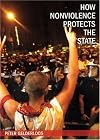
In his book How Nonviolence Protects the State, anarchist Peter Gelderloos criticizes nonviolence as being ineffective, racist, statist, patriarchal, tactically and strategical inferior to militant activism, and deluded. Gelderloos claims that traditional histories whitewash the impact of nonviolence, ignoring the involvement of militants in such movements as the Indian independence movement and the Civil Rights movement and falsely showing Gandhi and King as being their respective show more movements' most successful activists. He further argues that nonviolence is generally advocated by privileged white people who expect "oppressed people, many of whom are people of color, to suffer patiently under an inconceivably greater violence, until such time as the Great White Father is swayed by the movement's demands or the pacifists achieve that legendary 'critical mass.'" show less
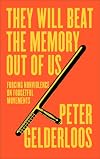
This book is about memory and how those in power, those that want power, and the victors rewrite this history so that we feel hopeless. They pick the parts of our movements and uprisings that suit capitalism and the state, and focus on that, while erasing the truly radical moments. They pick and choose who from the movement to elevate into positions of power (as long as their memories are consistent with those in power) and who to throw in prison. This re-written history becomes what most of show more us know. No wonder we often feel so hopeless.
Gelderloos points out some potential reasons we got here and ways to move forward while reclaiming our memories. Key among these reasons/solutions are the relationships between the youth and the elders in our movements. As a 45 year old who still considers himself to be quite radical, I've seen people burn out, sell out, become liberal, or just disappear countless times. There are still elders around though, even if they're not as active as that firebrand 20 year old, and they have stories to tell. Sure, some of them tell their stories in condescending ways (“things were much better then...”), but there are still lessons that we can learn from. Having context, especially of victories, can be one of the most important tools in our toolboxes.
There is also the written word. Most mainstream books about history (especially the one's we read in school) are highly slanted to favor the victor. In order to learn the truth, the people's histories, we need to dig. But once we do, there's plenty out there. From books (like this one) to old documentaries to independent research, our histories are recorded.
Once we begin this history, it's not only so much easier to rise up but it's also easier to win. It's easier to see connections between the different fights throughout time and space. It's easier to learn from mistakes that have been made in the past, instead of repeating them over and over and over.
I'm running out of review space, so here's some bullet points/quotes:
–The secret to a million people rising up is a thousand people rising up. The secret to a thousand people rising up is a hundred people rising up. Etc.
–“I have not come across a single [researcher] who has made a well researched argument that capitalism could have developed globally without causing all the ecological devastation we take for granted.”
–One of the biggest mistakes the younger radicals and orgs make is confusing civil disobedience with direct action.
–“It's ok to do less with more intention as you age.” show less
Gelderloos points out some potential reasons we got here and ways to move forward while reclaiming our memories. Key among these reasons/solutions are the relationships between the youth and the elders in our movements. As a 45 year old who still considers himself to be quite radical, I've seen people burn out, sell out, become liberal, or just disappear countless times. There are still elders around though, even if they're not as active as that firebrand 20 year old, and they have stories to tell. Sure, some of them tell their stories in condescending ways (“things were much better then...”), but there are still lessons that we can learn from. Having context, especially of victories, can be one of the most important tools in our toolboxes.
There is also the written word. Most mainstream books about history (especially the one's we read in school) are highly slanted to favor the victor. In order to learn the truth, the people's histories, we need to dig. But once we do, there's plenty out there. From books (like this one) to old documentaries to independent research, our histories are recorded.
Once we begin this history, it's not only so much easier to rise up but it's also easier to win. It's easier to see connections between the different fights throughout time and space. It's easier to learn from mistakes that have been made in the past, instead of repeating them over and over and over.
I'm running out of review space, so here's some bullet points/quotes:
–The secret to a million people rising up is a thousand people rising up. The secret to a thousand people rising up is a hundred people rising up. Etc.
–“I have not come across a single [researcher] who has made a well researched argument that capitalism could have developed globally without causing all the ecological devastation we take for granted.”
–One of the biggest mistakes the younger radicals and orgs make is confusing civil disobedience with direct action.
–“It's ok to do less with more intention as you age.” show less
Though it won’t necessarily cause you to pick up a Molotov cocktail or an AK-47, this little book will cause you to at least question some of your assumptions about past successes from nonviolence movements. From Gandhi to MLK to the anti-Vietnam movement, there have always been more militant groups working at the same time. These more militant groups through either actual violent acts or through the threat of violence may have done as much to change policy as the nonviolent groups that we show more feel more comfortable focusing on. Plus as an added bonus, we guarantee an FBI file to be created with every purchase! show less

This book helped confirm my nagging feeling that nonviolent activism doesn't really help further any type of real revolutionary agenda. The author does a great job explaining why this is so and what alternatives exist to counter ineffective pacifism.
Lists
Library Wishlist (2)
South End Press (1)
You May Also Like


Associated Authors
Statistics
- Works
- 73
- Members
- 786
- Popularity
- #32,383
- Rating
- 4.0
- Reviews
- 13
- ISBNs
- 27
- Languages
- 3
- Favorited
- 2