

Ellie Topp
Author of The Complete Book of Small-Batch Preserving: Over 300 Recipes to Use Year-Round
About the Author
Works by Ellie Topp
The Complete Book of Small-Batch Preserving: Over 300 Recipes to Use Year-Round (2005) 465 copies, 6 reviews
Tagged
Common Knowledge
- Birthdate
- 20th Century
- Gender
- female
- Nationality
- Canada
- Associated Place (for map)
- Canada
Members
Reviews
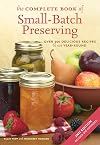
I'm a little in love with this book, which covers jams, jellies, marmalades, conserves, pickles, chutneys, salsa, flavored oils and vinegars (the latter two I'll never make). By far this one is my favorite canning cookbook I've read so far, ever.
It focuses on small batch water bath canning - exactly what I'm looking to do. Make small batches of food, using ingredients mainly from my garden, with maybe a couple of things added (like peppers, because my garden right now is just not producing show more peppers). Another reviewer mentioned the book had a "vintage" feel to it - the recipes, that is, not the book itself - which is probably why I like the recipes so much.
There are a lot of freezer / fridge "canning" in here, but the name of the book is small batch preserving, not small batch canning, so it's to be expected that there's a variety of prserving methods included. show less
It focuses on small batch water bath canning - exactly what I'm looking to do. Make small batches of food, using ingredients mainly from my garden, with maybe a couple of things added (like peppers, because my garden right now is just not producing show more peppers). Another reviewer mentioned the book had a "vintage" feel to it - the recipes, that is, not the book itself - which is probably why I like the recipes so much.
There are a lot of freezer / fridge "canning" in here, but the name of the book is small batch preserving, not small batch canning, so it's to be expected that there's a variety of prserving methods included. show less
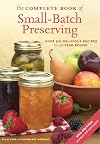
It's exciting to find a canning book written by a food scientist. This book is "considered a safe canning book by many informed, experienced canners, as Topp has a Masters degree in food science (University of Wisconsin), where she did a major in experimental foods with a minor in microbiology on organisms causing foodborne illness. She was then a research associate in the Department of Food Research at the University of Illinois." (Healthy Canning website) And the information on equipment, show more processes, and set-up is sterling.
This book is definitely a keeper for the canning reference shelf!
However, this isn't going to replace my Ball Blue Book. There are a lot of fancy flavour combinations, but few that I really want to make in quantity. Good thing it's a small batch cookbook. (Gingered Pear Apricot Conserve? Plum Conserve with Maple Syrup? They sound really good, but breakfast is a time for standard comfort food; these might shine on the afternoon tea table!). I thought I'd found a reason to love the book in its pages of mustard recipes, but none of them were actually preserved; all said "keep up to two weeks in refrigerator" -- that's a lot of mustard to eat in two weeks, unless I was cooking for a large commune! I did find some very attractive jams, but I was slightly discouraged because many of the recipes involve lengthy cooking to reach the "gel" stage. And some of the recipes puzzle me because I don't know the author's cultural background -- does Ms Topp's taste in Oriental ginger or pickled daikon align with mine? How authentic are these recipes? (When there's soy sauce in the pickled ginger, I am fearing not entirely.) The Indian chutney "along the lines of ... Major Gray (sic)" doesn't have any of the same major (Grey) ingredients. And the Satay Sauce recipe uses peanut butter, usually on the do-not-can list, so I wish she'd given her reasoning or research as to why it's an exception to the general rules. show less
This book is definitely a keeper for the canning reference shelf!
However, this isn't going to replace my Ball Blue Book. There are a lot of fancy flavour combinations, but few that I really want to make in quantity. Good thing it's a small batch cookbook. (Gingered Pear Apricot Conserve? Plum Conserve with Maple Syrup? They sound really good, but breakfast is a time for standard comfort food; these might shine on the afternoon tea table!). I thought I'd found a reason to love the book in its pages of mustard recipes, but none of them were actually preserved; all said "keep up to two weeks in refrigerator" -- that's a lot of mustard to eat in two weeks, unless I was cooking for a large commune! I did find some very attractive jams, but I was slightly discouraged because many of the recipes involve lengthy cooking to reach the "gel" stage. And some of the recipes puzzle me because I don't know the author's cultural background -- does Ms Topp's taste in Oriental ginger or pickled daikon align with mine? How authentic are these recipes? (When there's soy sauce in the pickled ginger, I am fearing not entirely.) The Indian chutney "along the lines of ... Major Gray (sic)" doesn't have any of the same major (Grey) ingredients. And the Satay Sauce recipe uses peanut butter, usually on the do-not-can list, so I wish she'd given her reasoning or research as to why it's an exception to the general rules. show less

Well, I sort of read it. I went through and read the information at the beginning about canning and preserving in general, then the chapter introductions as I came to them, and of course the recipes. It starts with jams and preserves - sweet spreads with fruit in them. I found quite a few recipes I want to try. Then jellies - sweet spreads made just from juice (sometimes with flavoring things - herbs or spices - put in when they're canned). Then - I think marmalades were next (mostly show more citrus-type jams with peel in them, sweet-tart), then conserves (sweetish spreads with both fruits and nuts). Then it got onto odd stuff - chutneys and relishes and salsa, mustard, sauces of various sorts from butterscotch and fudge to blueberry lime, and pickles of many kinds. The pickles included pickled ginger; the salsas had a mango variety. There were also ketchups, including a mango one. And pickled tomatoes. And lots of stuff, most of which I'd never eat so I wouldn't make it. But the sweet spreads, the marmalades, and the sauces had many interesting recipes. I don't know how well they work, since I haven't actually made any yet, but they're very simply presented. The information on canning - the step-by-step process for short-time processing, the information on why you take particular steps and how they help preserve the food, and the general information about ingredients were all very useful - I learned things that had puzzled me for some time. There's also a recipe for homemade pectin from apples, which looks useful. However, it was a little annoying that the authors used a variety of pectins in their recipes and said at the beginning that the various types 'were not interchangeable' without explaining why not or what sort of conversions might be possible. So the homemade pectin can be used in about 10 recipes listed right with it, and not with any of the hundreds of others in the book. I will, of course, figure out how to use it by trial and error, but they could have made it much more useful with just a little more information there. Overall - good basic information, lots of recipes ranging from basic to pretty exotic, and - in the back of the book - just a few recipes for using some of your newly canned products. Fun. show less

I love this book! Unlike the big guys of preserving (Ball and Kerr) this book gives me recipes I can complete on a week night with a small amount of store bought ingredients. It's very easy to put up a pantry full of goodies and gifts using this method. Plus, if something goes wrong you haven't wasted a whole day or a whole bushel of something.
You May Also Like


Statistics
- Works
- 6
- Members
- 515
- Popularity
- #48,204
- Rating
- 3.8
- Reviews
- 6
- ISBNs
- 11
