
Karen Solomon (1)
Author of Jam It, Pickle It, Cure It and Other Cooking Projects
For other authors named Karen Solomon, see the disambiguation page.
About the Author
Karen Solomon is a food preservation teacher and food writer whose cookbooks include Asian Pickles and Jam It, Pickle It, Cure It as well as Can It, Bottle It, Smoke It. Her articles and recipes have appeared in Fine Cooking, Prevention, Men's Health, Every Day with Rachael Ray, and Yoga Journal show more and on Food52 and Saveur.com. She lives in San Francisco. show less
Image credit: Karen Solomon
Series
Works by Karen Solomon
Asian Pickles: Sweet, Sour, Salty, Cured, and Fermented Preserves from Korea, Japan, China, India, and Beyond (2014) — Author — 143 copies, 4 reviews
Cured Meat, Smoked Fish & Pickled Eggs: Recipes & Techniques for Preserving Protein-Packed Foods (2018) 18 copies, 1 review
The Cheap Bastard's Guide to San Francisco: Secrets of Living the Good Life - for Free! (2007) 15 copies
Asian Pickles: Korea: Recipes for Spicy, Sour, Salty, Cured, and Fermented Kimchi and Banchan (2013) 11 copies
Asian Pickles: Japan: Recipes for Japanese Sweet, Sour, Salty, Cured, and Fermented Tsukemono (2012) 10 copies, 2 reviews
Tagged
Common Knowledge
- Birthdate
- 20th Century
- Gender
- female
- Nationality
- USA
- Places of residence
- San Francisco, California, USA
- Associated Place (for map)
- California, USA
Members
Reviews
Cured Meat, Smoked Fish & Pickled Eggs: Recipes & Techniques for Preserving Protein-Packed Foods by Karen Solomon
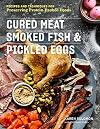
I don't like this book very much but it is not without some value. The text, at least in the ARC that I am working from, is disjointed and contradictory and somewhat unclear in places.
Ms Solomon skimps on the fermented foods section because she says that US readers don't like fermented food. What world is she living in? "The revolution will not be microwaved" was published in 2006 and, while it was not the only recent fermenting book, it can be used as a start date for updated fermenting. show more Check out fermented foods online and you will see many sites devoted to "live" foods which are rich in probiotics and thus favorite recommendations for gut health.
Ms Solomon then devotes a chapter to brined foods, which somehow she separates from fermented foods. Cucumbers fermented in brine are not the protein foods that are the subject of this book, but by golly, brined is fermented there (look up "half-done" pickles). Most people consider corned beef to be fermented, but not Ms Solomon.
The book's introduction says clearly that you are responsible for your own safety and that all of the instructions in the book are safe. I would have put in some "Don't do this" along with the "Do this" for tricky techniques.
Ms Solomon uses sodium nitrate in the form of Pink Cure #1 and #2 which are often called "Pink Salt". While she often adds "(sodium nitrate)" to the sentence to reinforce that this is not table salt but no where does not spell out that Himalayan Pink Salt is something else entirely. Do all novice cooks know this?
As I read the text, Ms Solomon says that you really should not cold smoke meat, a sentiment echoed by many of my fave sources, but then goes on to tell you how to do it. Fortunately she always tells you to cook the cold smoked meat before eating.
Stick in here too are a few non-preserved foods too. Why?
So bottom line here is that this is probably a good reference book but I would check the recipes with other sources before testing.
I received a review copy of "Cured Meat, Smoked Fish & Pickled Eggs: Recipes & Techniques for Preserving Protein-Packed Foods" by Karen Solomon (Storey) through NetGalley.com.
PS There is a recipe in the book for "Yoghurt Bombs" which are dehydrated yoghurt cheese. You haven't taste anything till you have tasted "qurut" from Afghanistan. It is far too strong, salty, and smelly for me but some American and most Afghan friends, who love it. show less
Ms Solomon skimps on the fermented foods section because she says that US readers don't like fermented food. What world is she living in? "The revolution will not be microwaved" was published in 2006 and, while it was not the only recent fermenting book, it can be used as a start date for updated fermenting. show more Check out fermented foods online and you will see many sites devoted to "live" foods which are rich in probiotics and thus favorite recommendations for gut health.
Ms Solomon then devotes a chapter to brined foods, which somehow she separates from fermented foods. Cucumbers fermented in brine are not the protein foods that are the subject of this book, but by golly, brined is fermented there (look up "half-done" pickles). Most people consider corned beef to be fermented, but not Ms Solomon.
The book's introduction says clearly that you are responsible for your own safety and that all of the instructions in the book are safe. I would have put in some "Don't do this" along with the "Do this" for tricky techniques.
Ms Solomon uses sodium nitrate in the form of Pink Cure #1 and #2 which are often called "Pink Salt". While she often adds "(sodium nitrate)" to the sentence to reinforce that this is not table salt but no where does not spell out that Himalayan Pink Salt is something else entirely. Do all novice cooks know this?
As I read the text, Ms Solomon says that you really should not cold smoke meat, a sentiment echoed by many of my fave sources, but then goes on to tell you how to do it. Fortunately she always tells you to cook the cold smoked meat before eating.
Stick in here too are a few non-preserved foods too. Why?
So bottom line here is that this is probably a good reference book but I would check the recipes with other sources before testing.
I received a review copy of "Cured Meat, Smoked Fish & Pickled Eggs: Recipes & Techniques for Preserving Protein-Packed Foods" by Karen Solomon (Storey) through NetGalley.com.
PS There is a recipe in the book for "Yoghurt Bombs" which are dehydrated yoghurt cheese. You haven't taste anything till you have tasted "qurut" from Afghanistan. It is far too strong, salty, and smelly for me but some American and most Afghan friends, who love it. show less
Asian Pickles: Japan: Recipes for Japanese Sweet, Sour, Salty, Cured, and Fermented Tsukemono by Karen Solomon

Karen Solomon's passion for pickles is so intense, so contagious that I actually sat and read the whole book like a novel! I'm not sure I'd try all the pickle recipes available in this delicious little volume, but if I wanted to, the instructions are clear and each pickle is lovingly presented with enough descriptive flair to really set tastebuds tingling. Solomon knows her subject - her time spent living in Japan has clearly paved the way for her intense enjoyment of this food accompaniment show more and I really enjoyed taking this culinary journey with her. show less
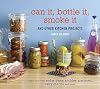
Many interesting recipes of varying degrees of practicality. Appealing recipe for canned tomatoes I might try; basic vanilla extract made of vanilla bean and vodka, which given the volatility of vanilla prices needs new cost calculations before making (she doesn't cost out anything); great hints on making vinegar with a discussion of recognizing, using or even making “mother” -- information not easy to find. Pretzels and candies are worth a careful look. The cornflakes recipe, on the show more other hand, is ludicrous: first of all, it's not true to Dr Kelloggs's original idea of mildly fermented rehydrated corn, it's just a cornmeal mixture baked; and secondly, despite having a relatively complex procedure which takes a non-negligible amount of time, it directs you to make it right before breakfast and consume it immediately. Might be practical for an insomniac, others would resent having to get up an hour or two early. The puffed rice cereal suffers from the same problems: it's not what it says, in this case it is parched rice rather than puffed, and must be made right before it is eaten. Silly.
There is a series of these books, I'm thinking it's well worth checking out the others also. show less
There is a series of these books, I'm thinking it's well worth checking out the others also. show less
Asian Pickles: Sweet, Sour, Salty, Cured, and Fermented Preserves from Korea, Japan, China, India, and Beyond by Karen Solomon
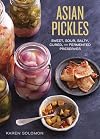
This book is a feast for the eyes as well as the mouth. The photography really invites you to jump in and try the terrific recipes. Organized by region, I was easily able to find the Japanese pickles we fell in love with while traveling there. Each country has its own basic techniques described to help those who like to experiment on their own. The glossary, resources and index make it easy to access the information and to expand on what is offered. I think Karen Solomon has hit a home run show more with this one. show less
Lists
You May Also Like


Associated Authors
Statistics
- Works
- 9
- Members
- 452
- Popularity
- #54,271
- Rating
- 3.6
- Reviews
- 11
- ISBNs
- 19