
Eugenia Bone
Author of Mycophilia: Revelations from the Weird World of Mushrooms
About the Author
Eugenia Bone is a nationally known nature and food writer, former president of the New York Mycological Society, and member of the National Association of Science Writers. She has published over six books, and her work has appeared in many outlets and publications, including The New York Times, The show more Wall Street Journal, Saveur, and Food Wine, as well as the tie-in book to the hit documentary, Fantastic Fungi. You can see Eugenia in Fantastic Fungi and in the children's food program Waffles + Mochi (the mushroom episode, of course). show less
Image credit: Eugenia Bone
Works by Eugenia Bone
Well-Preserved: Recipes and Techniques for Putting Up Small Batches of Seasonal Foods (2009) 170 copies, 4 reviews
Associated Works
Fantastic Fungi: Expanding Consciousness, Alternative Healing, Environmental Impact // Official Book of Smash Hit Documentary (2019) — Contributor — 140 copies, 1 review
New York Waterfront: Evolution and Building Culture of the Port and Harbor (1997) — Contributor — 60 copies, 1 review
Tagged
Common Knowledge
- Birthdate
- 20th Century
- Gender
- female
- Relationships
- Giobbi, Edward (father)
- Nationality
- USA
- Places of residence
- New York, New York, USA
- Associated Place (for map)
- New York, USA
Members
Reviews
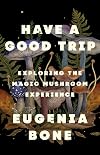
Over the past sixty years there have been waves of interest in magic mushrooms and psychedelic experiences. For most of this period, possession and distribution of such things has been frowned upon by the legal authorities. Many people have claimed to have enjoyed profoundly moving experiences which have led to many benefits while using psychedelic mushrooms. Others have had terrifying experiences.
In Have A Good Trip: Exploring the Magic Mushroom Experience (galley received through early show more review program), Eugenia Bone thoroughly examines any and all things related to psilocybin. And I mean thoroughly examines any and all things. She describes everything we know about how and why psilocybin produces psychedelic effects in the brain. She sets forth the different types of experiences which can be had based on how much is consumed. She explores the modern history of mushroom exploration and use as well as what can be known about more ancient antecedents. She forthrightly explains her own experiences and the experiences related to her about people on various trips. She explains how trips can go well and what benefits could be had and for how long. And she is just as forthright about the trips that go wrong, some of the reasons which may be behind it, and how much more research is necessary about such things. She considers the forms of community and support engendered by mushrooms, and the prospect of the business of mushrooms and incorporating trips into a psychiatric and therapeutic framework. She also considers the religious and spiritual connotations of mushrooms and psilocybin trips.
I was interested in the work on account of whisperings I have heard about how psilocybin might provide some benefit to those experiencing autoimmune conditions. As a Christian I have many reservations about the use of psilocybin, especially in a recreational context. It is possible psilocybin could open the brain and mind in healthy, freeing ways. But could it also be a means by which one encounters the realms of the evil and demonic? Where does psilocybin fit into the pharmakeia of it all - as medicine or as sorcery? Such will no doubt have to be a growing conversation as society becomes more open to potential therapeutic applications of psilocybin. show less
In Have A Good Trip: Exploring the Magic Mushroom Experience (galley received through early show more review program), Eugenia Bone thoroughly examines any and all things related to psilocybin. And I mean thoroughly examines any and all things. She describes everything we know about how and why psilocybin produces psychedelic effects in the brain. She sets forth the different types of experiences which can be had based on how much is consumed. She explores the modern history of mushroom exploration and use as well as what can be known about more ancient antecedents. She forthrightly explains her own experiences and the experiences related to her about people on various trips. She explains how trips can go well and what benefits could be had and for how long. And she is just as forthright about the trips that go wrong, some of the reasons which may be behind it, and how much more research is necessary about such things. She considers the forms of community and support engendered by mushrooms, and the prospect of the business of mushrooms and incorporating trips into a psychiatric and therapeutic framework. She also considers the religious and spiritual connotations of mushrooms and psilocybin trips.
I was interested in the work on account of whisperings I have heard about how psilocybin might provide some benefit to those experiencing autoimmune conditions. As a Christian I have many reservations about the use of psilocybin, especially in a recreational context. It is possible psilocybin could open the brain and mind in healthy, freeing ways. But could it also be a means by which one encounters the realms of the evil and demonic? Where does psilocybin fit into the pharmakeia of it all - as medicine or as sorcery? Such will no doubt have to be a growing conversation as society becomes more open to potential therapeutic applications of psilocybin. show less

This was a good choice for a book club as it touched slightly on a lot of different aspects of mushrooms. It definitely made me want to learn more about the biology but I got all I needed about food and mushroom foraging culture. The chapter about mushroom foragers was weirdly racist. The chapter about using mushrooms to lose weight was very eating-disorder-y. Unexpectedly I got the most out of the chapter about psychedelics, because the author was a skeptic and her experience as described show more was interesting but not really life-changing. That’s much more interesting to me than people who are very enthusiastic. I wish there were more diagrams of mushrooms, instead of just blurry black-and-white photographs. I did learn some fun facts and I will definitely be seeking out more books about mushrooms, but not more books about this author (who I'm sure is a very good food writer). show less
Part memoir, part mushroom science book and part insider view into the cult of mycophilia I found this book to be really informative if somewhat overblown in some places. Unlike some reviewers, I didn’t find Bone’s personal asides and insights annoying. A book like this is supposed to have that kind of thing in it, although after a while the litany of mushroom dishes and elbow-rubbing vignettes with mushroom “royalty” was a bit repetitive.
Bone begins her book by telling us that show more she’s not much of an outdoors woman (and boy does it show later), but that by finding, eating and loving some wild mushrooms she found (or maybe it was someone else) she bit the bullet and started sleeping in tents in the middle of nowhere so she could find more. I only hunt mushrooms for food casually. Most of my mushroom fascination goes into photography not my kitchen. But I admit I got a bit entranced by her description of candy caps and the fabled matsutake. Some of the chapters went on a bit too long, like truffles and her brush with the “magic mushroom people”, but overall it’s breezy, diverse and interesting.
So what did I learn from this book? That the reason I found so many varieties and specimens in an old growth forest is because of the symbiotic relationship mycorrhizal mushrooms and trees have. Older, established trees have had the time to accumulate a large and intricate network of fungus underground. Through this webbing and their own roots they can better do things like nutrient uptake. If a forest is logged heavily too many trees die and the mycorrhizal network is damaged or destroyed, leaving saplings to struggle and possibly die because of it. I already knew about the importance of fungi in soil from my connection to biodynamic farming and how many farmers are abandoning the traditional soil tillage methods for ones that don’t break up the fungus network. It’s more labor intensive, but the soil is a much better substrate for whatever they plant.
I also learned that mushrooms, the fruiting bodies of fungus, don’t grow so much as expand. The cells of a mushroom are fixed as soon as it forms. From button stage to disintegration, no cells are added to the structure. They merely fill with water and inflate, like balloons filling with air. Crazy huh?
Oh and there’s a type of fungus that invades the head of a certain caterpillar and when it sprouts it shoot straight up and basically hollows out the caterpillar; absorbing its entire insides replacing it with mycelium. In parts of Asia this is a delicacy and mushroom and worm are collected and sold for hundreds and thousands of dollars, proving once again that Asians will eat practically anything.
In America though, mushrooming is a fringe thing, practiced by lunatics. Indeed when I told some people that I’d found some gorgeous chanterelles they looked at me like I grew another head and said that wild mushrooms were scary. True, many are, but once you come to know certain species, it’s very hard to be fooled by impostors and while I probably won’t join local clubs or forays I will continue to pick from the groves of chanterelles I’ve already found and keep my eyes peeled for the glorious hen of the woods. show less
Bone begins her book by telling us that show more she’s not much of an outdoors woman (and boy does it show later), but that by finding, eating and loving some wild mushrooms she found (or maybe it was someone else) she bit the bullet and started sleeping in tents in the middle of nowhere so she could find more. I only hunt mushrooms for food casually. Most of my mushroom fascination goes into photography not my kitchen. But I admit I got a bit entranced by her description of candy caps and the fabled matsutake. Some of the chapters went on a bit too long, like truffles and her brush with the “magic mushroom people”, but overall it’s breezy, diverse and interesting.
So what did I learn from this book? That the reason I found so many varieties and specimens in an old growth forest is because of the symbiotic relationship mycorrhizal mushrooms and trees have. Older, established trees have had the time to accumulate a large and intricate network of fungus underground. Through this webbing and their own roots they can better do things like nutrient uptake. If a forest is logged heavily too many trees die and the mycorrhizal network is damaged or destroyed, leaving saplings to struggle and possibly die because of it. I already knew about the importance of fungi in soil from my connection to biodynamic farming and how many farmers are abandoning the traditional soil tillage methods for ones that don’t break up the fungus network. It’s more labor intensive, but the soil is a much better substrate for whatever they plant.
I also learned that mushrooms, the fruiting bodies of fungus, don’t grow so much as expand. The cells of a mushroom are fixed as soon as it forms. From button stage to disintegration, no cells are added to the structure. They merely fill with water and inflate, like balloons filling with air. Crazy huh?
Oh and there’s a type of fungus that invades the head of a certain caterpillar and when it sprouts it shoot straight up and basically hollows out the caterpillar; absorbing its entire insides replacing it with mycelium. In parts of Asia this is a delicacy and mushroom and worm are collected and sold for hundreds and thousands of dollars, proving once again that Asians will eat practically anything.
In America though, mushrooming is a fringe thing, practiced by lunatics. Indeed when I told some people that I’d found some gorgeous chanterelles they looked at me like I grew another head and said that wild mushrooms were scary. True, many are, but once you come to know certain species, it’s very hard to be fooled by impostors and while I probably won’t join local clubs or forays I will continue to pick from the groves of chanterelles I’ve already found and keep my eyes peeled for the glorious hen of the woods. show less
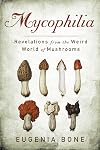
When I started this book, I was vaguely interested in mushrooms. I've always liked mushrooms from the culinary end, and I've taken photographs of mushrooms during hikes. But apart from that, I've never really given them a great deal of thought.
But this book has raised not my just consciousness into the wonderful world of mushrooms, but my level of interest as well. Who knew that mushrooms share about 80% of the same RNA as humans do? I certainly didn't. Or that the chiten that coats show more mushrooms so that they can push out of the ground without bruising themselves is the same thing that's found in crab shells and squid beaks? Or that mushrooms have more in common with the animal kingdom than the plant kingdom? I now know that there are mushroom conferences and mushroom hunting festivals around the world should I ever feel the urge to don a pair of wellingtons and root around animal dung or forest floors with company.
Apart from providing an indepth look at different mushrooms, both wild and farmed, their reproductive habits, their preferred habitats and how to hunt for them, I now know the symptoms of mushroom poisoning. I like the advice shared in the book about mushroom hunting ... just stand and take in the view. Especially in today's busy world, when we're all trying to multitask, just standing still, being quiet and letting our eyes take in the bounties of Mother Nature before us, is a task worth cultivating, and one that is bound to bring us a few moments of inner peace ... until we spy that one shy mushroom to leap upon!
If there's only one thing I'm taking away from this book alone, it's that I'm no longer going to be wasting my money buying expensive bottles of truffle oil. Want to know what? Read the book! show less
But this book has raised not my just consciousness into the wonderful world of mushrooms, but my level of interest as well. Who knew that mushrooms share about 80% of the same RNA as humans do? I certainly didn't. Or that the chiten that coats show more mushrooms so that they can push out of the ground without bruising themselves is the same thing that's found in crab shells and squid beaks? Or that mushrooms have more in common with the animal kingdom than the plant kingdom? I now know that there are mushroom conferences and mushroom hunting festivals around the world should I ever feel the urge to don a pair of wellingtons and root around animal dung or forest floors with company.
Apart from providing an indepth look at different mushrooms, both wild and farmed, their reproductive habits, their preferred habitats and how to hunt for them, I now know the symptoms of mushroom poisoning. I like the advice shared in the book about mushroom hunting ... just stand and take in the view. Especially in today's busy world, when we're all trying to multitask, just standing still, being quiet and letting our eyes take in the bounties of Mother Nature before us, is a task worth cultivating, and one that is bound to bring us a few moments of inner peace ... until we spy that one shy mushroom to leap upon!
If there's only one thing I'm taking away from this book alone, it's that I'm no longer going to be wasting my money buying expensive bottles of truffle oil. Want to know what? Read the book! show less
Lists
Awards


You May Also Like


Associated Authors
Statistics
- Works
- 7
- Also by
- 3
- Members
- 633
- Popularity
- #39,815
- Rating
- 3.7
- Reviews
- 24
- ISBNs
- 18
- Languages
- 1