
About the Author
Series
Works by Lawrence Schick
Deities & Demigods: Cyclopedia of Gods and Heroes from Myth and Legend (Advanced Dungeons and Dragons) (1980) — Editor — 557 copies, 5 reviews
The Big Book of Swashbuckling Adventure: Classic Tales of Dashing Heroes, Dastardly Villains, and Daring Escapes (2014) — Editor — 64 copies, 2 reviews
Against the Slave Lords: "A" Series Classic Adventure Compilation: (A0 - A4) (D&D Adventure) (2013) 33 copies
Associated Works
Tagged
Common Knowledge
- Legal name
- Schick, Lawrence
- Other names
- Ellsworth, Lawrence (pen name)
- Birthdate
- 1955-09-15
- Gender
- male
- Education
- Kent State University
- Occupations
- game designer
translator (French to English)
novelist - Nationality
- USA
- Places of residence
- Dublin, County Dublin, Ireland
- Associated Place (for map)
- Dublin, County Dublin, Ireland
Members
Reviews
Deities & Demigods (Cyclopedia of Gods and Heroes from Myth and Legend, Advanced Dungeon & Dragons, Special Reference Work) by James M. Ward

I've got the first edition, where TSR included pantheons from Earthly mythology and fiction. While it seemed odd to include them, instead of creating their own (something that was done in later editions), it afforded DMs a chance to perhaps change the flavor of their campaigns.
One thing it definitely did was expose early readers, who were primarily American, to non-Judeo-Christian cultures. To my point, it included the following mythologies: American Indian, Babylonian, Celtic, Central show more American, Chinese, Egyptian, Finnish, Greek, Indian, Japanese, Norse, and Sumerian. Although the descriptions of each deity or hero was limited to a few paragraphs, it was a nice introduction to these other cultures.
As for fictional pantheons, it included Arthurian legend, Cthulhuian monstrosities, Michael Moorcock's world of Melnibone (Elric), and Fritz Leiber's world of Nehwon (Fafhrd and the Gray Mouser). This certainly spurred me into reading more about these authors' works.
The one drawback to this collection was the need of the authors to put stats to the beings—heroes and deities alike—contained herein. They became just more monsters for characters to fight on a dungeon crawl, albeit on the astral plane. I think that took away from their exalted status.
Still, it's impressive for an RPG book to not only be educational but to promote the reading of literature as well. show less
One thing it definitely did was expose early readers, who were primarily American, to non-Judeo-Christian cultures. To my point, it included the following mythologies: American Indian, Babylonian, Celtic, Central show more American, Chinese, Egyptian, Finnish, Greek, Indian, Japanese, Norse, and Sumerian. Although the descriptions of each deity or hero was limited to a few paragraphs, it was a nice introduction to these other cultures.
As for fictional pantheons, it included Arthurian legend, Cthulhuian monstrosities, Michael Moorcock's world of Melnibone (Elric), and Fritz Leiber's world of Nehwon (Fafhrd and the Gray Mouser). This certainly spurred me into reading more about these authors' works.
The one drawback to this collection was the need of the authors to put stats to the beings—heroes and deities alike—contained herein. They became just more monsters for characters to fight on a dungeon crawl, albeit on the astral plane. I think that took away from their exalted status.
Still, it's impressive for an RPG book to not only be educational but to promote the reading of literature as well. show less

A4: In the Dungeons of the Slave Lords is the final adventure in the "A" or Slaver series of classic AD&D tournament modules. This adventure follows on the heels of the railroad fest of A3: Assault on the Aerie of the Slave Lords, which ends with the characters captured by their enemies. As one might expect, the characters begin this adventure imprisoned and stripped of their gear. Eventually, they are dumped into a network of sandy tunnels and left as a sacrifice to the "earth dragon". Then show more the adventure begins.
The players have to try to escape from the dark network of tunnels before the "earth dragon" erupts and kills them. Lacking in equipment, light, or much in the way of prepared spells, the characters are at a severe disadvantage. The bulk of the adventure is directed towards the characters finding or making makeshift equipment and either negotiating with or fighting the motley assortment of inhabitants of the labyrinth until they can find one of the escape routes. Except for the fact that some of the monsters introduced in this module appear to be solely to screw with the players' heads (myconids and sandlings being the prime offenders) and the advice that it is the players rather than the characters who will determine success in the adventure (why does anyone bring a character then?), this portion of the adventure is quite good. Gone is the regimented lockstep railroading of the previous adventures, and except for the time pressure (taking the shape of ominous tremors and rumblings) the characters are free to pursue almost any course of action in their quest for freedom.
Once the characters escape, they have to try to get off the island, a task complicated by the fact that the local volcano has erupted and poison gas and magma are spreading across the island. Amidst the panicked residents trying to escape, the characters can try to confront the Slave Lords for a final showdown and recover their equipment. This seems to me to be a very difficult task, even with the assistance they get from a few unexpected sources - they don't have their equipment, they are probably somewhat beaten up from their experience in the tunnels, and they probably don't have access to much magical support. The Slave Lords, on the other hand, are pretty geared up for battle, and supported by a cadre of minions. It just seems that with the deck so stacked against them, anyone with any kind of sense would let the Slave Lords go to pursue them another day, and take one of the other presented avenues to cross the lake to safety. In some ways, it seems to me like this would be a superior way for this adventure to end in a campaign, as it would leave the probably now hated Slave Lords available as continuing villains.
In the end, this is a market improvement on the previous modules, with only the drawbacks of requiring some of the railroading in the previous modules to make the characters' prisoners (and get them into the set up for this adventure) and a couple of elements that simply seem too stacked against the players, this is an excellent conclusion to the series. Unfortunately, unless a DM is willing to modify the previous adventures, it is quite possible that the players' will have given up in disgust before getting here. However, if a DM can get his players to this adventure, they are likely in for quite an enjoyable time. show less
The players have to try to escape from the dark network of tunnels before the "earth dragon" erupts and kills them. Lacking in equipment, light, or much in the way of prepared spells, the characters are at a severe disadvantage. The bulk of the adventure is directed towards the characters finding or making makeshift equipment and either negotiating with or fighting the motley assortment of inhabitants of the labyrinth until they can find one of the escape routes. Except for the fact that some of the monsters introduced in this module appear to be solely to screw with the players' heads (myconids and sandlings being the prime offenders) and the advice that it is the players rather than the characters who will determine success in the adventure (why does anyone bring a character then?), this portion of the adventure is quite good. Gone is the regimented lockstep railroading of the previous adventures, and except for the time pressure (taking the shape of ominous tremors and rumblings) the characters are free to pursue almost any course of action in their quest for freedom.
Once the characters escape, they have to try to get off the island, a task complicated by the fact that the local volcano has erupted and poison gas and magma are spreading across the island. Amidst the panicked residents trying to escape, the characters can try to confront the Slave Lords for a final showdown and recover their equipment. This seems to me to be a very difficult task, even with the assistance they get from a few unexpected sources - they don't have their equipment, they are probably somewhat beaten up from their experience in the tunnels, and they probably don't have access to much magical support. The Slave Lords, on the other hand, are pretty geared up for battle, and supported by a cadre of minions. It just seems that with the deck so stacked against them, anyone with any kind of sense would let the Slave Lords go to pursue them another day, and take one of the other presented avenues to cross the lake to safety. In some ways, it seems to me like this would be a superior way for this adventure to end in a campaign, as it would leave the probably now hated Slave Lords available as continuing villains.
In the end, this is a market improvement on the previous modules, with only the drawbacks of requiring some of the railroading in the previous modules to make the characters' prisoners (and get them into the set up for this adventure) and a couple of elements that simply seem too stacked against the players, this is an excellent conclusion to the series. Unfortunately, unless a DM is willing to modify the previous adventures, it is quite possible that the players' will have given up in disgust before getting here. However, if a DM can get his players to this adventure, they are likely in for quite an enjoyable time. show less
The Big Book of Swashbuckling Adventure: Classic Tales of Dashing Heroes, Dastardly Villains, and Daring Escapes by Lawrence Ellsworth
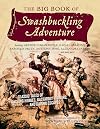
This compilation of famous and obscure swashbucklers certainly lived up to its subtitle! The author has covered each of the various "subgenres" of swashbucklers: the dashing pirate, the musketeer [not the one who comes to mind first :)], the jester-swashbuckler, the courtier, and others. I skipped around and read only those stories or excerpts from novels of my interest. The writing's a bit old-fashioned, mannered, and creaky. Most of the stories are from the twenties from the pulp magazine show more "Adventure" or before [e.g., writings of Conan Doyle, Dumas, Baroness Orczy]. I'm enjoying the compiler's brief biographies of the authors and what influence their writings have had on modern heroes. The quality of the collection varies, but the compiler has tried to be comprehensive. I'm sure there is something to everyone's taste here. There is so much to choose from! This is an outstanding collection.
My favorites of the 17 herein:
"The sin of the Bishop of Modenstein": a bishop rescues the princess Osra from kidnapping and gains back for King Rudolf the castle and demesne of Zenda. Set in the author's fictional Ruritania. I'd like to read "The Heart of Princess Osra" from which this short story is excerpted.
"Señor Zorro pays a visit": our introduction to the masked righter of wrongs, Zorro.
"How the Brigadier played for a kingdom": Brigadier Etienne Gerard is outwitted by a German princess and is unable to gain sympathy for France through her toying with him. Conan Doyle's character of the Brigadier shows his influence on the Flashman character.
"Robin Hood meets Guy of Guisborne": their duel to the death
"The King of Spain's Will": Is Charles V's will a fake?
"Crillon's Stake": how a lucky gamble leads to saving a king's life
"The Black Death": Sir John Hawkwood escapes danger and in doing so, avoids the plague show less
My favorites of the 17 herein:
"The sin of the Bishop of Modenstein": a bishop rescues the princess Osra from kidnapping and gains back for King Rudolf the castle and demesne of Zenda. Set in the author's fictional Ruritania. I'd like to read "The Heart of Princess Osra" from which this short story is excerpted.
"Señor Zorro pays a visit": our introduction to the masked righter of wrongs, Zorro.
"How the Brigadier played for a kingdom": Brigadier Etienne Gerard is outwitted by a German princess and is unable to gain sympathy for France through her toying with him. Conan Doyle's character of the Brigadier shows his influence on the Flashman character.
"Robin Hood meets Guy of Guisborne": their duel to the death
"The King of Spain's Will": Is Charles V's will a fake?
"Crillon's Stake": how a lucky gamble leads to saving a king's life
"The Black Death": Sir John Hawkwood escapes danger and in doing so, avoids the plague show less
Do you know, if you leave a bored child in the same room long enough with this book, and Gods, Demigods and Demons, she may develop a somewhat sketchy education in the classics. Maybe not as good as reading Homer, but it will stand her in good stead until she does (about ten years later), and thanks to the broad swath of cultural mythologies included, she'll never come up short in an ancient history museum. Most of the names will be at least a little familiar. Oh, and I hear you can roleplay show more with it too. show less
Lists
Awards
You May Also Like


Associated Authors
Statistics
- Works
- 14
- Also by
- 2
- Members
- 1,297
- Popularity
- #19,796
- Rating
- 4.1
- Reviews
- 12
- ISBNs
- 20
- Languages
- 1


