

Christian Gossett
Author of Red Star, Vol. 1 - The Battle of Kar Dathras Gate
About the Author
Series
Works by Christian Gossett
Star Wars: Tales of the Jedi: Dark Lords of the Sith #1 of 6 - Masters and Students of the Force (1994) — Illustrator — 9 copies
Star Wars: Tales of the Jedi: Dark Lords of the Sith #2 - The Quest for the Sith (1994) — Illustrator — 7 copies
Star Wars: Tales of the Jedi: Dark Lords of the Sith #3 - Descent to the Dark Side (1994) — Illustrator — 7 copies
Star Wars: Tales of the Jedi: Dark Lords of the Sith #5 - Sith Secrets (1995) — Illustrator — 5 copies
Star Wars: Tales of the Jedi: Dark Lords of the Sith #4 - Death of a Dark Jedi (1995) — Illustrator — 5 copies
Star Wars: Tales of the Jedi: Redemption #4 of 5 - The Trials of a Jedi (1998) — Illustrator — 3 copies
Star Wars: Tales of the Jedi: Redemption #1 of 5 - A Gathering of Jedi (1998) — Illustrator — 3 copies
Star Wars: Tales of the Jedi: Redemption #2 of 5 - The Search for Peace (1998) — Illustrator — 2 copies
Attica 2 copies
The red star #3 1 copy
The red star #6 1 copy
Red Star Vol. 2 #s 1,3,5 1 copy
Associated Works
Tagged
Common Knowledge
- Other names
- Gossett Vilá, Christian
- Birthdate
- 1968-08-16
- Gender
- male
- Occupations
- director
story artist - Nationality
- USA
- Birthplace
- New York, New York, USA
- Places of residence
- Los Angeles, California, USA
- Associated Place (for map)
- USA
Members
Reviews

"The Freedon Nadd Uprising" unites the two strands of Tales of the Jedi, bringing Ulic Qel-Droma into contact with Nomi Sunrider for the first time. This later becomes a Great Romance, but it never really convinces as such because they barely interact.
From there, it's into giant events with "Dark Lords of the Sith" and "The Sith War." My main takeaway from this is that Veitch and Anderson just do not get the Dark Side of the Force. They seem to see it solely as an external force of Evil that show more acts upon our heroes. I don't understand why Ulic falls. I mean, I really do not get it. He decides he wants to join the Krath and take them out from within... but at what point does he become Evil? He leaves the Jedi, next we see him, he is Evil. But what is he actually doing that is Evil? I think he's commanding the Krath military, but it should or could even be possible to do that without falling to the Dark Side. Most of what he does is glossed over, and I think that really undermines the effect of the story of Ulic's fall.
My favorite fall to the Dark Side in Star Wars is one that never actually happens. In The Empire Strikes Back, Darth Vader has Luke Skywalker backed into a corner. "Join me." It seems like a sane, reasonable action for Luke. But taking it would be the act of a coward, and thus an action for the Dark Side. Only by jumping into the unknown, choosing suicide over surrender, does Luke maintain his ties to the Light. But I always imagine that moment of cowardice that could have happened. With his whole world broken down, his friends captured, the truth revealed, his hand severed, who could blame Luke if he joined Darth Vader? Any good fall has a backed-into-a-corner moment like that, I think, if just metaphorically. Ulic has no such moment-- one minute he's good, the next he's Evil.
It gets worse from there, as Ulic's fall is mostly carried out through external forces-- first, the Krath give him "Sith poisons," which apparently make you Evil (Veitch often seems to think the Force is just standard fantasy-type magic), and then the spirit of Marka Ragnos appears and just turns him into a Dark Lord of the Sith. This whole thing completely lacks any feeling of character or choice-- so what's the point of it all then? Falling to the Dark Side is only a meaningful story if the character chooses it. (Also, the moment when Nomi leaves Ulic behind with the Krath is morally reprehensible. If he has chosen Evil and is unwilling to come, then it's not just "his choice"-- if he helps the Krath maintain their control over the Empress Teta System, then it's a choice that leads to the destruction of millions of innocent lives! Take the guy out while you have a chance!)
Oddly, Exar Kun, then, has a slightly more effective "fall" than Ulic, as he does have that moment of choice in the Sith Temple on Yavin 4. Unfortunately, though, he's been depicted as Evil all along, so the effect is undermined. And too many of the Sith minions are just controlled via magic.
All of this is to say that "Dark Lords of the Sith" and "The Sith War" are a lot of big flash, with epic battles and such, but with little actual meaning. There are lots of Jedi here-- too many, and mostly we care about them because of the earlier stories. Which means I basically only cared about Nomi, Oss, and Thon.
Surprisingly, given all this, Kevin J. Anderson and Chris Gossett pull it out of the bag at the end with "Redemption." Set ten years after the end of the Great Sith War, the story is about many things, all of them tragic-- Nomi's inability to connect with her own daughter after all the tragedy she's seen, Vima's inability to see what it really means to be a Jedi, Ulic's inability to find peace and solace now that he's been stripped of the Force, Tott Doneeta and Sylvar's inability to leave the war behind. It's heartbreaking stuff, drawn to perfection by Gossett, and with a tragic, elegiac tone throughout.
My favorite bit was a small one, just a shared look between Tott and Sylvar that brought home the tragedy of their lives. At one point, they were young Jedi Knights, ready to conquer evil and right wrongs and all that jazz. Now, only ten years later, they're walking wounded, people who've seen too much and who became old before their time, and with no one to understand them. "Will you go with me?" Sylvar asks Tott, as she decides to burn out her rage in a ritual hunt, Tott the only man who can possibly understand her pain. "I would be honored," says Tott grimly, his very visible scarring a reminder that he can never be who he was again.
It ends in tragedy, of course, but the best kind of tragedy-- the kind that indicates rebirth and hope and the potential for real change. It's a shame that nothing's been done with these characters since Tales of the Jedi ended in 2001, but as long as I can imagine the epic adventures of Vima Sunrider, Jedi Knight, perhaps we're better off that way. show less
From there, it's into giant events with "Dark Lords of the Sith" and "The Sith War." My main takeaway from this is that Veitch and Anderson just do not get the Dark Side of the Force. They seem to see it solely as an external force of Evil that show more acts upon our heroes. I don't understand why Ulic falls. I mean, I really do not get it. He decides he wants to join the Krath and take them out from within... but at what point does he become Evil? He leaves the Jedi, next we see him, he is Evil. But what is he actually doing that is Evil? I think he's commanding the Krath military, but it should or could even be possible to do that without falling to the Dark Side. Most of what he does is glossed over, and I think that really undermines the effect of the story of Ulic's fall.
My favorite fall to the Dark Side in Star Wars is one that never actually happens. In The Empire Strikes Back, Darth Vader has Luke Skywalker backed into a corner. "Join me." It seems like a sane, reasonable action for Luke. But taking it would be the act of a coward, and thus an action for the Dark Side. Only by jumping into the unknown, choosing suicide over surrender, does Luke maintain his ties to the Light. But I always imagine that moment of cowardice that could have happened. With his whole world broken down, his friends captured, the truth revealed, his hand severed, who could blame Luke if he joined Darth Vader? Any good fall has a backed-into-a-corner moment like that, I think, if just metaphorically. Ulic has no such moment-- one minute he's good, the next he's Evil.
It gets worse from there, as Ulic's fall is mostly carried out through external forces-- first, the Krath give him "Sith poisons," which apparently make you Evil (Veitch often seems to think the Force is just standard fantasy-type magic), and then the spirit of Marka Ragnos appears and just turns him into a Dark Lord of the Sith. This whole thing completely lacks any feeling of character or choice-- so what's the point of it all then? Falling to the Dark Side is only a meaningful story if the character chooses it. (Also, the moment when Nomi leaves Ulic behind with the Krath is morally reprehensible. If he has chosen Evil and is unwilling to come, then it's not just "his choice"-- if he helps the Krath maintain their control over the Empress Teta System, then it's a choice that leads to the destruction of millions of innocent lives! Take the guy out while you have a chance!)
Oddly, Exar Kun, then, has a slightly more effective "fall" than Ulic, as he does have that moment of choice in the Sith Temple on Yavin 4. Unfortunately, though, he's been depicted as Evil all along, so the effect is undermined. And too many of the Sith minions are just controlled via magic.
All of this is to say that "Dark Lords of the Sith" and "The Sith War" are a lot of big flash, with epic battles and such, but with little actual meaning. There are lots of Jedi here-- too many, and mostly we care about them because of the earlier stories. Which means I basically only cared about Nomi, Oss, and Thon.
Surprisingly, given all this, Kevin J. Anderson and Chris Gossett pull it out of the bag at the end with "Redemption." Set ten years after the end of the Great Sith War, the story is about many things, all of them tragic-- Nomi's inability to connect with her own daughter after all the tragedy she's seen, Vima's inability to see what it really means to be a Jedi, Ulic's inability to find peace and solace now that he's been stripped of the Force, Tott Doneeta and Sylvar's inability to leave the war behind. It's heartbreaking stuff, drawn to perfection by Gossett, and with a tragic, elegiac tone throughout.
My favorite bit was a small one, just a shared look between Tott and Sylvar that brought home the tragedy of their lives. At one point, they were young Jedi Knights, ready to conquer evil and right wrongs and all that jazz. Now, only ten years later, they're walking wounded, people who've seen too much and who became old before their time, and with no one to understand them. "Will you go with me?" Sylvar asks Tott, as she decides to burn out her rage in a ritual hunt, Tott the only man who can possibly understand her pain. "I would be honored," says Tott grimly, his very visible scarring a reminder that he can never be who he was again.
It ends in tragedy, of course, but the best kind of tragedy-- the kind that indicates rebirth and hope and the potential for real change. It's a shame that nothing's been done with these characters since Tales of the Jedi ended in 2001, but as long as I can imagine the epic adventures of Vima Sunrider, Jedi Knight, perhaps we're better off that way. show less
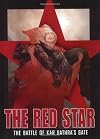
EVen though the plot and themes of this graphic novel are absolutely predictable (war, loyalty to the State, loss, questioning authority) I was absolutely impressed by the sohpistication of the artwork and the overall book design. The use of colour is exactly what people mean when they refer to a "painterly" art style, and it is this mastery that gives the lacklustre story an emotive depth. Having a beautiful sorceress protagonist (and her equally endearing rugged soldier husband) as the show more focal point draws away from some of the blood and brutality of war - giving the scenery a much needed positive counterpoint and carefully placed I'm sure to draw in the fan boys. In a lot of ways I would have preferred for the author to just stick to illustration and not play at a plot, since clearly that is his strength. This is only the first volume though, so maybe he gets a bit more interesting later on. show less

The best way I can describe this graphic novel series is ask you to imagine what would have happened to steam punk if, instead of being modeled on the Victorian era, it was inspired by the Soviet Union circa 1960. This is a top notch, innovative and very beautiful graphic novel. The story is epic, an allegorical retelling of the fall of the Soviet Union set against a backdrop of a fantasy version of the Cold War. Plus it has gigantic, flying battleships.
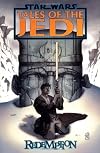
Disconnected from the Force Ulic wanders seeking the place where he can finally live the rest of his life in peace. And while he reflects on his life and slow demise his past catches up with him and unexpectedly he will be given opportunity to redeem himself.
As a complete opposite to Ulic (who at this point is person aware of dangers of emotions and pride) we have Sylvar, mighty Jedi warrior who lost her mate in Sith Wars. She is unable to find peace and lives bitter life constantly seeking show more revenge against Ulic. Even when confronted by Tott Doneeta she is not capable to cope with the hate and allows it to take full control over her actions. When she finally confronts Ulic he manages by being blunt to the extreme to disarm her anger and make her see that living in never-ending rage is no living at all.
Excellent story of redemption and coming to peace with oneself by helping others to find peace in themselves.
Art is good, lots of very clear panels and more modern than it was case with previous book. Artist manages to express all the emotions on the faces of the characters and helped me to get fully immersed into the story.
With this novel Tales of the Jedi arc comes to an end. Dark Horse truly did wonders with this setting. In my opinion although follow up books were good (Legacy, pre-Clone Wars stories etc) Tales of the Jedi still remain most epic Star Wars story for me.
Highly recommended to Star Wars fans and in general fans of the SF/Fantasy. show less
As a complete opposite to Ulic (who at this point is person aware of dangers of emotions and pride) we have Sylvar, mighty Jedi warrior who lost her mate in Sith Wars. She is unable to find peace and lives bitter life constantly seeking show more revenge against Ulic. Even when confronted by Tott Doneeta she is not capable to cope with the hate and allows it to take full control over her actions. When she finally confronts Ulic he manages by being blunt to the extreme to disarm her anger and make her see that living in never-ending rage is no living at all.
Excellent story of redemption and coming to peace with oneself by helping others to find peace in themselves.
Art is good, lots of very clear panels and more modern than it was case with previous book. Artist manages to express all the emotions on the faces of the characters and helped me to get fully immersed into the story.
With this novel Tales of the Jedi arc comes to an end. Dark Horse truly did wonders with this setting. In my opinion although follow up books were good (Legacy, pre-Clone Wars stories etc) Tales of the Jedi still remain most epic Star Wars story for me.
Highly recommended to Star Wars fans and in general fans of the SF/Fantasy. show less
Lists
Awards

You May Also Like


Associated Authors
Statistics
- Works
- 29
- Also by
- 4
- Members
- 558
- Popularity
- #44,765
- Rating
- 3.8
- Reviews
- 13
- ISBNs
- 22
- Languages
- 3