
Samuel Abraham Goudsmit (1902–1978)
Author of LIFE Science Library: Time
About the Author
Works by Samuel Abraham Goudsmit
La mesure du temps 1 copy
Tagged
Common Knowledge
- Birthdate
- 1902-07-11
- Date of death
- 1978-12-04
- Gender
- male
- Awards and honors
- National Medal of Science (Physical Sciences, 1976)
- Nationality
- Netherlands
USA - Birthplace
- The Hague, Netherlands
- Place of death
- Reno, Nevada, USA
- Associated Place (for map)
- Reno, Nevada, USA
Members
Reviews

The concept of an arms race has permeated the zeitgeist in the past one hundred and fifty years as the arrival of the Industrial Revolution accelerated the pace of technological change in warfare. This was perhaps best exemplified by the duel of the Merrimac and the Monitor where the two sides of the Civil War converged within a day at a technological solution to a problem. The Edwardian Era saw the Anglo-German Dreadnought rivalry (and a concurrent smaller one among the nations of South show more America), and of course, the massive nuclear programs of the Cold War. The Cold War nuclear arms race is generally what comes to mind when one hears the term “arms race”. It was heralded by the “race” between the United States and Germany for the atomic bomb. Television depictions of this have titles like “The Race for the Bomb”. This reflects the urgency that was felt by both Great Britain and the United States that they had to create this wonder weapon before the Germans did and the world historical example of the effort that went into the Manhattan Project stands testament to that sense of urgency. One likes to know how close one’s opponent is and Alsos is a very amusing and engaging account of our effort to find out exactly how far along the Germans were in this race.
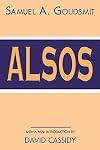
It was the near-unanimous opinion of the scientists involved in the Manhattan Project that Germany was a year or two ahead of Great Britain and America in the development of an atomic bomb. This was a natural supposition with both Otto Hahn and Werner Heisenberg being in Germany and presumably doing what our physicists were doing. But we had to be sure. Leslie Groves put together the Alsos Mission shortly after the fall of Rome and the D-Day landings where we finally had a hold on some important areas of continental Europe. The author of Alsos, Samuel Goudsmit was the scientific director of the Mission. This insider account, so new in 1947 that some of the participants are referred to by titles such as the “Mysterious Major”, as he was still active in the field, is a fast and amusing ride through the Alsos Mission’s adventures to find out how close the Germans were to the bomb.
Goudsmit was selected partially because of his personal connections in the field, partially from his grasp of various European languages and perhaps most importantly, because he was a physicist who was NOT involved in the atomic bomb. He’d been working on radar at MIT instead and thus wouldn’t be a threat to give away atomic secrets under interrogation if captured (not that radar secrets aren’t important too…) He seems to have enjoyed the whole affair, from working with the Mission’s commander, the swashbuckling Colonel Boris Pash, to the sense of covert excitement that their group had from being able to explain their role in only the vaguest of terms, to having an unusual distinctive unit insignia on their shoulders. His account is filled with numerous amusing incidents. For example, Col. Pash was able to finesse his way into Paris with the Free French troops liberating it riding in the sixth car that entered the city, just to grab the premier French physicist couple, the Joliot-Curies. But nothing definitive was known about what the Germans were up to by them. As various secondary functionaries of the German science establishment are encountered, the almost cartoonish actual nature of what seemed sinister plots (like a German company hording thorium, not for an advanced atomic weapon, but for use in postwar toothpaste!) led Goudsmit to conclude that perhaps the Germans weren’t ahead of us. Assuming that an analog to the Handford site along the Columbia River must exist to process plutonium, and thus need massive amounts of water for cooling, a mission is sent behind German lines to get samples of water from the Rhine. As a joke, Goudsmit sent a bottle of liberated French wine back along with the water to the lab boys with a note to “test this too”, meaning to drink it, only to learn that the Rhine water showed no signs of radiation, but wine was radioactive (from natural spring minerals), leading to two week wild goose chase in the center of France looking for German atomic research stations.
As the Misson got further and further into Europe, it was becoming apparent to Goudsmit that there was no German equivalent of Oak Ridge, or Handford or Los Alamos. When the University of Strasbourg was captured, the Mission was able to report that the Germans were nowhere near an atomic bomb. What remained was to grab the main people, namely Hahn and Hesienberg et al. Outrunning French forces, the Alsos Mission was first into the town of Hechingen to which the Germans had fled. When entering Heisenberg’s office there, Col. Pash was shocked to discover a photo of Heisenberg with Goudsmit from Heisenberg’s visit to the University of Michigan in 1938 when he stayed with Goudsmit, leading to a lot of teasing. Unfortunately for the interest of historical posterity, Goudsmit was not there to prevent the demolition of the cave that contained the rather interesting looking German attempt at an atomic pile. At the conclusion of the war, the interned physicists were held a country house in England which was bugged. When the news came to them, they were shocked by Hiroshima. They had assumed, much like the physicists with the Manhattan Project, that they were well ahead of America, and that we had created a bomb left them crestfallen.
Goudsmit examines the state of science in the Third Reich, which is not at all what would have been expected of the supposed efficient and organized Nazi state. The German bomb effort was split between many different bureaus and agencies, with even the Reich Postal Service involved. This led to extreme inefficiencies, which, coupled with the low priority the project was given, meant that the surprising result of the Alsos Mission was that it wasn’t a race at all. The Germans had assumed that they were the leaders in the field and they had severely underestimated the industrial capacity and intellectual abilities of the United States. In reality, they were behind, as early as 1940. Goudsmit worries that in the future, America might lose those qualities and poses the German case to be used an example to be avoided, a timely warning in our age of offshored industrial capability and severe misallocation of our research and educational establishments. show less
It was the near-unanimous opinion of the scientists involved in the Manhattan Project that Germany was a year or two ahead of Great Britain and America in the development of an atomic bomb. This was a natural supposition with both Otto Hahn and Werner Heisenberg being in Germany and presumably doing what our physicists were doing. But we had to be sure. Leslie Groves put together the Alsos Mission shortly after the fall of Rome and the D-Day landings where we finally had a hold on some important areas of continental Europe. The author of Alsos, Samuel Goudsmit was the scientific director of the Mission. This insider account, so new in 1947 that some of the participants are referred to by titles such as the “Mysterious Major”, as he was still active in the field, is a fast and amusing ride through the Alsos Mission’s adventures to find out how close the Germans were to the bomb.
Goudsmit was selected partially because of his personal connections in the field, partially from his grasp of various European languages and perhaps most importantly, because he was a physicist who was NOT involved in the atomic bomb. He’d been working on radar at MIT instead and thus wouldn’t be a threat to give away atomic secrets under interrogation if captured (not that radar secrets aren’t important too…) He seems to have enjoyed the whole affair, from working with the Mission’s commander, the swashbuckling Colonel Boris Pash, to the sense of covert excitement that their group had from being able to explain their role in only the vaguest of terms, to having an unusual distinctive unit insignia on their shoulders. His account is filled with numerous amusing incidents. For example, Col. Pash was able to finesse his way into Paris with the Free French troops liberating it riding in the sixth car that entered the city, just to grab the premier French physicist couple, the Joliot-Curies. But nothing definitive was known about what the Germans were up to by them. As various secondary functionaries of the German science establishment are encountered, the almost cartoonish actual nature of what seemed sinister plots (like a German company hording thorium, not for an advanced atomic weapon, but for use in postwar toothpaste!) led Goudsmit to conclude that perhaps the Germans weren’t ahead of us. Assuming that an analog to the Handford site along the Columbia River must exist to process plutonium, and thus need massive amounts of water for cooling, a mission is sent behind German lines to get samples of water from the Rhine. As a joke, Goudsmit sent a bottle of liberated French wine back along with the water to the lab boys with a note to “test this too”, meaning to drink it, only to learn that the Rhine water showed no signs of radiation, but wine was radioactive (from natural spring minerals), leading to two week wild goose chase in the center of France looking for German atomic research stations.
As the Misson got further and further into Europe, it was becoming apparent to Goudsmit that there was no German equivalent of Oak Ridge, or Handford or Los Alamos. When the University of Strasbourg was captured, the Mission was able to report that the Germans were nowhere near an atomic bomb. What remained was to grab the main people, namely Hahn and Hesienberg et al. Outrunning French forces, the Alsos Mission was first into the town of Hechingen to which the Germans had fled. When entering Heisenberg’s office there, Col. Pash was shocked to discover a photo of Heisenberg with Goudsmit from Heisenberg’s visit to the University of Michigan in 1938 when he stayed with Goudsmit, leading to a lot of teasing. Unfortunately for the interest of historical posterity, Goudsmit was not there to prevent the demolition of the cave that contained the rather interesting looking German attempt at an atomic pile. At the conclusion of the war, the interned physicists were held a country house in England which was bugged. When the news came to them, they were shocked by Hiroshima. They had assumed, much like the physicists with the Manhattan Project, that they were well ahead of America, and that we had created a bomb left them crestfallen.
Goudsmit examines the state of science in the Third Reich, which is not at all what would have been expected of the supposed efficient and organized Nazi state. The German bomb effort was split between many different bureaus and agencies, with even the Reich Postal Service involved. This led to extreme inefficiencies, which, coupled with the low priority the project was given, meant that the surprising result of the Alsos Mission was that it wasn’t a race at all. The Germans had assumed that they were the leaders in the field and they had severely underestimated the industrial capacity and intellectual abilities of the United States. In reality, they were behind, as early as 1940. Goudsmit worries that in the future, America might lose those qualities and poses the German case to be used an example to be avoided, a timely warning in our age of offshored industrial capability and severe misallocation of our research and educational establishments. show less
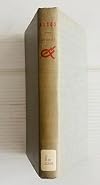
First hand account of the hunt for German scientific knowledge as the European front moved into Germany. Fantastic, quick read.

You May Also Like


Associated Authors
Statistics
- Works
- 4
- Members
- 184
- Popularity
- #117,735
- Rating
- 3.7
- Reviews
- 4
- ISBNs
- 10
- Languages
- 2