

Irene Dische
Author of The Empress of Weehawken: A Novel
About the Author
Works by Irene Dische
Associated Works
Tagged
Common Knowledge
- Canonical name
- Dische, Irene
- Birthdate
- 1952-02-13
- Gender
- female
- Education
- Harvard University
- Occupations
- journalist
author - Awards and honors
- Deutscher Kritikerpreis (1989)
- Nationality
- USA
- Birthplace
- New York, New York, USA
- Places of residence
- Berlin, Germany
Rhinebeck, New York, USA
Libya
Kenya
Members
Reviews
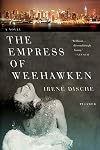
This novel is written in the style of a memoir, but the narrator is the author’s grandmother, Elisabeth Rother. Before the story begins, the author’s note reads: “Certain events and characters in this novel were inspired by real people and events. But the actual events, characters, and dialogue depicted are fictional.” The story spans the majority of the narrator’s life, including many details about her granddaughter, Irene Dische, which may or may not be true.
Right from the first show more sentence, I was hooked. Within Part One (out of five), I found the narrator’s cynicism and complexity of her character endearing. I knew I would enjoy the novel from that point, and I was right.
It begins by explaining that the story really is about Irene, the granddaughter: “the hows and whys of her, a kind of True Confession I have decided to write for her since she has just reached a spot that is as lonely as a vacuum” (p. 5). Despite her goal, the story is really about the narrator, and what she did and why she did it. She is flawed by her own ignorance and manipulative personality, yet she is easily lovable in her own way.
The narrator often explains that the men in her life are weak, and that the women are the real backbone of the family. Evidence to that statement is presented time and time again, and it becomes apparent that the narrator, her daughter Renate, and her granddaughter Irene are the strongest people in the family.
I enjoyed Dische’s use of narration through her grandmother. The story took on a conversational tone, referring briefly to episodes that would happen eventually, and then explaining, “I’ll get to that later.”
The author succeeded wonderfully with her character development, plot, and tone. This was really one of the best novels I have read in a while. show less
Right from the first show more sentence, I was hooked. Within Part One (out of five), I found the narrator’s cynicism and complexity of her character endearing. I knew I would enjoy the novel from that point, and I was right.
It begins by explaining that the story really is about Irene, the granddaughter: “the hows and whys of her, a kind of True Confession I have decided to write for her since she has just reached a spot that is as lonely as a vacuum” (p. 5). Despite her goal, the story is really about the narrator, and what she did and why she did it. She is flawed by her own ignorance and manipulative personality, yet she is easily lovable in her own way.
The narrator often explains that the men in her life are weak, and that the women are the real backbone of the family. Evidence to that statement is presented time and time again, and it becomes apparent that the narrator, her daughter Renate, and her granddaughter Irene are the strongest people in the family.
I enjoyed Dische’s use of narration through her grandmother. The story took on a conversational tone, referring briefly to episodes that would happen eventually, and then explaining, “I’ll get to that later.”
The author succeeded wonderfully with her character development, plot, and tone. This was really one of the best novels I have read in a while. show less
 This review was written for LibraryThing Early Reviewers.
This is a novel but reads like a memoir. The narrator, Elisabeth Rother, is a hoot! Basically, she recounts her life story, which includes her childhood in Germany, marrying a Jewish man who converts to Catholicism, escaping Nazi Germany and emigrating to New Jersey. Nothing is sacred, not her husband, her children, her grandchildren, her servants, her neighbors. She tells it like she sees it. Lots of laugh-out-loud moments but also parts that bring tears to your eyes. Wonderful story with show more brilliant writing. If this is the "almost-true-but-not-quite" story of the author's real grandmother and she is still keeping tabs on her family from the "other side," she should be very proud of her granddaughter. show less
This review was written for LibraryThing Early Reviewers.The Empress of Weehawken is a faux memoir from the point-of-view of Elisabeth Rother, leading us through her amazing life and the lives of her daughter, Renate, and her granddaughter, Irene. Yes, Irene, as in Irene Dische, the author. But as Elisabeth would say, more on that later. At first glance, Elisabeth is an unrepentant snob, an anti-Semite who marries a Jew, a borderline abusive mother, and if I had put aside the book after fifty or so pages, I would have come away disliking Elisabeth show more despite her amusing turns of phrase. Dische has absolutely nailed Elisabeth's incisive, witty, condescending, observant voice, and though Elisabeth says she is anti-Semitic and disdainful of the lower classes, Dische allows her actions to tell a more nuanced story. By the end of the story, I adored Elisabeth, and though I'm not a big crier while reading, I wept at the end.
The story begins with Elisabeth telling of her difficulties conceiving with her husband Carl, and Elisabeth's disappointment that the eventual child (Renate) is a girl. It is the 1930s in Germany and Carl is a Jew, regardless his conversion to Elisabeth's Catholicism before their wedding. As life becomes more and more restrictive, Elisabeth bullies the Catholic church into helping relocate him to America. She sends Renate to a convent school as a "good Catholic girl." Elisabeth's strength of spirit becomes very clear as she protects her family, and even attempts to help Carl's family using her family connections (her brother Otto is in the SS). Though Elisabeth is the one with the "good breeding" and noble family, it is Carl who is most scathing in his judgments about Jews, and Carl who enforces class delineations (though Elisabeth pays lip service to the idea of keeping the servant class in their place, her relationship with Liesel belies that position). In Part II, Elisabeth and Renate join Carl in America, where they have nowhere to stay, as Carl's unbelievable behavior has put him on the outs with the Catholic church. Elisabeth takes the reins of the family and steers them toward assimilation and even prosperity. After the war, she deals with the bitter correspondence from family, friends, and even unknown Germans, who congratulate her on getting out of Germany and ask for handouts. Her response is inspiring. Dische weaves the lives of Renate and Irene through Elisabeth's narrative, and Elisabeth often invokes a subject, promising to return to it later. Elisabeth is very, very funny on a variety of subjects. On old age: "After forty, if you wake up without feeling any pain, then you're probably dead." On Heinz kosher baked beans: "They came in glass jars, and the inside of the cap, if you put your nose right up to it, smelled like pork. It was some kind of trick. I believe this was used by the Jewish manufacturer to attract his own pork-starved people, and that trick is as much proof as one needs about the ingenuity of the race."
Irene Dische has placed this disclaimer before Chapter One: "Certain events and characters in this novel were inspired by real people and events. But the actual events, characters, and dialogue depicted are all fictional." If anything, the knowledge of the author's own connection to the story, was a minor drawback to me. On occasion, I was pulled out of the story wondering if the events were actually true (not just true to the story); the incidences of child abuse (did the maid/nanny actually lock the real Irene in a closet for punishment, leaving the house when the screaming got on her nerves? and, oh, the pants-wetting thing!) and Irene's wild adventures abroad (did some intervention actually abort the near-rape experiences of Irene, or is she rewriting her history our of wishful thinking? or did those scenes never happen at all?) I know that "real life" is very popular right now. Memoirs pop up right and left, and don't get me started on reality television. And if Irene hadn't been a character in her own book, I would have had no issues at all with the "inspired by real people and events"--in fact, I would have thought it an ingenious idea to write a biography of one's grandmother from the grandmother's point of view. Wondering about the truth of Irene's story was only a minor nuisance, but it did, at times, distract me from the story. Nevertheless, this is an engaging, moving story about an extraordinary woman, and I certainly recommend it. show less
The story begins with Elisabeth telling of her difficulties conceiving with her husband Carl, and Elisabeth's disappointment that the eventual child (Renate) is a girl. It is the 1930s in Germany and Carl is a Jew, regardless his conversion to Elisabeth's Catholicism before their wedding. As life becomes more and more restrictive, Elisabeth bullies the Catholic church into helping relocate him to America. She sends Renate to a convent school as a "good Catholic girl." Elisabeth's strength of spirit becomes very clear as she protects her family, and even attempts to help Carl's family using her family connections (her brother Otto is in the SS). Though Elisabeth is the one with the "good breeding" and noble family, it is Carl who is most scathing in his judgments about Jews, and Carl who enforces class delineations (though Elisabeth pays lip service to the idea of keeping the servant class in their place, her relationship with Liesel belies that position). In Part II, Elisabeth and Renate join Carl in America, where they have nowhere to stay, as Carl's unbelievable behavior has put him on the outs with the Catholic church. Elisabeth takes the reins of the family and steers them toward assimilation and even prosperity. After the war, she deals with the bitter correspondence from family, friends, and even unknown Germans, who congratulate her on getting out of Germany and ask for handouts. Her response is inspiring. Dische weaves the lives of Renate and Irene through Elisabeth's narrative, and Elisabeth often invokes a subject, promising to return to it later. Elisabeth is very, very funny on a variety of subjects. On old age: "After forty, if you wake up without feeling any pain, then you're probably dead." On Heinz kosher baked beans: "They came in glass jars, and the inside of the cap, if you put your nose right up to it, smelled like pork. It was some kind of trick. I believe this was used by the Jewish manufacturer to attract his own pork-starved people, and that trick is as much proof as one needs about the ingenuity of the race."
Irene Dische has placed this disclaimer before Chapter One: "Certain events and characters in this novel were inspired by real people and events. But the actual events, characters, and dialogue depicted are all fictional." If anything, the knowledge of the author's own connection to the story, was a minor drawback to me. On occasion, I was pulled out of the story wondering if the events were actually true (not just true to the story); the incidences of child abuse (did the maid/nanny actually lock the real Irene in a closet for punishment, leaving the house when the screaming got on her nerves? and, oh, the pants-wetting thing!) and Irene's wild adventures abroad (did some intervention actually abort the near-rape experiences of Irene, or is she rewriting her history our of wishful thinking? or did those scenes never happen at all?) I know that "real life" is very popular right now. Memoirs pop up right and left, and don't get me started on reality television. And if Irene hadn't been a character in her own book, I would have had no issues at all with the "inspired by real people and events"--in fact, I would have thought it an ingenious idea to write a biography of one's grandmother from the grandmother's point of view. Wondering about the truth of Irene's story was only a minor nuisance, but it did, at times, distract me from the story. Nevertheless, this is an engaging, moving story about an extraordinary woman, and I certainly recommend it. show less
This review was written for LibraryThing Early Reviewers.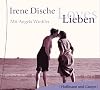
Wer romantische und glückliche Liebesgeschichten erwartet, vielleicht ein bisschen HerzSchmerz aber mit gutem Ende, sollte tunlichst die Finger von diesen Erzählungen lassen. Die Lieben und die darauf basierenden Beziehungen von denen Irene Dische berichtet, sind gekennzeichnet durch ausgeprägte Ungleichgewichte: Die eine Seite liebt mit völliger Hingabe den Partner, der Partner hingegen nur sich selbst. Oder die Liebe ist von einem Teil durch eine derart große Erwartungshaltung show more gekennzeichnet, dass die andere Seite diese nicht erfüllen kann oder will - es kommt zur Katastophe (oder fast).
Doch trotz dieser so unfroh klingenden Inhalte handelt es sich keineswegs um ausschließlich trübselige und deprimierende Geschichten. Dische versteht sich darauf, derart unerwartete Wendungen in ihre Stories einzubauen, dass man immer wieder ungläubig den Kopf schütteln und schmunzeln muss (Der Prof, der seine attraktive und kultivierte Frau für eine extrem dicke, ungebildete Verkäuferin verlässt und dann... Oder Huseyn, der den Mann seiner Tochter tötet und über den perfekten Mord jubiliert, bis er....).
Das Hörbuch ist eher mager ausgefallen was die Zahl der Geschichten betrifft. Ganze zehn Stück finden sich auf den zwei CDs wieder, immerhin mit fünf Kommentaren der Autorin, von ihr selbst gesprochen, wie sie auf die Idee zu den einzelnen Inhalten kam. Zusätzlich ist eine Geschichte im Original (auf Englisch) enthalten, ebenfalls von Dische selbst gelesen (wobei die deutsche Version besser klingt. Aber eine Autorin soll ja auch schreiben können und nicht vorlesen :-))
Angela Winter war eine gute Wahl für diese Lesung. Insbesondere die Darstellung der beiden selbstverliebten Egozentriker, selbstmitleidig, voller Hingabe und Liebe für die eigene Person, gelingt ihr meiner Meinung nach glänzend.
Alles in allem eine schöne Auswahl aber für rund 20 € schlicht zu teuer. Lieber das Buch kaufen :-) show less
Doch trotz dieser so unfroh klingenden Inhalte handelt es sich keineswegs um ausschließlich trübselige und deprimierende Geschichten. Dische versteht sich darauf, derart unerwartete Wendungen in ihre Stories einzubauen, dass man immer wieder ungläubig den Kopf schütteln und schmunzeln muss (Der Prof, der seine attraktive und kultivierte Frau für eine extrem dicke, ungebildete Verkäuferin verlässt und dann... Oder Huseyn, der den Mann seiner Tochter tötet und über den perfekten Mord jubiliert, bis er....).
Das Hörbuch ist eher mager ausgefallen was die Zahl der Geschichten betrifft. Ganze zehn Stück finden sich auf den zwei CDs wieder, immerhin mit fünf Kommentaren der Autorin, von ihr selbst gesprochen, wie sie auf die Idee zu den einzelnen Inhalten kam. Zusätzlich ist eine Geschichte im Original (auf Englisch) enthalten, ebenfalls von Dische selbst gelesen (wobei die deutsche Version besser klingt. Aber eine Autorin soll ja auch schreiben können und nicht vorlesen :-))
Angela Winter war eine gute Wahl für diese Lesung. Insbesondere die Darstellung der beiden selbstverliebten Egozentriker, selbstmitleidig, voller Hingabe und Liebe für die eigene Person, gelingt ihr meiner Meinung nach glänzend.
Alles in allem eine schöne Auswahl aber für rund 20 € schlicht zu teuer. Lieber das Buch kaufen :-) show less
Lists
Awards


You May Also Like


Associated Authors
Statistics
- Works
- 21
- Also by
- 1
- Members
- 743
- Popularity
- #34,184
- Rating
- 3.9
- Reviews
- 25
- ISBNs
- 111
- Languages
- 9
